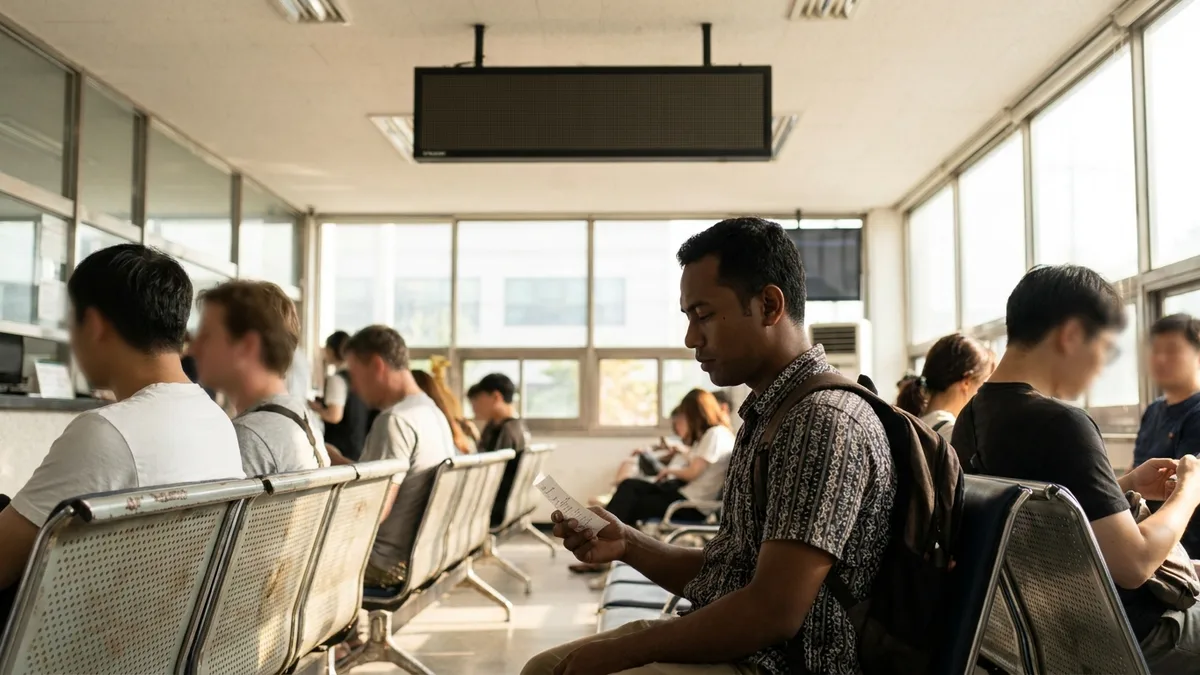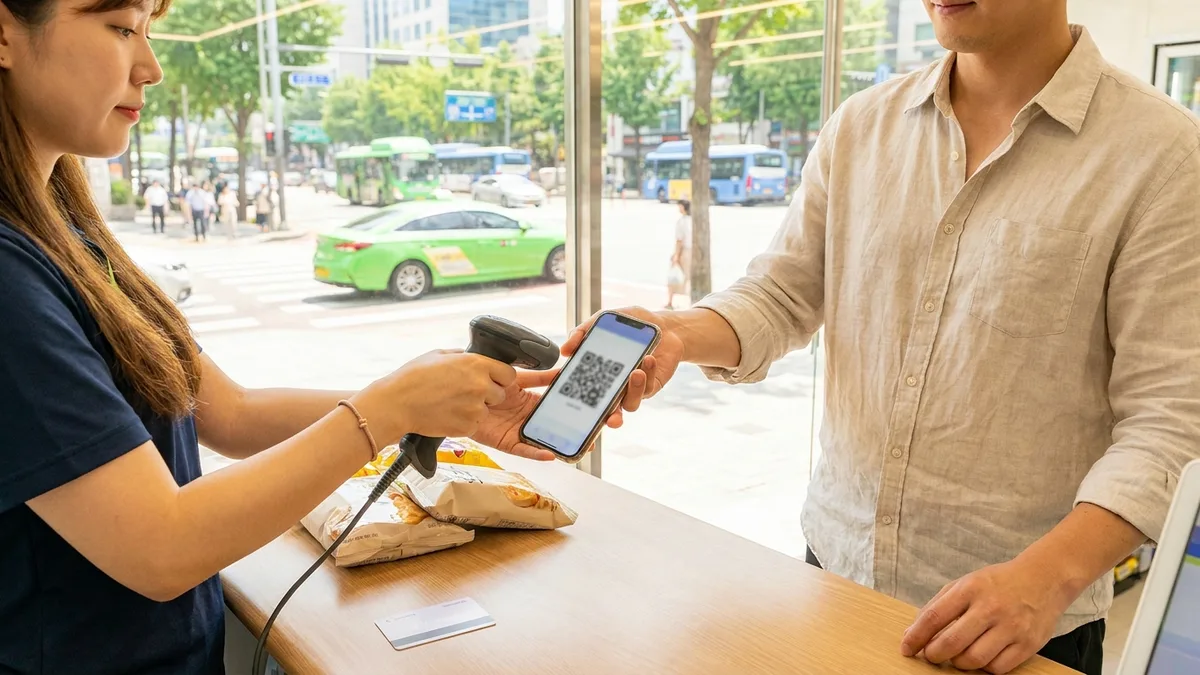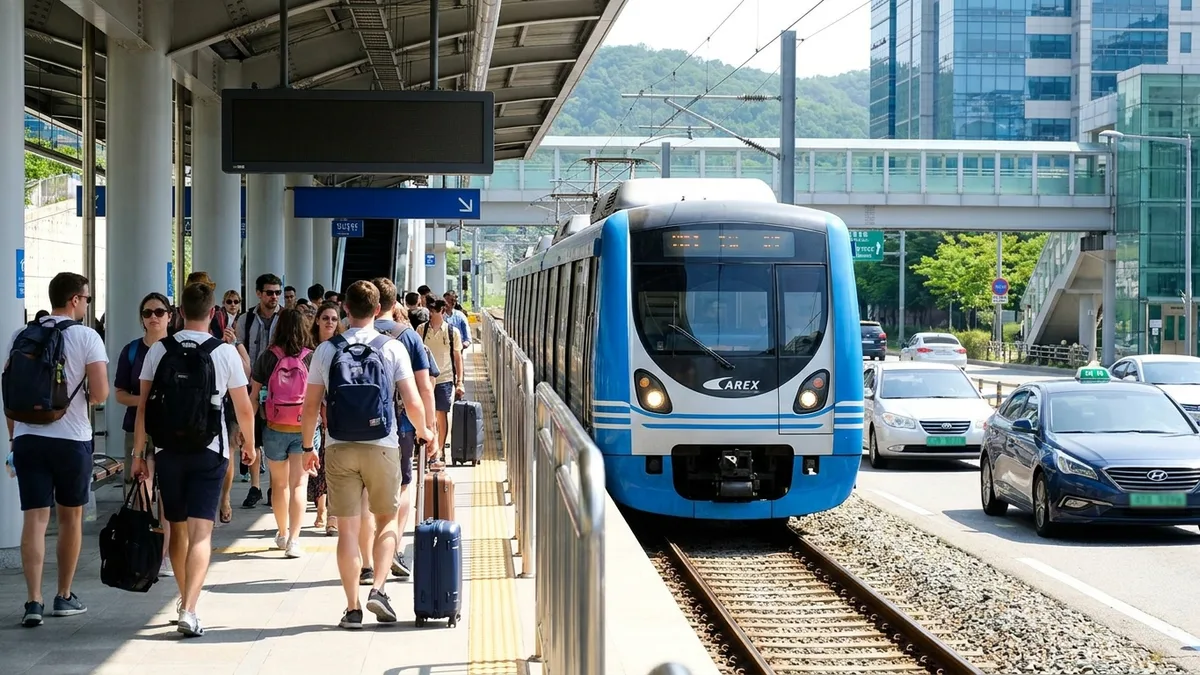

The Alien Registration Card (ARC — the current English name is "Residence Card," while the Korean name stays the same) usually takes about 2–4 weeks to arrive as a physical card after you finish your application at the immigration office, and longer during peak season. A Korean bank account can only be opened once this card is issued, and a postpaid contract for an 010 phone number also requires the card. So for roughly the first month after arrival, you'll be without an account and without a number — and during this gap, booking train tickets, topping up a transit card, and paying at restaurants all tend to hit a wall at once.
The ways to get through that month without a Korean account or number are, surprisingly, well established. Let's break it into two tracks — transport and payments. (This is based on June 2026 information, so fares and eligibility change often. To be safe, double-check on the official sites using the guidance below.)
The First 3 Things to Solve Without a Residence Card
The points where you get stuck right after arrival are fairly predictable. Here they are, in order of priority.
| Need | Possible without a residence card? | Temporary solution |
|---|---|---|
| Mobile phone (data) | Yes | Activate a data eSIM instantly with your passport |
| Bank account | Generally not | Get by with a foreign card or mobile payment |
| Transit card | Yes | Anonymous T-money or an international-card kiosk |
| Train/bus booking | Conditionally yes | Passport-based booking (app, station counter, LACHA, etc.) |
The key is just one thing: know the routes that work even without a Korean account, phone number, or identity verification.
1) Mobile Phone: A Data eSIM Instantly, With Just Your Passport
A Korean 010 number requires a physical residence card and a long-term stay visa to be issued on a postpaid contract. A data eSIM is different. Whether you're a tourist or a resident, you can use it the day you arrive with just your passport. Even if you plan to stay long term, the usual flow is to start with a data eSIM first, then add a number once your residence card arrives.
Data alone is enough to run maps, translation, payment apps, and booking apps. That's plenty to get you through the gap period.
2) Bank Account: Wait for It, but Use Foreign Payment Methods in the Meantime
Most major banks require a foreigner registration number and proof of residence. Before your residence card is issued, opening a regular account is often difficult (it varies by bank, branch, and visa). So while you wait for your card, the practical approach is to handle everyday payments with the foreign credit/debit cards you already have and with mobile payments like Alipay and WeChat Pay.
3) Transit Card: Anonymous T-money + International-Card Top-up
You can buy and top up a physical T-money card with cash at convenience stores without any ID check. On top of that, since March 2026, new kiosks in the Seoul subway let you buy and top up single-journey tickets and short-term Climate Card passes with overseas-issued cards (international cards) as well (more on this below).
Transit Cards and Public Transport: How to Ride Without a Residence Card
Anonymous T-money (the most reliable)
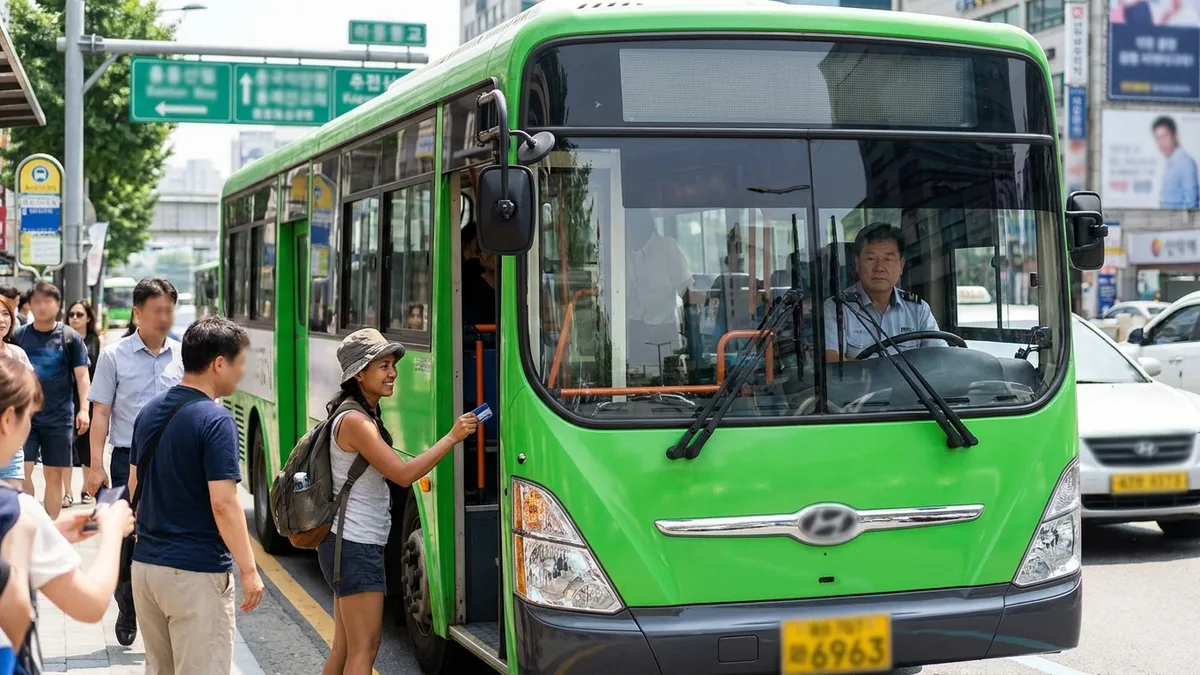
Buy a card at a convenience store and top it up with cash, and you can tap to pay for the subway, buses, and even taxis nationwide. No residence card, account, or phone number needed. Keep it as your default for public transport during the gap period.
Seoul Subway International-Card Kiosks (from March 2026)
Starting in March 2026, the Seoul city government installed about 440 new transit-card kiosks across 273 stations on Lines 1–8. You can buy and top up single-journey tickets and short-term Climate Card passes with overseas-issued credit/debit cards and with Apple Pay, Kakao Pay, Naver Pay, and more (regular T-money top-up is not included). A few things are worth knowing in advance.
- Foreign-card payments carry a fee of about 3.7%.
- Supported options are Climate Card short-term passes (1–7 days). (The 30-day pass is scheduled to end in late August 2026, so long-term stayers are moving to the K-Pass.)
- Support may vary by card issuer, station, and time. If it doesn't work, you can fall back on anonymous T-money.
Apple Wallet T-money (for iPhone users)
Since July 2025, iPhone users can add T-money to Apple Wallet and tap it for the subway and buses (there are device requirements, such as iOS 17.2 or later). As for topping up, from March 18, 2026, you can charge it in the Mobile T-money app's 'Foreigner' menu using overseas-issued Mastercard, Amex, or UnionPay (fee of about 4.5%). However, Visa cards are still blocked from in-app top-up, so if you only have a Visa, you'll need to use a station kiosk (foreign card, about 3.7% fee) or top up with cash. Google Pay hasn't launched in Korea, so on Android you can use the official T-money app family.
Booking KTX and Express Buses: The "Passport-Only" Route
You can book train tickets even without a residence card. But this is also exactly where foreigners get stuck most often. Korail's booking system is designed around domestic cards, so overseas cards go through an extra verification step (3D Secure). Cards that don't have 3D Secure enabled by the issuing bank frequently fail to pay at this step.
There are three routes available.
- Korail official (KorailTalk app/web): You can book as a non-member by entering your passport number. Overseas cards tend to go through more successfully in the KorailTalk app than on the web. If you get blocked by 3D Secure or an app error, you can move to the alternatives below.
- In-person purchase at a station counter: At major station ticket offices, you can pay with an overseas card after verifying your identity with your passport. No Korean number or registration number is needed.
- Foreigner-focused all-in-one app: LACHA lets you sign up without a Korean number or identity verification and pay by topping up with overseas wallets you already use, like Alipay and WeChat Pay. You can search and book both KTX and express buses in one app.
On the official channels, express buses run on a separate system from KTX, so you normally have to look up tickets twice. That hassle is what an all-in-one app removes during the gap period.
Need transit and payments while you wait for your residence card? Check out LACHA.
Built to work without a Korean phone number or bank account, with overseas payment methods like Alipay, WeChat Pay, and Apple Pay. Taxi hailing plus KTX, express bus, and airport railroad (AREX) booking — all in one app.
Download now


Payments in General: Using Cards and Mobile Payment During the Gap
- Overseas credit/debit cards: These work at most merchants — department stores, large retailers, chain cafés, convenience stores, and so on (some small businesses may not support them).
- Alipay+ / WeChat Pay: Acceptance at retail merchants in Korea has grown significantly. That said, tapping directly at transit gates is still centered on T-money, so it's safest to split things up — use a transit card for transport and mobile payment at stores.
- There's no "always works / never works." It depends on the card issuer, the merchant, and the timing, so it helps to always carry a small amount of cash (Korean won) as a backup.
Frequently Asked Questions (FAQ)
Q1. How long does the Alien Registration Card usually take? A. After applying at the immigration office, the physical card usually takes 2–4 weeks, and it can take longer during peak season. It's best to plan around a gap of more than a month after arrival.
Q2. Is the ARC the same as the Overseas Korean Residence Report card (F-4)? A. No. The Alien Registration Card (ARC, in English "Residence Card") and the Overseas Korean Residence Report card are separate systems. Check the procedure that matches your own visa type through immigration guidance.
Q3. Can you really book KTX without a residence card? A. Yes. You can book on Korail's official app/web as a non-member with your passport, and if that doesn't work, you can use a station counter, or an app designed for overseas payment methods with no identity verification (such as LACHA). That said, people frequently get blocked at the overseas-card 3D Secure verification, so the payment step is the biggest variable.
Q4. Can I ride the Seoul subway directly with an overseas card? A. Rather than tapping directly at the gate, the usual approach is to buy or top up a transit card with an overseas card at the in-station kiosks introduced in March 2026 (about 3.7% fee, varying by station, card issuer, and time). The most reliable option is anonymous T-money.
Last updated: 2026-06. Fares, supported cards, and station-by-station coverage change often, so check the exact amounts and eligibility on official sites/apps such as Korail and Seoul Metro as of the time of issue.