Seoul to Busan is about 325 km. It's the longest major domestic route in Korea, so depending on what you ride, the fare can swing anywhere from the mid-₩20,000s (about ₩26,700) up to nearly ₩60,000.
But a "cheap ticket" doesn't automatically mean it's "cheap." A flight can look inexpensive if you only look at the airfare, but you also add the time and transport cost of getting to and from Gimpo and Gimhae airports. For foreigners, there's one more wall: without a Korean credit card or phone number, payment often gets blocked on the official Korail, SRT, and express-bus websites. A classic example is a foreign-issued card being declined at the 3D Secure verification step.
Below, we'll put the fares and travel times side by side in a table, and then walk through how to book without a card or phone number.
Fares and times are as of 2026-06, so they vary by date, time of day, and discounts. Please check the official Korail, SRT, terminal, or airline channels right before you pay.
Fare and Time Comparison at a Glance (Seoul → Busan)
| Mode | One-way fare (standard seat) | Pure travel time | Departure station/terminal | Destination |
|---|---|---|---|---|
| KTX | about ₩59,800 | about 2 hr 30 min | Seoul Station | Busan Station (city center) |
| SRT | about ₩52,600 | about 2 hr 30 min | Suseo Station (Gangnam area) | Busan Station (city center) |
| Express bus (standard) | about ₩26,700 | about 4–4.5 hr | Seoul Express Bus Terminal | Busan Central Bus Terminal (Nopo) |
| Express bus (premium) | about ₩43,900–48,000 (late-night up to ₩52,600) | about 4–4.5 hr | Seoul Express Bus Terminal | Busan Central Bus Terminal |
| Mugunghwa-ho (regular train) | about ₩28,600 | about 5–6 hr | Seoul Station | Busan Station (city center) |
| Flight (GMP→PUS) | about ₩40,000–80,000 (lower with special fares) | flight about 1 hr | Gimpo Airport | Gimhae Airport (city outskirts) |
(Compiled from publicly available fare sources as of 2026-06)
The "cheapest ticket" is the express bus; the "best value for time" is SRT
- If you just want the cheapest ticket price: a standard express bus (about ₩26,700) or the Mugunghwa-ho (about ₩28,600). But it takes 4–6 hours.
- For value relative to speed: SRT (about ₩52,600) is about ₩7,000 cheaper than KTX while taking almost the same time.
- Flights: the airfare itself can be the cheapest when there's a special fare. But once you add the access time to Gimpo and Gimhae airports and security screening (arriving 2 hours early is recommended), the door-to-door time can be similar to or even longer than KTX and SRT.
1) Express Bus — The Cheapest Ticket Price
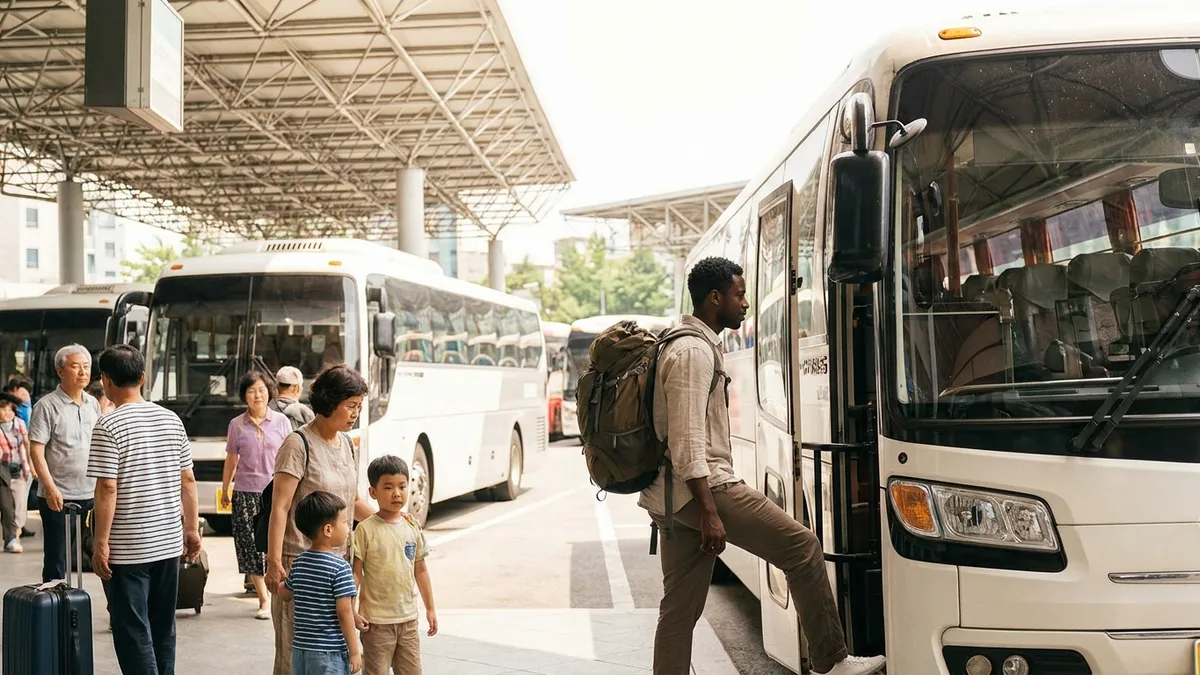
You travel from the Seoul Express Bus Terminal (Gangnam, Seoul; Subway Lines 3, 7, and 9) to the Busan Central Bus Terminal (Nopo-dong; Busan Metro Line 1, Nopo Station). It takes the Gyeongbu Expressway and stops once at a rest area along the way, roughly 4 hours or so. Keep in mind that the Busan Central Bus Terminal (Nopo-dong) sits on the northern outskirts of Busan, so reaching central areas like Seomyeon or Haeundae takes another 40 minutes or more by metro.
Fares by seat class (2026 basis, subject to change)
- Standard (2+2 layout): about ₩26,700
- Deluxe (2+1 layout, wider seats): about ₩39,700
- Premium (2+1, near-flat reclining with an individual curtain): about ₩43,900–48,000 (up to ₩52,600 with the late-night surcharge)
Late-night buses cost a little more. But since it saves you a night's accommodation, it's popular with long-stay foreign workers.
2) SRT vs. KTX — Both Are Fast, and SRT Is Cheaper
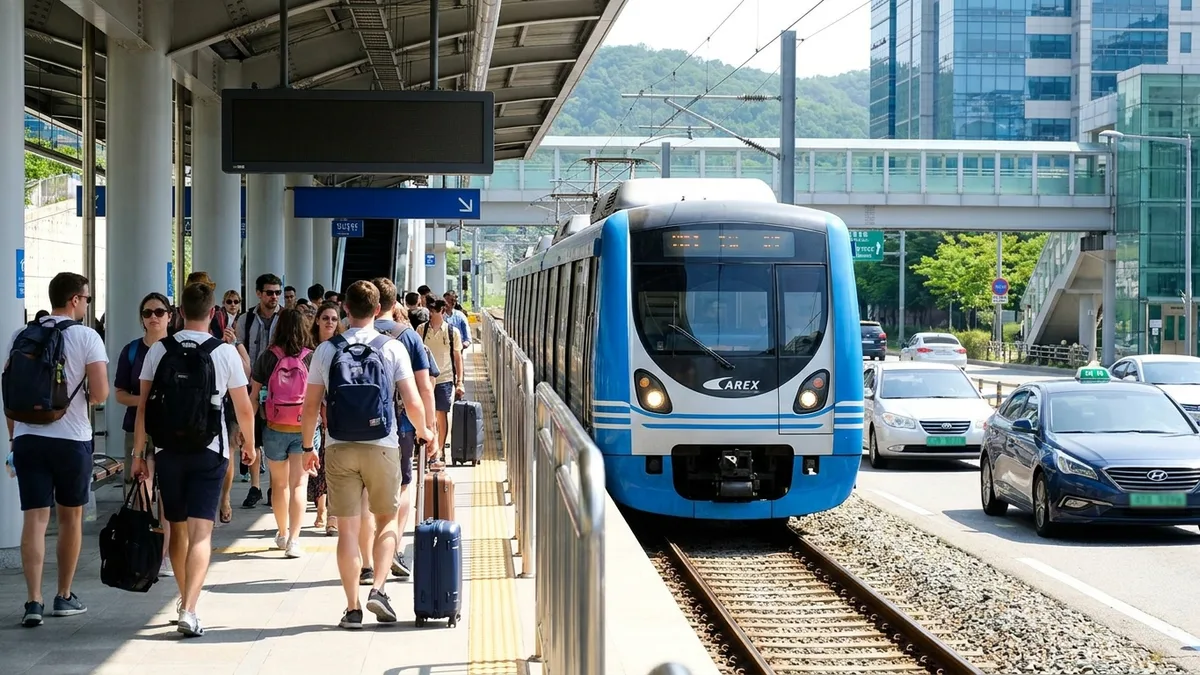
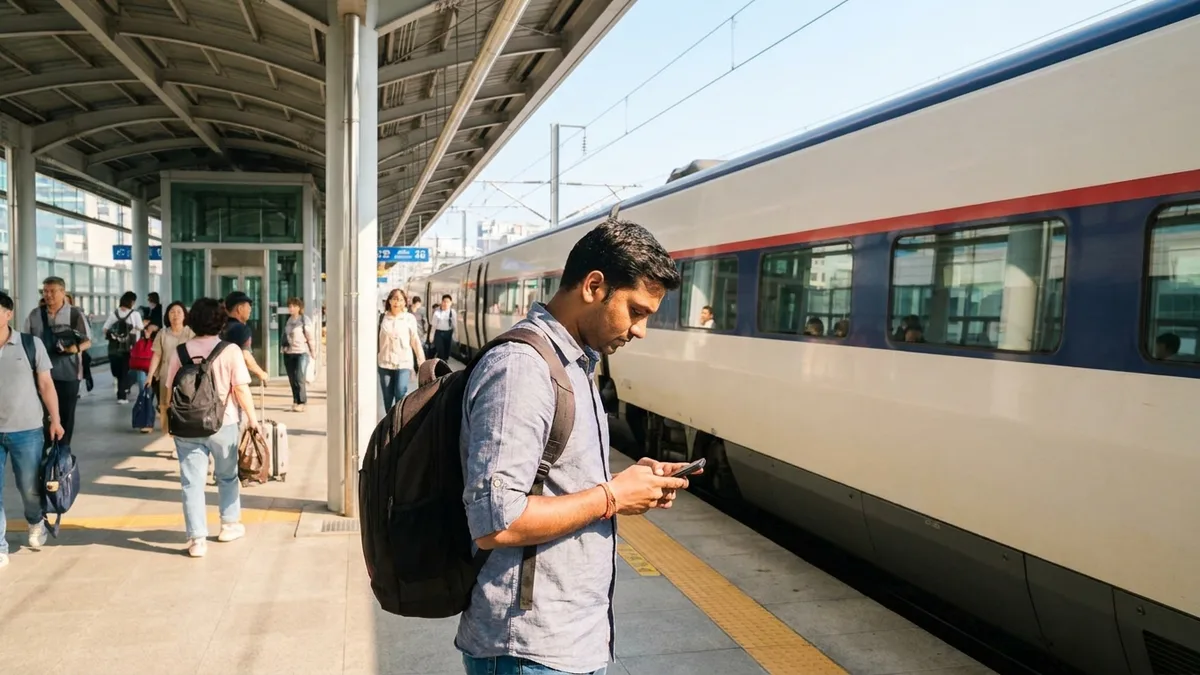
KTX departs from Seoul Station, and SRT departs from Suseo Station. If your accommodation is in central Seoul — Myeongdong, Hongdae, or Jongno — Seoul Station is easy to reach and connects directly to Incheon Airport via the AREX airport railroad, so KTX is the convenient pick. Suseo Station is served by Subway Line 3 and the Bundang Line, so it's closer if you're in Gangnam, Jamsil, or southern Seoul. Both trains drop you at Busan Station right in the heart of downtown Busan, making it easy to get around after you arrive.
- KTX: about ₩59,800
- SRT: about ₩52,600 (about ₩7,000 cheaper than KTX)
- For reference, since May 15, 2026, with the start of KTX-SRT coupled operation, the KTX fare for services departing from and arriving at Suseo Station was cut by about 10%, bringing it in line with the SRT fare (those trains are excluded from mileage accrual). In other words, for Suseo departures the fare gap between the two trains has narrowed considerably. It varies by route and schedule, so it's best to check before you pay.
- Meanwhile, KTX runs more frequent services, which gives you an edge in securing seats and choosing departure times.
Tips for riding cheaper
- Tuesdays and Wednesdays are relatively quiet, so there's more seat availability and more chances for discounts.
- Using Korail's and SRT's advance-booking discounts and standing/non-reserved seats can lower the fare further (a seat isn't guaranteed).
3) Flight (Gimpo GMP → Gimhae PUS) — The Trap of a Ticket That Only Looks Cheap
Jeju Air, Air Busan, T'way, and Korean Air operate the route, and during special fares a one-way ticket can come in under ₩40,000. The problem is the hidden costs.
- The flight itself is about an hour or so (about 55 minutes to 1 hr 5 min). But Gimpo Airport gets congested, so arriving 2 hours before departure is recommended.
- Gimhae Airport is on the outskirts of Busan, so it adds about 45 more minutes to the city center by public transport.
- In the end, on a door-to-door basis it can be similar to or longer than KTX and SRT, which connect directly to Busan Station.
- When a flight makes sense: when you catch a genuine special fare, when you're staying near Gimpo Airport, or when you're transferring from Gimhae to Jeju.
The Payment Barrier for Foreigners — Booking Without a Card or Phone Number
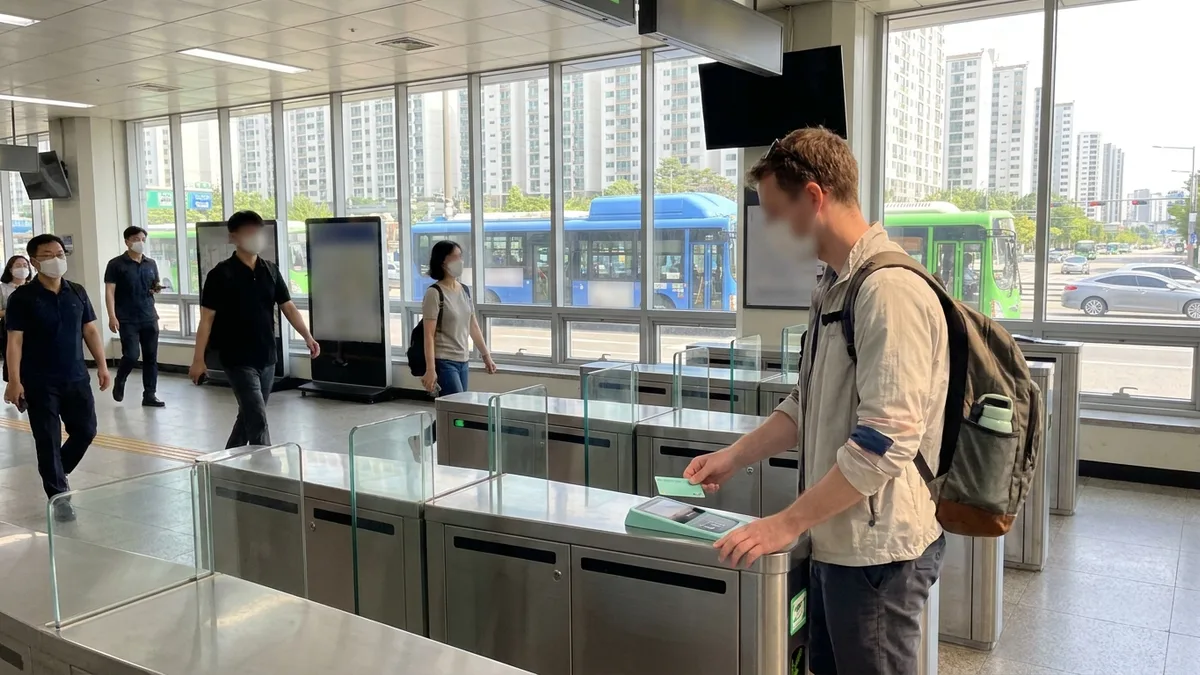
The biggest difficulty isn't the fare but payment. The official Korail, SRT, and express-bus (Kobus) websites and apps are built for Korean residents. It's common for a foreign-issued card to be declined at the 3D Secure step or for a Korean phone verification to be required.
Practical solutions by mode
| Mode | How foreigners can pay |
|---|---|
| KTX | The English Korail site (korail.com/global/eng) or the KorailTalk app. Foreign cards can get blocked by 3D Secure, and many reviews say PC web payment is more reliable. If 3D Secure blocks you, you can book on LACHA with overseas payment methods, no Korean ID verification needed |
| SRT | The English SRT site (etk.srail.kr, language=EN). PC web payment is more reliable than the mobile app. You must carry your physical passport |
| Express bus | The official Kobus has Korean-number verification and overseas-access restrictions, so the failure rate is high. Use the LACHA app, or the on-site ticket window or ticket machine at the terminal |
| Common alternative | The on-site ticket window at a terminal or station (bring your passport), or the LACHA app |
The on-site ticket window is the surest option if you have your passport, but lines can be long in peak season.
Want to search and book KTX and express buses in one app? Check out LACHA.
Built to work without a Korean phone number or bank account, with overseas payment methods like Alipay, WeChat Pay, and Apple Pay. Taxi hailing plus KTX, express bus, and airport railroad (AREX) booking — all in one app.
Download now


Frequently Asked Questions (FAQ)
Q1. What's really the cheapest way from Seoul to Busan? A. By ticket price alone, a standard express bus (about ₩26,700) or the Mugunghwa-ho (about ₩28,600) is cheapest. But it takes 4–6 hours. Factoring in time, the best value is SRT (about ₩52,600). If your accommodation is in central Seoul (Myeongdong, Hongdae, Jongno), the KTX departing from Seoul Station is easier to reach.
Q2. Why is SRT cheaper than KTX? Does it go to the same Busan Station? A. Yes, both arrive at Busan Station in downtown Busan. SRT departs from Suseo Station and is about ₩7,000 cheaper than KTX. If you're in Gangnam or southern Seoul, getting to Suseo Station may be more convenient.
Q3. Isn't a ₩40,000 flight the cheapest option? A. It is if you only look at the airfare. But once you add the cost and time of getting to Gimpo and Gimhae airports, arriving 2 hours early for security, and the 45 minutes from Gimhae Airport to downtown Busan, it can actually be as expensive as or more expensive than KTX and SRT—and take longer.
Q4. I don't have a Korean credit card—can I still book KTX or SRT? A. You can. That said, foreign-issued cards often get blocked at the 3D Secure verification step (it varies by card issuer and timing). Options include PC web payment, the on-site ticket window (bring your passport), and a foreigner-friendly all-in-one booking app.
Q5. Which day of the week is cheapest? A. Usually Tuesdays and Wednesdays are quiet, so there's more seat availability and more chances for discounts. Weekends and holidays sell out quickly and leave little room on fares.
Q6. My card keeps getting declined on the Korail and Kobus sites — is there another way? A. On the official sites, overseas cards often get blocked at the 3D Secure verification step. LACHA lets you sign up without a Korean phone number or ID verification, and it supports overseas mobile payments like Alipay and WeChat Pay, so payment goes through without that step. You can book KTX and express buses in one app.
The fares and times in this article are compiled from public sources as of 2026-06 and may change depending on date, time of day, discounts, and policy changes. Whether payment will go through varies by card issuer, station, and timing, so before booking or boarding, please check the latest information directly on official channels such as Korail, SRT, the individual bus terminals, and the airlines.