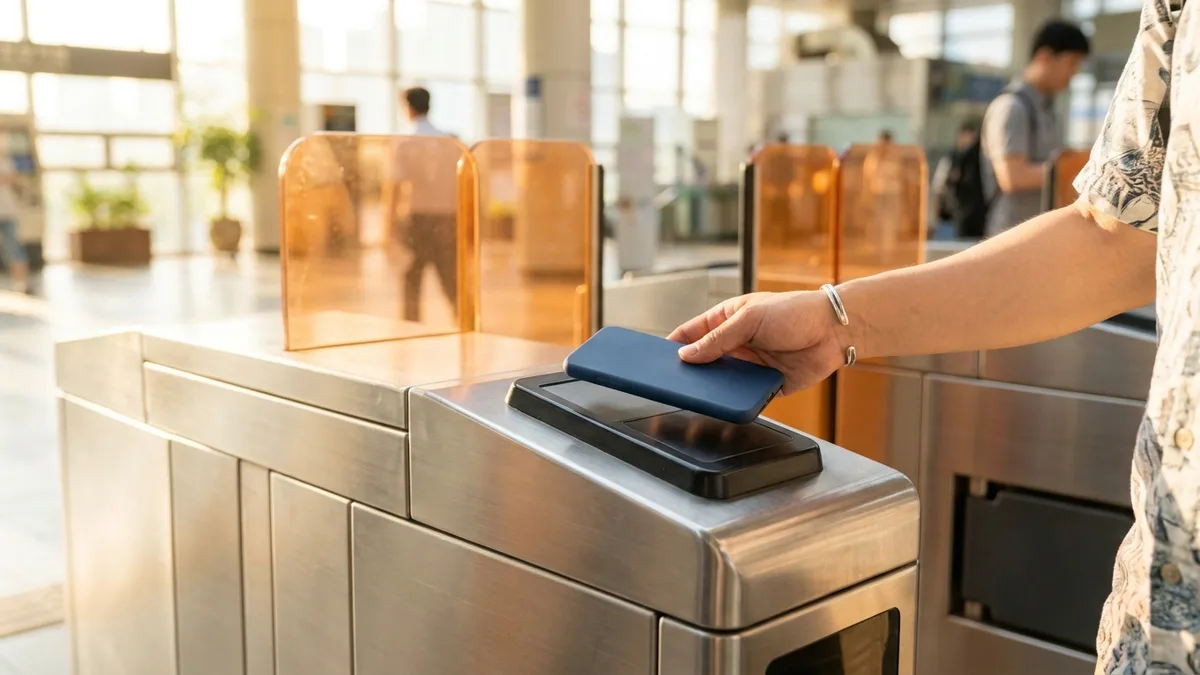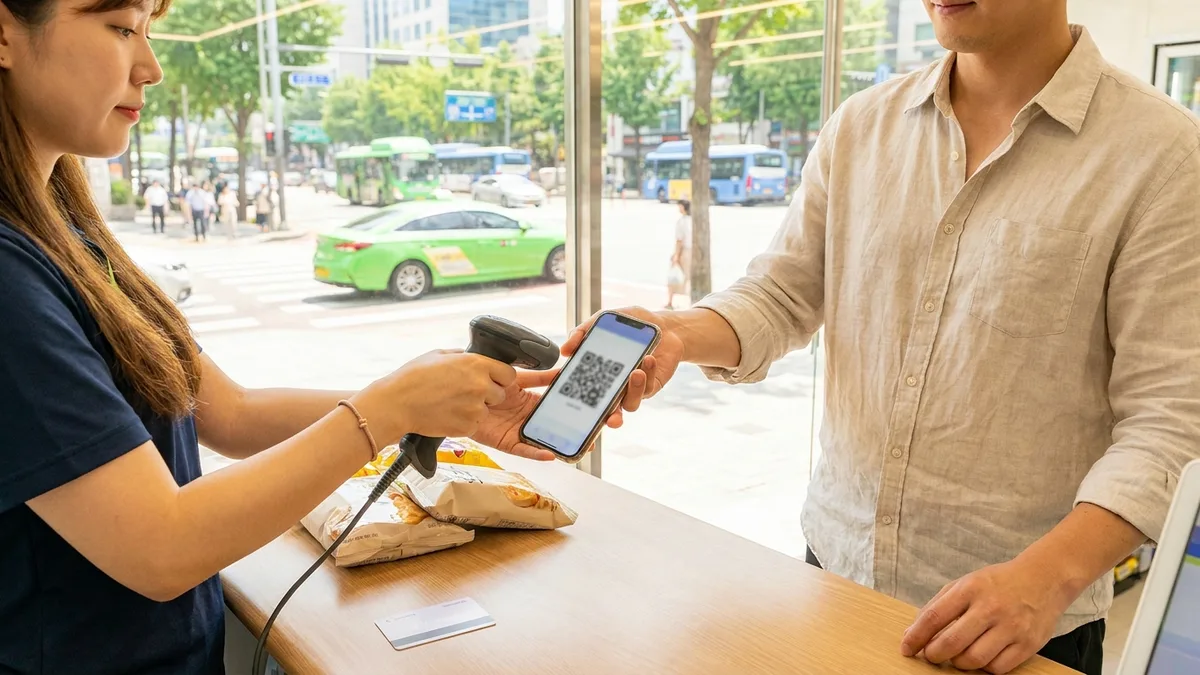
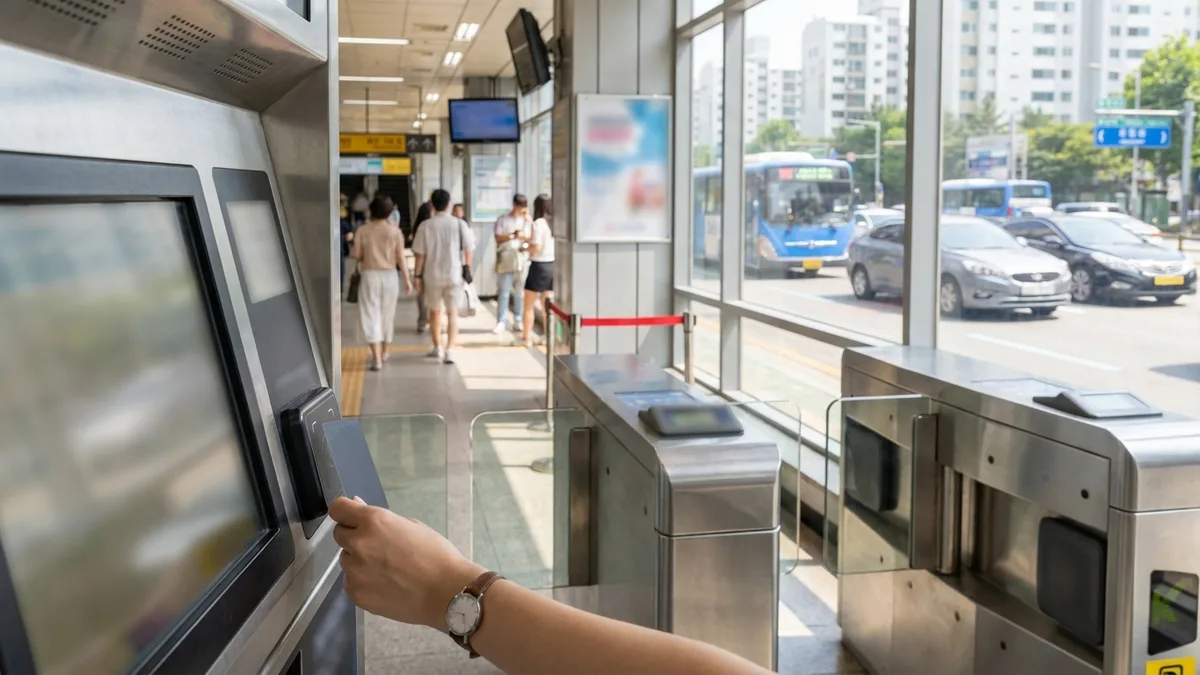
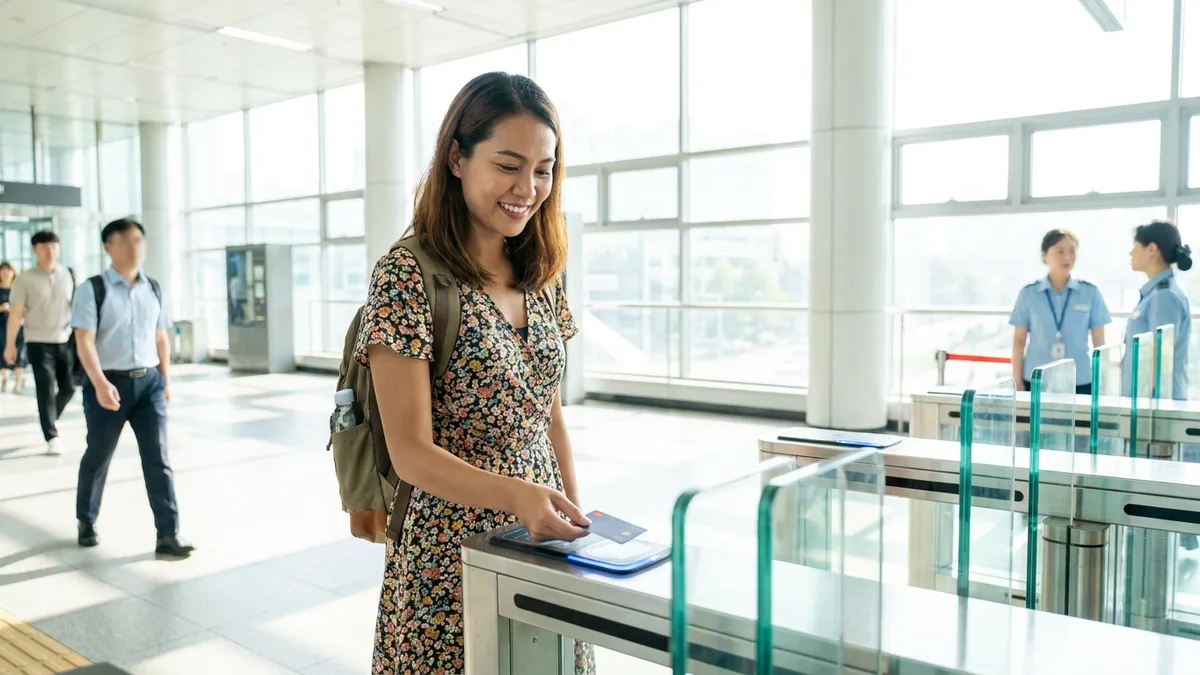
Just tapping a Visa or Mastercard on the gate like you would on the London Underground? As of June 2026, that's still not possible in Korea. Seoul plans to roll out EMV open-loop in phases between 2027 and 2030, so until then you'll need to use another route.
If you're used to Japan's SUICA, London contactless, or Singapore's SimplyGo, this difference may catch you off guard. For a long time, Korea's transit payment system worked by topping up a prepaid transit card (T-money, Cashbee), and that top-up was tied to a card issued in Korea.
Even so, over 2025–2026 the ways to pay with a foreign card have grown quickly. The main ones are paying directly at newer subway kiosks and adding T-money to Apple Wallet. Below, we'll walk through each method one by one. Whether payment works depends on the card issuer, country of issue, station, and timing, so please also check the official sources listed near the bottom of this article for the final word.
The Big Picture First: Korea Is "Prepaid Cards + Transitioning to Open-Loop"
Korea's public transit payments fall into roughly three routes. Pick the one that fits your situation.
| Method | Direct payment with a foreign credit card | Notes |
|---|---|---|
| ① Buy and top up a prepaid transit card (T-money, Cashbee) | Partly possible (via kiosks, below) | Most common; compatible nationwide |
| ② Apple Wallet T-money (iPhone) | Top-up requires a Korean card | The card itself can be issued by foreigners too |
| ③ Open-loop (tap a foreign card directly at the gate) | Not yet available (planned for 2027–2030) | Seoul is transitioning in phases |
Here's the summary.
You still can't just tap a foreign credit card on the gate the way you can in London (Seoul plans to roll out EMV open-loop in phases between 2027 and 2030). Right now, the most practical option is to top up a prepaid transit card with a foreign card.
Method 1 — Top Up T-money or Buy Single-Ride Tickets with a Foreign Card at Subway Kiosks
This is the most recently opened route. When Seoul Metro introduced new unmanned ticketing and top-up machines (kiosks), payment with credit and debit cards issued overseas became possible.
- Timing and scope: The new kiosks were fully installed by the end of 2025 — about 440 machines across 273 stations on Seoul Subway Lines 1–8 (announced by Seoul Metro in January 2026) — and overseas-issued card payment began on March 17, 2026.
- Supported cards: Overseas-issued credit and debit cards such as Visa and Mastercard, plus Kakao Pay and Naver Pay simple-payment (an average 3.7% service fee applies to foreign card payments).
- What you can buy: You can buy single-ride tickets and short-term Climate Card passes (1-, 2-, 3-, 5-, and 7-day passes). Buying or topping up a regular T-money card is not yet eligible for foreign card payment — for T-money, buying it with cash at a convenience store is the sure bet.
Step-by-Step Flow
- Find a new-model kiosk inside the station (older top-up machines may not accept foreign cards).
- Change the on-screen language to English or another option.
- Choose "Recharge/Top-up" or "Single Journey."
- Pick an amount, then insert or tap your card → sign or enter your PIN.
- If payment fails, it may be a foreign-merchant block on your card issuer's side or a 3D Secure authentication issue, so try a different card or a cash top-up.
You usually can't top up T-money with a foreign card at a convenience store. Korean POS systems are geared toward Korea-issued cards, so convenience-store top-ups are, as a rule, cash only.
Method 2 — Adding T-money to Apple Wallet on iPhone (from July 2025)
From July 22, 2025, you can add a T-money card to Apple Wallet. You can pay by tapping your iPhone or Apple Watch at gates and most bus terminals.
- Device requirements: iPhone XS or newer + iOS 17.2 or later, or Apple Watch Series 6 or newer + watchOS 10.2 or later.
- How to add it: Wallet app →
+in the top right → "Transportation Card" → select T-money → follow the prompts. - How to top up: Topping up directly within Apple Wallet still requires a Korea-issued card. That said, from March 18, 2026, you can register an overseas-issued card (Mastercard, Amex, or UnionPay — with a fee of about 4.5%) in the Mobile T-money app to top up, and you can also use station top-up machines (cash) or convenience-store cash. Visa cards can't yet be used to top up within the app, so use a kiosk or cash instead.
For Android (Galaxy) users, there is guidance that T-money-family apps (for example, "Korea Tour Card") support foreign-card top-ups to some extent. However, whether it works can vary by card and app version, so it's a good idea to check in advance.
Method 3 — Short-Term Passes Like the Climate Card (Seoul Only)
If you plan to get around Seoul intensively for a few days, a short-term Climate Card pass is handy. You can buy one with a foreign card at the new kiosks.
| Pass type | Price |
|---|---|
| 1-day pass | ₩5,000 |
| 2-day pass | ₩8,000 |
| 3-day pass | ₩10,000 |
| 5-day pass | ₩15,000 |
| 7-day pass | ₩20,000 |
| 30-day pass (ending late Aug 2026) | ₩62,000 |
| 30-day pass (subway + bus + Ttareungi) | ₩65,000 |
You can ride the Seoul subway and city buses without limit (some lines or sections may be excluded). Check the price and coverage on Seoul's official guidance.
Recommended Order When You First Arrive
- Withdraw cash at an airport ATM (around ₩30,000–₩50,000 is a good amount) — you can withdraw with a foreign card.
- Buying a T-money card + topping it up with cash at an airport or city convenience store is the surest option.
- Once you're in the city, you can top up or reload with a foreign card at the new kiosks.
- iPhone users can add T-money to Apple Wallet (supplement top-ups with cash at kiosks).
Long Distance (KTX, Express Bus) Is a Different Story Again
The subway and buses are covered by the methods above, but booking a train like KTX is another matter. The Korail reservation system is built around Korean cards, so foreign cards often get blocked at the 3D Secure authentication or additional processing steps. Even when a booking progresses with non-member + passport + foreign card, it often fails at the payment step (this varies by card issuer and timing). Express bus booking also has limited English support.
Handling the subway, buses, trains, taxis, and payments all with a single card is difficult — this is the biggest inconvenience foreign users face.
Stuck on payments or bookings without a Korean phone or bank account? Check out LACHA.
Built to work without a Korean phone number or bank account, with overseas payment methods like Alipay, WeChat Pay, and Apple Pay. Taxi hailing plus KTX, express bus, and airport railroad (AREX) booking — all in one app.
Download now


Frequently Asked Questions (FAQ)
Q1. Can I just tap my Visa card on the subway gate like in London? A. Not yet. Seoul plans to roll out EMV open-loop in phases between 2027 and 2030, so until then the default is the prepaid transit card method (T-money and the like).
Q2. Can I top up T-money with a foreign card at a convenience store? A. Generally, it's difficult. Korean POS systems are geared toward Korea-issued cards, so convenience-store top-ups are, as a rule, cash only. To top up with a foreign card, the realistic route is the Mobile T-money app (Mastercard, Amex, UnionPay) — station machines cover single-journey tickets and short-term Climate Card passes.
Q3. My foreign card keeps failing at the kiosk. A. The cause could be a foreign-merchant block by your card issuer, 3D Secure not being set up, or country-of-issue restrictions (it varies by card and timing). Ask your card issuer to enable overseas use, or switch to a different card or a cash top-up.
Q4. If I add T-money to Apple Wallet on iPhone, can I top it up with a foreign card? A. Topping up directly within Wallet requires a Korea-issued card, but from March 2026 you can top up in the Mobile T-money app with an overseas Mastercard, Amex, or UnionPay (fee of about 4.5%; Visa is not supported). If that doesn't work, use station kiosks or cash top-up alongside it.
Q5. Can I book KTX or express buses directly with a foreign card too? A. It often gets blocked. Korail frequently sees foreign-card payments fail at additional authentication steps like 3D Secure (it varies by card issuer and timing). It's worth considering an app that supports alternative payment methods.
Note: This document is general guidance compiled from publicly available information as of June 2026, and whether payment works, fares, and station-by-station support may vary by card issuer, country of issue, station, and timing. Before use, please check the latest information through the official channels of the Seoul Metropolitan Government, Seoul Metro, T-money, and your card issuers. This article does not guarantee any particular payment will succeed.