Last updated: 2026-06 · Fares, operating hours, and foreign-card support change often. Before you travel, double-check the official channels of the Airport Railroad (airportrailroad.com) and Incheon Airport (airport.kr).
The cheapest option, the AREX All-Stop train, runs about ₩4,750 (Seoul Station–T1), while the most comfortable, a taxi, runs about ₩55,000–75,000. It's the same stretch from Incheon Airport to downtown Seoul, yet the fare gap is more than tenfold. In between are the Express train (about ₩13,000, Seoul Station in 43 min) and the limousine bus (about ₩17,000, direct to your hotel). In the end, the answer comes down to your budget, your luggage, and where you're headed.
For a foreigner who has just arrived without a Korean phone number or bank account, it's not only about fares and time — payment methods and the language barrier get in the way too. We've laid out all four side by side using June 2026 fares, travel times, and luggage convenience, and pointed out exactly where things tend to get stuck.
You've Just Landed at Incheon Airport — "How Do I Get to Seoul?"
Once you clear immigration and pick up your bags, the first wall you hit is figuring out how to get into downtown Seoul. You don't have a Korean phone number yet, and all you're holding is a foreign-issued card and your passport. The kiosk screens mix in Korean, and communicating in English with staff isn't always smooth.
There are essentially four options: ① AREX Express train, ② AREX All-Stop train, ③ limousine (airport) bus, and ④ taxi. Each differs in fare, travel time, luggage convenience, and how hard it is to pay with a foreign card. Below we compare all four side by side and walk through the payment and language snags that arriving foreigners actually run into.
At a Glance (as of June 2026)
| Method | Fare (one-way) | Travel time | Pros | Notes for foreigners |
|---|---|---|---|---|
| AREX Express train | about ₩13,000 (down to ~₩11,400 with an online discount) | about 43 min to Seoul Station (non-stop) | Fastest and most punctual; all seats reserved | Terminates only at Seoul Station; you may have to transfer with your luggage |
| AREX All-Stop train | about ₩4,750 (T1)–₩5,350 (T2) | about 59–66 min to Seoul Station (stops at every station) | Cheapest; every 10–15 min during the day | Crowded at rush hour; awkward for large luggage |
| Limousine (airport) bus | about ₩17,000 (₩18,000 for premium) | about 60–80 min (traffic-dependent) | Drops you right at major hotels and attractions; easy to load luggage | Delays in heavy traffic; check your route |
| Taxi (regular / international) | about ₩55,000–75,000 | about 45–70 min | Door to door; convenient with lots of luggage | Most expensive; metered fare rises in traffic (regular taxi) |
The fares in the table are rough estimates for the trip from Incheon Airport Terminal 1 to central Seoul (the Seoul Station / Myeongdong area). They vary by destination, terminal (1 or 2), and the time you travel.
① AREX Express Train — The Fastest and Most Precise
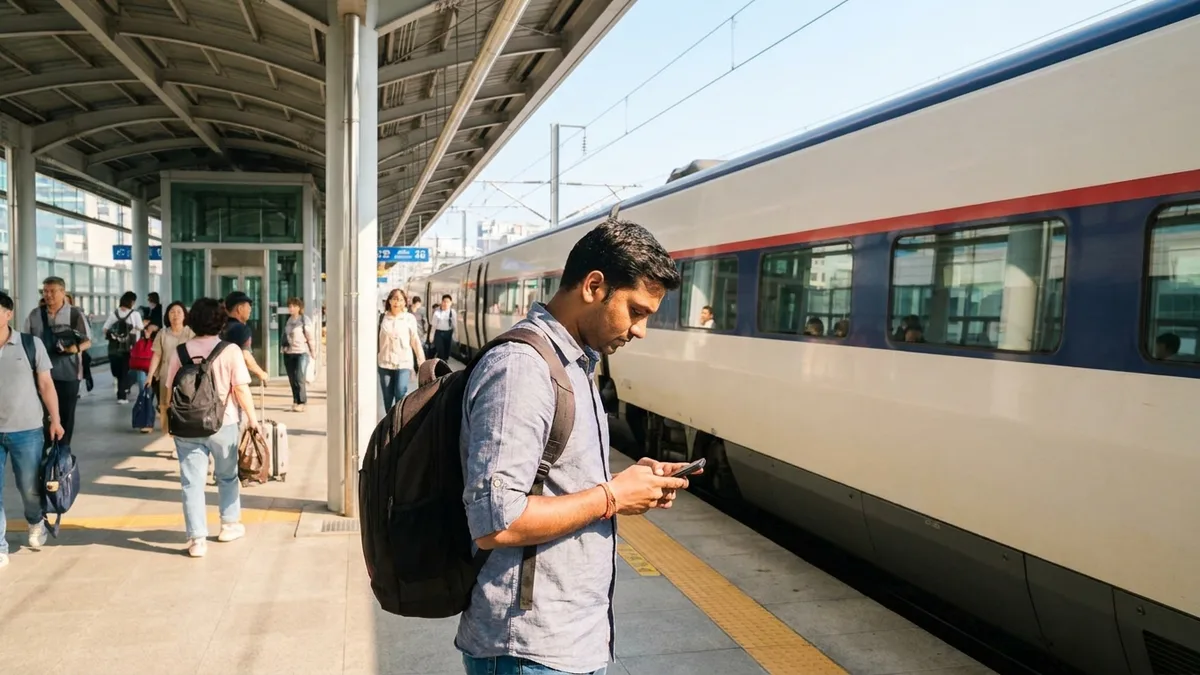
Non-stop to Seoul Station in about 43 minutes. It's the fastest of the four. All seats are reserved, so your seat is guaranteed even with luggage.
- Fare: about ₩13,000. Booking online through travel platforms (Klook, etc.) sometimes gets you a discount (about ₩11,400 in one instance). With LACHA, you can book without ID verification using overseas payment methods and enter directly with a QR ticket
- Service: about every 20–40 min; first train from Incheon Airport T1 around 05:24 (T2 around 05:15, toward Seoul Station) / last train around 22:48 (check the official timetable)
- Where to board: the Express-train-only gate at the underground transportation center of Incheon Airport Terminal 1 or 2. The Express and All-Stop trains use different floors and gates, so be sure to check the signs
The catch is that it terminates only at Seoul Station. If your final destination is Gangnam or Hongdae, you'll have to transfer once more from Seoul Station by subway or taxi.
② AREX All-Stop Train — The Cheapest
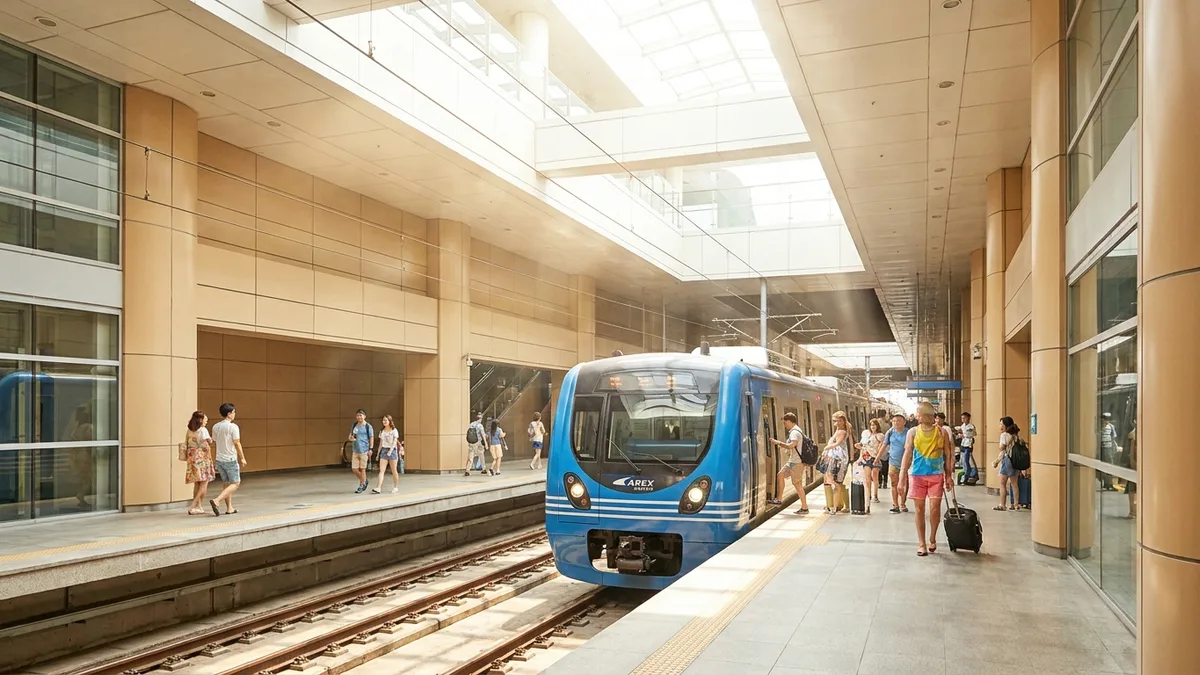
Like a regular subway, it stops at every station along the way — Gimpo Airport, Hongik University, Digital Media City, and more (14 stations total on the line). It takes longer, about 59–66 minutes to Seoul Station, but the fare is the lowest.
- Fare: about ₩4,750 (Terminal 1)–₩5,350 (Terminal 2) — transit-card rate, reflecting the June 2025 increase
- Service: comes very frequently, every 5–10 min
- Payment: just tag a transit card (like T-money) and board. You can also ride with a single-use transit card (deposit required separately)
If your accommodation sits on the airport railroad line — like Hongdae, Gongdeok, or Digital Media City — the All-Stop train is the most economical, with no transfer needed. At rush hour it can get crowded, making it awkward to store a large suitcase.
Where Do I Get a Transit Card? (Key Point for Foreigners)
Overseas-card payment at the new Seoul subway ticket machines (in 273 stations since March 2026) is for single-journey tickets and Climate Card short-term passes only. Topping up a regular T-money is possible through the Mobile T-money app (Mastercard, Amex, and UnionPay). On top of that, since July 2025 you can add T-money to your Apple Wallet, so you can tap and ride with an iPhone. Google Pay hasn't launched in Korea yet, so Android users are better off carrying a physical T-money card. Supported stations and card types change over time, so check the on-site notices.
③ Limousine (Airport) Bus — Straight to the Hotel or Attraction
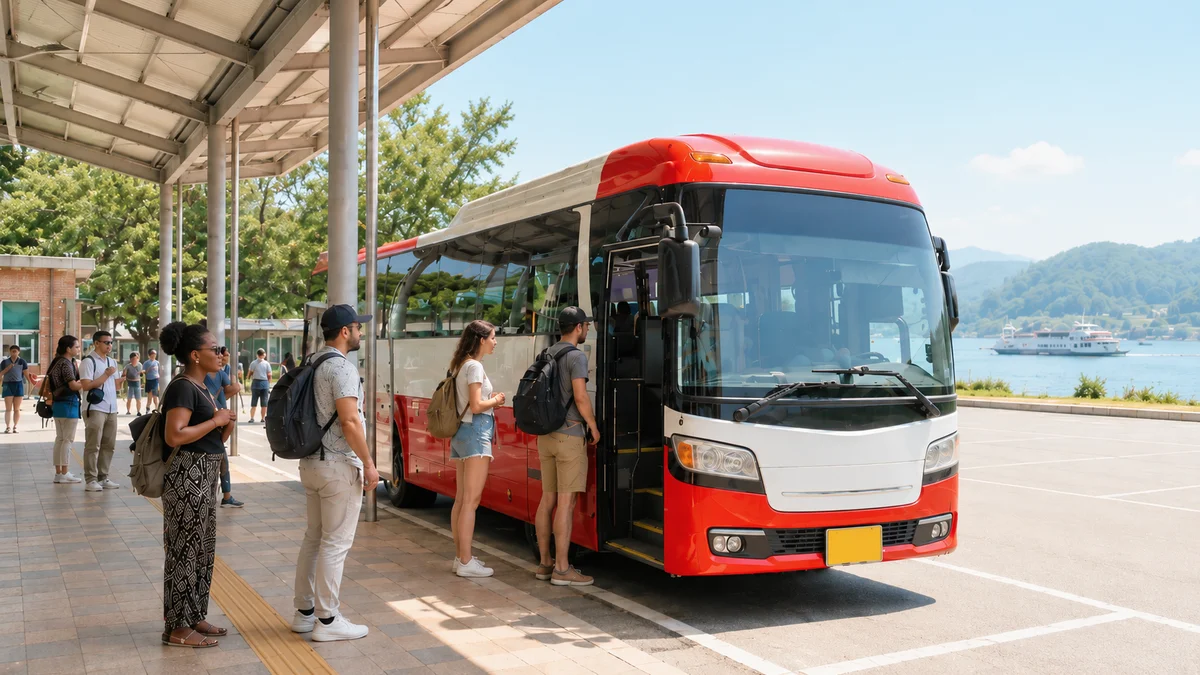
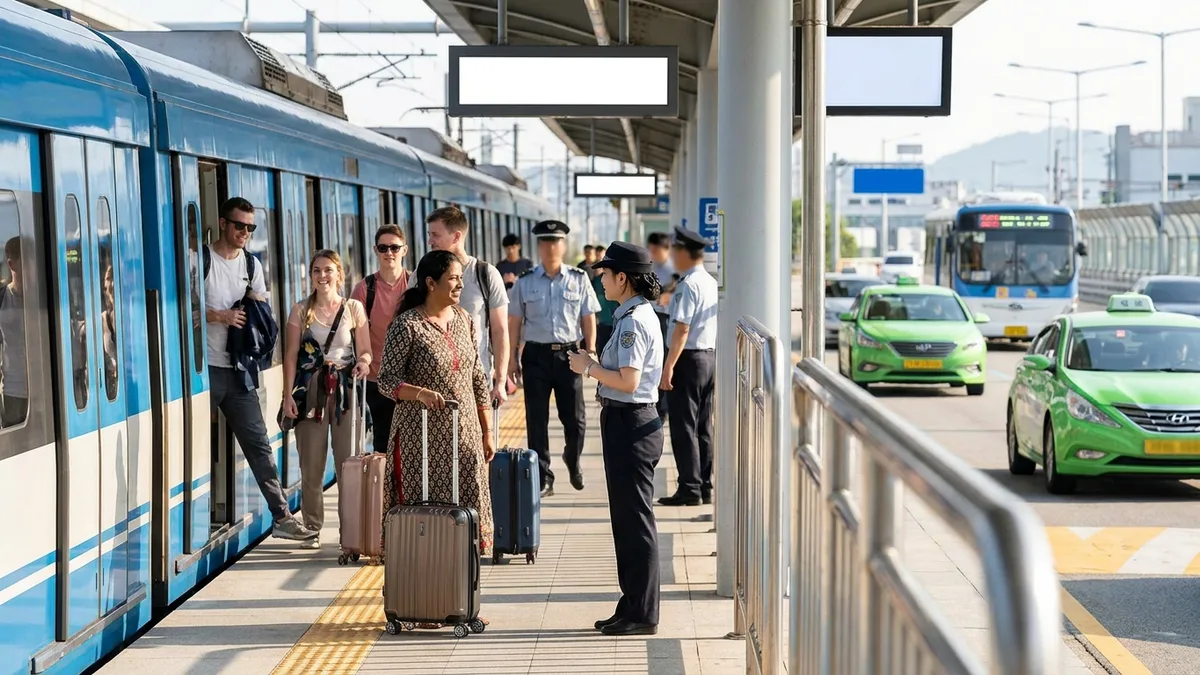
It takes you directly, with no transfer, right to the hotels and terminals in major areas like Myeongdong, Gangnam, and Dongdaemun. You can load large bags into the luggage compartment underneath, which is convenient when you have several suitcases.
- Fare: about ₩17,000 for standard, about ₩18,000 for premium (K-Limousine)
- Travel time: about 60–80 min (heavily affected by road congestion)
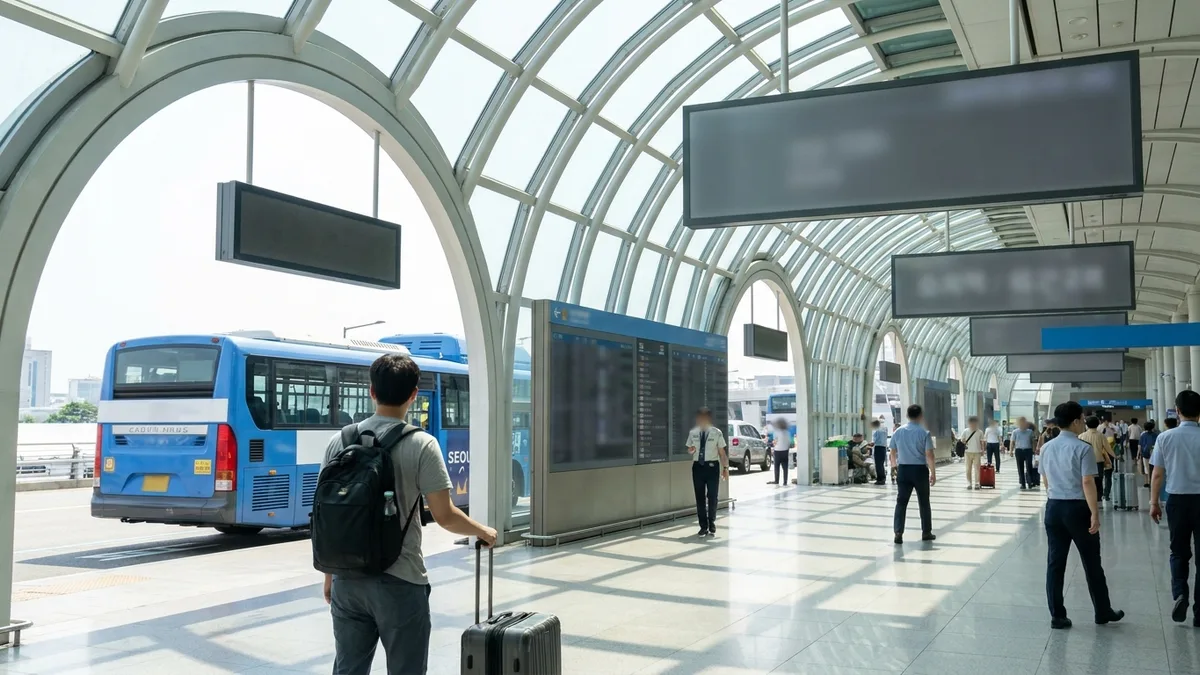
- Where to board: the bus platforms outside Incheon Airport Terminals 1 and 2. Routes differ by platform number, so check your destination's route first
- Buying a ticket: buy one at the ticket booth or vending machine next to the platform. Whether cards are accepted can vary by booth and by time, so it's safer to bring a little cash as well
Its strength is that it gets you straight from the airport to your hotel's doorstep in one go. On the downside, delays can be significant when traffic is bad, and if the route doesn't pass your accommodation, it can end up inefficient.
④ Taxi (Regular / International Taxi) — The Most Comfortable but Priciest
If you have a lot of luggage or are traveling in a group, a door-to-door taxi is convenient. But it's the most expensive.
- Regular taxi: about ₩65,000–75,000 to Myeongdong (about 60–70 min), about ₩55,000–65,000 to Hongdae. Since it's metered, it can run higher in traffic
- International taxi (for foreigners): flat rate for trips within the Seoul area — about ₩70,000–95,000 for a mid-size car, about ₩100,000–140,000 for a deluxe or large car (by destination zone, tolls separate). Drivers who speak English, Japanese, or Chinese are available, and even if rain or traffic stretches out the trip, you pay only the agreed amount. The advantage is that there's no meter fluctuation
- Note: in December 2025 the Incheon Bridge toll was lowered to about ₩2,000, so the total taxi fare is slightly lower than before
Taxis often get stuck at the calling and payment stages because you don't have a Korean phone number. For how to handle this, see the separate guide Calling a Taxi in Korea Without a Korean Phone.
Recommendations by Destination — Which One Should You Pick?
- Reaching the Seoul Station area quickly / transferring to KTX at Seoul Station: ① Express train
- Accommodation on the airport railroad line (Hongdae, Gongdeok, DMC, etc.) + saving on budget: ② All-Stop train
- Lots of luggage and a hotel in Myeongdong, Gangnam, or Dongdaemun: ③ Limousine bus
- Late-night arrival, large group, excess luggage, door-to-door: ④ Taxi (international taxi if you want a predictable price)
Want to handle everything from your first ride after landing in one app? Check out LACHA.
Built to work without a Korean phone number or bank account, with overseas payment methods like Alipay, WeChat Pay, and Apple Pay. Taxi hailing plus KTX, express bus, and airport railroad (AREX) booking — all in one app.
Download now


Frequently Asked Questions (FAQ)
Q1. Can I ride the airport railroad without a Korean phone number or bank account? A. Yes, you can. For the All-Stop train, tag a transit card or use a single-use transit card; for the Express train, buy a ticket at the booth, kiosk, or online. Foreign-card payment may or may not work depending on the card issuer and the kiosk, so it's safer to have cash or a transit card on hand too.
Q2. Can I really top up T-money with a foreign-issued card? A. Overseas-card payment at the new station ticket machines (273 stations since March 2026) is for single-journey tickets and Climate Card short-term passes only, so a regular T-money can't be topped up at those machines. Topping up a regular T-money is possible through the Mobile T-money app (Mastercard, Amex, UnionPay). Keep some cash on hand in case it doesn't work.
Q3. I arrived late at night and the airport railroad had stopped. What do I do? A. After the last train (Express around 22:50; the All-Stop train runs later), you can take a late-night limousine bus or a taxi. Operating hours change, so check the official timetable, and consider an international taxi, which has no price fluctuation.
Q4. I keep getting confused about where to board the Express vs. All-Stop train. A. The two trains use different floors and gates. At both Incheon Airport and Seoul Station, the signs mark "Express" and "All-Stop" separately, so head to the gate that matches the type of ticket you bought.
Q5. I have a huge amount of luggage — what's the most comfortable option? A. The limousine bus, where you load suitcases in the luggage compartment, or a taxi that takes you to the door. The All-Stop train is awkward for large luggage when it's crowded.
Note: The fares, operating hours, foreign-card support, and route information in this article are general guidance as of June 2026 and may differ from reality. Whether payment is accepted can vary by card issuer, terminal, and time, so we don't state it definitively. Before you travel, always check the official information from the Airport Railroad (airportrailroad.com), Incheon Airport (airport.kr), and the individual bus and taxi operators.