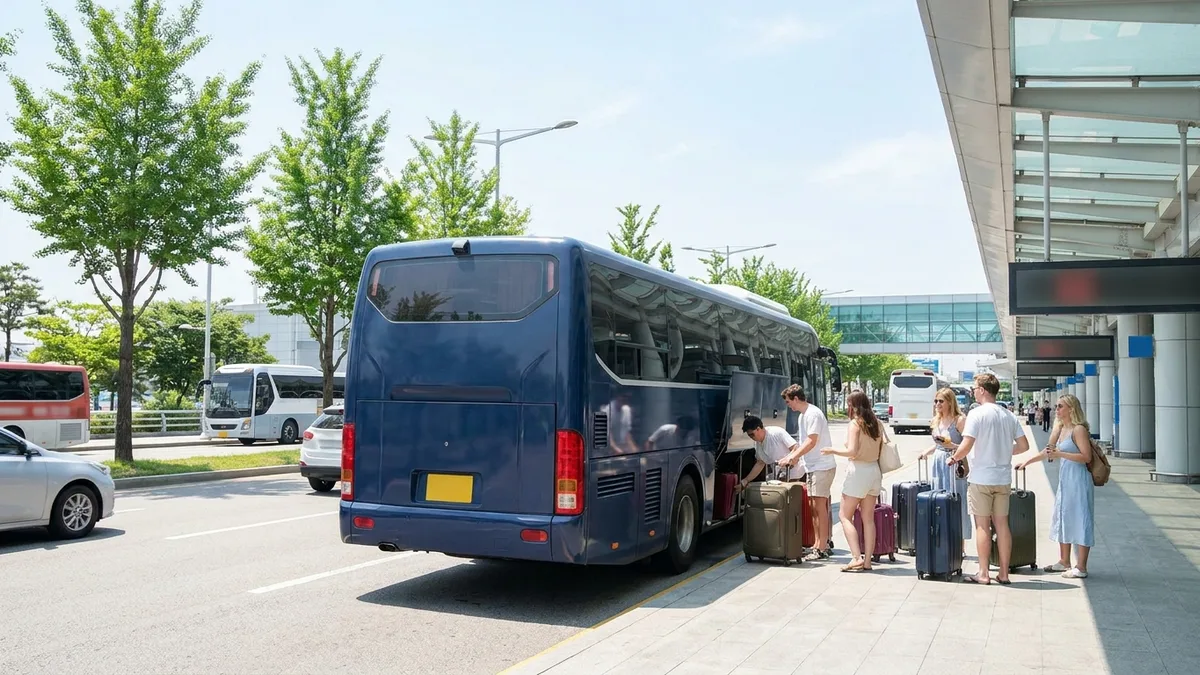
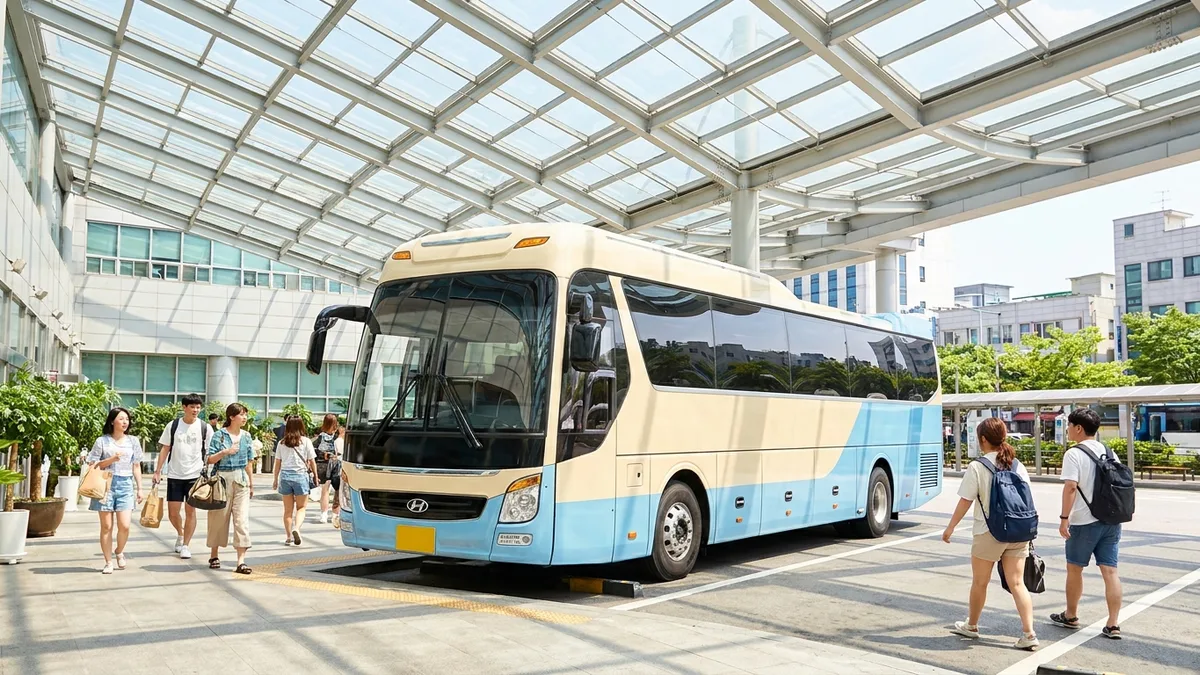
To take an intercity bus out of Seoul, the first thing you need to decide is which terminal to head to. Express Bus Terminal Station, Nambu Terminal, and Dong Seoul Terminal are each 30–40 minutes apart by subway.
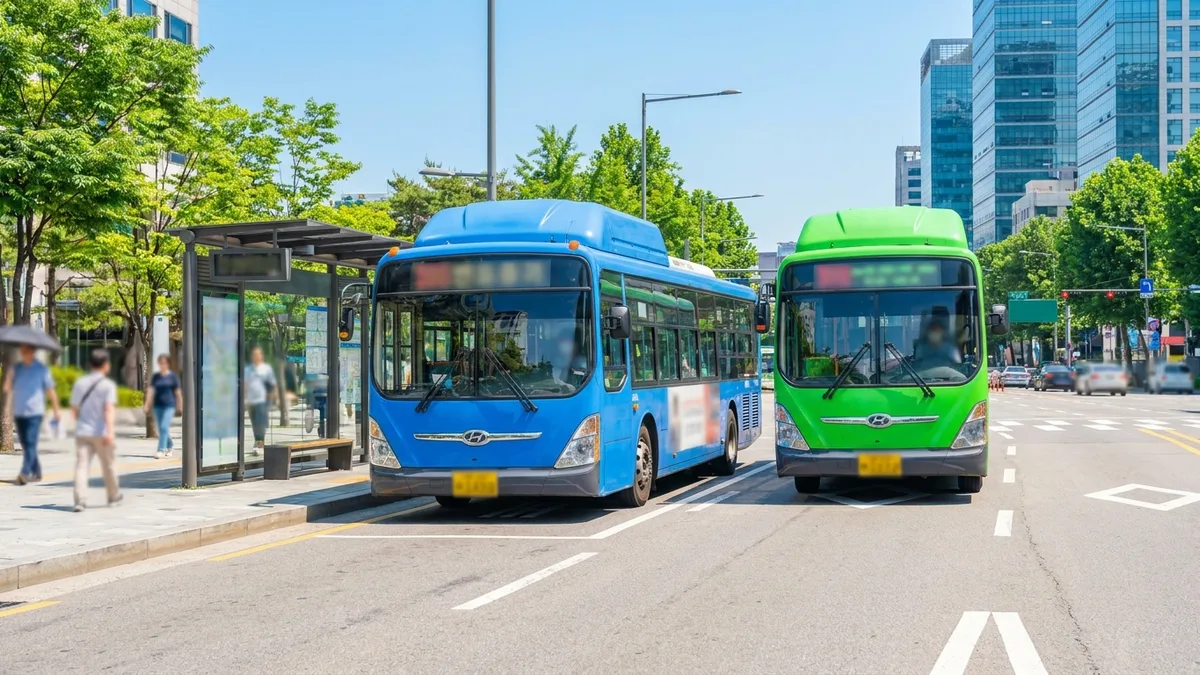
Korea's city-to-city buses split into two categories — "express buses" and "intercity buses." The booking apps are split too: express runs on kobus, while intercity runs separately on Bustago and TxBus. When you're heading to a small or mid-sized city, or a town or township that the KTX doesn't reach, you'll end up relying on this bus network — but at first it's confusing to know which app to use to buy a ticket for which terminal.
Below, we'll walk through it in order: the difference between express and intercity, the booking channels, seat classes and fares, refund rules, and the foreign-card payment issue that trips up foreigners most often. (Fares and policy figures are as of 2026-06. Routes and fares vary by operator and over time, so please check official channels before booking.)
1. Express Bus vs. Intercity Bus — Start With This Difference
The two often differ in their operators, their booking sites, and even the terminal you board from.
| Category | Express Bus | Intercity Bus |
|---|---|---|
| Main service | Direct routes between major cities (e.g., Seoul↔Busan) | Includes small/mid-sized cities and towns, with many stops in between |
| Governing body | Ministry of Land, Infrastructure and Transport (nationwide) | Licensed by each local government |
| Stops | Non-stop or minimal stops → generally faster | May pass through several places |
| Booking site | kobus.co.kr (integrated express bus booking) | bustago.or.kr / txbus.t-money.co.kr |
| Mobile app | Express Bus Mobile, T-money GO | Bustago, TxBus, T-money |
If you're moving quickly between big cities, it's likely an express bus; if you're heading into a small city, the countryside, or a tourist spot, it's more likely an intercity bus. Since the booking site depends on which category your destination route falls under, if you don't get search results on one site, check the other. (Source: VISITKOREA / verified 2026-06)
The Key Point: There Can Be More Than One Terminal
The most common mistake is assuming "there's just one terminal." In many cities, the express bus terminal and the intercity bus terminal are in separate locations.
- Seoul: Seoul Express Bus Terminal and Central City (Honam Line) are together at Express Bus Terminal Station on subway Lines 3, 7, and 9. But Nambu Terminal (Nambu Terminal Station on Line 3), which is intercity-focused, and Dong Seoul Bus Terminal (Gangbyeon Station on Line 2) are in entirely different locations. They can be 30–40 minutes apart by subway.
- Some cities like Gyeongju: the express and intercity terminals can be right next to each other.
Before buying a ticket, be sure to check the name of your departure terminal, and it helps to pin the exact location in Naver Map or KakaoMap.
2. Booking Channels — Web, App, and On-Site
Online (Web/App)
- Express bus: kobus.co.kr or the "Express Bus Mobile" app
- Intercity bus: bustago.or.kr or txbus.t-money.co.kr, the "Bustago" and "TxBus" apps
Both Bustago and TxBus support English, Japanese, and Chinese. Checking timetables, routes, and seats is perfectly doable for foreigners. The catch is that for the same route, some operators only appear on one of the sites — so if you don't see a route, check both sites. (Sources: bustago.or.kr, txbus.t-money.co.kr / 2026-06)
On-Site (Terminal Ticket Counter and Self-Service Kiosk)
Most terminals have both a staffed ticket counter and self-service ticketing machines (kiosks). In addition to cash and domestic cards, there are reports that foreign cards go through more successfully at the kiosk than online (see section 4 below).
Note: On-site ticketing at the terminal is often excluded from the online discounts offered on the website (with some exceptions, such as certain rear-seat bookings). If you want a discount, booking online is the better option. (Source: intercity bus user guide)
3. Seat Classes and Fares — Regular, Premium (Udeung), and Premium Plus
Intercity and express buses charge different fares depending on the seat class.
| Class | Seat layout | Features |
|---|---|---|
| Regular | 4 across (2+2) | Cheapest, most seats |
| Premium (Udeung) | 3 across (1+2) | Wider seats, fares about 1.5× those of regular |
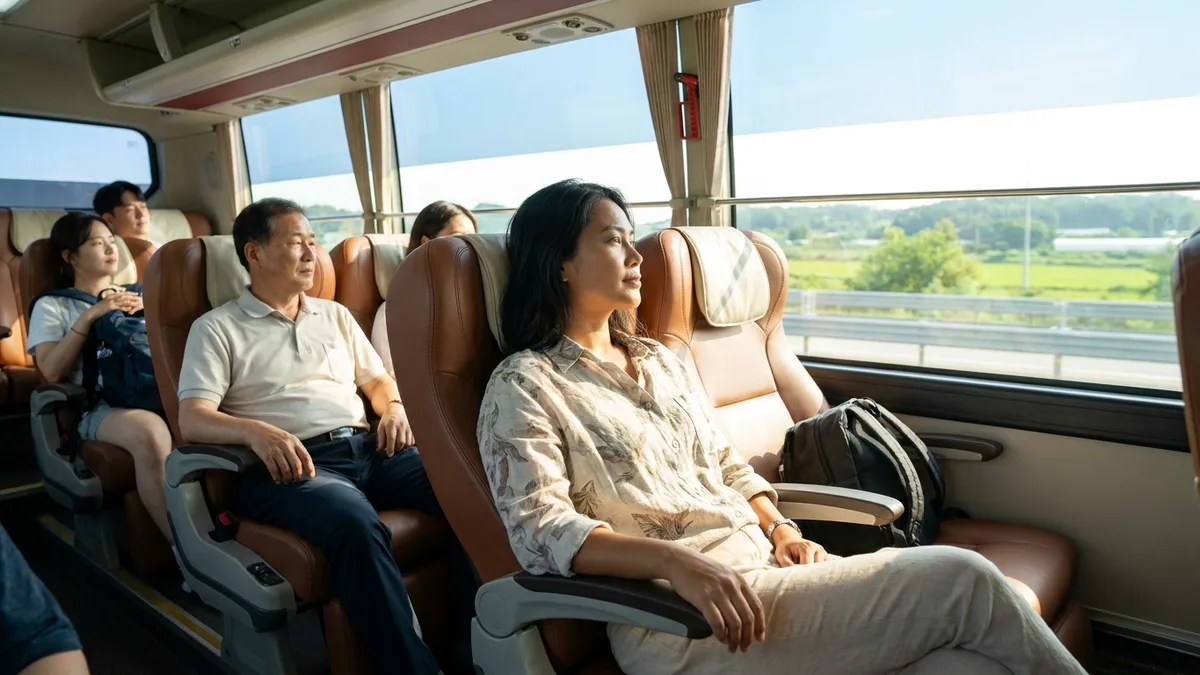
| Premium Plus | 3 across + personal monitor and extended recline | Top tier, offered on only some routes |
Even on the same stretch, fares differ significantly by class. Be sure to check the class and seat layout on the booking screen. Some intercity routes also offer discounts on premium and premium-plus seats. Specific fares vary by route, so treat the fare shown on the booking screen as the official reference.
4. The Biggest Hurdle for Foreigners — Foreign-Card Payment Issues
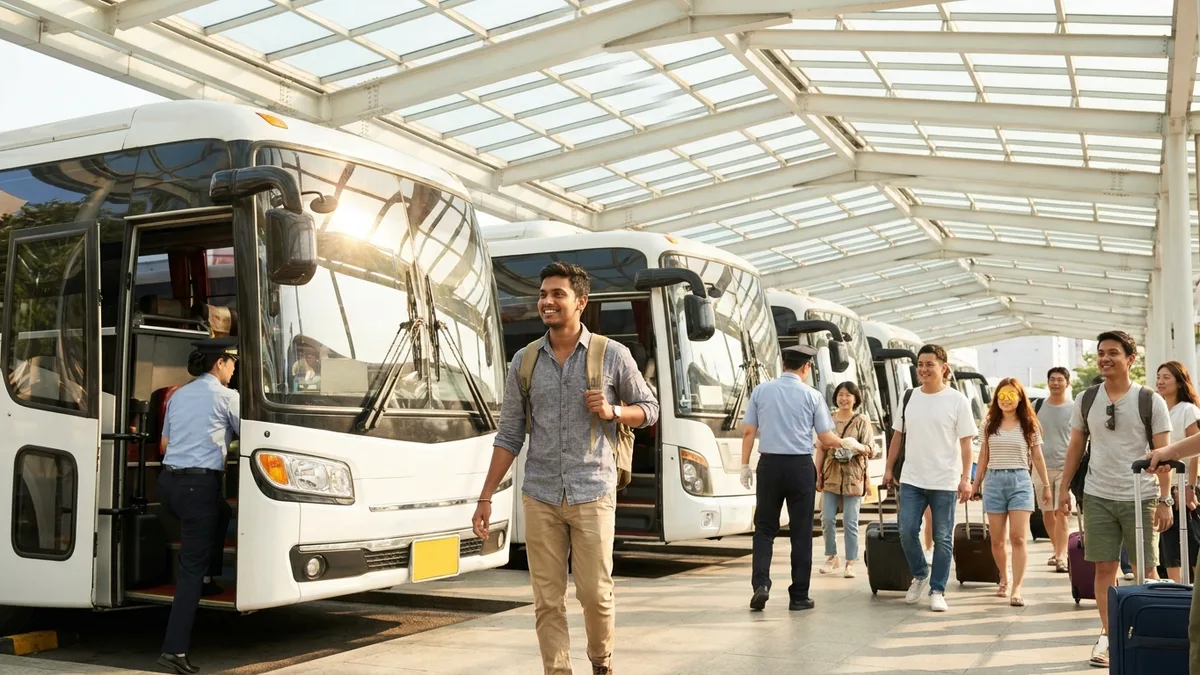
The problem foreign users run into most often is having a foreign-issued card (Visa, Mastercard, etc.) declined when booking online. It frequently gets stuck at the payment step because it isn't compatible with the identity-verification procedures (such as 3D Secure) in Korea's payment systems. App reviews repeatedly mention people borrowing a Korean card because their foreign card wouldn't work.
Here's a practical order of steps to try.
- On-site ticketing at the terminal: Even the same foreign card that was declined online sometimes goes through at the terminal ticket counter or self-service kiosk. Cash ticketing almost always works.
- Prioritize official sites: Rather than simple third-party agency sites, official channels like kobus.co.kr and bustago.or.kr — or an app designed with foreign payments in mind — are relatively more reliable.
- Use a foreigner-focused app: LACHA is designed so you can pay with overseas payment methods like Alipay and WeChat Pay, without a Korean bank account or phone-based identity verification. For express bus and KTX routes, booking through LACHA from the start is a simple way to avoid card declines.
In October 2025, the Seoul Metropolitan Government announced a plan to introduce "open loop," letting you pay city bus and subway fares directly with a foreign contactless (EMV) card (Phase 1: installing EMV modules on city bus payment terminals in 2025–2026, with full rollout targeted for 2030). Note, though, that this concerns "fare payment on boarding" for Seoul city buses and subways, and it's separate from ticketing at intercity and express bus terminals — please check on-site whether foreign cards work for terminal ticketing. (Sources: Seoul Metropolitan Government, The Korea Times)
Want to search and book KTX and express buses in one app? Check out LACHA.
Built to work without a Korean phone number or bank account, with overseas payment methods like Alipay, WeChat Pay, and Apple Pay. Taxi hailing plus KTX, express bus, and airport railroad (AREX) booking — all in one app.
Download now


5. Refund and Cancellation Fee Rules
It's good to know the refund rules in case you buy the wrong ticket or your plans change.
- Canceling up to 2 days before departure: full refund with no fee
- Canceling 1 day before departure through the day of departure: a portion of the fare is deducted as a fee
- Within 1 hour of ticketing on the day of departure: no cancellation fee (for reserved-seat tickets)
- Canceling between departure and the scheduled arrival time: a 60% fee during the period of 2026.5.1 – 2027.4.30
- After the scheduled arrival time has passed: no refund, even for an unused ticket
(Source: integrated intercity bus booking user guide and cancellation fee information. Fee rates and periods are subject to change, so before canceling please treat the information on the booking screen as the official reference.)
6. A Step-by-Step Flow for First-Time Users
- Check whether your destination is express or intercity → search on kobus (express) or bustago/TxBus (intercity)
- Confirm the departure terminal's name and location → save it in a map app in advance (a single city can have several terminals)
- Choose date, time, and class (Regular / Premium / Premium Plus) → select your seat
- Attempt payment → if a foreign card is declined, switch to on-site ticketing at the terminal
- Board → board with a mobile QR/booking number or a paper ticket; arriving 10–15 minutes before departure is recommended
Frequently Asked Questions (FAQ)
Q1. Can I book intercity bus tickets in English? Yes, you can. Bustago (bustago.or.kr) and TxBus (txbus.t-money.co.kr) support English, Japanese, and Chinese. Checking timetables, routes, and seats works fine in English; where people get stuck is mainly the payment step.
Q2. What do I do if online booking with a foreign card doesn't work? On-site ticketing at the terminal (ticket counter or self-service kiosk) is the most reliable option. The same card that was declined online sometimes goes through at the kiosk, and cash ticketing almost always works. Another approach is to use an app like LACHA that handles payment with foreign payment methods without separate identity verification.
Q3. Are the express bus terminal and the intercity bus terminal in the same place? It depends on the city. Some places, like Gyeongju, have them right next to each other, but in Seoul the Express Bus Terminal Station (express and Honam) and Nambu Terminal / Dong Seoul Terminal (intercity) are far apart. Be sure to check the name of your departure terminal.
Q4. How do I choose a seat class? There are Regular (4 across), Premium (3 across, wider), and Premium Plus (3 across + amenities), and fares differ. For long-distance or overnight trips, choose Premium or higher; to save money, choose Regular.
Q5. If I book a ticket but can't take the bus, do I get a refund? Up to 2 days before departure you get a full refund. The closer it gets to departure, the larger the fee, and once the scheduled arrival time has passed there's no refund. Before canceling, check the fee information on the booking screen.
Note: The fares, classes, refund rules, payment availability, terminal locations, and other details in this article are general information compiled as of 2026-06, and may vary by route, operator, terminal, card issuer, and over time. Whether foreign cards can be used for payment cannot be stated definitively and differs by terminal and by time. Before actually booking and boarding, please be sure to check the latest guidance from official channels such as kobus.co.kr, bustago.or.kr, and txbus.t-money.co.kr.