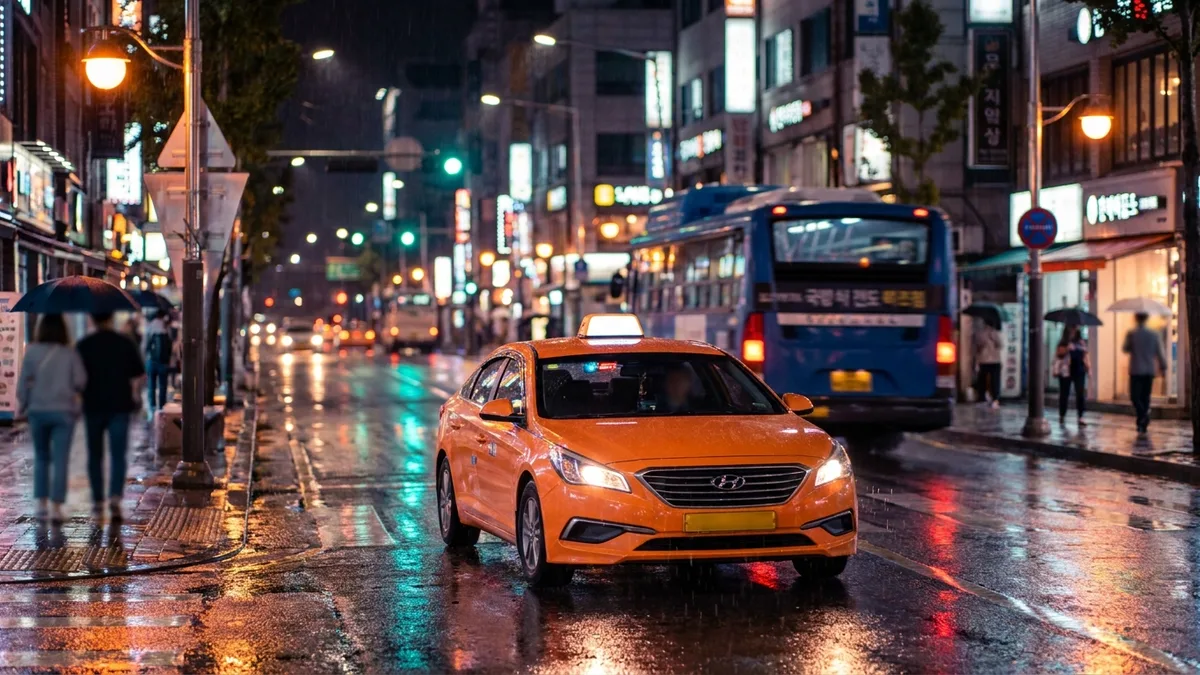
You hail a taxi in Gangnam at 11 p.m. and the first number on the meter reads ₩6,700 instead of ₩4,800. No need to be alarmed. Between 11 p.m. and 2 a.m., Korean taxis add 40% to the base fare.
Korean taxi fares are actually pretty simple. Base fare + distance/time metering + surcharges (late-night, out-of-area) — that's all three pieces of it. And you don't need to tip.
The fares and time bands below are as of 2026-06 and may change under local government notices. When you ride, check the meter, the in-car fare chart, and the app's estimated fare yourself.
1. Seoul Taxi Base Fare (as of 2026-06)
| Item | Standard (mid-size) taxi | Deluxe / jumbo taxi |
|---|---|---|
| Base fare | ₩4,800 | ₩7,000 |
| Base distance | Within 1.6km | Within 3km |
| Distance metering | ₩100 per 131m | ₩200 per 151m (example) |
| Time metering (below approx. 15 km/h) | ₩100 per 30 seconds | ₩200 per 35 seconds (example) |
All you need to know is when the meter climbs fast.
- Distance/time metering: When the car moves at a normal speed, the fare goes up by distance (₩100 every 131m); when it slows down in traffic, it goes up by time (₩100 every 30 seconds). That's exactly why the number jumps unusually fast in congested stretches.
- Deluxe/jumbo taxis often have a black body with a yellow rooftop light. They have a higher base fare of ₩7,000 (3km) than standard taxis, but in return the cars are roomier and many drivers wear suits.
- Busan and Incheon have the same ₩4,800 base fare as Seoul, while Daegu is ₩4,500 — so the base fare and surcharge rules differ slightly from city to city. Even for the same distance, the total can vary by city.
2. Late-Night Surcharge — the Key Variable in Korean Taxi Fares
Since December 2022, Seoul has run a time-tiered late-night surcharge. The surcharge applies from 10 p.m. to 4 a.m., with a higher rate only during the busiest middle-of-the-night window.
| Time band | Surcharge rate | Base fare after surcharge (standard taxi) |
|---|---|---|
| 22:00 – 23:00 | 20% | About ₩5,800 |
| 23:00 – 02:00 | 40% | About ₩6,700 |
| 02:00 – 04:00 | 20% | About ₩5,800 |
| 04:00 – 22:00 (daytime) | None | ₩4,800 |
The surcharge is multiplied by the same rate not just on the base fare but on the entire distance/time metered amount.
So if you take a long ride between 23:00 and 02:00, it comes out to nearly 1.4x the daytime fare. Deluxe/jumbo taxis get a flat 20% surcharge from 22:00 to 04:00 (late-night base fare ₩8,400). Unlike mid-size taxis, there's no 40% window.
Right after midnight is the most expensive, and empty taxis are also scarce. Move before 23:00, or catch the last subway train, and your cost drops sharply.
3. Out-of-Area (Beyond City Limits) Surcharge and Tollgates
If a Seoul-licensed taxi leaves the Seoul service area and heads into Gyeonggi or Incheon, an "out-of-area surcharge" applies.
- The fare for the portion outside the service area is typically increased by about 20%.
- Going out of the area late at night stacks the two surcharges (e.g., 40% late-night + 20% out-of-area). It can end up quite a bit higher than the daytime fare.
- Expressway/toll-road tolls are usually the passenger's responsibility. For destinations that pass through toll roads — like Incheon Airport — the toll is added separately, so it's good to ask the driver before you get in.
4. Call Fee (App Hailing Fee)
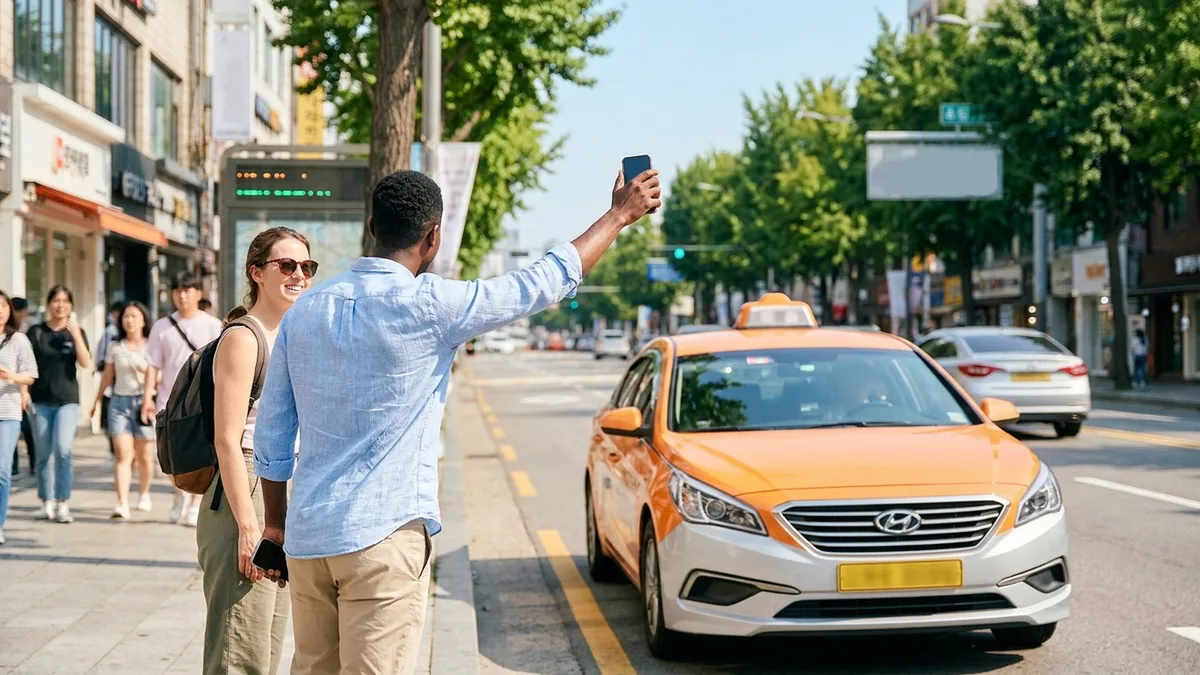
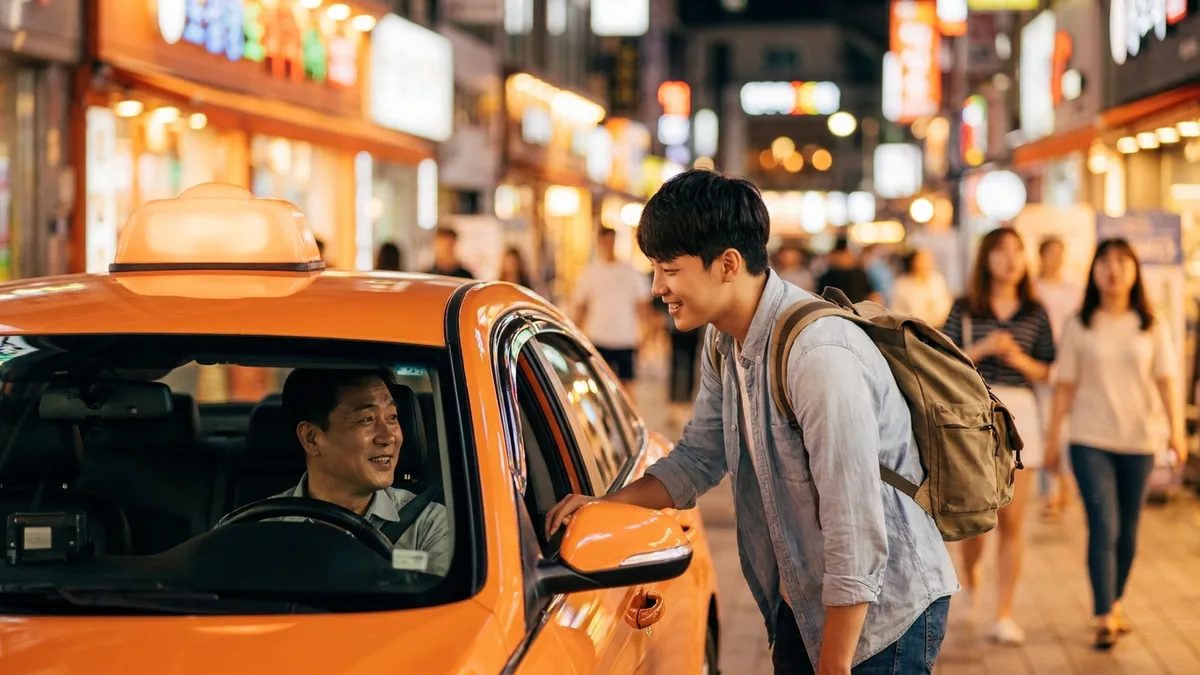
There's no call fee if you flag one down on the street by raising your hand. It applies when you call one through an app.
| Type of call | Approximate call fee |
|---|---|
| Standard call | Free – ₩1,000 |
| Fast dispatch / priority call (e.g., Kakao T Blue) | ₩1,000 – up to ₩5,000 (demand-flexible) |
| Phone call (daytime / nighttime) | About ₩1,000 daytime / about ₩2,000 nighttime |
The call fee is added on top of the meter fare separately. The estimated fare the app shows before you call usually includes the call fee, so just check that number before you call.
5. Tipping Culture — You Don't Need To
Korea has no tipping culture, taxis included. Just pay the meter amount (plus call fee and tolls) and you're done.
- The same goes for restaurants, hotels, and salons. Tipping tends to make people feel awkward, if anything.
- When you pay in cash and there's an awkward bit of change under ₩1,000, saying "it's fine (keep the change)" is a natural gesture of goodwill — but not an obligation.
- In any case, most payments are automatic by card or app, so no change comes up in the first place.
6. How Foreigners Can Check Fares and Pay
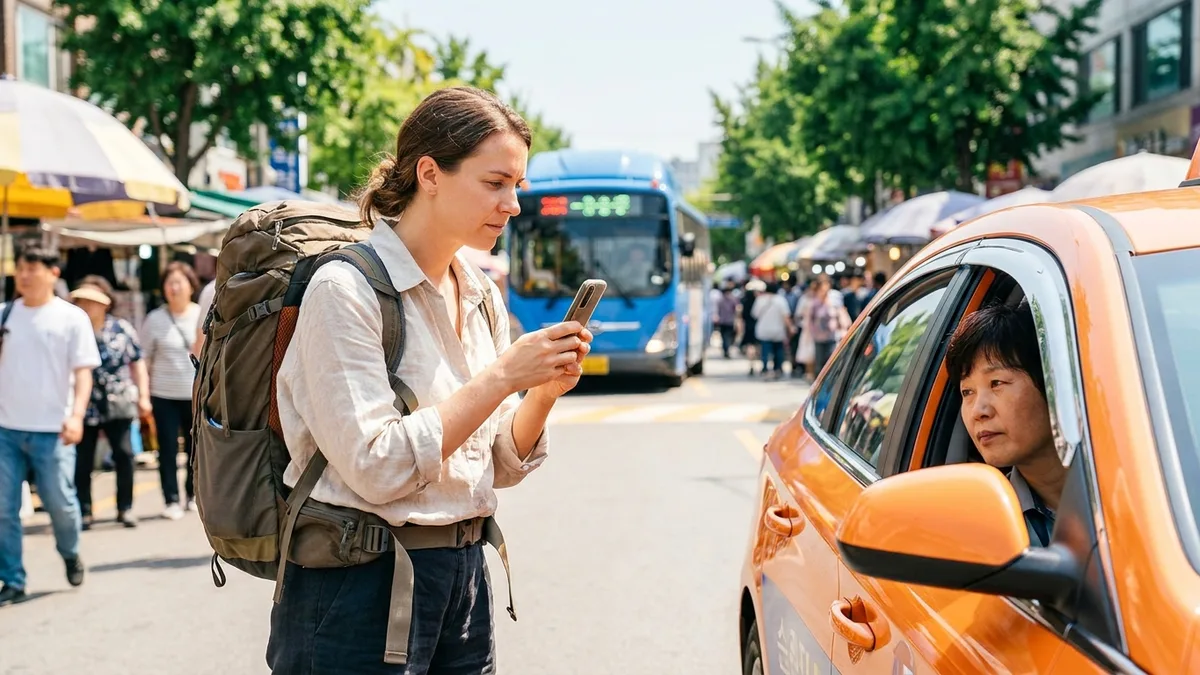
The biggest worry is really just one thing: "I don't have a Korean card or phone number — how do I call one and pay?"
- Hailing apps: Enter your destination in an app like Kakao T and an estimated fare shows up in advance. It's the surest way to reduce the shock of overcharging or surcharges. That said, you may get stuck at the foreign-card registration or identity-check step, or run into payment errors (it varies by card issuer and timing).
- In-car card terminal: An overseas-issued credit/debit card sometimes works, but approval may be declined depending on the vehicle or card issuer.
- Cash: Always accepted. Just keep some small change on hand.
If you want to hail a taxi without a Korean phone number or identity verification, you can call one with LACHA — an app designed specifically for foreigners — and pay with overseas payment methods like Alipay and WeChat Pay.
Want to get a taxi without a Korean phone number? Check out LACHA.
Built to work without a Korean phone number or bank account, with overseas payment methods like Alipay, WeChat Pay, and Apple Pay. Taxi hailing plus KTX, express bus, and airport railroad (AREX) booking — all in one app.
Download now


Frequently Asked Questions (FAQ)
Q1. How much is the Seoul taxi base fare? A. It's ₩4,800 for a standard (mid-size) taxi (within 1.6km) and ₩7,000 for a deluxe/jumbo taxi (within 3km). After that it's metered by distance and time.
Q2. From what time does the late-night surcharge apply, and how much? A. In Seoul it applies from 22:00 to 04:00. It's 20% for 22:00–23:00 and 02:00–04:00, and 40% during the busiest 23:00–02:00 window. The surcharge is multiplied across the entire fare.
Q3. Is there an extra charge if I go from Seoul out to Gyeonggi Province? A. Yes. An out-of-area surcharge (typically about 20%) applies to the portion outside the service area, and toll-road tolls are usually the passenger's responsibility. Late at night, the two surcharges can stack.
Q4. Do I need to tip in Korean taxis? A. No. Korea has no tipping culture, so you only pay the meter amount (plus call fee and tolls).
Q5. Can I pay for a taxi with a foreign card? A. It may work, but it can be declined depending on the card issuer, vehicle, and timing. It's safest to keep cash on hand as well, or to use an app like LACHA that lets you pay with overseas payment methods without identity verification.
Note: The fares, surcharges, time bands, and policies here are a summary of public information as of 2026-06, and may change with local government notices or app policy updates. Please check the exact fare directly against the in-car fare chart, the meter, and the estimated fare in an official hailing app.
Sources: Seoul Metropolitan Government traffic information (news.seoul.go.kr), Seoul price information (sftc.seoul.go.kr), Seoul's English guidance (english.seoul.go.kr), and other public materials (confirmed 2026-06).