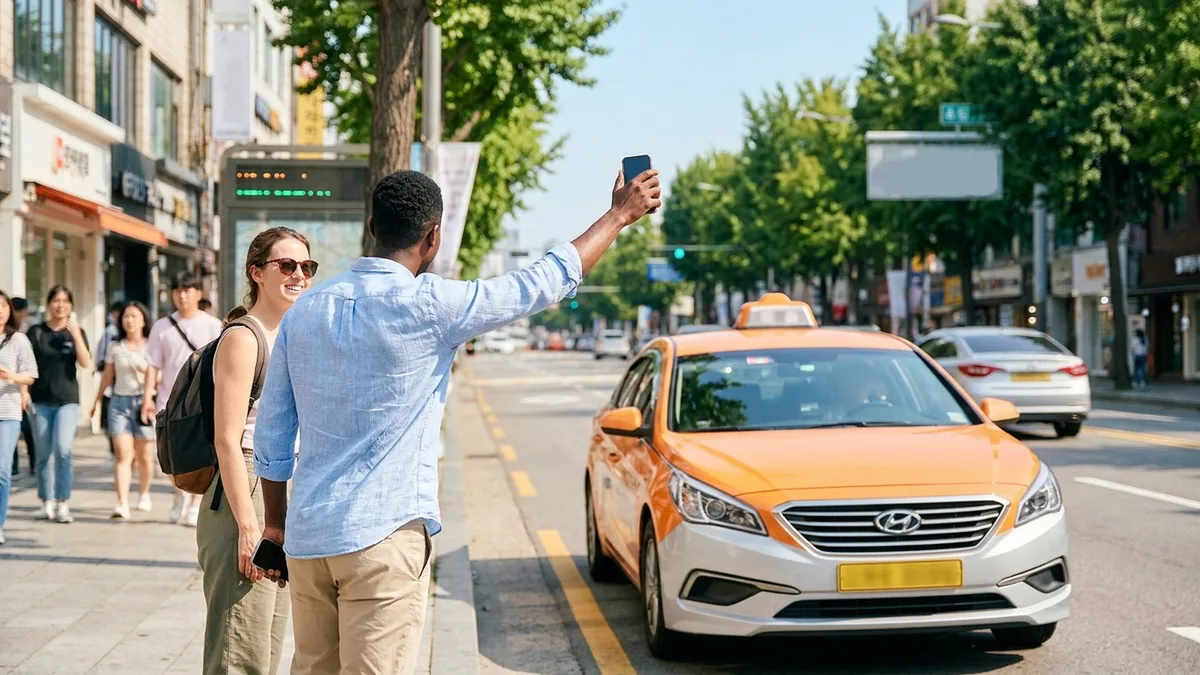
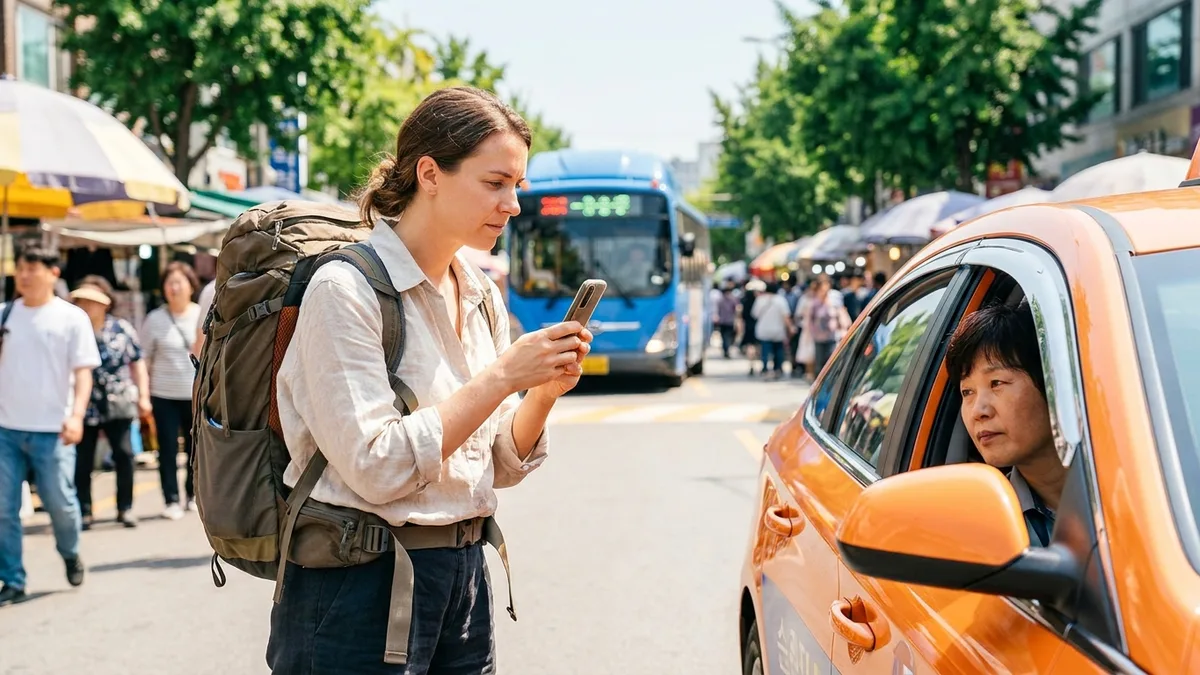
About one in five tourist complaints filed with the Korea Tourism Organization (KTO) in 2024 were taxi-related. Korean taxis are generally safe and clean, but tricks aimed at foreign tourists — not using the meter, overcharging, and taking deliberate detours — still happen. Especially in places crowded with foreigners like airports, Myeongdong, Hongdae, and Gangnam, it's fairly common for a driver to say "You're not Korean, right?" and quote a fare higher than normal.
Below we'll break down what counts as a normal fare versus a scam, and how to report it when a dispute comes up, all in numbers and steps.
※ The fares and rules below are as of 2026-06. Rates vary by local government notices and by time period, so before you board, just check the fare shown on the meter together with the app's estimated fare.
First, the basics: what a normal fare looks like (Seoul)
To judge whether you're being overcharged, you first need to know what "normal" costs. Seoul's standard taxi fare structure roughly works like this (it varies slightly by region and time period).
| Category | Standard |
|---|---|
| Standard taxi base fare | About ₩4,800 (base distance 1.6km) |
| Distance/time add-on | About ₩100 per 131m or per 30 seconds |
| Deluxe/large taxi base fare | ₩7,000 (higher rate) |
| Late-night surcharge (22:00–04:00) | 20% added to base and distance fare |
| Peak late-night hours (about 23:00–02:00) | Highest surcharge band (about 40%) |
| Out-of-zone surcharge | Added when leaving the operating zone boundary (Seoul, etc.) |
There's just one thing to remember here. The fare is calculated and displayed automatically by the meter.
Charging more based on the number of passengers is not a normal fare. Whether there are 2 people or 4, the meter amount is the same, and only toll fees (if any) and the late-night surcharge are legitimately added on top.
Common scam types foreigners run into
1) No meter / "It's broken"
This is the most common one. The driver sets off without turning on the meter, then upon arrival quotes an arbitrary amount like "₩50,000." If they don't turn on the meter or claim it's broken, just get out right there.
2) Demanding a flat (haggled) fare
This is when, before you board, the driver quotes a flat fare like "₩X0,000 to Gangnam" instead of using the meter. Unless it's an official system like the airport flat-rate fare (explained later), in-town standard taxis are supposed to run on the meter.
3) Deliberate detours
If a driver decides you're a foreigner who doesn't know the way, they may take a long way around to inflate the fare. If you keep the route open on a map app at the same time, it becomes obvious on the spot.
4) Unlicensed vehicles, call-vans, and touts
Someone who approaches you inside an airport or terminal saying "I'll take you cheap" may be an unlicensed vehicle (a fake taxi) or a call-van charging excessive fares. It's best to board only at official taxi stands.
5) Change and payment tricks
This is when a driver insists on cash only and gives back too little change, or claims the card terminal "doesn't work." Official taxis are close to being required to accept card payment.
The easiest way to "prevent" disputes: hail with an app
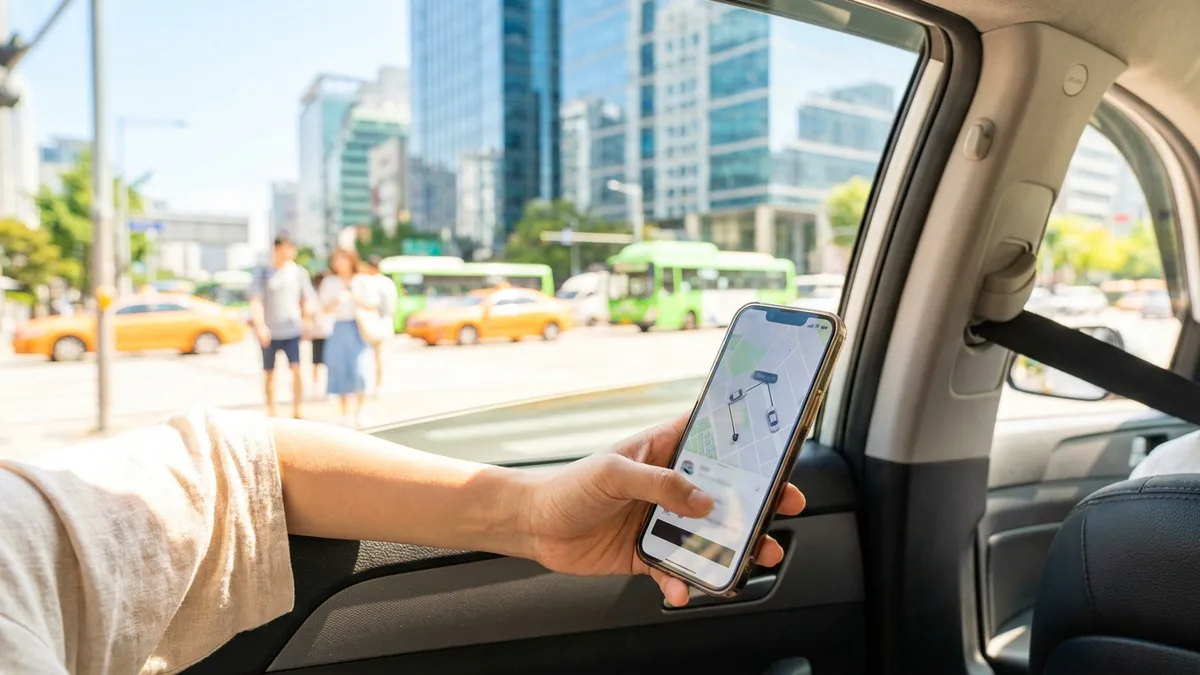
Taxis you flag down on the street leave a lot of room for driver discretion and touting. When you book ahead with an app, the start, destination, and fare are all recorded, which sharply reduces that room.
- The start, destination, route, and estimated fare are recorded in the app → detours are hard to pull off
- The vehicle number and driver info are saved automatically → it's easy to secure evidence when reporting
- Automatic settlement by card or easy pay → blocks cash-change tricks
The catch is what happens when a foreigner tries to use Korean taxi/transit apps. Many people get stuck at Korean mobile-number identity verification or at registering a Korean card. In that case, a foreigner-focused app like LACHA — designed so that no separate identity verification is required under the standard process, letting you hail and pay right away with a foreign payment method — becomes an alternative.
At the airport: telling flat-rate fares from fake taxis
Incheon Airport / Gimpo Airport ↔ Seoul can differ from the in-town meter. The zone flat-rate applies to Seoul's designated International Taxi (intltaxi, ☎1644-2255), while standard metered taxis are not flat-rate and instead charge the meter fare + out-of-zone surcharge (about 20% for Seoul taxis).
| Vehicle type (International Taxi zone flat-rate) | Incheon Airport ↔ Seoul |
|---|---|
| Midsize | About ₩70,000–95,000 (by destination zone, tolls extra) |
| Deluxe/large (Black) | About ₩100,000–140,000 |
Flat-rate routes have no haggling to begin with. So a pitch about "a special discount just for you" is actually a warning sign in itself.
- Board only at official taxi stands. You can just walk past anyone who approaches you touting inside the terminal.
- Extra charges like luggage, the late-night surcharge, or tolls may apply, so it's good to confirm the total before you board.
When you're scammed or in a dispute: how to report
Don't panic — just move in the order of evidence → report.
Step 1 — Secure evidence (on the scene)
- Photograph the vehicle number (license plate) and the driver's license/permit on the dashboard.
- Be sure to get a receipt (automatic with card payment; you can also request one with cash).
- If you can, photographing the meter screen and route screen helps too.
Step 2 — Reporting channels (foreigner-friendly)
- 1330 (Tourism Interpretation Service / Korea Travel Hotline): 24-hour consultation and reporting connected in multiple languages including English, Chinese, and Japanese.
- 120 Dasan Call (Seoul): Seoul city civil complaints and taxi-inconvenience reports.
- QR quick reporting: Since 2025, Seoul has been handing out QR survey cards in English, Chinese, and Japanese at places like the Incheon and Gimpo airport departure areas, so you can easily report things like no-meter use or overcharging.
- Email reporting (Seoul city): Just send photos of the vehicle number and receipt to
happyride@seoul.go.kr. - If you used an app to hail: reporting through the app's ride history or customer center gets processed faster, based on the records.
Step 3 — Penalties
Seoul caught 345 violations from 7,435 on-site interviews with foreigners in 2024, and in 2025 it strengthened a 100-day special crackdown and QR reporting. When caught, drivers and operators can face administrative penalties such as fines, penalty surcharges, business suspension, or license revocation.
Checklist for riding safely
- As soon as you board, check whether the meter is on (if not, get out)
- Check the estimated fare and route in a map/hailing app in advance
- When possible, use app hailing over street-flagging (it leaves a record)
- Board only at official taxi stands, and ignore touts inside the terminal
- Prefer card/easy pay; with cash, check the receipt and change
- If something feels off, photograph the vehicle number and receipt and report to 1330
How taxi apps differ (fact-based)
- Taxi-hailing apps such as Kakao T and Uber are widely used in Korea, but foreigners sometimes get stuck at the Korean mobile verification or Korean-card registration steps (it varies by app and time period).
- LACHA is built with foreign use in mind, designed so that no separate identity verification is required under the standard process, letting you hail and pay with a foreign payment method — so the barrier to entry tends to be low.
Features and fares change over time, so when comparing, check each app's latest guidance.
Frequently Asked Questions (FAQ)
Q1. What do I do if the driver says "the meter is broken" and quotes a flat fare? A. In-town standard taxis are supposed to run on the meter. If they demand an arbitrary amount citing a breakdown, it's safest to get out. If you've already traveled, secure the vehicle number and receipt and report to 1330.
Q2. I can't speak Korean — can I still report? A. Yes, you can. 1330 Tourism Interpretation Service connects in multiple languages including English, Chinese, and Japanese, and Seoul's QR survey reporting is also offered in multiple languages.
Q3. I didn't get a receipt — can I still report? A. Just the vehicle number (license plate), the date/time of the ride, and the route is enough to file. And if you hailed with an app, your app ride history is strong evidence.
Q4. They're quoting me ₩60,000–100,000+ at the airport — is that a scam? A. For Incheon Airport ↔ Seoul, the International Taxi zone flat-rate is about ₩70,000–95,000 for midsize and about ₩100,000–140,000 for Black, while standard metered taxis charge meter + out-of-zone surcharge. Within this range it may be normal. That said, if excessive extras beyond the late-night surcharge and tolls are added, be suspicious, and check that you used an official taxi stand.
Q5. I'm nervous about disputes and want to avoid taxis. What are the alternatives? A. Hailing ahead with an app records the fare and route, which greatly reduces the room for disputes. If you don't have identity verification or a Korean card, one option is to hail using a foreign payment method through a foreigner-oriented app (such as LACHA).
Want to get a taxi without a Korean phone number? Check out LACHA.
Built to work without a Korean phone number or bank account, with overseas payment methods like Alipay, WeChat Pay, and Apple Pay. Taxi hailing plus KTX, express bus, and airport railroad (AREX) booking — all in one app.
Download now


Note: The fares, systems, and reporting procedures in this article are compiled from public information as of 2026-06, so they may vary by region, vehicle type, time period, and policy. For actual fares, the meter display and official notices take priority, and whether payment is accepted may differ by card company, vehicle, and time period. For disputes and legal matters, please check the guidance of official channels such as 1330 (Tourism Interpretation Service), 120 Dasan Call, and the relevant local government. This article is for general informational purposes and is not legal advice.