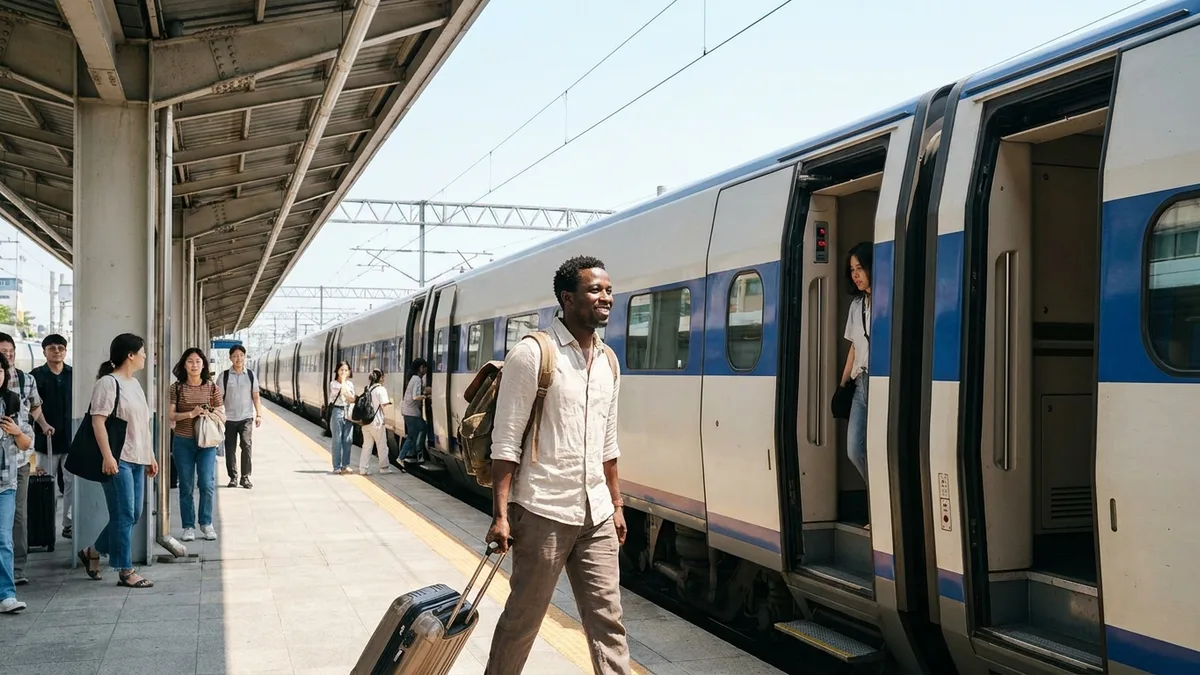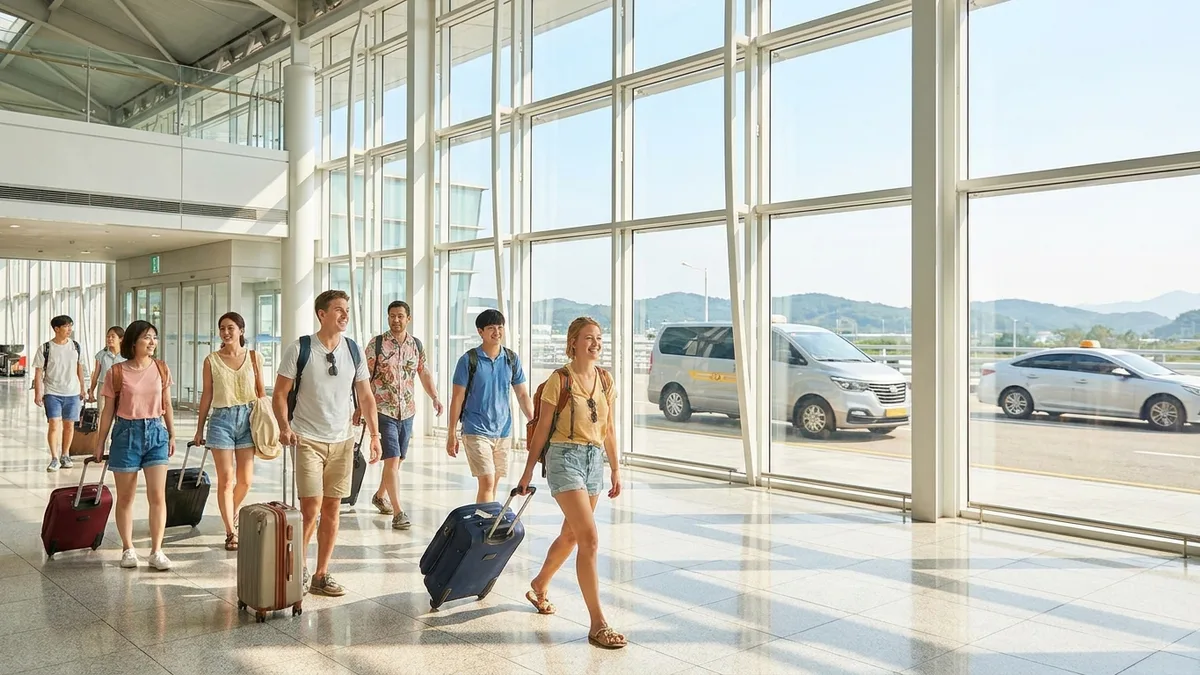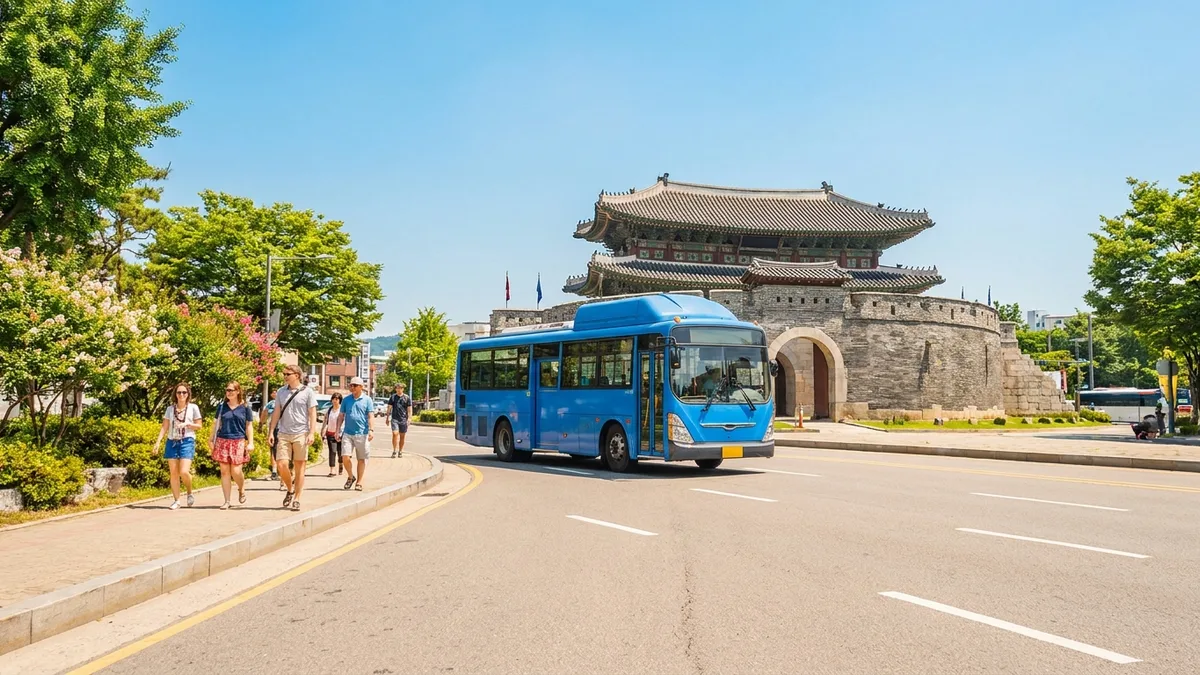
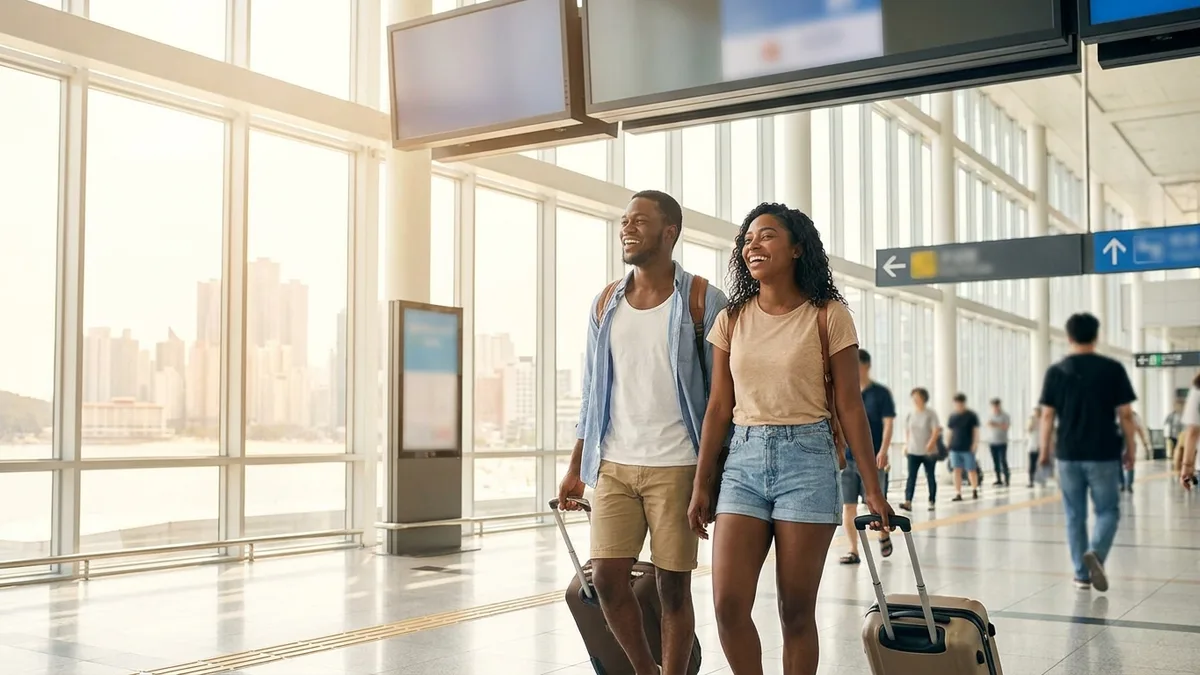
"With five days in Korea, should I just see Seoul, or should I go all the way to Busan?" This is the question first-time foreign travelers ask most often. Since the KTX connects Seoul and Busan in about 2 hours 17 minutes, you can comfortably cover both cities within five days if you plan it as 2 days in Seoul + a KTX transfer + 2 days in Busan + 1 buffer day for travel.
What actually trips people up isn't "where to go" but "how do I book tickets and how do I top up a transit card?" Foreigners without a Korean bank account or phone number often run into a wall where 3D Secure authentication for an overseas card fails in the Korail app, or their card just doesn't work at a subway ticket machine. Below, we follow an actual route and, section by section, walk through how to handle transport and payment—and what to fall back on when you get stuck.
Fares, operating hours, and station names are as of 2026-06. Fares, timetables, and operating policies change frequently, so please double-check the official channels of Korail and each facility before booking or boarding.
The Full 5-Day Route at a Glance
| Day | City | Key Route | Main Transport |
|---|---|---|---|
| Day 1 | Seoul | Gyeongbokgung → Bukchon Hanok Village → Insadong → Myeongdong | Subway Lines 3 & 4, walking |
| Day 2 | Seoul | N Seoul Tower → Hongdae → Dongdaemun/night market | Subway Lines 2 & 4, cable car |
| Day 3 | Seoul→Busan | Morning KTX transfer → Busan check-in → Gwangalli | KTX, Busan Subway Line 2 |
| Day 4 | Busan | Gamcheon Culture Village → Jagalchi/Nampodong → Haeundae | Busan Subway Lines 1 & 2, village bus |
| Day 5 | Busan→Departure | Haedong Yonggungsa or free morning → airport | Busan Subway, airport bus/taxi |
Use the KTX only for the intercity Seoul↔Busan trip; within each city, subway + bus + walking are the basics. If you depart directly from Busan Gimhae Airport on the last day, you don't need to return to Seoul, which keeps the route clean.
Days 1–2 — Seoul (Traditional + Modern)
Day 1: Traditional Course
- Gyeongbokgung: Opens at 9 a.m. Admission is about ₩3,000, and it's free if you wear a hanbok. At 10 a.m. the Gwanghwamun Royal Guard changing ceremony takes place.
- Bukchon Hanok Village: About a 15-minute walk from Gyeongbokgung, or take Anguk Station on Line 3. ⚠️ Since late 2024, some alleys have a visit restriction from 5 p.m. to 10 a.m. (to protect residents), and violating the hours may make you subject to a fine. It's safest to visit in the early afternoon.
- Insadong → Myeongdong: From Anguk Station (Line 3) with one transfer to Myeongdong Station (Line 4), it's about 10 minutes. For dinner, Myeongdong street food is a great choice.
Day 2: Modern Course
- N Seoul Tower: Reachable by cable car or about a 30-minute walk. The observatory is about ₩29,000 for adults (based on 2026 official pricing; there are also discounted online-booking options).
- Hongdae: Hongik University Station on Line 2. You can enjoy vintage shops, busking, live music, and karaoke (about ₩15,000–20,000 per room per hour).
- Travel tip: It's efficient to group Insadong, Bukchon, Myeongdong, and Hongdae into walking-friendly clusters. KakaoMap or Naver Map will guide you through subway lines and transfers in real time.
Seoul Transit Cards — A Big Change in 2026
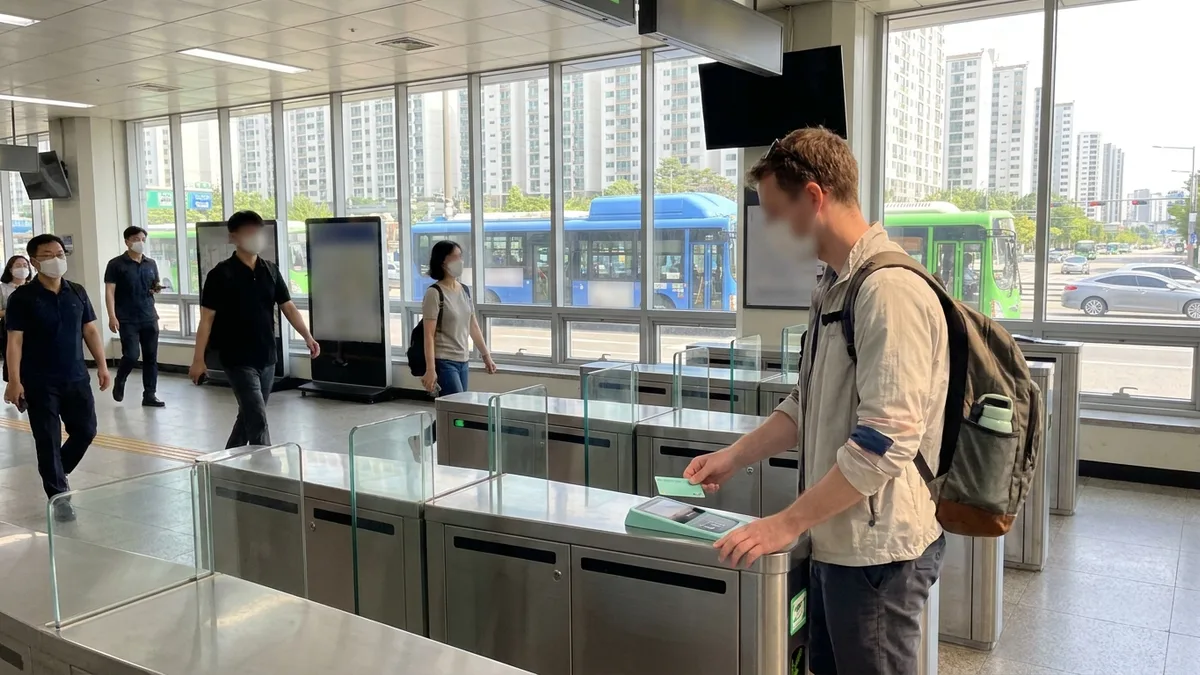
From March 17, 2026, new kiosks (about 440 units) were installed at 273 stations on Seoul Subway Lines 1–8. There, you can buy and top up transit cards and issue Climate Card tourist passes directly and cash-free using overseas Visa, Mastercard, JCB, UnionPay, and Amex cards. Major hubs include Seoul Station, Myeongdong, Hongik University, Gangnam, Jamsil, and Itaewon.
| Option | Best For | Notes |
|---|---|---|
| Regular T-money card | Stays of a few days to a few weeks | Buy with cash at convenience stores (CU, GS25, 7-Eleven), then top up |
| Climate Card tourist pass | Short trips focused on Seoul | 1-, 2-, 3-, 5-, and 7-day passes; can be issued with an overseas card at the 273-station kiosks |
| Single-journey ticket | For occasional rides | Deposit-based system |
Not every station and every overseas card works 100% of the time. To be safe, keep some small cash (₩10,000–20,000) in your wallet in case something doesn't go through.

Day 3 — Traveling to Busan by KTX
Fare & Travel Time
| Section | Travel Time | One-Way Standard Class Fare |
|---|---|---|
| Seoul → Busan (KTX) | About 2 hours 17 min (some trains run into the ~2 hour 40 min range) | About ₩59,800 |
The standard first-class fare is ₩83,700 and standard class is ₩59,800 (weekday and off-peak discounted trains are cheaper).
Booking opens about one month before departure. During holidays like Seollal or Chuseok, and on weekends, popular time slots can sell out 3–4 weeks in advance, so it's best to book early.
KTX Booking for Foreigners — What Gets Blocked
The biggest wall overseas-card users hit is 3D Secure authentication at the payment step. When you enter an overseas card number into the KorailTalk app, it often stalls on loading, and if 3D Secure isn't enabled by your issuing bank, the authentication itself fails.
There are four ways to handle this.
- Korail Global (English) website — Book as a non-member with passport information and an overseas card. Many reviews say it's more stable in a desktop browser. Even here, you can still get blocked by 3D Secure.
- KorailTalk app — Supports English, Chinese, and Japanese. The downside is that card payments frequently get blocked.
- Integrated apps that support foreign payment methods — Apps like LACHA let you book without a Korean phone number or identity verification, paying with Alipay, WeChat Pay, or Apple Pay.
- On-site ticket office — Show your passport and buy at a Seoul Station counter. This is the most reliable, but your desired time slot may be sold out.
Enter the English name printed on your card exactly, including spaces and hyphens. Even a single wrong letter can cause the payment to fail. Whether an overseas card payment goes through can vary by card issuer, station, and timing, so it's hard to say for certain.
Want to handle everything from your first ride after landing in one app? Check out LACHA.
Built to work without a Korean phone number or bank account, with overseas payment methods like Alipay, WeChat Pay, and Apple Pay. Taxi hailing plus KTX, express bus, and airport railroad (AREX) booking — all in one app.
Enter code GUIDE3 at sign-up for 3,000P instantly
Download now


After Arriving in Busan (Day 3 Evening)
Once you get off at Busan Station, take Subway Line 1 to your accommodation. The Seomyeon and Nampodong areas are convenient for transit. Busan also accepts T-money / Cashbee transit cards, which you can buy and top up at convenience stores (CU, GS25, 7-Eleven).
For the first evening, Gwangalli Beach is a great choice. On the roughly 1.4 km crescent-shaped beach you can see the night view of Gwangan Bridge, and on Saturday nights there's a drone show (March–September 20:00–22:00, October–February 19:00–21:00).
Day 4 — Busan's Core Day
| Time | Place | Getting There |
|---|---|---|
| Morning | Gamcheon Culture Village (a 1950s refugee settlement turned colorful art village) | Subway Line 1 to Toseong Station → village bus, about 15 min |
| Lunch | Jagalchi Market · Nampodong (seafood · BIFF Square) | Walking · Subway Line 1 |
| Afternoon | Haeundae Beach · Haeundae Market | Subway Line 2 to Haeundae Station, about 20 min |
| Evening | Haeundae Blueline Park (Sky Capsule · Beach Train) | Beachside stroll route |
In Busan, the subway is the most convenient, followed by the bus. For poorly connected spots, use a taxi. Taxis also accept T-money for payment.
Day 5 — Wrapping Up + Departure
- If you have time in the morning, it's nice to visit Haedong Yonggungsa (a temple on the sea) before heading to the airport.
- If you depart directly from Gimhae International Airport, you don't need to return to Seoul. You can use an airport bus, or a combination of the Busan–Gimhae Light Rail Transit + a taxi.
- Before departure, you can get a refund on your transit card balance at a convenience store (there's a small fee).
Rough 5-Day Transport Cost (Per Person)
| Item | Amount |
|---|---|
| KTX Seoul→Busan one-way, standard class | About ₩59,800 |
| Seoul subway & bus (2 days) | About ₩6,000–10,000 |
| Busan subway & bus (2 days) | About ₩6,000–10,000 |
| Airport transfer | About ₩7,000–25,000 |
This is a transport-only reference figure excluding admission, meals, and lodging; the actual amount varies depending on your route and discount passes.
Frequently Asked Questions (FAQ)
Q1. Is 5 days enough to see both Seoul and Busan? A. If you stick to the highlights, it's enough. A setup of 2 days in Seoul + 2 days in Busan + 1 travel/buffer day is typical. If you want to add cities like Gyeongju or Jeonju, we recommend 7 days or more.
Q2. I don't have a Korean phone number or bank account—can I still book KTX tickets? A. Yes, you can. You can use non-member booking (passport information + overseas card) on the Korail English website/app, or an on-site ticket office. That said, overseas cards often get blocked at 3D Secure authentication, so it's a good idea to keep an app that supports foreign payment methods or on-site ticketing as a backup.
Q3. Do foreign cards really work at Seoul subway ticket machines? A. Since March 2026, new kiosks at 273 stations on Lines 1–8 support Visa, Mastercard, JCB, UnionPay, and Amex. Not every station and every card works all the time, so it's wise to keep some small cash on hand as well.
Q4. Which is faster, the KTX or a plane? A. Pure flight time is under an hour, but once you add airport access, check-in, and waiting, the KTX (about 2 hours 17 minutes), which connects city-center station to city-center station, is often faster in total time.
Q5. Can I use my Seoul T-money card as-is in Busan? A. Yes, you can. T-money and Cashbee are compatible nationwide, so a card you topped up in Seoul can be used as-is on Busan's subway, buses, and taxis.
Note: The fares, travel times, station names, operating hours, and overseas-card support in this article are based on the time of writing, 2026-06, and may change according to policy updates by Korail, Seoul Metro, Busan Transportation Corporation, and each facility. Whether a payment will go through can vary by card issuer, station, and timing and cannot be stated for certain, so please be sure to check the latest information through official channels before booking or boarding. This article is intended to provide general travel information and does not guarantee any specific payment or booking outcome.