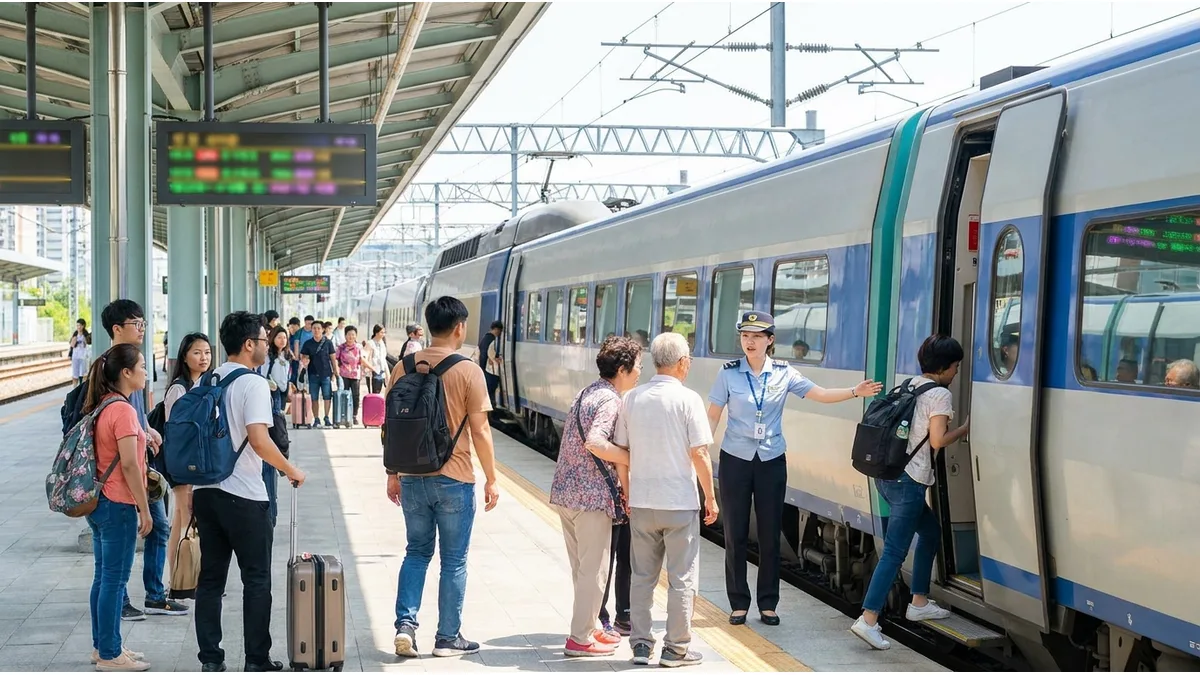
The fares, times, and routes in this article are as of 2026-06, so they may change depending on the actual booking time, train service, and seat class. Please always do a final check on the official KORAIL Talk (KTX) and SRT channels.
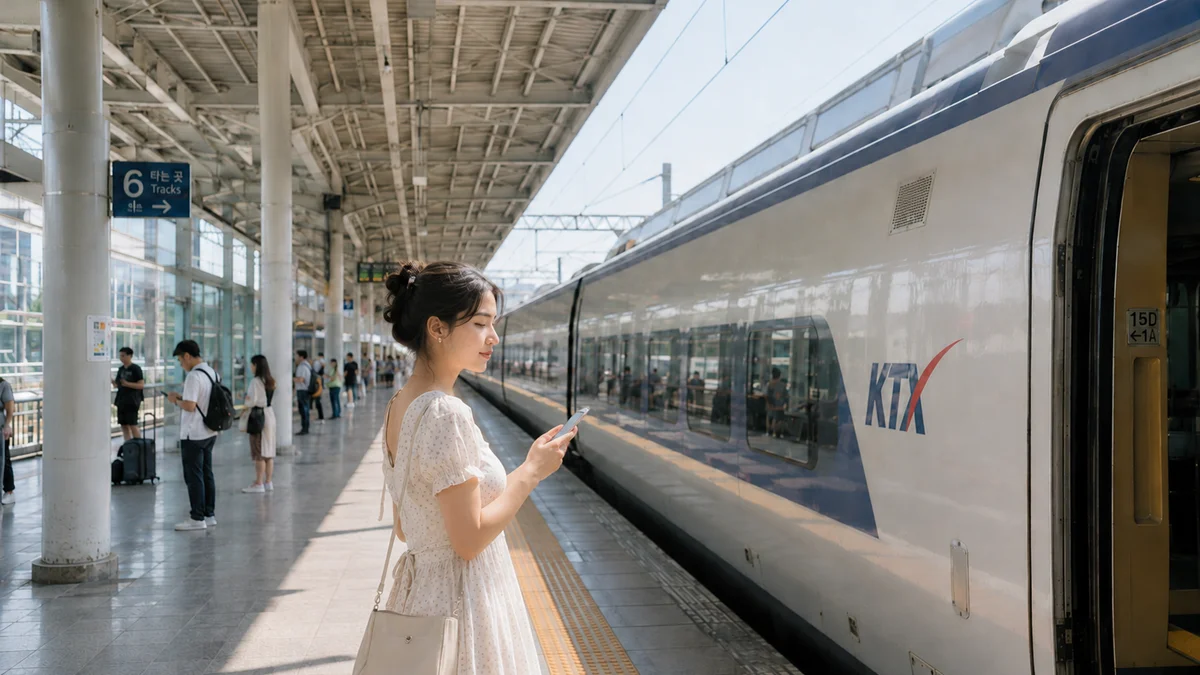
They look alike, share similar names, and both run at speeds of around 300 km/h — but KTX and SRT are actually two separate high-speed trains run by different companies. KTX departs from Seoul Station and Yongsan Station, while SRT departs from Suseo Station. They use separate booking apps and websites, and SRT is usually about 5–10% cheaper.
For a foreigner, the number-one deciding factor is surprisingly simple. If you're staying in Gangnam or Jamsil, SRT from Suseo Station is closer; if you're near Seoul Station, Myeongdong, or Hongdae, KTX is closer.
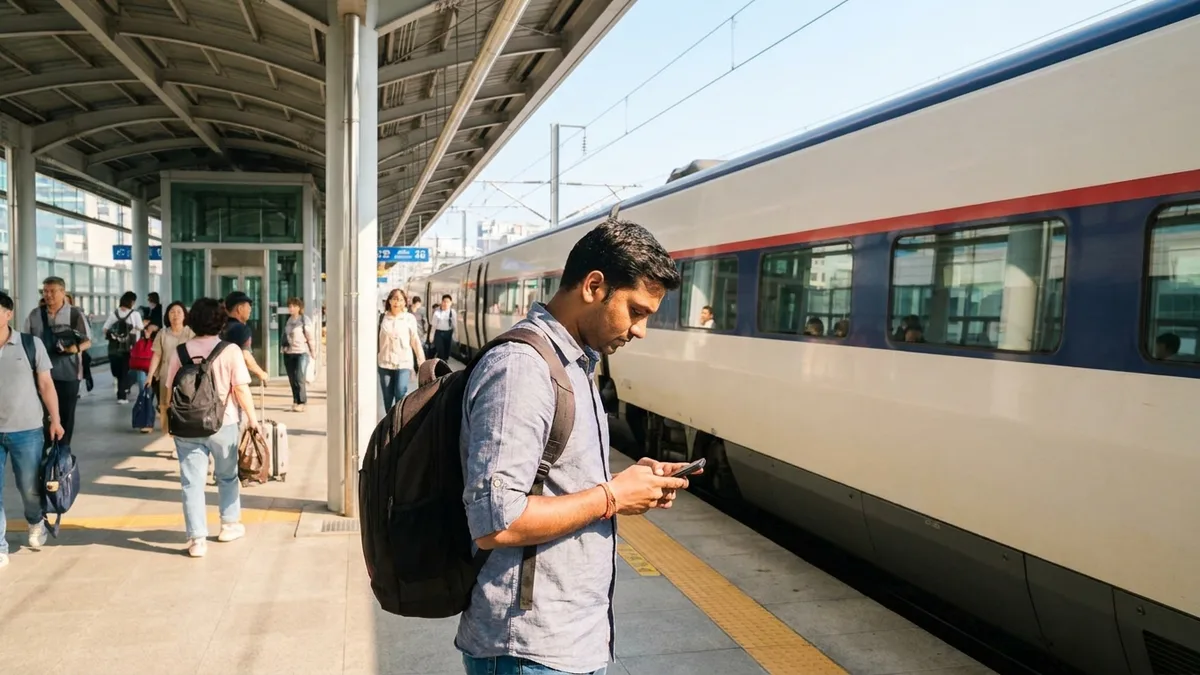
The real headache comes at the next step: payment. When you enter a foreign-issued card without a Korean phone number or Korean card, it often gets stuck at the identity verification step.
SRT and KTX at a Glance
The first thing to note is that they are two separate trains run by different companies. KTX is operated by KORAIL (Korea Railroad Corporation), while SRT is run by a separate company called SR. Because of this, their booking apps and websites are also different.
| Category | KTX | SRT |
|---|---|---|
| Operator | KORAIL | SR |
| Seoul-area departure station | Seoul Station, Yongsan Station | Suseo Station (Suseo) |
| Main routes | Gyeongbu Line (Busan), Honam Line (Mokpo/Gwangju), Gangneung/Donghae (Gangwon), Jinju/Yeosu, and more nationwide | Centered on the Gyeongbu Line (Busan) and Honam Line (Mokpo/Gwangju), plus limited service on the Gyeongjeon Line (Jinju), Jeolla Line (Yeosu), and Donghae Line (Pohang) |
| Fare level | Standard fare | About ₩7,000–11,000 cheaper than KTX (about 5–10%) |
| Booking app | KORAIL Talk | SRT app / English web |
| English booking | Supported on app and English web | Supported on English web (app English is limited) |
By number of routes alone, KTX has a far wider reach. SRT is concentrated on the Busan, Mokpo, and Gwangju directions.
The Departure Station Is the Biggest Difference
In practical terms, the most important difference is where the departure station is located.
- KTX: Departs from Seoul Station and Yongsan Station — convenient to reach from downtown Seoul and the northwestern part of the city.
- SRT: Departs from Suseo Station — closer for those staying in the southeastern part of Seoul, such as Gangnam, Jamsil, and Songpa. Suseo Station connects to Subway Line 3, the Suin-Bundang Line, and the GTX-A line, which was expanded in 2026.
In the end, "where you're staying" is the top factor in your choice. If you're near Myeongdong, Hongdae, or Seoul Station, go with KTX; if you're near Gangnam or Jamsil, SRT works well.
Fares and Travel Time
The standard one-way fare for a KTX Economy Class seat from Seoul to Busan is ₩59,800 (First Class ₩83,700). Weekday and off-peak discount trains can be cheaper than this. On the same route, SRT is usually about ₩7,000 cheaper (Suseo–Busan Economy Class ₩52,600).
Travel time is similar for both, at around 2 hours 10–45 minutes. Since Suseo Station is physically a little closer to Busan than Seoul Station, some SRT services are 7–10 minutes faster. That said, once you add the time it takes to get from downtown to Suseo Station, the difference you actually feel isn't large. It makes sense to look at where you're staying first.
2026 Changes — Integrated KTX/SRT Operation (Important)
A major change is underway right now. The government, along with KORAIL and SR, is moving toward gradually integrating the two systems.
- Cross-operation and coupled operation in effect: A pilot cross-operation began on February 25, 2026, so you can already board KTX at Suseo Station and SRT at Seoul and Yongsan Stations (on some applicable services). Since May 15, coupled operation — where KTX and SRT are joined into a single train — has also been running.
- Fare unification and discount: A discount of about 10% has been applied to the fares of coupled-operation trains and KTX services departing from or arriving at Suseo Station, bringing them in line with SRT fare levels. However, trains with this 10% discount are excluded from mileage accrual, and the mileage accrual rate for the newly introduced SRT routes has not yet been finalized.
- Full integration timeline: The government is aiming to complete the integration by September 2026.
(Source: korea.kr Policy Briefing, sedaily, electimes, 2026)
The integration is happening in stages, so the scope of what applies changes over time. To see which operator's app shows which trains, please check the official KORAIL Talk and SRT channels.
How Foreigners Can Book
The core concern is just one: "Can I complete payment without a Korean phone number or Korean card?"
Booking KTX (KORAIL)
- You can book through the KORAIL Talk app or the English website. The app supports English.
- In some cases, you can pay with guest booking + passport information + a foreign-issued card. The problem is that with foreign cards, payment often gets blocked at the 3D Secure (identity verification) step. Success depends on your card issuer, the country of issue, and the timing.
- If payment is blocked, you can also book through a foreigner-focused app like LACHA, paying with an overseas payment method and no identity verification.
Booking SRT (SR)
- The most reliable route is the official English website at
https://etk.srail.kr/main.do?language=EN. Switch the language to English at the top right. - If you select "Foreigner" at the personal information step, you can proceed with passport information, and payment with foreign-issued cards such as VISA, MasterCard, and JCB is supported (per SR's official guidance).
- The SRT mobile app has limited English support. The English pages on the PC/mobile web tend to be more reliable for foreigners.
(Source: srail.or.kr, 2026)
When You Get Stuck at the Payment Step — Using LACHA
The common sticking point across these official channels is foreign-card 3D Secure verification failures and the identity verification step for those without a Korean phone number. Depending on the timing, card issuer, and station, it may or may not go through.
LACHA is an app designed specifically for foreigners. It's designed so that no separate identity verification is required as part of the standard process, so you can use it right away without a Korean bank account or phone, and it supports foreign payment methods such as Alipay and WeChat Pay. You can book both KTX and express buses in a single app (a first in Korea), so if a train is sold out, you can switch straight to a bus.
Want to search and book KTX and express buses in one app? Check out LACHA.
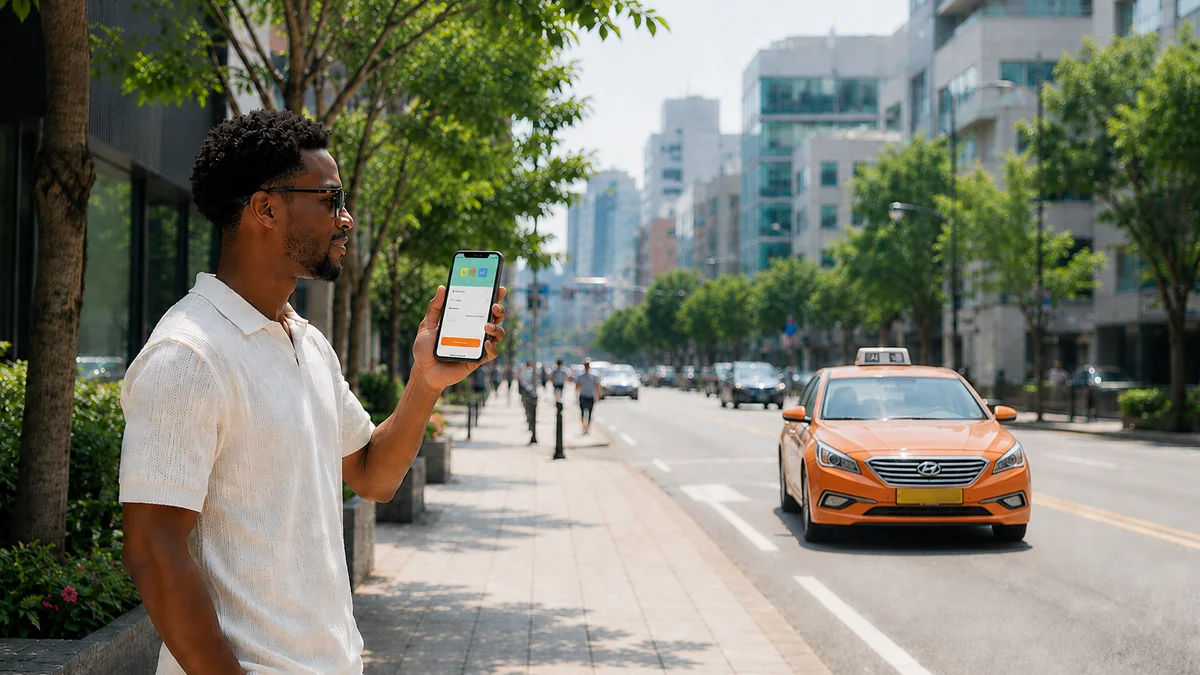
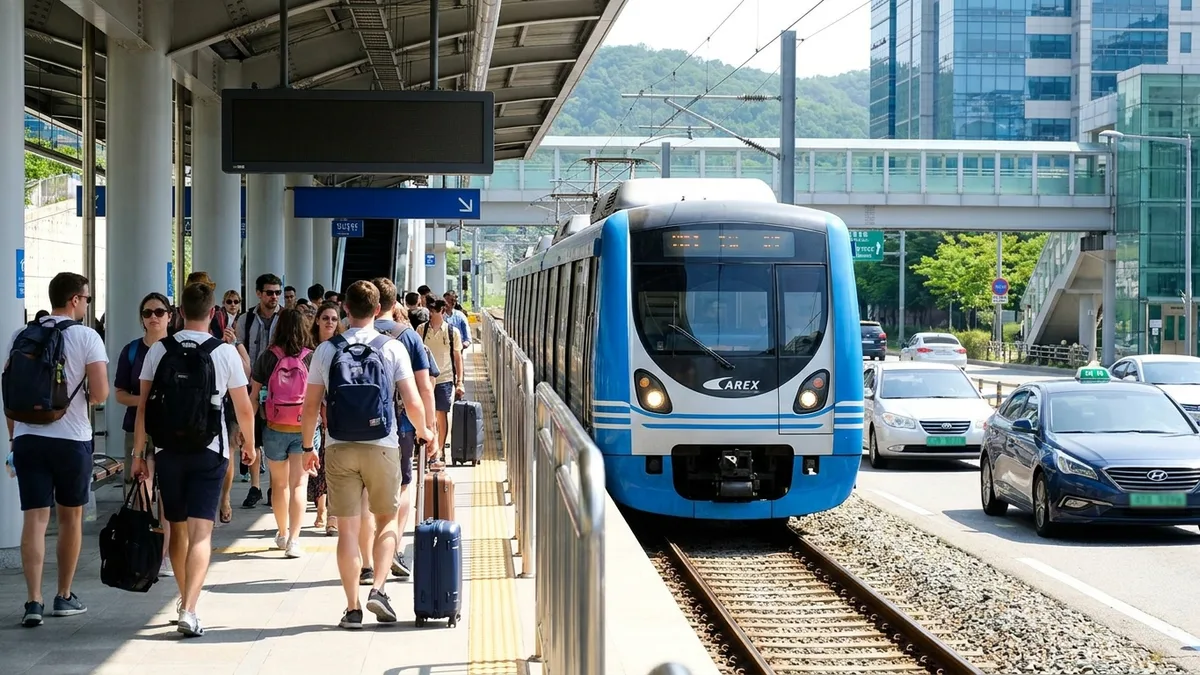
Built to work without a Korean phone number or bank account, with overseas payment methods like Alipay, WeChat Pay, and Apple Pay. Taxi hailing plus KTX, express bus, and airport railroad (AREX) booking — all in one app.
Enter code GUIDE3 at sign-up for 3,000P instantly
Download now


Which One Should You Choose — Quick Decision Table
| Situation | Recommendation |
|---|---|
| Staying in Gangnam, Jamsil, or Songpa | SRT (Suseo Station) |
| Staying near Seoul Station, Myeongdong, or Hongdae | KTX (Seoul/Yongsan Station) |
| Gangwon Province (Gangneung, Donghae, etc.) | KTX (SRT doesn't run there) |
| Yeosu, Jinju, Pohang | KTX preferred (SRT has few services — 2 round trips a day) |
| Want to save even a little | SRT (usually 5–10% ↓) |
| Foreign-card payment keeps getting blocked | English SRT web, or LACHA |
Frequently Asked Questions (FAQ)
Q1. Which is easier for a foreigner to ride, SRT or KTX? A. In terms of booking convenience alone, the SRT route — selecting "Foreigner" on the English web and paying with a foreign card — is relatively smooth. On the other hand, KTX's KORAIL Talk app supports English and has far more routes. Choosing based on your destination and where you're staying comes first.
Q2. Do I absolutely need a Korean phone number or a Korean card? A. Not necessarily. On the SRT English web and KTX guest booking, it's sometimes possible to proceed with a passport + a foreign card. That said, you may get stuck at the 3D Secure verification step, so results vary by card issuer and timing. If you get blocked, consider an app like LACHA that supports foreign payment methods.
Q3. Can I board KTX at Suseo Station? A. With the 2026 integration push, KTX services departing from and arriving at Suseo Station are being introduced in stages. Applicable services and timing are limited, so the most accurate approach is to check which trains actually appear on the booking screen.
Q4. Can I swap and use SRT and KTX tickets interchangeably? A. In principle, since the operators are different, tickets are not interchangeable. That said, with the 2026 coupled-operation and integration stages, some trains run in connection with each other, so this is a fast-changing area. Please check the guidance on the official channels.
Q5. How much is the fare to Busan? A. The standard one-way fare for a KTX Economy Class seat from Seoul to Busan is ₩59,800 (First Class ₩83,700), and SRT is ₩52,600. Trains with weekday or off-peak discounts can be cheaper, so check on the booking screen.
Fares, routes, integrated-operation schedules, and foreigner booking procedures are subject to change. For exact fares, timetables, and payment availability, please do a final check on the official KORAIL Talk and SRT channels (etk.srail.kr, official KORAIL). Whether a payment succeeds can vary by card issuer, country of issue, station, and timing, so we don't state it as a certainty.