
When you leave Korea, you can get up to about ₩20,000 of your remaining T-money balance back right at a convenience store. But a ₩500 fee is taken out each time you do.
Three things tend to confuse people here. First, the cost of the card itself (about ₩2,500–4,000) is a purchase cost, not a deposit, so it isn't refundable. Second, the convenience store refund limit varies by brand — GS25 under ₩20,000, 7-Eleven ₩20,000 or less, CU and emart24 ₩30,000 or less. Anything above that means going to a subway station customer service center (₩50,000 or less) or T-money Town. Third, the ₩500 fee always applies. If you don't know these limits, fees, and eligible locations, it's easy to just waste time at the airport.
Below, we'll go over where to buy the card and for how much, how to charge it even without Korean cash (such as overseas-card top-up in the Mobile T-money app), and how to cleanly empty your balance before you leave — all from a foreigner's point of view. Since it's a card you can buy without identity verification or a Korean bank account, we'll walk through the flow from right after arrival to just before departure, with figures as of June 2026.
What Is T-money? (And Why It's Almost Essential)
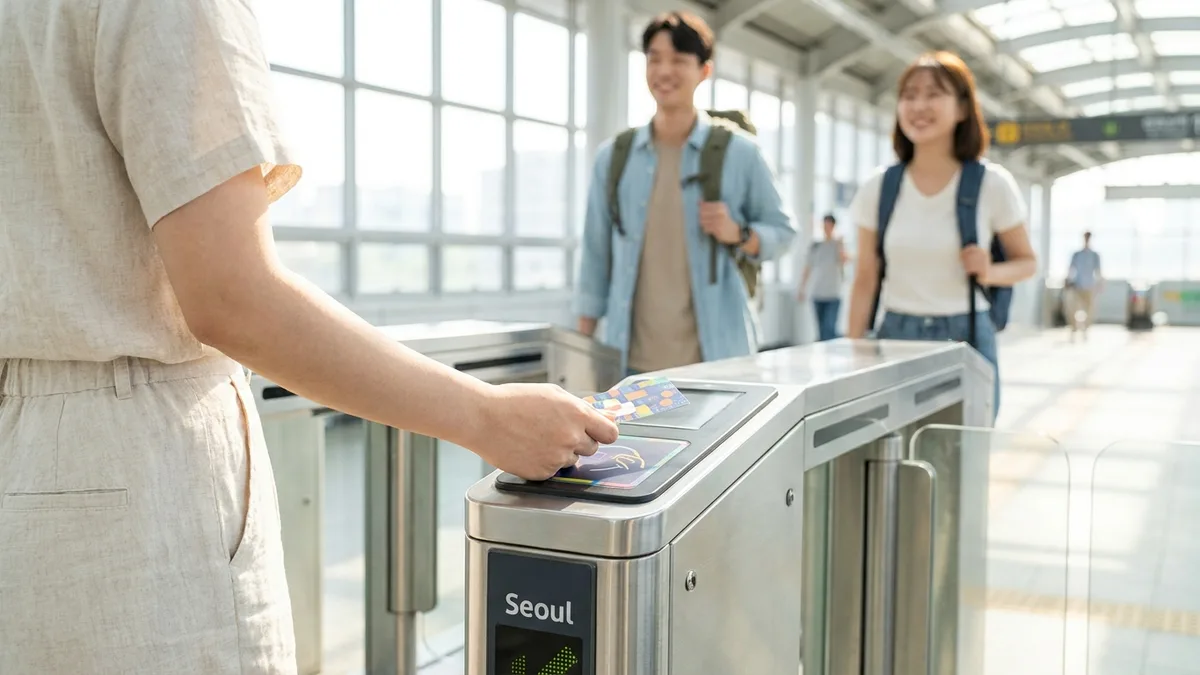
T-money is a prepaid, rechargeable transit card used all across Korea. You load money onto it in advance, and when you tag it at a subway gate or a bus terminal, the fare is automatically deducted from your balance.
- Where you can use it: subways in Seoul and nationwide, city and intercity buses, some taxis, and small purchases at convenience stores and vending machines
- No identity verification required: you can buy it with cash and use it right away, without registering your name. You don't need a Korean bank account, phone number, or Alien Registration Card (ARC).
- Fare discounts: subway and bus transfer discounts apply only when you ride with a transit card like T-money. It's almost always a better deal than a single-journey ticket (paper/token).
Seoul's base subway fare is ₩1,550 as of 2026 (it varies by distance, line, and discount policy). Check the official Seoul Metro guidance for exact fares.
1. Where and for How Much Can You Buy It?
Where to buy
Convenience stores are by far the most common. You can even buy one right after landing, on the arrivals level of Incheon Airport.
| Location | Notes |
|---|---|
| Convenience stores (CU, GS25, 7-Eleven, emart24, MINISTOP, etc.) | Most common. Sold at almost every convenience store |
| Subway station ticket machines / customer centers | Available at some stations |
| Convenience stores on the Incheon Airport arrivals level | Can buy immediately after arrival |
Card cost
A basic card costs about ₩2,500–4,000 (design or character editions can be more expensive).
This card cost is not refunded later. That's because it's a purchase cost, not a "deposit." Only the balance you've charged onto the card is refundable.
A note on payment methods
- When buying the card at a convenience store, you usually need Korean cash (won). Whether you can buy the card itself with a foreign card varies by store, so it's hard to say for certain.
- If you don't have cash, consider overseas-card top-up in the Mobile T-money app described below (the station kiosks accept overseas cards only for single-journey tickets and short-term Climate Card passes).
2. How to Charge (Top-up)
You recharge T-money as you use it and keep going. There's no separate fee for charging itself.
(A) Convenience store top-up — the most common way
- Hand your card to the clerk and say "T-money charge (charge / top-up)."
- Say the amount you want to add (e.g., ₩10,000).
- Pay with cash, and it charges instantly.
You usually charge in ₩1,000 increments, and there's a cap on the cumulative balance per card.
(B) Subway station charging machines
Place your card on the charging machine inside the station, pick an amount, and insert cash. Traditionally these have been mostly cash-based, but the newer kiosks below also accept card payment.
(C) New kiosks that accept international cards (from March 2026) — important for foreigners
From March 17, 2026, at 273 stations on Seoul subway lines 1–8, roughly 440 new ticket machines let you buy and charge single-journey tickets and short-term Climate Card passes (1-, 2-, 3-, 5-, and 7-day passes) using overseas-issued credit/debit cards such as Visa and Mastercard (per the Seoul city announcement; service fee averages about 3.7%). Some mobile payments like Kakao Pay and Naver Pay are also supported.
One thing to watch out for: charging a regular rechargeable T-money card with a foreign card is not part of this announcement — T-money charging is cash-based by default, and with a foreign card it's only possible from March 18, 2026 through the Mobile T-money app (Mastercard, Amex, UnionPay; Visa not supported). Supported options can vary by station and timing, so check the on-screen guidance when you buy.
(D) Apple Wallet T-money (iPhone / Apple Watch)
From July 22, 2025, you can add a T-money card to Apple Wallet and tag your iPhone or Apple Watch directly at subway gates and most bus terminals (per the Apple/T-money announcement). It effectively lets you handle transit with just your phone, no physical card needed.
There's one catch here. To load money onto T-money in Apple Wallet (both manual and auto top-up), you need a card issued in Korea. Per reporting, only a limited number of Korean card issuers support Apple Pay, so foreigners without a Korean card may get stuck at the charging step. In other words, charging directly in the Wallet requires a Korean card. From March 2026, however, you can also charge with an overseas card (Mastercard, Amex, or UnionPay — not Visa) by going through the Mobile T-money app (fee about 4.5%). An easy way to remember it: direct Wallet top-up = Korean card, overseas card = via the app.
Google Pay had not officially launched in Korea as of 2026. Android users are safer with a physical card plus kiosk/convenience store charging.
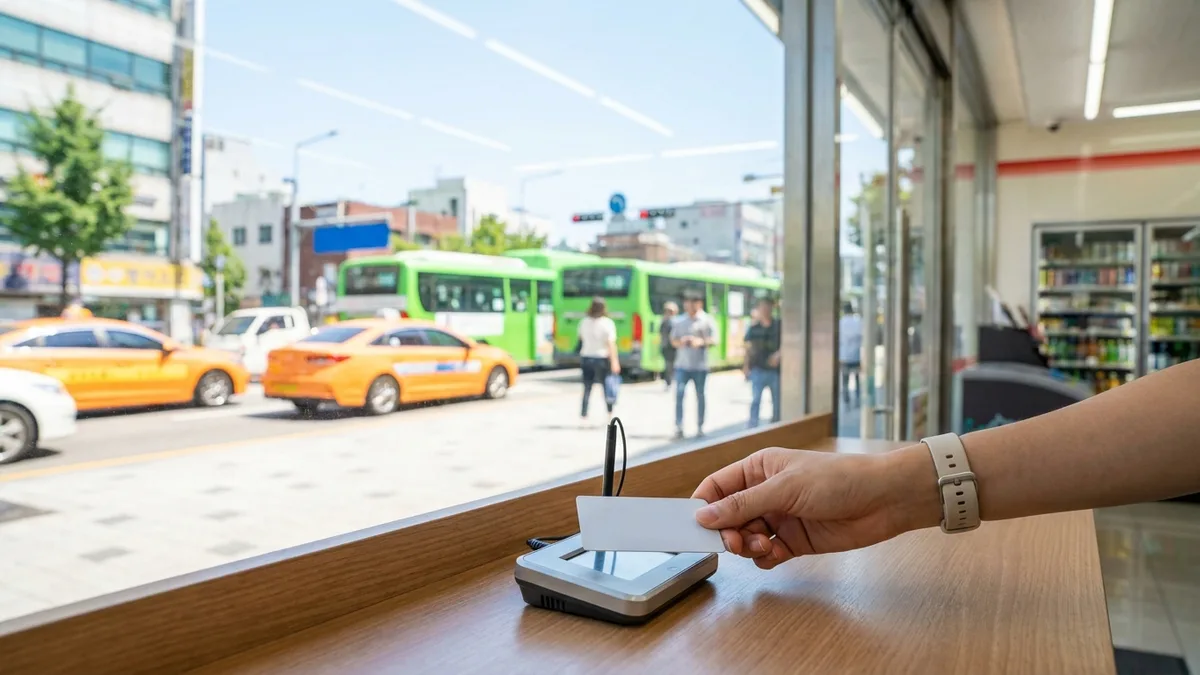
3. Refunds — Getting Your Remaining Money Back Before Departure (the Most Confusing Part)
You can get your unused balance back. But the refund limit differs by location, and a fee applies.
The key rules at a glance
| Balance range | Where you can refund | Fee |
|---|---|---|
| About ₩20,000 or less | Any convenience store (all brands) | ₩500 |
| Over ₩20,000 to ₩50,000 or less | Designated counters such as subway station customer centers and T-money Town (CU and emart24 handle up to ₩30,000) | ₩500 (partial-refund unit rules apply) |
| Card cost (₩2,500–4,000) | Not refundable | — |
The ₩500 fee is deducted from your balance. Partial refunds in the ₩20,000–50,000 range are usually processed only in ₩10,000 units, and only at designated places like subway station T-money customer centers and T-money Town. Convenience stores cannot process these.
Convenience store refund procedure (simplest, when the balance is small)
- Hand your card to the clerk and say "T-money refund (refund)."
- The clerk processes it at the terminal.
- You receive balance − ₩500 in cash (won).
For example, if you charged ₩15,000 and spent ₩8,000, your balance is ₩7,000. What you get in hand is ₩7,000 − ₩500 = ₩6,500.
When the balance is large / at the airport
If your balance is over that brand's limit (₩20,000–30,000), convenience stores can't handle it. You'll need to use a designated counter, such as a subway station customer center.
The cleanest approach is to not leave much on the card in the first place. Since refunds are a hassle and the card cost and fee come out anyway, it's best to charge a little at a time so only a small balance remains before departure. Or you can keep the card as a souvenir, or hold onto it if you plan to come back to Korea.
The limits and fees above are general guidance as of June 2026 and may differ by card type, store, and timing. Check the exact refund conditions at the official T-money guidance (t-money.co.kr).
Frequently Asked Questions (FAQ)
Q1. Can foreigners buy it without identity verification? A. Yes, you can. A regular T-money card is bought with cash and used right away, without registering your name. You don't need a Korean bank account, phone number, or Alien Registration Card.
Q2. Can I charge it with a foreign card? A. You can charge a regular T-money card in the Mobile T-money app with an overseas Mastercard, Amex, or UnionPay (from March 2026; Visa not supported). Foreign-card payment at the new station kiosks is for single-journey tickets and short-term Climate Card passes. Convenience store charging is usually cash-based, and this can vary by card issuer, station, and timing.
Q3. Do I get the card cost back when I leave? A. No, the card cost is not refundable. The card purchase cost (about ₩2,500–4,000) isn't eligible for a refund — only the remaining charged balance can be refunded. A ₩500 fee is deducted here too.
Q4. Can I get a refund at the airport? A. You can get it at a convenience store up to that brand's limit (GS25 under ₩20,000, 7-Eleven ₩20,000 or less, CU and emart24 ₩30,000 or less), and anything above that can be handled at a subway station customer service center (₩50,000 or less) or T-money Town. Check locations and operating hours in advance.
Q5. If I have only an iPhone, can I do everything without a physical card? A. Tagging (boarding) works with Apple Wallet T-money. However, charging requires a Korea-issued card, so there are limits for foreigners in the early days after arrival.
T-money Handles the City — but What About Traveling Between Cities?
T-money is the easiest way to handle city transit like subways and buses without identity verification. You buy it, charge it, and refund the balance when you leave — done.
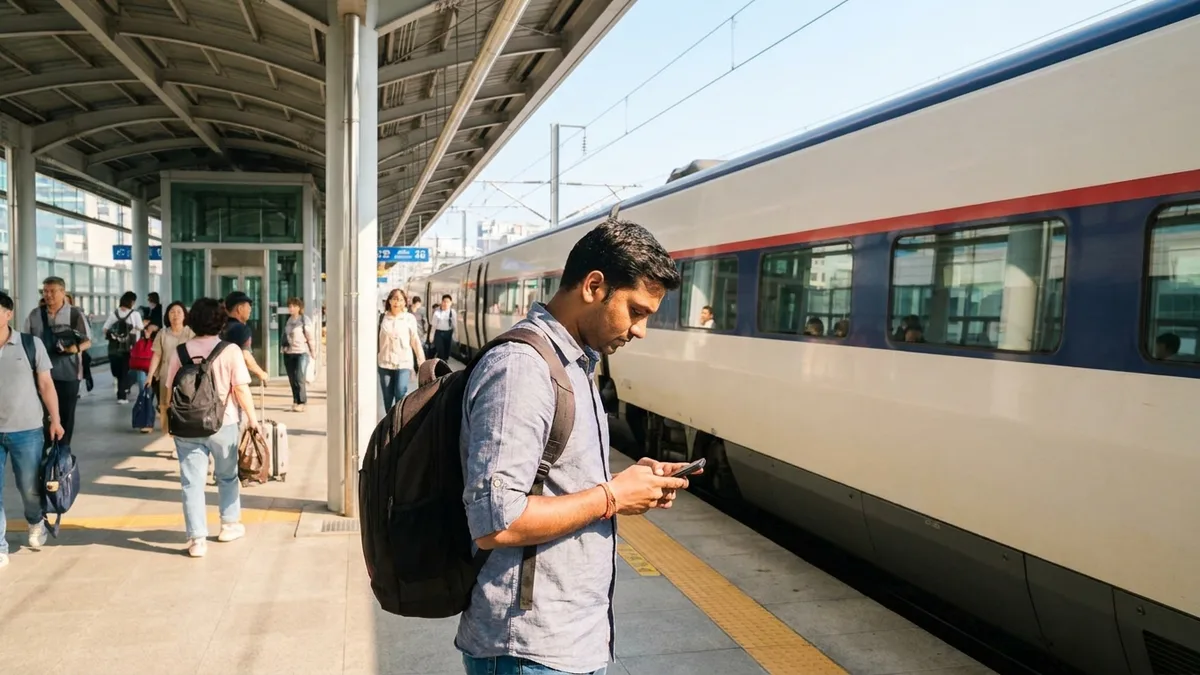
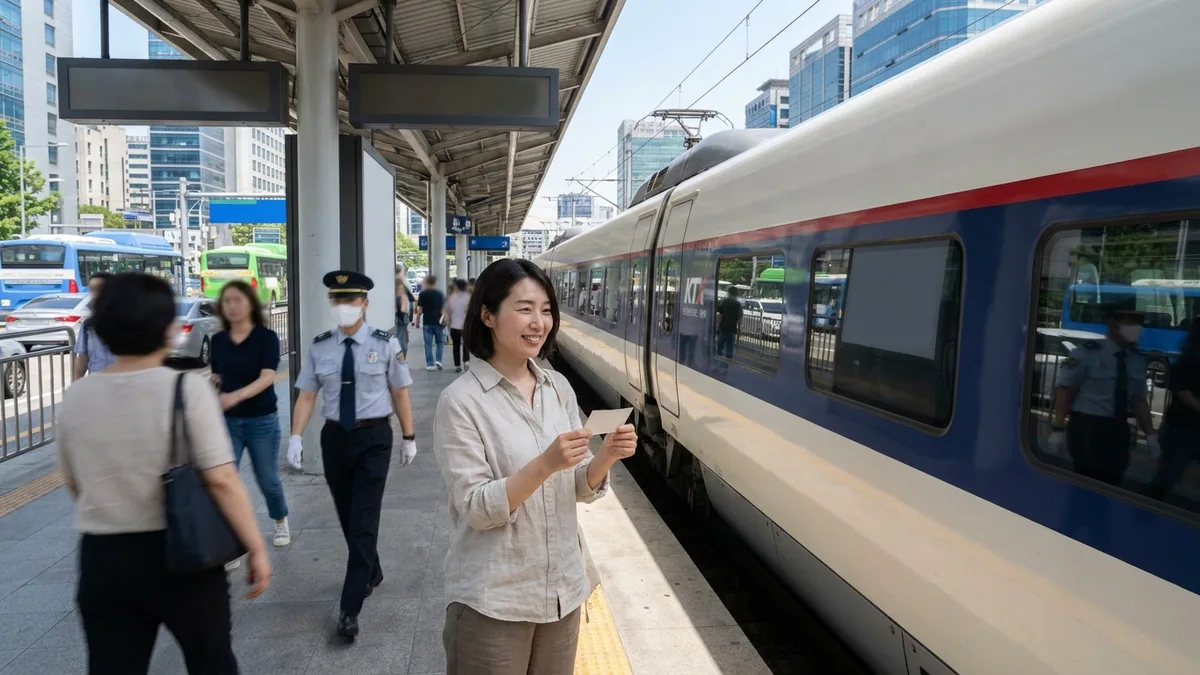
The problem is traveling between cities (KTX, express buses). That doesn't work by paying with T-money; it requires separate booking, and KORAIL and express bus booking often demand 3D Secure verification for foreign cards or a Korean phone number, which frequently trips up foreigners.
LACHA is a booking and payment app built for foreigners, made precisely for this intercity travel.
- No identity verification required: it's designed so that no separate identity verification is required under the official process, without a Korean bank account, phone number, or identity check, so you can use it right after arrival.
- Overseas payment methods supported: you pay with familiar easy-pay methods like Alipay and WeChat Pay, so payment goes through without the 3D Secure step where foreign cards often get stuck.
- KTX + express bus combined: you can search and book both KTX and express buses at the same time in one app (a first in Korea). No need to switch between KorailTalk and a bus app.
- Multilingual support: available in English, Vietnamese, Russian, Thai, and Chinese (Traditional), among others.
Use T-money for city transit, and LACHA for intercity KTX and express buses.
Want to search and book KTX and express buses in one app? Check out LACHA.
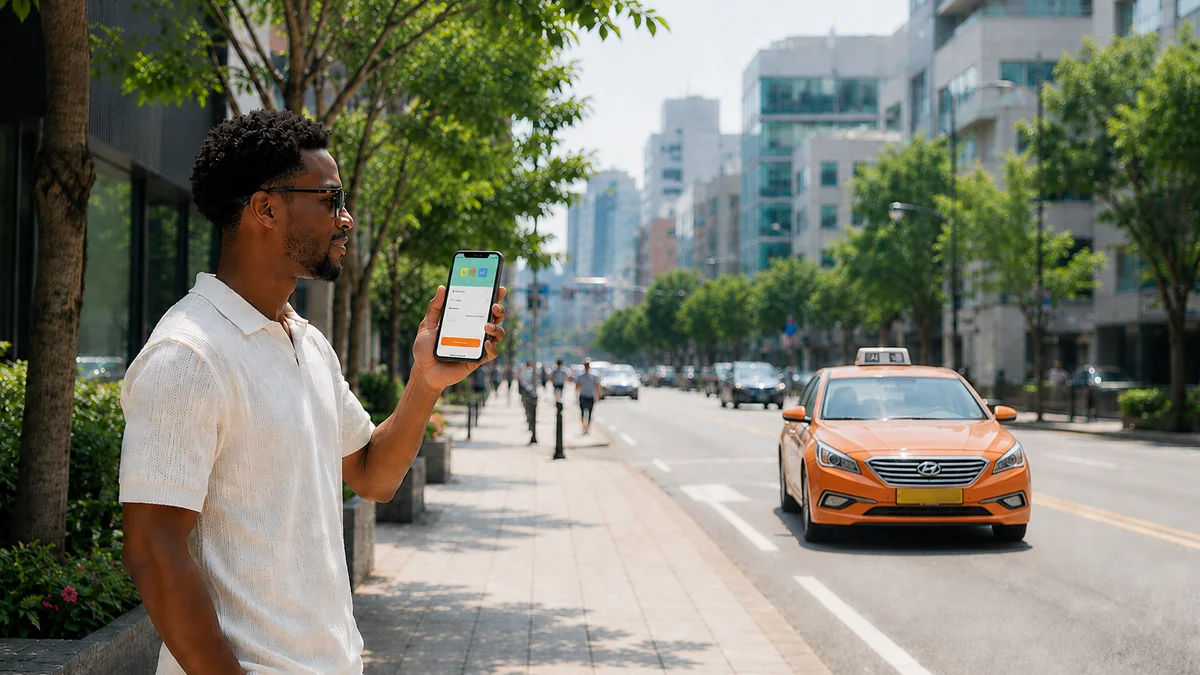
Built to work without a Korean phone number or bank account, with overseas payment methods like Alipay, WeChat Pay, and Apple Pay. Taxi hailing plus KTX, express bus, and airport railroad (AREX) booking — all in one app.
Enter code GUIDE3 at sign-up for 3,000P instantly
Download now


Last updated June 2026. Transit card fares and charging/refund rules are subject to change and may differ by card issuer, station, store, and timing. For accurate information, please check official sources such as T-money (t-money.co.kr) and Seoul Metro.