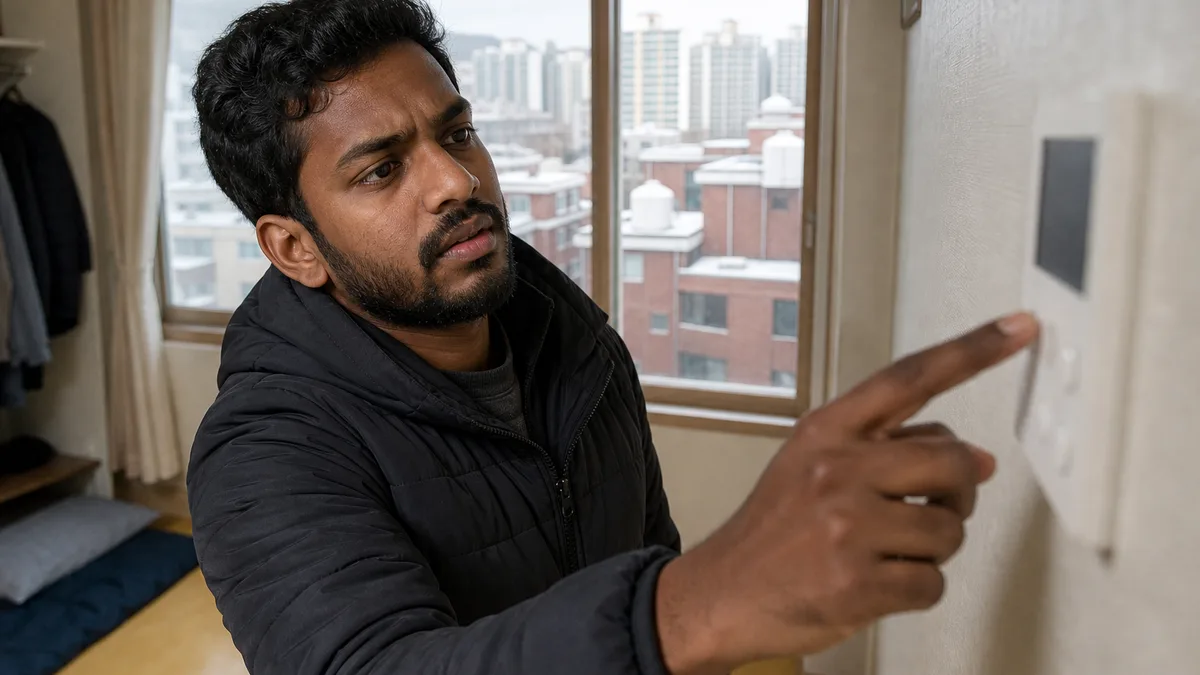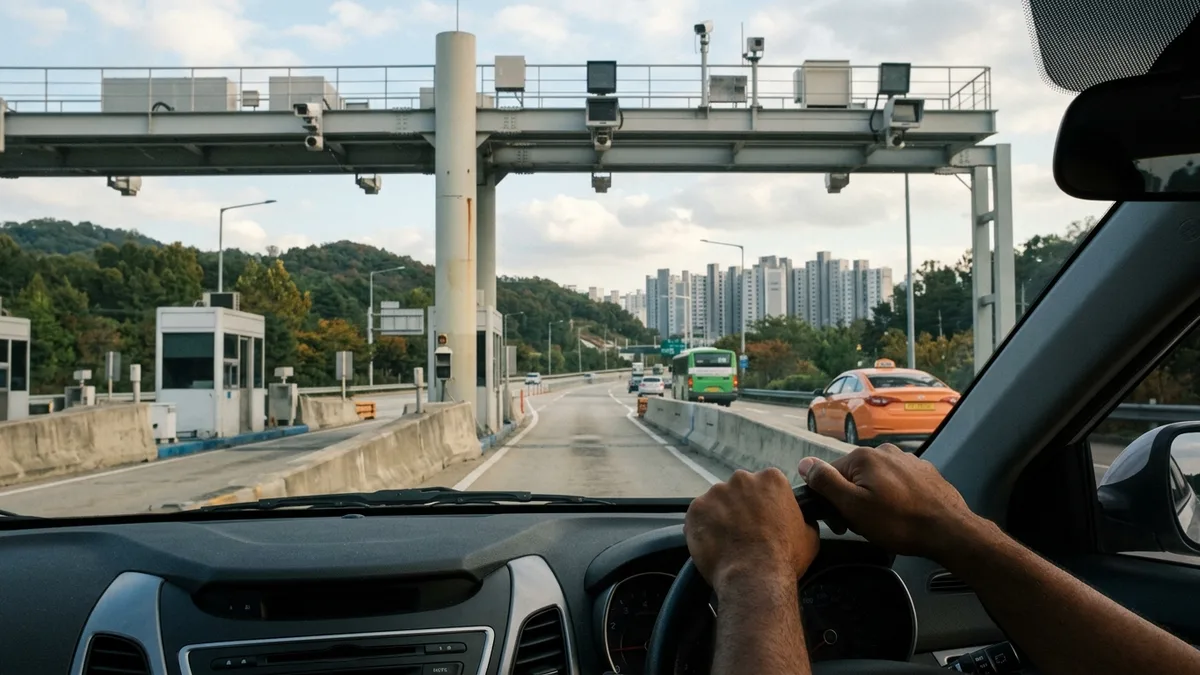
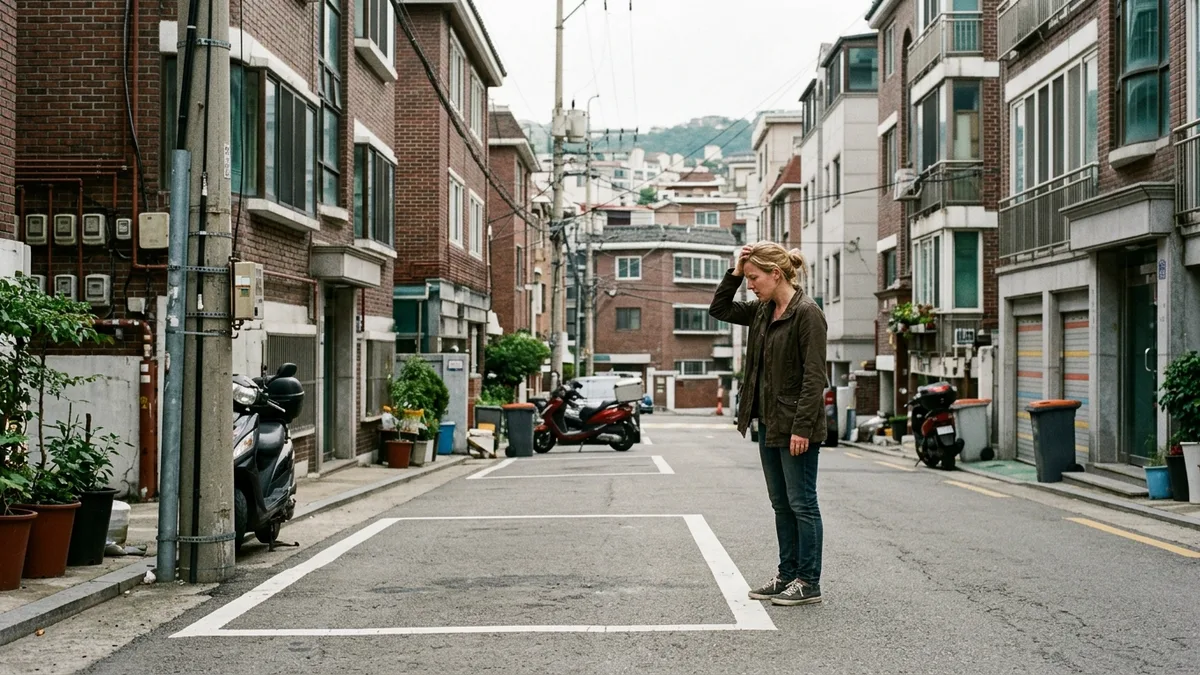
In Korea, the administrative fine (과태료) for a parking violation is 40,000 won for a passenger car. But the same spot and the same car cost 120,000 won — three times as much — if it happens to be a school zone. And that increase applies only to violations between 8 a.m. and 8 p.m., so parking there at 7 p.m. costs 120,000 won while parking at 9 p.m. costs 40,000 won (based on official local government guidance, 2026-08).
From the moment you get ticketed, three clocks start running at once. There's the voluntary-payment window that cuts 20% off if you pay within the comment-submission period, the 60-day objection deadline counted from the day you received the notice, and — if your car was towed — the storage fee that piles up every 30 minutes plus the one month left before the car can be sold off. None of the three are "within a few days"; they're all "starting from when," so the first thing to pin down is when the bill actually arrived.
The place foreigners actually lose money isn't the amount — it's delivery. The bill goes to the vehicle's registered address, and the parking-enforcement text alert service that Koreans sign up for in advance requires verification with a Korean mobile number. Rental cars go one step further — Article 160(4)4 of the Road Traffic Act bars fines from being imposed on rental car companies, so it takes time for the charge to work its way back to the renter, and it sometimes shows up on your card after you've already flown home.
Note: The amounts and deadlines in this article are as of 2026-08, confirmed against the original text of the Road Traffic Act, the Act on Regulation of Violations of Public Order, and the Immigration Act, plus official guidance from local governments (Gangdong, Gwangjin, and Eunpyeong in Seoul; Yeonsu in Incheon; Haeundae, Buk-gu, and Dongnae in Busan; Paju; Asan; Gimpo, and others). Towing and storage fees in particular are set by local ordinance and differ from region to region, so don't apply the Seoul figures in this article to other areas — check again with the relevant district office or facilities management corporation.
Which situation are you in — did you get a ticket, or did your car vanish?
Enforcement reaches you along three paths. Which one it is changes what you need to do right now.
- There's a notice on your windshield — that's on-site enforcement. The bill (advance notice) comes separately to the vehicle's registered address a few days later. The notice itself is not the bill.
- Nothing was on the car, but a bill arrived — that's either automated enforcement or the resident reporting system. Even with no enforcement vehicle around, two photos taken by a passing citizen are enough to confirm the violation.
- Your car isn't where you left it — towing is far more likely than theft. Start by looking for a notice posted at the spot stating that the car was towed and where it's being stored.
All three paths run through the same process for the fine itself. What's different about towing is that it adds an entirely separate clock on top.
Caution: The fine and the towing are separate. Getting towed doesn't erase the fine, and paying the fine doesn't waive the towing and storage fees. If your car was towed, you pay all three — the administrative fine, the towing fee, and the storage fee.
How much is the fine — amounts by zone and the 2-hour add-on
The amount hinges less on "how long you parked" than on "where you parked." The figures below were cross-checked against official guidance from Yeonsu-gu in Incheon, Haeundae-gu and Buk-gu in Busan, Gangdong-gu in Seoul, and the City of Paju, and the legal basis is Attached Tables 6 and 7 under Article 88 of the Enforcement Decree of the Road Traffic Act.
| Where you parked | Passenger car / truck up to 4 tons | Van / truck over 4 tons | Vs. a regular zone (passenger car) |
|---|---|---|---|
| Regular zone | 40,000 won | 50,000 won | Baseline |
| Within 5m of a fire hydrant · senior protection zone · disabled protection zone | 80,000 won | 90,000 won | 2× |
| School zone (violation 08:00–20:00) | 120,000 won | 130,000 won | 3× |
The time condition on school zones matters. Under the proviso to Article 88(4) of the Enforcement Decree of the Road Traffic Act and Attached Table 7, the increased fine applies only to violations between 8 a.m. and 8 p.m., and a violation at any other hour costs the same as in a regular zone. The problem is that foreigners have trouble reading both "is this a school zone?" and "is it currently the increased-penalty window?" The school zone signs and road markings are in Korean, and working out the time while driving past is harder still.
Parking in the same spot for 2 hours or more adds another 10,000 won. A passenger car in a regular zone goes from 40,000 to 50,000 won, and in a school zone from 120,000 to 130,000 won. Whether the same add-on applies to other increased-penalty zones such as fire hydrants and senior or disabled protection zones is written inconsistently across local government guidance, so checking with the relevant district office is the accurate route.
The 20% discount window and the 60-day objection period — how 40,000 won becomes 70,000 won
The fine isn't imposed right away. An advance notice comes first, and the administrative agency has to give you at least 10 days to submit comments (Article 16 of the Act on Regulation of Violations of Public Order). If you simply pay within that period rather than contesting it, 20% comes off. A passenger car in a regular zone goes from 40,000 to 32,000 won; in a school zone, from 120,000 to 96,000 won.
If you think it's unfair, there's a separate channel for fighting it. You can file a written objection within 60 days from the day you received the notice of the fine, and once an objection is filed, the disposition imposing the fine loses its effect (Article 20 of the same Act). From there it moves to a court hearing on the administrative fine. Watch the order — if you pay first to save the 20%, the path to contesting it is effectively closed.
| Stage | What happens | Amount (passenger car, regular zone) |
|---|---|---|
| Pay within the comment-submission period (10+ days) after the advance notice | 20% voluntary-payment discount | 32,000 won |
| Pay after that period | No discount | 40,000 won |
| Within 60 days from the day you received the notice | Written objection possible; the disposition loses effect | — |
| Past the payment deadline | One-time 3% surcharge | 41,200 won |
| Every month after that, up to 60 months | Additional monthly surcharge of 1.2% | Up to 70,000 won |
| Vehicle-related fines of 300,000 won or more unpaid for 60+ days | Registration plate may be seized | Returned immediately once paid |
The basis for the last row is Article 55 of the Act on Regulation of Violations of Public Order and Article 14 of its Enforcement Decree. The law requires a seized plate to be handed back immediately once the overdue amount is paid.
Here's the math behind 40,000 won turning into 70,000 won. 40,000 won + a 1,200 won surcharge + 480 won a month × 60 months = 70,000 won. Leave it for five years and it becomes 1.75 times the original amount.
How to pay — the virtual account on the bill is the surest route
There are four payment channels: WeTax (wetax.go.kr), your local government's eTax site (Busan has its own at etax.busan.go.kr), the ARS line at 1544-1414, and the virtual account number printed on the bill.
For foreigners, the surest option is a bank transfer to the virtual account on the bill. Guidance on which authentication methods foreigners can use to log in to WeTax and eTax contradicts itself (there are explanations saying only joint certificates and financial certificates work, alongside explanations saying foreigners can register as members). We couldn't confirm which one is currently in force either, so don't assume online payment will obviously work and let the discount deadline slip past. With a virtual account, as long as you can make a bank transfer, payment is done with no separate verification step.
If you're at the stage where you don't have a Korean bank account or phone number yet, read What Works and What Doesn't Before Your ARC Arrives alongside this. Knowing in advance which channels are open and which are blocked keeps you from missing the deadline.
Tip: If the bill is hard to read, in Seoul you can use the 120 Dasan Call Center's foreign-language service. Dial (02)120 and press 9, then 1 for English, 2 for Chinese, 3 for Japanese, 4 for Vietnamese, or 5 for Mongolian; from overseas the number is 82-2-731-2120. It runs weekdays 09:00–18:00 and will do three-way interpretation if needed. It's a Seoul city service, so for other regions check that city, county, or district's own call center.
Whether bills and notification texts also come in English or other foreign languages is something we couldn't find official confirmation for. Checking directly with your district office's transportation division is the accurate route.
If your car is gone — confirming it was towed, the order of steps, and Seoul costs
What gets towed is defined. Sections with a tow-away zone sign, sections with a no-parking or no-stopping sign, and cases that obstruct other vehicles, such as double parking or blocking someone else's garage entrance. Here's the order to follow.
- Look at the spot again. When a car is towed, a notice stating that it was towed and where it's stored is posted at that spot.
- If there's no notice, contact the transportation (parking) division of the district or city office. The police civil complaint call center at 182 is another place to check.
- Confirm the impound lot's location and go there in person. You have to show ID and pay the towing and storage fees before the car is released. Card and bank transfer are accepted.
- The administrative fine is still outstanding, separately. Paying the towing fee isn't the end of it, so expect a separate bill to follow.
Notification comes in stages. A notice posted at the scene → an SMS within 24 hours → once 24 hours have passed, a written retrieval notice by registered mail (based on official local government guidance; this can vary by region). This is where foreigners get stuck. Without a Korean mobile number the SMS never arrives, and if the registered address isn't where you actually live, the registered mail doesn't reach you either. If your car is gone and you've heard nothing, that only means the notification didn't reach you — it doesn't mean it wasn't towed.
| Vehicle type / size | Towing fee (Seoul, 2026-08) |
|---|---|
| Passenger cars | Light 40,000 won · Compact 45,000 won · Midsize 50,000 won · Full-size 60,000 won |
| Vans and buses | Light 40,000 won · Small 60,000 won · Medium 80,000 won · Large 140,000 won |
| Trucks and special vehicles | Under 2.5 tons 40,000 won · 2.5–6.5 tons 60,000 won · 6.5–10 tons 80,000 won · 10 tons and over 140,000 won |
| Motorcycles and personal mobility devices | 40,000 won |
Storage fees are set on a Seoul basis too.
- Passenger cars, motorcycles, and trucks or special vehicles under 6.5 tons: 700 won per 30 minutes
- Medium and large vans or buses and trucks or special vehicles of 6.5 tons or more: 1,200 won per 30 minutes
- Cap per storage instance: 500,000 won
There's something here you absolutely have to note. Towing and storage fees are not a single nationwide amount. They're set by local ordinance, so even the structure of the caps differs. Seoul has a 500,000 won cap per instance with no separate daily cap, while Dongnae-gu in Busan charges 700 won per 30 minutes with a daily cap of 15,000 won, and Gimpo caps the first 24 hours at 7,000 won. Leave a car for three days in Seoul and you're past 100,000 won; in Gimpo you aren't. Don't apply the table above to other regions as-is.
The retrieval counters are more available than you'd expect. The Gwanak and Dongjak impound lots in Seoul run 24 hours a day, year-round, so you can get your car back even in the middle of the night. But the foreign-language line (Seoul's 120 Dasan Call) only runs weekdays 09:00–18:00, so if you're towed on a Friday night, an inquiry with an interpreter isn't possible until Monday. And the storage fee keeps stacking every 30 minutes all weekend long.
Caution: The notices for the Jongno and Dongjak impound lots in Seoul specify the ID for retrieval as "a driver's license or resident registration card." We couldn't confirm from official guidance whether a passport, Alien Registration Card (ARC), or International Driving Permit (IDP) is accepted. Call the specific impound lot before you go and ask which ID to bring. The storage fee clock keeps running while you make a wasted trip.
If you never come get it — 14 days of public notice, sale or scrapping after one month
Leaving it there is the most expensive choice. Article 35 of the Road Traffic Act provides that if the user or driver of the vehicle cannot be identified, the vehicle is publicly announced for 14 days from the day it was towed, and if no return request is made within one month from the day of the measure or the announcement, the vehicle may be sold off or scrapped.
In money terms, it looks like this. At the Seoul rate of 700 won per 30 minutes for a passenger car, that's 33,600 won a day, and 504,000 won over 15 days — which hits the 500,000 won cap per instance (simple calculation). The towing fee and the administrative fine come on top of that. The scenario where you step out of the country briefly, come back, and find your car gone is genuinely possible because of this provision.
📌 Important: If you have a long trip abroad or a long business trip coming up, start by checking whether the spot where you parked is subject to towing. Towing notification comes via the on-site notice, SMS, and registered mail (based on official local government guidance; this can vary by region), and if you're overseas, none of those reach you. Meanwhile the 14-day announcement and the one-month deadline pass without a word.
If you violated in a rental car — the billing path is completely different
For rental cars, the route the fine takes is entirely different. Article 160(4)4 of the Road Traffic Act provides that an administrative fine cannot be imposed on an employer or the like "in the case of a vehicle rented out by a car rental business operator or a facility leasing business operator, where it is clear that only the vehicle was leased." In plain terms, the fine cannot be imposed on the rental car company.
So here's how it works in practice. The rental company submits a "request to change the party liable for payment of a parking violation fine" to the competent authority so the fine is re-imposed on the renter, and the National Police Agency's Traffic Minwon 24 (efine) runs a menu for rental companies to change the liable payer. Article 16(2) of the Standard Terms and Conditions for Car Rental also states that administrative fines and traffic penalty notices (범칙금) imposed on the customer for parking violations and traffic law violations during the rental period shall be borne by the customer even after the rental car is returned (amended 2021-10-29).
That said, the standard terms are a recommendation from the Fair Trade Commission and are not binding. The actual scope of billing and the processing fee follow each rental company's own terms, so checking what your contract says at the time you rent is the only real defense.
| Category | Car registered in my name | Rental car |
|---|---|---|
| Where the fine goes first | The registered owner of the vehicle — me | Cannot be imposed on the company (Road Traffic Act Art. 160(4)4) |
| How it reaches me | Bill mailed to the registered address | Re-imposed after the company requests a change of liable payer, or billed directly by the company under its terms |
| When I find out | Days to weeks after the violation | Later still. Can be billed even after you return the car and fly home (Standard Terms Art. 16(2)) |
| The 60-day objection period | Fully available from the day you received the notice | May start with time already run off the clock |
| Extra costs | None | A processing fee under the company's own terms may apply (the amount varies by company) |
The upshot is that the typical sequence for a visitor to Korea runs like this. Park briefly in Korea and get ticketed → fly home → weeks later an unfamiliar charge appears on the card you left on deposit → you look into it and the 60-day objection clock has already run down considerably. For the qualification to drive a rental car in the first place (license, International Driving Permit), read How to Exchange or Use a Foreign Driver's License in Korea alongside this.
Where foreigners specifically trip up — resident reporting, resident-priority parking, and text alerts
This is the heart of the article. The fee tables are the same for Koreans, but the four things below act as walls only for foreigners.
First, the resident reporting system finalizes a fine with no enforcement vehicle present. If a citizen reports it through the Safety Report (안전신문고) app, the fine is imposed without any on-site enforcement. The requirements are two or more photos taken from the same position and the same angle at least one minute apart, the license plate, violation location, and time of capture must be identifiable, and the report must be filed by the next day (48 hours) from the date of capture. The instinct that "I only stopped for a moment and nobody saw" doesn't work here.
Nationwide, the system covers seven types of zone. After taking effect on 2019-04-17, sidewalks and safety zones were added on 2021-05-10.
- ① Within 5m of a fire hydrant · ② Within 5m of an intersection corner · ③ Within 10m of a bus stop · ④ Crosswalks
- ⑤ School zones (the road in front of an elementary school's main gate) · ⑥ Sidewalks and shared pedestrian-bicycle paths · ⑦ Safety zones
The trap is that the distance standards (5m, 10m) are expressed only through road markings, which are hard to judge by eye. Watch the operating hours too. Most zones run 24 hours (including Saturdays, Sundays, and holidays) and many local governments list school zones as weekdays 08:00–20:00 only, but operating hours and exemption criteria are at each local government's discretion, so they differ by region. Some local governments describe it as "six types of zone" by leaving out safety zones, while others — Andong, for example — additionally cover U-turn areas, double parking, bridges, and parking lot entrances on a 5-minute standard (from 2024-11-25). Read your own city, county, or district's guidance at least once.
Second, a resident-priority parking space just looks like an empty parking spot to a foreigner. The signs and road paint are in Korean, and it looks much like a paid public parking lot. But park there without permission and what you get isn't an administrative fine — it's the parking fee plus a surcharge of four times that fee. In the example from Eunpyeong-gu in Seoul, the initial charge is 7,200 won (150 won per 5 minutes × 4 hours), and if you don't pay, four times that — 28,800 won — is added, for a total of 36,000 won. On top of that, under Articles 8-2 and 9 of the Parking Lot Act it is subject to immediate towing, and the fee charge and the towing are imposed together (concurrently). Since it isn't an administrative fine, neither the 20% voluntary-payment discount nor the 60-day objection period under the Act on Regulation of Violations of Public Order applies to this system as such. Which means the channel for contesting it is different.
Third, the parking enforcement text alert service is effectively Korean-only. You have to sign up separately with each local government (they don't share personal data with one another), and you complete the application by entering the license plate, the owner's name, and a mobile number to receive a verification code. Visitors without a Korean number can't sign up in the first place, and for a rental car the owner is the company, so it doesn't work under the renter's name. It's a structure where Koreans get a text and go move their car while only foreigners eat the fine. And not receiving the text doesn't get the fine waived. We've covered the full range of services blocked by not having a Korean number separately in What You Can Do Without a Korean Phone Number.
Fourth, the bill goes to the vehicle's registered address. If you moved and never updated your foreign resident registration address, or registered a company or goshiwon address, the bill never reaches you at all. Meanwhile the 20% discount window closes, and the 3% surcharge plus 1.2% a month start piling on. You end up missing the discount because you didn't know and becoming delinquent because you didn't know — so if you've moved, handling the address change first is ultimately what saves you money.
Does leaving the country without paying end it — administrative fines and criminal fines are different
Two opposite stories circulate in foreigner communities at the same time: "just leave without paying and that's that," and "a parking ticket gets you deported." Both come from failing to distinguish an administrative fine from a criminal fine. A parking violation is an administrative fine — a penalty for a breach of public order — while a criminal fine is the outcome of criminal proceedings.
The grounds for a travel ban (a departure suspension, in the case of foreigners) are set out in Article 4(1) of the Immigration Act and Article 1-3 of its Enforcement Decree, and Article 29 of the same Act applies to foreigners. It covers people who haven't paid criminal fines of 10 million won or more, collection charges of 20 million won or more, national or customs taxes of 50 million won or more each, or local taxes of 30 million won or more. Administrative fines are not on that list. There is no system that blocks your departure because you didn't pay a parking fine.
That doesn't mean it disappears, either. The unpaid amount stays on the books and leads to consequences like these.
- License plate seizure: If vehicle-related administrative fines of 300,000 won or more go unpaid for 60 days or more, the registration plate can be seized (Act on Regulation of Violations of Public Order Art. 55; Enforcement Decree Art. 14).
- Credit information sharing, restrictions on licensed businesses, and detention: Delinquency information is provided to credit bureaus, and various sanctions may follow.
- Vehicle attachment registration: A car under attachment can't have its ownership transferred without a certificate of payment of the overdue fines (including surcharges and additional surcharges). You can't sell it or hand it over.
Whether unpaid administrative fines factor into extending your stay, changing your visa status, or re-entry screening is something we couldn't find official Ministry of Justice or Hi Korea confirmation for. We can't state it definitively, so check directly with an Immigration Office if you need to know. What's certain is that the delinquency itself doesn't go away. Later, when you buy a car in Korea or transfer a title, the attachment registration catches you again at that point.
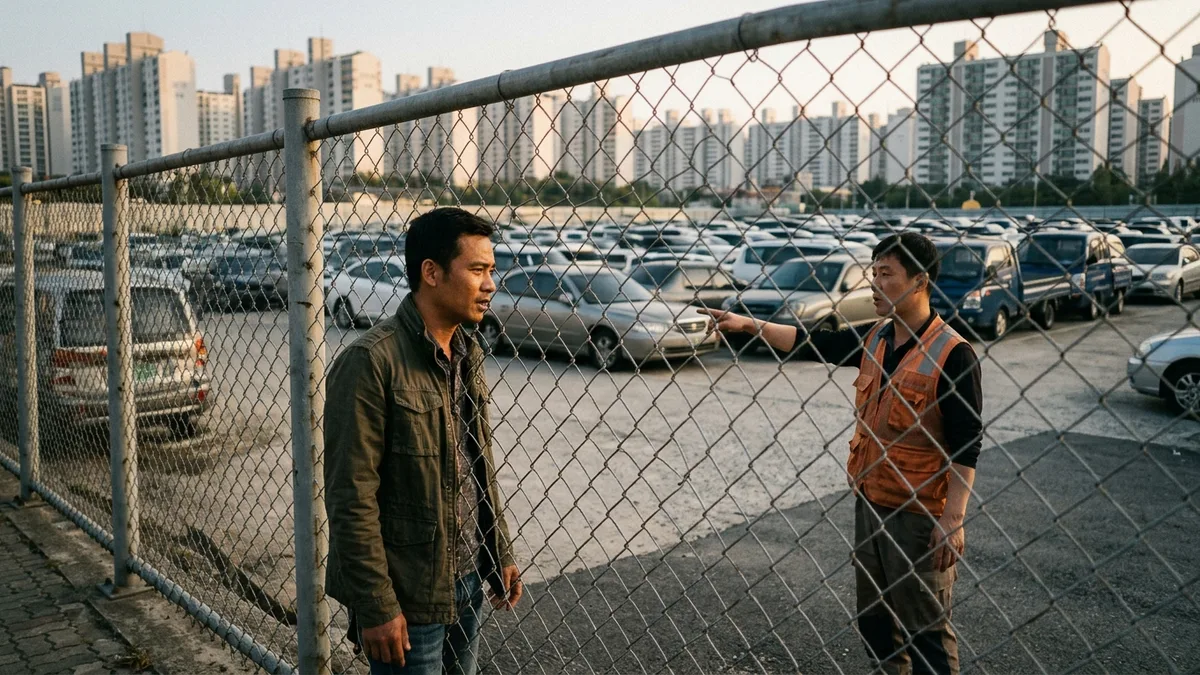
Whether you're heading out to collect your car or walking away after dropping off a rental, what comes next is public transit either way. Impound lots are often on the outskirts of the city, and after you return a rental car — or after your plates are seized and you can't drive — you have to move around by public transit. And when the storage fee is stacking up every 30 minutes, locking in a ride quickly is itself a way to save money. LACHA is a transit and payment super app for foreigners that you can start using immediately with no identity verification. You can book KTX, express buses, taxis, the Airport Railroad, and transit cards all in one place, and you can start with just your passport — no Korean bank account or phone number required. If you're stuck at the taxi app sign-up step because you don't have a Korean number, we've covered that separately in How to Call a Taxi in Korea Without a Korean Phone Number.
One thing to be clear about, though. LACHA doesn't handle parking lots or rental cars, and it doesn't pay your fine, file your objection, or retrieve your towed car for you. Those three are handled only by the competent local government and the impound lot.
Want Korea's transit and payments in one app — without a Korean phone number or bank account? Check out LACHA.
Built to work without a Korean phone number or bank account, with overseas payment methods like Alipay, WeChat Pay, and Apple Pay. Taxi hailing plus KTX, express bus, and airport railroad (AREX) booking — all in one app.
Up to 60% off Korea transit with a coupon (max ₩3,000): enter code at sign-up. KTX gets up to 18% off on top
Download now


Frequently Asked Questions (FAQ)
Q1. What happens if I leave Korea without paying the fine? Your departure itself won't be blocked. The grounds for a travel ban (a departure suspension for foreigners) are unpaid criminal fines of 10 million won or more, collection charges of 20 million won or more, national or customs taxes of 50 million won or more each, or local taxes of 30 million won or more (Immigration Act Art. 4(1) and Enforcement Decree Art. 1-3; Art. 29 for foreigners), and administrative fines are not on that list. But the delinquency stays and grows with a 3% surcharge plus 1.2% a month (up to 60 months), and if vehicle-related administrative fines of 300,000 won or more go unpaid for 60 days or more, it can lead to license plate seizure and attachment of the vehicle (Act on Regulation of Violations of Public Order Art. 55; Enforcement Decree Art. 14). We couldn't confirm official grounds for whether it factors into residence screening, so contact an Immigration Office if you need to know.
Q2. Can I get my car back from the impound lot with just my passport? This needs checking. The official impound lot guidance lists the ID for retrieval only as "a driver's license or resident registration card," and we couldn't find explicit guidance on whether a passport, Alien Registration Card, or International Driving Permit is accepted. Definitely call the specific impound lot before you go and ask what documents you need. The Gwanak and Dongjak lots in Seoul are open 24 hours year-round, but the storage fee keeps accruing at 700 won per 30 minutes (Seoul rate) while you're making a wasted trip.
Q3. I already returned the rental car — can a fine still be billed to me later? Yes, it can. Article 160(4)4 of the Road Traffic Act bars administrative fines from being imposed on rental car companies, so the company either requests a change of liable payer from the competent authority to have the fine re-imposed on the renter, or bills you directly based on its terms. Article 16(2) of the Standard Terms and Conditions for Car Rental likewise provides that the renter bears fines for violations during the rental period even after the car is returned. That said, the standard terms are only a recommendation, so the actual scope of billing and the processing fee follow each company's own terms — check the fine clause in your contract when you rent.
Q4. I have no Korean bank account and no Korean phone number. How do I pay the fine? Transferring to the virtual account printed on the bill is the surest method. Online payment through WeTax or a local government's eTax is hard to state definitively because the guidance conflicts on which authentication methods foreigners can use to log in. The ARS line at 1544-1414 is also listed as a payment channel. If neither works out, contacting your city, county, or district office's transportation division directly is fastest, and in Seoul you can dial (02)120 and press 9 for consultation in English, Chinese, Japanese, Vietnamese, or Mongolian (weekdays 09:00–18:00).
Q5. I didn't know it was a school zone and got a 120,000 won fine. Can I reduce it? Check two things. First, the increased fine applies only to violations between 8 a.m. and 8 p.m. If your violation was outside those hours it should be the same amount as a regular zone, so check the violation time printed on the bill. Second, paying voluntarily within the comment-submission deadline cuts 20%, bringing it to 96,000 won. If you intend to contest it, you can file a written objection within 60 days from the day you received the notice (Act on Regulation of Violations of Public Order Art. 20), and once an objection is filed the disposition loses effect and the matter moves to a court hearing on the administrative fine. Paying first closes the path to contesting, so decide on the order before you act.
Note: This article is intended as general information and is not legal advice. The administrative fines, towing fees, storage fees, and deadlines in this article are as of 2026-08, confirmed against the Road Traffic Act (Arts. 35 and 160), the Act on Regulation of Violations of Public Order (Arts. 16, 18, 20, and 55), the Immigration Act (Arts. 4 and 29), and official guidance from local governments in Seoul, Busan, Incheon, and Gyeonggi. For the fine amounts we weren't able to check against the original attached tables of the Enforcement Decree of the Road Traffic Act, so we compiled them by cross-checking five official local government sources; towing and storage fees are matters of local ordinance, so the Seoul figures can't be applied as-is to other regions. The resident reporting system's operating hours and exemption criteria, which IDs are accepted for retrieval at impound lots, whether bills are provided in foreign languages, and the login methods for online payment are things we either couldn't confirm or that vary by region, so we've hedged them. Before you actually pay or head out to retrieve your car, please always check again with the competent city, county, or district office and the specific impound lot. LACHA doesn't handle parking lots or rental cars, and doesn't act on your behalf to pay fines or retrieve towed vehicles.