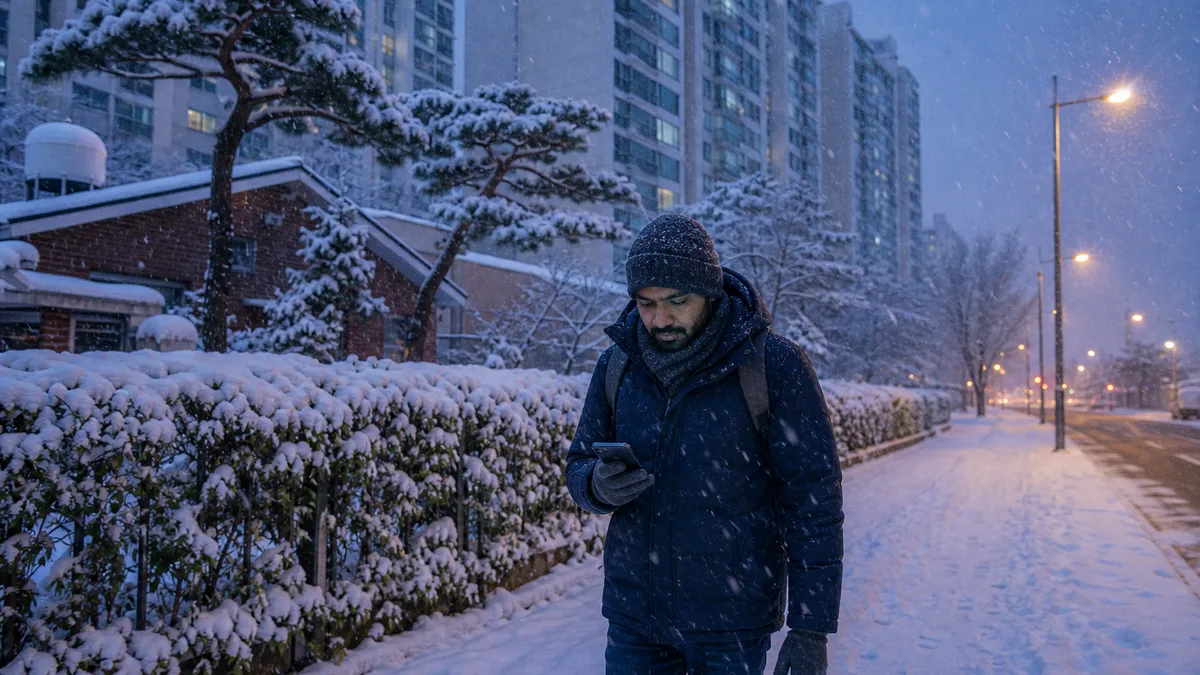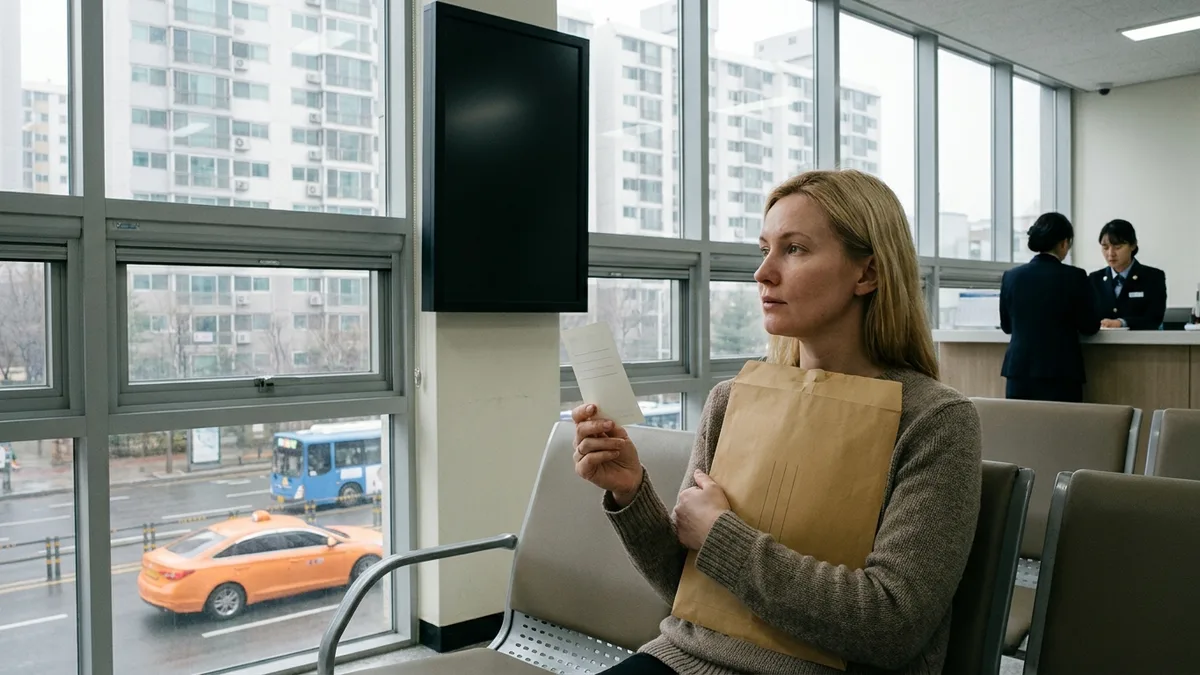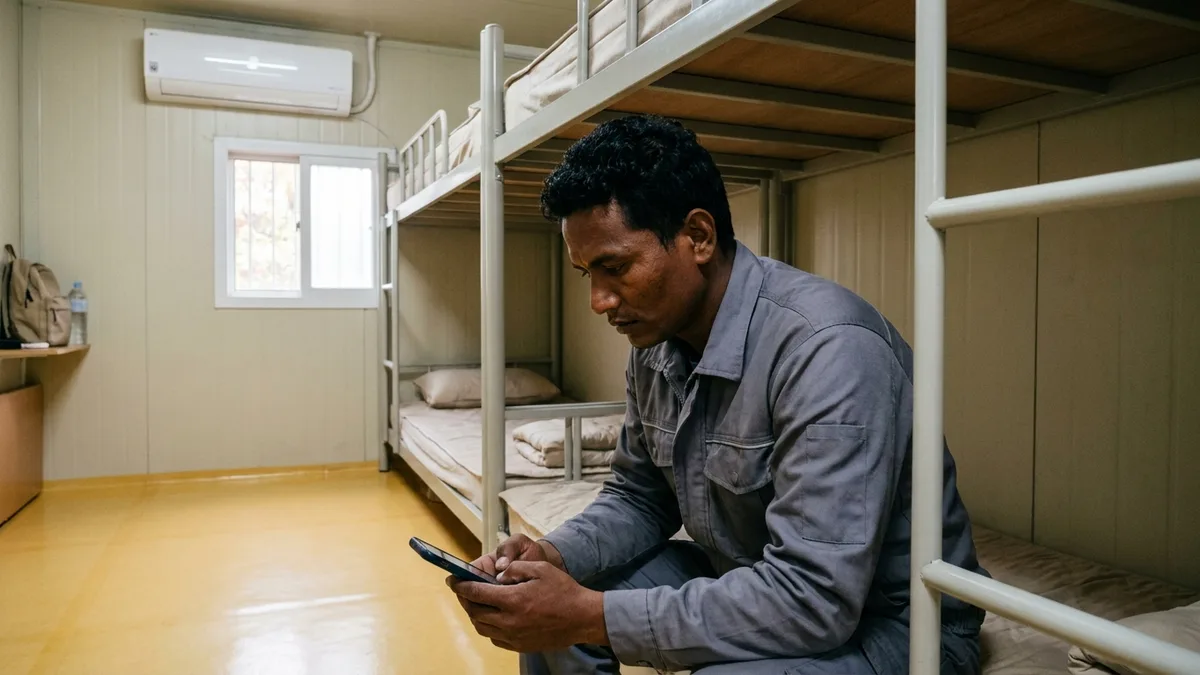
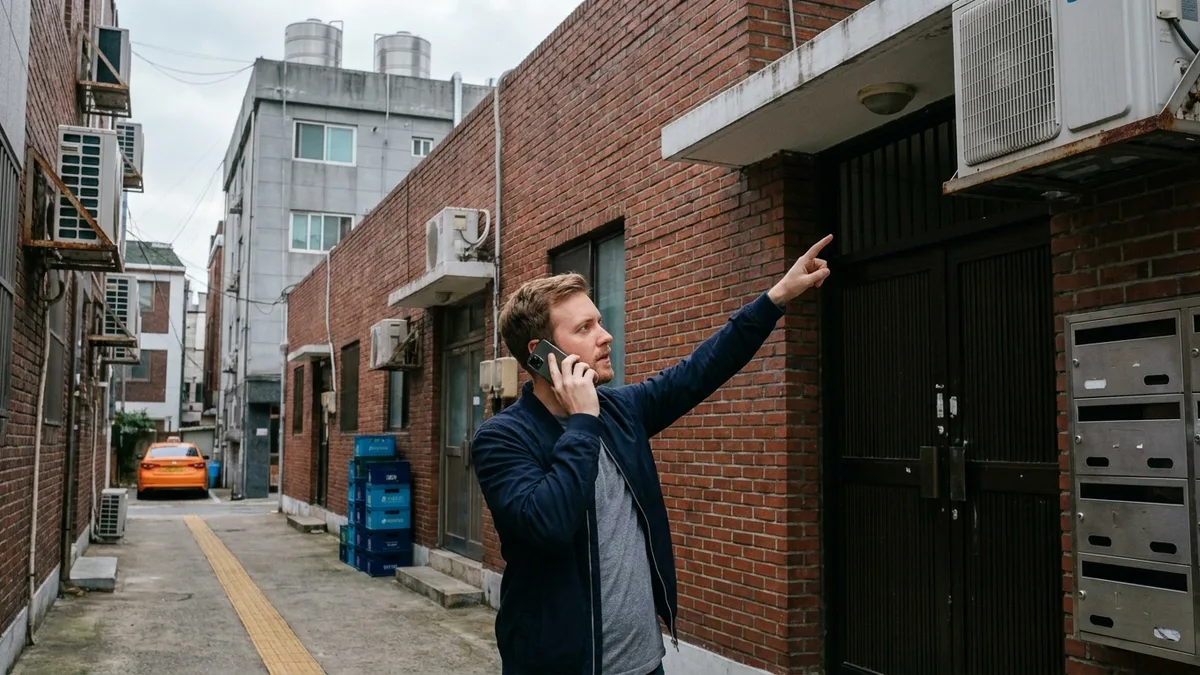
If someone hurt you or took your belongings, call 112. If there's a fire, you're injured, or you're trapped, call 119. Both are three digits with no area code.
You don't need to find the jurisdiction police station. Article 7(1) of the Act on the Operation and Processing of 112 Reports (Act No. 19870, effective July 3, 2024) requires police to promptly receive and process 112 calls regardless of the division of police duties or the jurisdiction where on-site response is needed.
A foreigner registration card isn't required either. Both Article 4(1) of the Act on 112 Reports and Article 4(1) of the Act on 119 Rescue and Emergency Services (Act No. 20543, effective June 4, 2025) begin with "anyone," and neither provision conditions the right on nationality or visa status.
Caution: This article organizes publicly available laws and government guidance as general information, not legal or medical advice. Please confirm decisions for your situation through the official channels below.
112 or 119 — Choosing in 30 Seconds
| Situation | Call |
|---|---|
| Someone is hitting or threatening you | 112 |
| Money or belongings were taken, stolen | 112 |
| Fire or smoke | 119 |
| Bleeding won't stop, unconscious | 119 |
| Trapped in an elevator or machinery | 119 |
| Traffic accident with injuries | Both 112 and 119 |
If you're unsure, don't hesitate—press either one. Both laws include provisions for joint response and cooperation among relevant agencies (Article 9 of the Act on 112 Reports, Article 14 of the Act on 119 Rescue). I haven't confirmed in primary sources whether you'll need to call again, so follow the instructions you receive on the call.
Many people think "112 is only for violent crimes, 119 only for the ER" and don't call at all. The statutes are broader. Article 2(2) of the Act on 112 Reports defines coverage as "crimes and various incidents, accidents, and other urgent situations," and Article 2(3) of the Act on 119 Rescue includes consultation within "emergency services."
What 112 Guarantees by Law — 'No Disadvantage Due to Language'
Article 3(3) of the Act on 112 Reports states: "The State shall guarantee accessibility so that no one is disadvantaged in using 112 reports due to disability, language, or other reasons" (as of 2026). Requesting interpretation isn't a courtesy—it's accessibility the law assigns as a state duty. Don't hang up because your Korean isn't fluent.
Article 4(1) also states, "Anyone has the right to request a prompt response from the State by using 112 reports when a crime or various incidents, accidents, or other urgent situations occur or are expected to occur."
Many people fear their information will reach an employer or perpetrator. Article 10(2) prohibits in principle the collection, use, and provision of information that can identify or infer the reporter—phone number, name, address, gender, age, voice—and limits exceptions to only three: report processing, consent, or special provisions of law. Misuse carries up to 5 years imprisonment or a criminal fine of up to 50 million KRW under Article 17.
119's Scope — Fire, Rescue, Emergency, and 'Which Hospital'
Article 2(1) of the Act on 119 Rescue defines "rescue" as all activities protecting the life, body, and property of people needing help in fire, disaster, calamity, terrorism, and other urgent situations. It's not just for fires. Article 10-2 of the same Act assigns the 119 Emergency Situation Management Center to provide guidance, consultation, direction for emergency patients, and hospital transfer information, so "which hospital should I go to" is also something 119 can guide.
For those who can't call 119 because of visa status, here's a provision I want to show you. Article 3 of the Emergency Medical Service Act (Act No. 21237, effective June 24, 2026) establishes the right to receive emergency medical care without discrimination, then adds: "The same applies to foreigners staying in Korea." Article 6(2) of the same Act prohibits emergency medical personnel from refusing or evading emergency care without just cause.
📌 Important: Having a right and not incurring costs are different things. Emergency room bills vary greatly depending on health insurance enrollment. The cost structure and order of use are organized in How Foreigners Use Hospitals in Korea; situations where it's not an emergency and you only need medicine are in How to Use Pharmacies and OTC Medicines.
Many people ask if it's okay to get involved in someone else's accident—but it's actually the opposite. Article 4(3) of the Act on 119 Rescue and Article 19(1) of the Framework Act on Fire Services (Act No. 20727, effective February 1, 2026) impose a duty on those who discover an urgent situation or accident scene to report it without delay.
When Language Doesn't Work — You Can Report by Text or Video Too
Phone calls aren't the only form of 112 reporting. Article 2(2) of the Act on 112 Reports defines 112 reporting as "reporting by voice, text, and other means such as internet, video, smart devices, etc." The National Police Agency 112 reporting portal (112.go.kr) also guides four channels—phone, text, 10-second recording, video—plus "my report inquiry." When a perpetrator is next to you and you can't make noise, text becomes the safer channel.
Both 112 and 119 have interpretation channels, but as of 2026 I haven't confirmed supported languages and connection methods in official sources. Transcribing them would risk advertising nonexistent services, so I won't list them here. If you connect, request interpretation and follow the guidance. (Official confirmation needed)
Beyond reporting, there's also a channel for foreigners on the receiving side, for disaster news. The emergency alert texts that arrive on your phone automatically are in Korean by default, and only the "critical" and "emergency" level alerts that come with a warning tone also show key details such as the type of disaster in English (in effect since February 2024). Emergency Ready App, the Ministry of the Interior and Safety's app for foreigners, provides disaster alerts, safety guidelines, and embassy information. The ministry said its June 15, 2026 overhaul expanded the app's supported languages to 22 and its safety guidelines from 29 types to 77. According to the same announcement, its information on facilities near your location now includes cold-weather shelters, so you can also use it to find a nearby shelter during a winter cold wave. App stores also list an older app from the same Ministry of the Interior and Safety with "(Old)" in front of its name, so download the one without "(Old)".
1345 Doesn't Answer at 10 PM — Numbers That Aren't 24 Hours
The belief "1345 handles all foreigner matters" fails outright at night and on weekends. According to Ministry of Justice guidance, 1345 operates weekdays 09:00–22:00, excluding public holidays. If you dial 1345 first for an assault or fire at 2 AM, no one will answer. 1345 is an administrative consultation window, not an emergency one.
| Number | What It Is | Confirmed Hours |
|---|---|---|
| 1345 | Ministry of Justice Foreign Resident Support Center — stay, visa | Weekdays 09:00–22:00, excluding public holidays |
| 129 | Health and Welfare Call Center — welfare, emergency support | Weekdays 09:00–18:00, emergency support consultation only 24 hours |
| 1350 | Ministry of Employment and Labor Customer Service — wages, working conditions | Not confirmed (official confirmation needed) |
| 132 | Korea Legal Aid Corporation — free legal consultation | Not confirmed (official confirmation needed) |
1345 requires no area code, caller pays, and from abroad it's +82-2-1345 or +82-2-6908-1345~6. 129 is toll-free, and only emergency welfare support, welfare blind spots, elder and child abuse, and mental health consultation run 24 hours—it's not an emergency medical reporting number.
Tip: Korean public holidays differ from your home country. Lunar New Year and Chuseok change dates every year, and most weekday windows close then. Korea Legal Aid Corporation publicly states it does not request payment for legal services via social media or chat apps, so watch out for impersonators.
24-Hour Numbers — 112, 119, 110, and 1577-1366
| Number | For What | Confirmed Details |
|---|---|---|
| 112 | Crimes, incidents, accidents, and other urgent situations | Receive and process regardless of jurisdiction (Article 7(1)) |
| 119 | Fire, rescue, emergency | "Emergency services" includes consultation (Article 2(3)) |
| 110 | When you don't know where to ask, government civil complaints | Toll-free, 365 days 24 hours (Korea Anti-Corruption and Civil Rights Commission guidance) |
| 1577-1366 | Danuri Call Center for multicultural/migrant families | Multilingual consultation 24 hours |
Foreign language and sign language consultation at 110 is noted as provided during business hours.
Caution: Women's Emergency Hotline 1366 and Danuri Call Center 1577-1366 are different. Ministry homepages list both numbers separately as distinct services. The ministry name is also Women's Equality and Family (formerly Gender Equality and Family) as of 2026, so searching the old name may return different results. The number of languages supported by Danuri varies by source, so I've written only "multilingual."
When Your Visa Status Is Uncertain — The Real Structure of Notification Duty Exemptions
Let me be clear up front: this is not something you can judge on your own. Neither "you'll definitely never be caught" nor "you'll definitely be deported" is true.
The structure has three tiers. Article 84(1) main text of the Immigration Act (Act No. 20992, effective January 23, 2026) establishes public officials' duty to report, and the proviso allows exceptions for reasons determined by Presidential Decree. Enforcement Decree Article 92-2(5) lists as one such exception when a public official, while performing duties defined by Ministry of Justice Ordinance such as rescuing crime victims or remedying human rights violations, "recognizes that victim relief is a priority need." "Recognizes" is a discretionary requirement, so it's not automatic or blanket exemption. The final tier, Enforcement Rule Article 70-2 (Ministry of Justice Ordinance No. 1106, effective January 23, 2026), enumerates in six items duties such as investigating murder, injury, assault, theft, robbery, and other crimes, investigating and remedying human rights violations and discriminatory acts, and inspecting and supervising wage arrears at workplaces.
Caution: This list defines when public officials' notification duty is exempted in performing certain duties, not a blanket immunity list for reporters. Whether your case falls under it is not something you can judge yourself. Even if exempted, it doesn't create visa status or erase penalties for overstay or unauthorized employment. Get the determination from ☎1345 and ☎132.
Labor case petition procedures and channels are in Complete Guide to Official Consultation Channels for Foreigners; consular notification and the scope of consular assistance upon arrest or detention are in What You Can Request from Your Embassy in Korea.
What to Prepare Before Calling, What Happens After
Jurisdiction doesn't block reception, but conveying location is required for response.
- Save your home and workplace addresses in Korean in your phone notes.
- Write down building name, unit, floor, room number. Road name addresses alone sometimes can't locate the entrance.
- One line of nearby landmarks — a convenience store name or bus stop is enough.
- Passport or foreigner registration number is not a precondition for reporting. Don't waste time looking for ID first.
Accidentally dialing wrong and fabricating a false report are different. If you dialed by mistake, don't hang up—just say so. Penalties divide into three types:
| For What | Legal Basis | Nature and Level |
|---|---|---|
| False fabricated report to 112 | Act on 112 Reports Article 18(1) | Administrative fine up to 5 million KRW (administrative order penalty) |
| False notification to 119 or fire agency | Act on 119 Rescue Article 30(1), Framework Act on Fire Services Article 56(1)(1) | Each administrative fine up to 5 million KRW (administrative order penalty) |
| Obstructing official duties by deception | Criminal Act Article 137 | Up to 5 years imprisonment or criminal fine up to 10 million KRW (criminal punishment) |
| False report of nonexistent crime/disaster to public official | Minor Offenses Punishment Act Article 3(3)(2) | Criminal fine, detention, or minor fine up to 600,000 KRW (criminal punishment) |
Even at the same 5 million KRW, an administrative fine leaves no criminal record and is an administrative order penalty, while a criminal fine is a criminal punishment.
After the incident ends is another hurdle. You'll need to visit police stations, immigration offices, hospitals, and labor offices over several days, but without a Korean bank account or phone number, travel and payment get blocked from the start. LACHA is a super-app for foreign residents' transportation and payment usable immediately without identity verification, so you can pay for KTX, express buses, taxis, airport rail, and transit cards in one place. But what you call in an urgent moment is 119, not a taxi. LACHA is a private transportation and payment service unrelated to reporting, investigation, or rescue procedures.
Want Korea's transit and payments in one app — without a Korean phone number or bank account? Check out LACHA.
Built to work without a Korean phone number or bank account, with overseas payment methods like Alipay, WeChat Pay, and Apple Pay. Taxi hailing plus KTX, express bus, and airport railroad (AREX) booking — all in one app.
Up to 60% off Korea transit with a coupon (max ₩3,000): enter code at sign-up. KTX gets up to 18% off on top
Download now


Frequently Asked Questions (FAQ)
Q1. I don't speak Korean. Can I still call 112? Yes. Article 3(3) of the Act on 112 Reports requires the State to guarantee accessibility so no one is disadvantaged in using 112 reports due to disability, language, or other reasons. Interpretation channels exist, but as of 2026 I haven't confirmed supported languages and connection methods in official sources, so if you connect, request interpretation and follow the guidance. If speaking is difficult, text reporting is also an option (Article 2(2)).
Q2. I don't have a foreigner registration card. Can I call 119? Article 4(1) of the Act on 119 Rescue states "anyone" has the right to receive prompt rescue and emergency services, and Article 3 of the Emergency Medical Service Act explicitly states "the same applies to foreigners staying in Korea." However, having a right and not incurring costs are different. Medical bills vary greatly depending on health insurance enrollment, so also see How to Use Hospitals.
Q3. I'm a victim but my visa status is uncertain. Will immigration be notified if I report? It can't be stated definitively. It's a three-tier structure: Immigration Act Article 84(1) proviso → Enforcement Decree Article 92-2(5) → Enforcement Rule Article 70-2, and the Enforcement Decree includes the discretionary requirement "recognizes that victim relief is a priority need." That list defines the scope of public officials' duties, not a reporter immunity list. Confirm your situation together with ☎1345 and ☎132.
Q4. I accidentally dialed 112 by mistake. Will I be punished? Accidental dialing and fabricated false reporting are different. Don't hang up—just say you dialed by mistake. Fabricating a false report carries an administrative fine of up to 5 million KRW under Article 18(1) of the Act on 112 Reports, which is an administrative order penalty, not a criminal fine. Criminal punishments are separate: Criminal Act Article 137 provides up to 5 years imprisonment or a criminal fine of up to 10 million KRW, and Minor Offenses Punishment Act Article 3(3)(2) provides a criminal fine, detention, or minor fine of up to 600,000 KRW.
Q5. It's an emergency at night or on the weekend. If 1345 doesn't answer, where do I call? According to Ministry of Justice guidance, 1345 operates weekdays 09:00–22:00, excluding public holidays, so it won't connect at night or on weekends. In an urgent situation, call 112 or 119. For multicultural/migrant consultation, Danuri Call Center ☎1577-1366 is advertised as operating 24 hours in multiple languages, and when you don't know where to ask, Government Civil Complaint Call Center ☎110 (toll-free, 365 days 24 hours) is available. 1366 and 1577-1366 are different numbers.
References: This article organizes publicly available laws and government guidance as general information, not legal or medical advice. Statutory provisions are from the Korean Law Information Center as of August 2026; numbers and hours are confirmed from Ministry of Justice Hi Korea and Ministry of Justice homepage (1345), Korea Anti-Corruption and Civil Rights Commission e-People (110), Ministry of Health and Welfare Call Center (129), National Police Agency 112 Reporting Portal (112.go.kr). Interpretation support languages for 112 and 119, and operating hours for 1350 and 132, were not confirmed in primary sources and are not listed. Systems, numbers, and hours change, so before acting please reconfirm for your situation with ☎112 (crimes, incidents, accidents), ☎119 (fire, rescue, emergency), ☎1345 (stay, visa, weekdays 09:00–22:00), ☎1350 (wages, working conditions), ☎132 (free legal consultation), ☎1577-1366 (multicultural/migrant, 24 hours), ☎110 (government civil complaints, toll-free, 24 hours). LACHA is a private transportation and payment service unrelated to the above agencies and does not perform reporting, investigation, or rescue procedures.