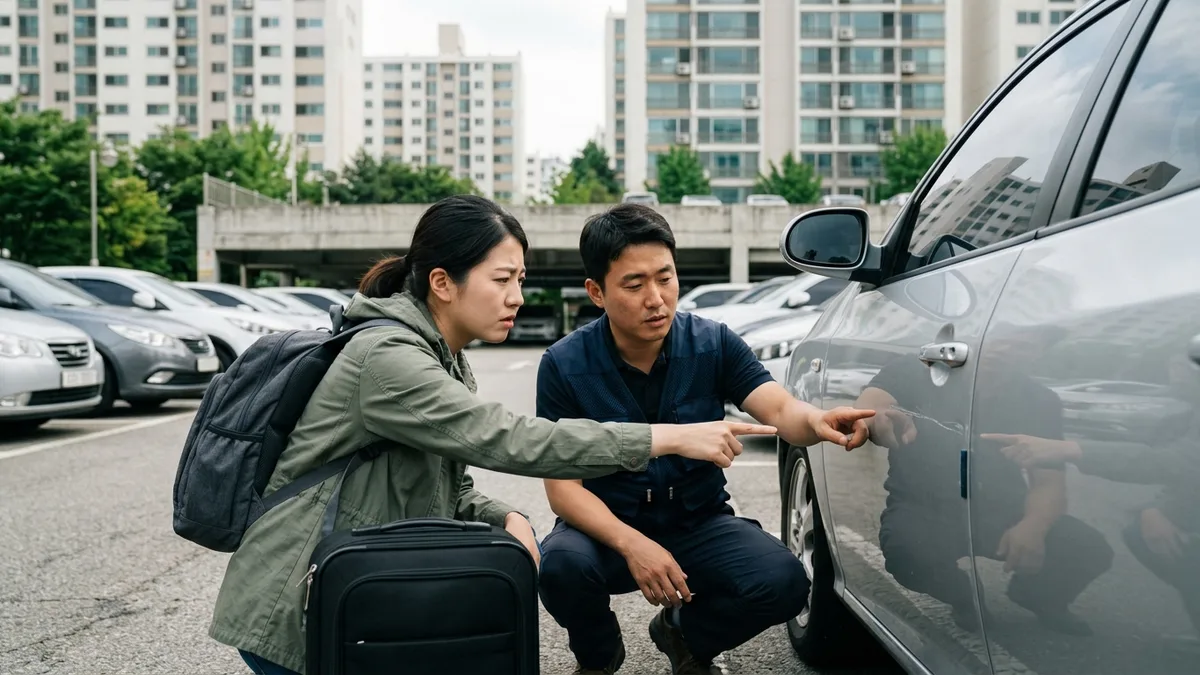
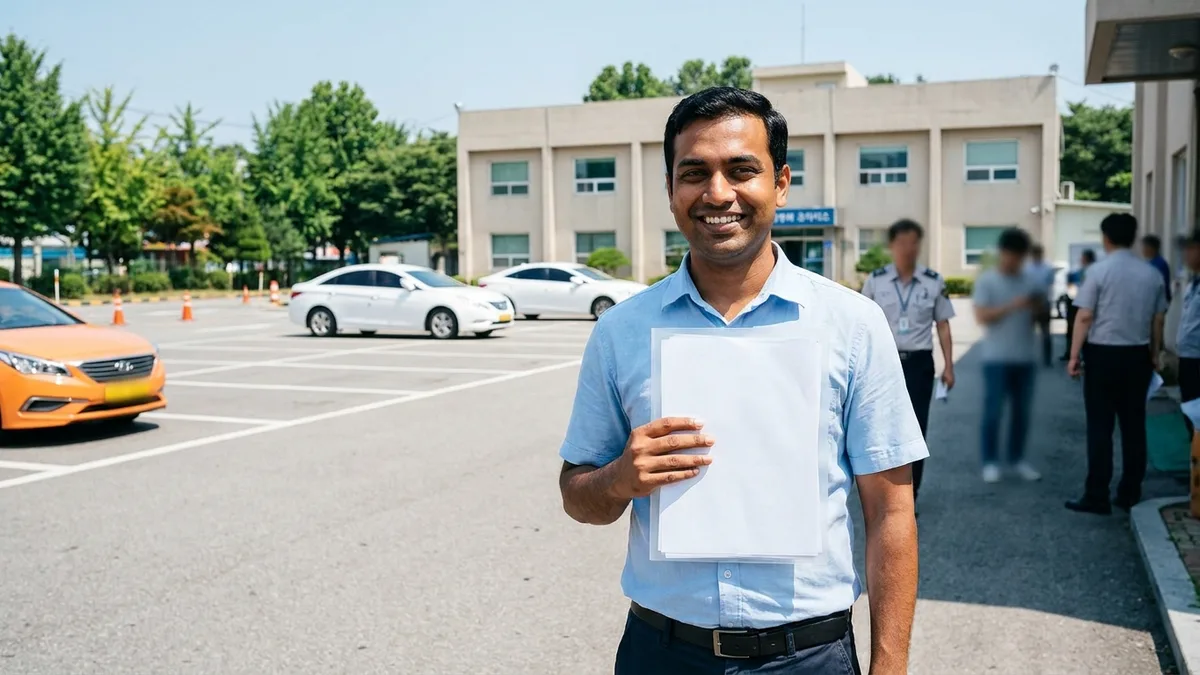
You've gathered all your documents and gone to the driver's license test center, only to hear "For licenses from your country, you'll need to take the written test." This happens after you've already spent time and money getting embassy certifications. Meanwhile, licenses from certain countries can be exchanged same-day with just paperwork—no test required. Temporary or learner's permits don't qualify at all, and if you're from the U.S., requirements vary even by state.
There are basically two ways to drive in Korea. If you're visiting short-term for travel, you can use an International Driving Permit (IDP). If you're planning to settle and stay long-term in Korea, you'll want to look into "foreign license exchange"—converting your home country license to a Korean one. We'll walk through both, starting with the exchange process.
The procedures, fees, and recognized country lists below are based on publicly available information as of 2026-08. All amounts and timelines mentioned without separate notation follow the same reference date. Country recognition status and required documents change frequently, so before visiting, always verify your specific case with the Road Traffic Authority's Safe Driving Integrated Civil Service (www.safedriving.or.kr), Road Traffic Authority ☎1577-1120, and your home country's embassy.
Exchanging for a Korean License
If you're planning to stay in Korea for 1 year or longer, an IDP alone won't be enough. This is where the foreign license exchange system comes in. It converts your valid foreign license into a Korean license, and you apply at a Road Traffic Authority driver's license test center. There are several prerequisites:
- Only valid, full licenses qualify. Temporary licenses, learner's permits, or driving permits cannot be exchanged.
- You must prove you stayed in the issuing country for 90+ days when you obtained the license using passport stamps and entry/exit records. If this can't be verified, exchange isn't possible—this requirement filters out licenses obtained quickly during short trips.
- The Korean license you receive through exchange is typically a Class 2 Ordinary license. Even if you hold a large vehicle, cargo, or bus license back home, it won't automatically convert to the same class. Only countries with mutual recognition agreements—like Belgium, Poland, Spain, Italy, and Ireland—may exchange for equivalent license classes. (Requires official confirmation)
- To verify domestic residence status, you'll need an Alien Registration Card (ARC) or Domestic Residence Report Certificate. Overseas Koreans (F-4 visa holders) who report domestic residence will use their residence certificate.
If you're exchanging for work purposes, check the license class first. If your job requires a Class 1 or special large/commercial license (cargo, bus, taxi), the exchanged license alone often won't be enough. Before paying for embassy certification, call your planned test center or Road Traffic Authority ☎1577-1120 to ask about your specific case.
When Should I Start Preparing? — Three Different Clocks
IDP validity, ARC issuance, and document preparation each run on different timelines. Get the sequence wrong and your IDP's 1-year window might expire while you're still waiting for your ARC.
- Right after entry — You can drive with an IDP. The clock starts from your entry date and runs for 1 year.
- Immediately upon arrival — Apply for alien registration or domestic residence report. Receiving the card typically takes a month or more.
- After receiving your ARC — Apply for embassy certification or Apostille. These must be issued within 1 year of the application date, so getting them too early wastes money.
- No later than 8-9 months after entry — Submit your application at the test center. For non-recognized countries, factor in written test scheduling to finish everything within your IDP's 1-year window.
Whether you can submit your application using just the ARC application receipt (before receiving the actual card) varies by test center. If you want to speed up the process, call ☎1577-1120 first to ask.
Step-by-Step Exchange Process
Step 1 — Check if Your Country is "Recognized"
This is the fork in the road. Your path—tests required, costs, timeline—depends entirely on which category you fall into.
| Category | Recognized Country (written test exemption) | Non-Recognized Country |
|---|---|---|
| Test | None — documents & medical exam only | Aptitude test + written test (40 multiple choice) |
| Additional Cost | None | Written test fee 10,000 KRW (per attempt) |
| Test Center Process | Same day to a few days if documents check out | Longer due to written test scheduling |
| Required Documents | Same as Step 2 below | Same |
The country list changes periodically, so we won't reproduce it here. Instead, here's how to narrow down your status:
- Countries with mutual recognition agreements with Korea qualify for written test exemption. Don't assume "my country must be on there"—actually look up your country name on the list.
- For the U.S., check by state name, not country. Some states qualify for exemption, others require the written test, even though they're all U.S. licenses.
- Being party to an agreement doesn't mean automatic exchange. The Geneva/Vienna Conventions determine whether you can drive with an IDP—exchange is separate.
- Not being recognized doesn't mean you can't exchange. Even licenses from countries outside any agreement can be exchanged if you pass the aptitude test + written test. Don't give up if your country isn't on the list.
Check the list on the Safe Driving Integrated Civil Service (www.safedriving.or.kr) under "Exchange Foreign License for Domestic License," and if you're uncertain, call your intended test center or ☎1577-1120 with your country/state name—it's the fastest way to find out.
Step 2 — Gather Documents (The Most Time-Consuming Step)
Here are the typically required documents. Additional documents may be requested depending on your country and personal circumstances.
- Original foreign driver's license — If your license isn't in English (Thai, Vietnamese, Arabic, Cyrillic, etc.), they may require a translation. Ask your embassy before getting the certification whether the translation is included—it can save you a trip. (Requires official confirmation)
- Original passport — To verify you stayed in the issuing country 90+ days when the license was issued, using entry/exit stamps.
- Alien Registration Card (ARC) or Domestic Residence Report Certificate
- Embassy certification or Apostille certificate — Core document for license verification. How to choose between them is explained right below.
- Entry/Exit Certificate — Can be issued at Government24 (www.gov.kr), local Immigration Office, or unmanned civil service kiosks. Online issuance may require Korean-style identity verification, so if you hit authentication roadblocks, visiting in person is more reliable. Ask the issuing office about fees and whether English-language versions are available.
- Color photo (3.5×4.5cm) several copies — Taken within the past 6 months
Embassy Certification vs. Apostille—Which Should I Choose?
- If you can't visit your home country or need it urgently → Embassy certification in Korea. Can be completed domestically, but some embassies have hard-to-book appointments. When contacting them, say "I need a certification of my driver's license for submission to the Korean driver's license test center" and they'll usually understand.
- If family/agent in your home country can handle it and your country is party to the Apostille (Hague) Convention → Apostille.
- If your country hasn't joined the Apostille Convention, Apostille won't be available—only embassy certification or consular verification may work. (Requires official confirmation)
Embassy certifications and Apostilles must be issued within 1 year of the application date. Getting them too early may result in rejection at submission, so time your issuance around your planned test center visit. Embassy appointment systems, fees, and processing times vary widely, so research ahead—strongly recommended.
Step 3 — Choose a Test Center & Visit for Application
This is the only step that actually requires you to physically go somewhere. Let's go through it in order:
- Choose a test center — The list and locations of driver's license test centers nationwide is available on the Safe Driving Integrated Civil Service. Not all test centers may accept foreign license exchange applications, so first confirm the one you're planning to visit handles this service.
- Check reservation requirements — Some centers operate by appointment, others accept walk-ins only. Closing times for same-day applications also vary—arriving late in the afternoon might mean you can't apply that day. A quick call to ☎1577-1120 or the specific test center before heading out prevents wasted trips. While you're at it, ask whether they have interpretation or foreign language counter services.
- Check operating days — Test centers typically operate weekdays (Mon–Fri) only. Planning weekend visits ends in disappointment.
- Application & medical exam — Submit your documents and take the medical (aptitude) exam. Many test centers process this on-site the same day.
Once application is complete, recognized countries move straight to license issuance, while non-recognized countries schedule a written test date (test prep tips below).
Step 4 — Pay Fees & Receive License
Pay the fees and you'll get your Korean license (amounts in table below). Non-recognized countries must pass the written test first.
- Usually same-day pickup, but varies by test center and timing.
- Bringing your own photo is standard, though some test centers have on-site photo services.
- If there's a gap between surrendering your foreign license original and receiving your Korean license, ask the application counter whether you can drive during that period. Getting fuzzy on this point risks driving without a valid license—the most dangerous scenario.
Costs & Timeline at a Glance
Exchange costs break down into document preparation expenses and test center fees. Embassy certification fees vary widely by country; everything else is fixed.
| Item | Recognized Country | Non-Recognized Country | Timeline |
|---|---|---|---|
| Embassy certification / Apostille | Varies by embassy/country | Varies by embassy/country | Days to weeks from reservation to receipt |
| Medical (aptitude) exam | 7,000 KRW | 7,000 KRW | Same-day processing at test center |
| Written test fee | N/A | 10,000 KRW (per attempt) | Depends on test scheduling |
| License issuance | 10,000 KRW (mobile IC 15,000 KRW) | Same | Usually same-day |
| Total test center fees | ~17,000 KRW | ~27,000 KRW | Including document prep, typically several weeks |
Add embassy certification/Apostille costs and photo fees on top. Mobile IC licenses are physical IC cards with smartphone registration capability, but registering on the app may require Korean-style identity verification. If you're early in your residence, you might pay the extra 5,000 KRW but not be able to use the mobile features—ask at the counter first. (Requires official confirmation)
Preparing for the Non-Recognized Country Written Test
Non-recognized countries require a 40-question multiple choice written test. Here's what to know:
- Passing score is 60+ (for Class 2 Ordinary licenses issued through exchange).
- Available languages: Korean, English, Chinese, Vietnamese. Supported languages may vary by test center, so confirm before visiting.
- Sample test questions are published on the Safe Driving Integrated Civil Service. Reviewing question types beforehand makes passing on the first try much easier.
- Application and retake procedures vary by test center. Ask all four of these during application: ①Can I test same-day as application? ②Is it walk-in or online reservation? ③How soon can I retake after failing? ④What ID documents (passport, ARC) do I need to bring? Plan your timeline with these answers. (Requires official confirmation)
When Exchange Isn't Possible — Getting a New Korean License
When the 90-day stay requirement can't be verified, or you have a temporary/learner's permit that doesn't qualify, or the license class you need isn't available through exchange—there's still the option to obtain a Korean license from scratch.
- Process is written test → skills test → road test in that order. Unlike exchange, there are practical driving stages, and the written test supports foreign language testing just like exchange.
- You can either enroll at a driving academy or apply directly at the test center. Academies cost more but have structured training schedules that make planning easier; direct application costs less but requires you to arrange practice and reservations yourself.
- Timeline typically runs several weeks to months depending on your preparation and test center booking availability.
- Whether academies accept foreign registration and offer foreign language support varies significantly by region. Start by checking with nearby test centers via ☎1577-1120.
What Happens to My Original License After Exchange?
Many people miss this: when you exchange, the foreign license original is typically surrendered and held by the test center. However, not all are confiscated—the Road Traffic Authority separately lists countries whose licenses are collected versus not collected. If you need to keep your home country license, check the "Foreign License Collection/Non-Collection Country List" on the Safe Driving Integrated Civil Service to see which category your country falls into.
Cases where held licenses are returned:
- When traveling abroad — If you present your passport and documents confirming departure (e-ticket, etc.), they'll return it to you.
- When you want to cancel your Korean license
- When your diplomatic mission requests transmission
- Whether temporary retrieval for short trips is allowed isn't confirmed in official guidance. If needed, check with the holding test center or Road Traffic Authority ☎1577-1120 before making plans.
Foreign licenses held in storage may be discarded if not retrieved within 10 years of exchange date. If you'll be driving in your home country frequently, plan the surrender/return logistics in advance.

Driving with an International Driving Permit (IDP) — Tourists & Short-Term Visitors
IDPs can only be issued in the country that issued the license. You can't get a new IDP using your home country license after arriving in Korea. If you entered without an IDP, your options are: ①Get one when visiting home ②Korean license exchange (covered above) ③Obtain a new Korean license ④Postpone driving and use public transit — choose one of these four. In practice, many people go with ④ while working toward ②; transportation during that gap is covered in the transit & payment tips section below. (Requires official confirmation)
Korea is party to the Geneva Convention (1949). Therefore, if you have a valid International Driving Permit issued by a Geneva Convention signatory country, you can drive in Korea for 1 year from your entry date. Since January 1, 2002, IDPs issued by Vienna Convention (1968) signatories are also recognized, with the same 1-year period from entry. Three commonly confused points:
- The reference point is "entry date." Even if the IDP itself has validity remaining, it may not be recognized if 1 year has passed since you entered Korea. Long-term residents repeatedly leaving and re-entering to keep driving on an IDP isn't a safe approach.
- Only IDPs from official issuing authorities are recognized. Must be an "International Driving Permit" issued by the government or government-authorized official issuing body (AAA, JAF, etc.) of each country. Online "international licenses" sold by non-authorized entities have no validity in Korea. If you're uncertain whether your IDP issuing body is authorized, check with your home country's licensing authority or its embassy in Korea. (Requires official confirmation)
- Carry all documents when driving. The standard is IDP + original home country driver's license + passport together. Enforcement stops and accidents often check all three.
Geneva Convention vs. Vienna Convention — Which Is My IDP?
Both conventions are agreements to "mutually recognize international licenses among member countries." Which convention your IDP is based on can be immediately confirmed by the convention name printed on the IDP cover (1949 Geneva / 1968 Vienna).
| Category | Geneva Convention (1949) | Vienna Convention (1968) |
|---|---|---|
| Recognized in Korea | Recognized (Korea is a signatory) | Recognized from 2002-01-01 (Korea is not a signatory) |
| IDP validity period | Typically 1 year from issue | Typically 3 years from issue (varies by country) |
| Example signatory countries | U.S., Japan, Philippines, Thailand, Australia, Canada, etc. | Germany, France, Russia, Vietnam, etc. |
For both conventions, the period you can drive in Korea is the same: 1 year from entry date. Representative signatories are examples only—check with your home country's licensing authority or its embassy in Korea to confirm which convention applies to your country.
Licenses and international licenses from countries not party to either convention (e.g., China) cannot be used for driving in Korea. In this case, no matter how prepared your IDP is, there's no solution—you'll need to shift direction toward Korean license exchange or obtaining a new Korean license. (Requires official confirmation)
What You Need to Rent a Car
Even with a valid IDP, rental companies add their own requirements on top. Based on major companies' standards, here's what's typical (as of 2026-08, varies by company):
- International Driving Permit (Geneva or Vienna Convention country issued) + original home country license + passport all three together.
- Within 1 year of entry. Often verified by entry stamps in your passport.
- Age requirement typically 21+ years old (26+ for certain vehicle types), license held for 1+ years.
- Credit card required for payment and deposit.
Conditions vary by company policy, and rentals can be refused if requirements aren't met. Inquiring before booking whether they accept foreign licenses saves on-site confusion.
When requirements don't match, many people think of car-sharing services like Socar or GreenCar, but most of these require a Korean license and Korean-style identity verification, making them impractical alternatives. In these cases, the KTX–express bus–taxi combination is the most realistic choice.
Transit & Payment Connection Tips — Getting Around Before Your License Is Ready
During the weeks it takes to prepare documents, get embassy certification, and schedule tests, you still need to commute and get around. You can't be stuck without transportation while waiting for exchange to complete.
Booking itself has options. Channels like the official Korail website allow reservations with passport and international cards. However, many apps assume Korean mobile phone verification and Korean cards, so early in your residence you'll hit roadblocks in booking and payment. That's when transit and payment apps designed to work without identity verification help. You can handle KTX, express buses, and taxis in one app using international payment methods.
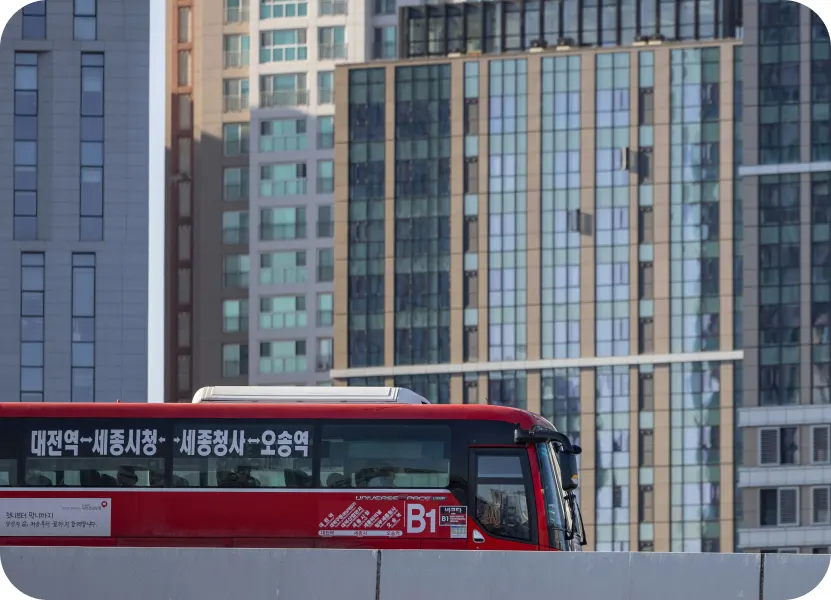
Need transit and payments while you wait for your residence card? Check out LACHA.
Built to work without a Korean phone number or bank account, with overseas payment methods like Alipay, WeChat Pay, and Apple Pay. Taxi hailing plus KTX, express bus, and airport railroad (AREX) booking — all in one app.
KTX now up to 18% off. Enter code at sign-up for 3,000P on top
Download now


Frequently Asked Questions (FAQ)
Q1. Can I drive with just my home country license without an IDP? In principle, no. You need IDP issued by a Geneva/Vienna Convention country + home country license + passport together. Check with your home country's embassy whether there are separate bilateral agreements outside the conventions.
Q2. If I leave and re-enter, does the IDP's 1-year period restart? Expecting that is risky. IDP validity is 1 year from entry date as a rule, and extending the period through repeated exits/entries may not be recognized. When 1 year approaches, move toward exchange or obtaining a new license.
Q3. Do I need to make an appointment at the driver's license test center? Can't I just walk in? Varies by test center. Some operate by appointment, some accept walk-ins, and application closing times differ. Some test centers may not handle foreign license exchange at all. Before heading out, call ☎1577-1120 or the specific test center to confirm all at once: ①Whether they accept exchange applications ②Whether reservation is required ③Application closing time. Test centers typically operate weekdays (Mon–Fri) only.
Q4. Can I drive overseas with a Korean license obtained through exchange? With a Korean license you can apply for an International Driving Permit (IDP) in Korea to use in Geneva Convention countries. Apply at driver's license test centers, police stations, etc. However, there may be required documents or residence status conditions for foreigner applications, and if your home country license original is surrendered/held at the test center, you'll need to handle that side as well. (Requires official confirmation)
Q5. What happens if I drive after my IDP expires? Driving without a valid license is unlicensed driving, subject to criminal penalties, and brings major disadvantages in insurance claims if an accident occurs. Rental companies will also refuse to rent to you. Schedule exchange or license acquisition before expiration.
Note: This article is for general informational purposes only and does not constitute legal or administrative advice. IDP recognition scope, recognized country lists, exchange requirements, documents, fees, exchanged license classes, and foreign license collection policies vary by country and change periodically. The procedures, fees, and timelines in this article are based on publicly available information as of 2026-08 and are subject to change. Before proceeding, always verify your specific case through official channels: Road Traffic Authority Safe Driving Integrated Civil Service (www.safedriving.or.kr), Road Traffic Authority (☎1577-1120), nearby driver's license test centers, and your home country's embassy. LACHA does not handle or guarantee license issuance or exchange procedures and assumes no responsibility for outcomes resulting from this guide.