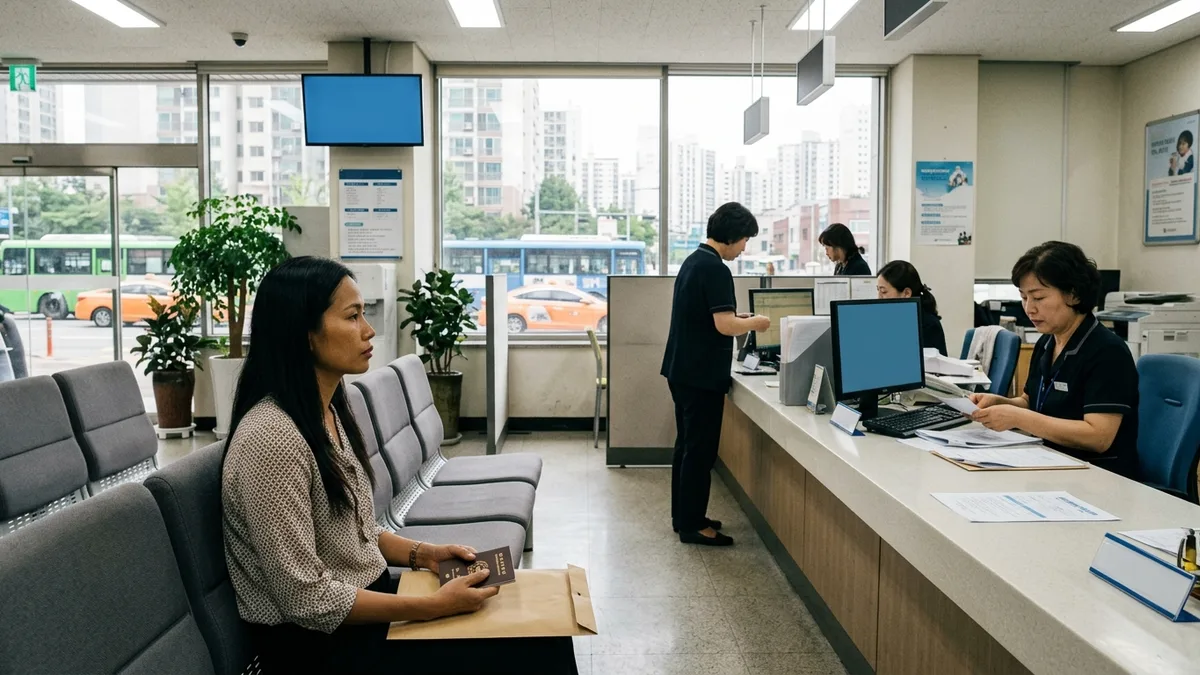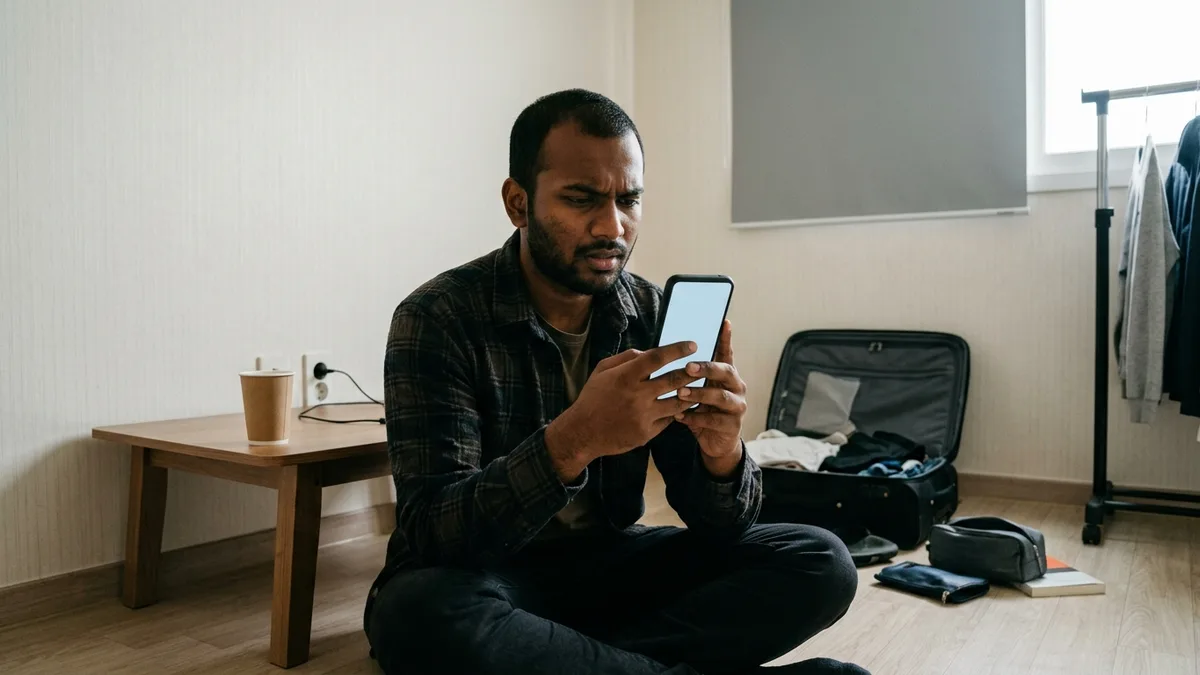

You wake up with a fever and a swollen throat, search "hospital" in your map app, and internal medicine clinics, ENT clinics, and general hospitals all come up at once. You head for the biggest-looking university hospital, get told "without a referral letter, national health insurance doesn't apply," and walk back out of the reception area. You call the neighborhood clinic and get a Korean-only recording. The booking app stops you dead at Korean phone verification. This is what a foreigner's first hospital visit actually looks like.
But once you know the order of operations, Korean hospitals are quite manageable for foreigners too. Plenty of neighborhood clinics take same-day walk-ins with no appointment, and if you have national health insurance, a cold costs far less than you'd expect. The single biggest variable in what you pay is whether you're enrolled in national health insurance, so if you haven't sorted that out yet, it's worth reading the Health Insurance Guide for Foreigners first.
In this article we'll walk through the whole first-visit process in order — how to pick the right kind of hospital, the ID you need to register, the range of costs, prescriptions and the walk to the pharmacy, interpretation hotlines, and what to do at night or in an emergency.
The fees, hours, and procedures below are based on publicly available information as of Aug 2026. Medical fee schedules and healthcare rules change year to year, so before you go, be sure to double-check official sites such as the Health Insurance Review and Assessment Service (hira.or.kr) and the National Emergency Medical Center portal E-Gen (e-gen.or.kr).
Start at a clinic — primary, secondary, tertiary
Korean medical institutions fall into three broad tiers. The neighborhood clinic (의원, uiwon) is primary care, hospitals and general hospitals are secondary, and tertiary general hospitals (university hospitals) such as Seoul National University Hospital are the third tier. For everyday care — colds, stomach bugs, minor aches — the guidance is to start at a primary-care clinic.
Bigger is not better. Outpatient care at a tertiary general hospital is structured so that national health insurance applies only if you have a referral letter (진료의뢰서 / 요양급여의뢰서), so going straight there without one means paying 100% of the bill yourself — tests and medication get billed as non-covered too. A referral is issued after you've been seen at a primary or secondary institution and the doctor concludes you should go to a larger hospital.
There are exceptions. Emergency patients, childbirth, dentistry, and family medicine, along with rehabilitation medicine (for registered persons with disabilities and similar) and hemophilia patients, are described as able to receive tertiary care without a referral (check official sources).
One tip for reading signs: if the name ends in 의원 (uiwon, "clinic"), as in "○○내과의원," it's primary care. For a cold, go to internal medicine (내과, Internal Medicine) or ENT (이비인후과); for skin trouble, dermatology (피부과); for children, pediatrics (소아청소년과).
How to find a hospital that speaks your language
- International healthcare centers at university hospitals: Major university hospitals such as Seoul National University Hospital, Severance, and Asan Medical Center run international healthcare centers where an interpreter stays with you from booking through payment. These are tertiary hospitals that require a referral, so file them away as your channel for detailed testing or admission.
- Published local government lists: Some local governments, Daegu among them, publish lists of medical institutions with foreign-language capability as open data. Try searching "[region name] + foreign language hospital."
- E-Gen emergency medical portal (e-gen.or.kr): Lets you search by region for hospitals, clinics, and pharmacies open right now. That said, the interface may be largely in Korean, so pairing it with a translation app is the realistic approach (check official sources).
- Have someone ask for you by phone: Call ☎1330 or ☎1345 from the interpretation section below and ask "is there an internal medicine clinic near here that speaks English" — they'll even confirm it for you on a three-way call.
What you need to register
Since May 20, 2024, ID verification has been mandatory when you receive care under national health insurance. For foreigners, an Alien Registration Card, Domestic Residence Report Card, Permanent Residence Card, or passport is accepted, and the mobile health insurance card (app / QR) is described as usable as well. Without ID, insurance may not apply or registration may be delayed, so make sure you bring it.
Registration itself is simple. Hand your ID to the front desk and describe your symptoms (a translation app screen works fine) and they'll give you a first-visit questionnaire. Write your name exactly as the roman-letter spelling on your ID — a mismatched spelling can prevent them from pulling up your insurance record. Most clinics run on same-day walk-in registration with no appointment, and wait times vary quite a bit by hospital and time of day.
What it costs comes down to whether you have insurance
In Korea, foreigners who stay six months or longer are automatically enrolled in national health insurance as regional subscribers (counted from the day six months after entry). Study abroad (D-2), non-professional employment (E-9), permanent residence (F-5), marriage migration (F-6) and similar statuses are described as enrolling immediately, and if you're an employee subscriber, your company normally handles enrollment.
With national health insurance, you pay only part of the outpatient bill (as of Aug 2026):
| Institution | Outpatient co-payment rate (general, under 65) |
|---|---|
| Clinic | 30% |
| Hospital | 40% (in urban dong areas) |
| General hospital | 50% (in urban dong areas) |
| Tertiary general hospital | 100% of the consultation fee + 60% of the rest |
For a sense of scale, the 2026 first-visit consultation fee at a clinic is ₩18,840, so with insurance your share of the consultation fee is about ₩5,650 (a further increase has been announced for late in the year — check official sources). For a cold, the visit and the medication together often come to roughly ₩10,000–20,000 (as of Aug 2026; more if tests are added).
Without national health insurance, everything is non-covered, so that same cold visit can climb to around ₩50,000–80,000 — it varies a lot by institution, so asking for an estimate before you register is the safe move (check official sources). If you're a traveler, be sure to get the receipt and the itemized statement for your travel insurance claim.
For reference, the regional health insurance premium for foreigners is described as a minimum of about ₩150,000 a month in 2026 (international students get a 50% reduction) — check the National Health Insurance Service (nhis.or.kr) for the exact figure. If you need admission or surgery without insurance, there's a safety net called the Medical Support Program for Foreign Workers and Others. You apply at the medical social work office of a designated institution, and a passport or Alien Registration Card plus a medical certificate are described as required (check official sources).
When the booking app blocks you
Koreans widely use apps like DdocDoc (똑닥) for hospital bookings and queue numbers. The booking function is free, though some features require a paid membership, and signing up requires Korean phone identity verification. If you have a Korean phone in your own name and an Alien Registration Card you can give it a try, but there are known cases of verification errors caused by a mismatch in the roman-letter name (as of Aug 2026; check official sources). Where and why identity verification blocks you is covered separately in Services You Can Use Without a Korean Phone Number.
If the app won't work, do this instead.
- Book by phone: Most hospitals take registrations by phone with no app verification step (it varies by hospital). If Korean is hard, ask ☎1345 or ☎1330 to place the call for you through three-way interpretation.
- Walk in and register on site: Just bring your ID and register at the desk. That said, some places — popular pediatric clinics in particular — run mainly on app registration, so if a wasted trip worries you, call ahead to check.
- For university hospitals, go through the international healthcare center: It's a booking channel dedicated to foreigners, so booking and interpretation are handled together without a Korean phone or an app (check each hospital's own guidance for the procedure).
Getting your prescription and going to the pharmacy
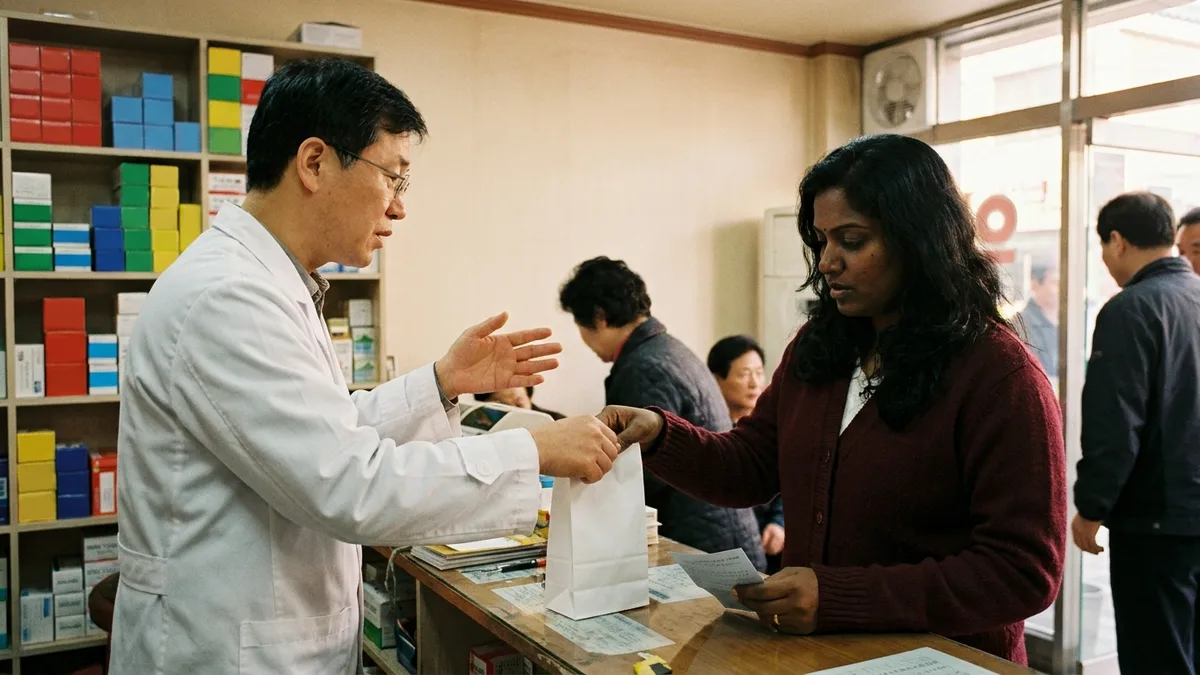
When the consultation ends, the hospital doesn't hand you medication — it hands you a prescription (처방전). Korea separates prescribing from dispensing as a rule, so you take the prescription to a pharmacy to have it filled, and prescriptions are described as being issued in two copies (one to submit to the pharmacy, one for you to keep) — don't throw the second one away; it's useful for travel insurance claims or a follow-up visit.
- Any pharmacy will do: Pharmacies cluster on the ground floor of the hospital building or right next door. Look for a green cross or a sign reading "약" (yak, "medicine").
- There's a validity period: It's commonly printed as three days including the date of issue, but that isn't fixed by law — the doctor who issues it sets the period — so reading the validity period printed on your own prescription is the accurate way to check. Once it lapses, the pharmacy can't fill it and you have to be seen again and get a reissue (check official sources).
- Medication costs: With national health insurance you pay 30% of the drug cost and the dispensing fee combined. There's a tiered rule under which getting a prescription for a mild condition like a cold from a tertiary general hospital pushes your drug-cost share up to 50% — so on medication too, the neighborhood clinic works in your favor.
Every medical interpretation hotline, in one place
We've collected only the channels actually operating as of Aug 2026. The key way to use them is a three-way call, with the interpreter joining between you and the hospital.
| Channel | Languages & hours | Use it for |
|---|---|---|
| ☎1330 Travel Helpline (Korea Tourism Organization) | Korean, English, Japanese, Chinese 24 hours; Russian, Vietnamese, Thai, Malay/Indonesian 08:00–19:00; year-round, free | The basic channel for travelers. Hospital guidance and, when needed, three-way connection to 119, 1345, and others |
| ☎1345 Immigration Contact Center (Ministry of Justice) | 20 languages, weekdays 09:00–22:00 (Korean, English, Chinese after 18:00) | The basic channel for residents. Choose your language in the ARS menu, then press * |
| ☎1577-1366 Danuri Call Center (Ministry of Gender Equality and Family) | 13 languages, 24 hours, 365 days | For migrants and multicultural families. Three-way interpretation that answers even late at night |
| ☎1339 Korea Disease Control and Prevention Agency call center | 24 hours, 365 days (mainly Korean) | Consultations on infectious diseases and disease information. This is not an emergency medical number |
One thing to watch — 1339 is not an emergency room information number. It's the KDCA's disease-information consultation channel, and it doesn't offer direct foreign-language consultation, so it's described as something to use via a three-way call with 1330 or 1345. If you live in Seoul, the city has begun running a medical interpretation support team that accompanies foreign residents to hospitals, so check how to apply with the Dasan Call Center ☎120 (operating details need official confirmation).
Nights, weekends, and the emergency room
- Finding somewhere open at night or on a weekend: The E-Gen emergency medical portal (e-gen.or.kr) and the E-Gen app let you search for hospitals, clinics, and pharmacies currently open. By phone, the Health and Welfare Call Center ☎129 and ☎120 will also point you somewhere.
- When your child is sick: Dalbit Children's Hospitals (달빛어린이병원, roughly "moonlight children's hospitals") are designated hospitals that treat mild cases in patients aged 18 and under at night and on holidays. There are about 150 nationwide (the number shifts), searchable by region on E-Gen (as of Aug 2026).
- How ER billing works: If you use the emergency room without an emergency-level condition, an emergency medical management fee (roughly ₩20,000–60,000, varying by institution type and year) is added entirely at your own expense (check official sources). On top of that, since September 2024, mild cases (KTAS levels 4 and 5) that go to a large emergency room such as a regional emergency medical center face a 90% co-payment on the ER bill — guidance indicates this raises the average at regional centers from about ₩130,000 to around ₩220,000.
- How to decide: If life is at risk — reduced consciousness, difficulty breathing, severe chest pain, heavy bleeding — call ☎119 immediately. Conversely, going to the ER "because nothing else is open at this hour" costs you heavily in both money and waiting — a Dalbit Children's Hospital, or a clinic the next morning, may be the better choice.
Transport & payment tips
The real ambush on a sick day is getting around. With a fever climbing, transferring buses to reach the hospital is too much, and the walk home carrying a bag of medication feels twice as long. Yet a good many Korean taxi-hailing apps assume Korean phone identity verification, so plenty of foreigners get blocked at the hailing step on exactly the day they're unwell.
Installing a transport and payment app designed to work without identity verification ahead of time makes this route simple. Being able to call a taxi without a Korean phone and pay directly with an overseas payment method makes the trip to the hospital far lighter. And once you've recovered, if you need to reach an international healthcare center in another city, the same app carries you on through KTX and intercity coach (고속버스) booking.

Want Korea's transit and payments in one app — without a Korean phone number or bank account? Check out LACHA.
Built to work without a Korean phone number or bank account, with overseas payment methods like Alipay, WeChat Pay, and Apple Pay. Taxi hailing plus KTX, express bus, and airport railroad (AREX) booking — all in one app.
Up to 60% off Korea transit with a coupon (max ₩3,000): enter code at sign-up. KTX gets up to 18% off on top
Download now


Frequently Asked Questions (FAQ)
Q1. I'm a traveler with no national health insurance. What does a cold visit to a clinic cost? Everything is non-covered so it varies by institution, but the visit and medication together are commonly reported to run around ₩50,000–80,000 (as of Aug 2026; check official sources). Ask for an estimate before you register, and if you have travel insurance, keep the receipt, the itemized statement, and your copy of the prescription to file the claim.
Q2. Can't I just go straight to a university hospital? Nothing stops you from going, but without a referral letter, national health insurance doesn't apply and you pay 100% of the bill yourself. Apart from exceptions such as emergencies, childbirth, dentistry, and family medicine, the standard route is to be seen at a clinic first and get a referral when one is needed.
Q3. I speak no Korean at all. Can I still be seen at a neighborhood clinic? Yes. Symptoms come across well enough on a translation app screen, and registration and payment go through with just ID and a payment method. For the moments where words are genuinely necessary, put ☎1330 or ☎1345 three-way interpretation on speakerphone. For care where precise communication matters, such as a surgical consultation, booking a hospital with an international healthcare center is the safer option.
Q4. A few days passed after I got my prescription and the pharmacy won't accept it. Once the validity period printed on the prescription (it isn't fixed at a set number of days by law — the doctor who issued it decides, commonly three days including the date of issue) has passed, the pharmacy can't fill it. If the last day falls on a weekend or public holiday it's described as extending to the next business day, but if it's already lapsed, you'll need to be seen again at the hospital and get a reissue (check official sources).
Q5. My child has a fever at night. Should I head straight to the emergency room? If it's mild, check for a Dalbit Children's Hospital first — they're searchable by region on E-Gen (e-gen.or.kr). Large emergency rooms carry a heavy cost burden because of the 90% co-payment rule for mild cases (KTAS 4 and 5), and the waits are long. That said, if there are urgent warning signs such as convulsions, reduced consciousness, or difficulty breathing, forget the cost and call ☎119 right away.
Cross the hospital threshold once and life in Korea gets easier
There are three things worth preparing before you get sick.
- Keep your Alien Registration Card (or passport) in your wallet. Half of registration is ID.
- Save the locations and phone numbers of internal medicine and ENT clinics near home in your map app. It's far faster than searching on the day you're ill.
- Line up a way to get around on a sick day. How to call a taxi without a Korean number is covered in How to Call a Taxi Without a Phone.
Once you've actually been through it once, going to the hospital turns out to be nothing much. Just remember the order. Clinic first, ID in hand, prescription to the pharmacy within its validity period — those three are enough for a first visit.
Note: This article is intended to provide general living information and is not medical advice. The fees, co-payment rates, and rules in the text are publicly available information as of Aug 2026 and can change at any time, so before you actually use these services, please check official channels such as the Health Insurance Review and Assessment Service (hira.or.kr), the National Health Insurance Service (nhis.or.kr), and the E-Gen emergency medical portal (e-gen.or.kr). For foreign-language consultation, use ☎1330 (travel interpretation), ☎1345 (Immigration Contact Center), or ☎1577-1366 (Danuri). LACHA is not a medical institution and takes no responsibility for outcomes arising from this guidance.