Start with the title printed on the paper in your hand. The dispositions Korea uses to make a foreign national leave split into three — a departure recommendation, a departure order, and a deportation order — and the detention order that holds you physically is a separate disposition layered on top of those. A different name means a different remaining deadline and a different place to file your papers.
The deadline is the piece that gets misunderstood most. The seven days is the window for filing an objection against a deportation order (Immigration Act Article 60(1), as of 2026), and the review request that challenges the detention itself has no filing deadline in the statute (Article 55). Seven days going by doesn't close off every remaining road.
📌 Important: This article is current as of August 2026, and the detention procedures reflect the amended Act that took effect on June 1, 2025 (Act No. 20794). Notices, news stories, and community posts in your own language written before then still carry the old content — "indefinite detention," "file your objection with the Minister of Justice," and so on.
Heads-up: This article is general information compiled from publicly available statutes, not legal advice. Everyone's disposition and remaining deadlines are different and so are the outcomes, so please confirm your own case with the official channels below. Ways of getting around the law, like fleeing or going into hiding, are not covered here in any form.
Which Paper Did You Get — Four Documents, Four Different Dispositions
| Document you received | Governing article | What it means | What comes with it |
|---|---|---|---|
| Departure recommendation | Article 67 | A recommendation to leave on your own, used where the violation is minor and in similar cases | A departure deadline may be set within 5 days from the date of issue |
| Departure order | Article 68 | An order issued to people leaving voluntarily at their own expense, people who didn't follow a departure recommendation, and others | Conditions such as residence restrictions, plus a performance bond deposit of up to KRW 20 million |
| Deportation order | Article 59(2) and (3) | Issued when the review finds you fall under one of the subparagraphs of Article 46(1) | Notice that you may file an objection (Article 59(4)) |
| Detention order / emergency detention order | Article 51 | Not an order sending you out — a separate disposition that holds you in a detention facility | For emergency detention, a detention order must be obtained and shown to you within 48 hours |
If you receive a departure order and don't leave by the deadline or you breach the conditions, a deportation order is issued without delay, and all or part of the performance bond can be forfeited to the national treasury (Article 68(4)). That's why sitting at the departure order stage and having received a deportation order are completely different situations.
This section has one conclusion. "Detention" isn't an order to leave — it's a separate disposition that holds you physically. You can be detained without a deportation order, and you can have a deportation order without being detained. The two dispositions are issued at different times, run on different deadlines, and are challenged in different places.
From the Crackdown to the Order — the Rights Attached to Each Stage
Who can be deported is limited to the subparagraphs of Article 46(1) of the Immigration Act, which lists them exhaustively. They include people who stayed beyond the scope of their status of stay or period of stay and people who worked without employment-eligible status (subparagraph 8), people who didn't get permission to change or add a workplace (subparagraph 9), people who breached their alien registration duties (subparagraph 12), and people released after being sentenced to imprisonment or a heavier penalty (subparagraph 13). Someone with permanent residency (F-5) is, as a rule, not deported under paragraph 2, with only three exceptions.
Heads-up: Not being on this list doesn't automatically mean you're in the clear. Each subparagraph cross-references other provisions in layers, so reading the list in reverse is risky. Which one your case falls under is for the competent immigration office to decide. This is hard to judge on your own, so ask ☎1345.
The law sets out certain things for the investigation stage. When an immigration officer questions a suspect who doesn't speak Korean, the officer must have an interpreter interpret (Article 48(6)). To inspect a suspect's residence or belongings, or to demand that documents or items be produced, the officer needs the suspect's consent (Article 50). In status checks, officers may ask a foreign national suspected of a violation to stop and may question them, and you must not refuse questioning or a request for materials without justifiable grounds (Article 81(3) and (4)).
Detention requires two conditions together. There must be substantial grounds to suspect that you fall under one of the subparagraphs of Article 46(1), and you must have fled or there must be a risk that you will flee (Article 51(1)). If the review finds that you don't fall under them, you must be told without delay and released immediately if you're in detention (Article 59(1)); if it finds that you do, the deportation order is issued together with notice that you may file an objection (Article 59(4)). That notice is a duty the law imposes.
One more thing: since June 2025, the law has included an opportunity to state your views before an action is taken (Article 66-3). Issuing a detention order, granting an extension of the detention period for review, detaining someone who has received a deportation order, applying for approval of an extension, re-detention and applying for approval of its extension, and revoking a temporary release — before any of these six, you must be given a chance to state your views orally or in writing. What you submit is sent along with the papers when the head of the office forwards them to the committee (Enforcement Decree Article 69(3) and Article 78(3)).
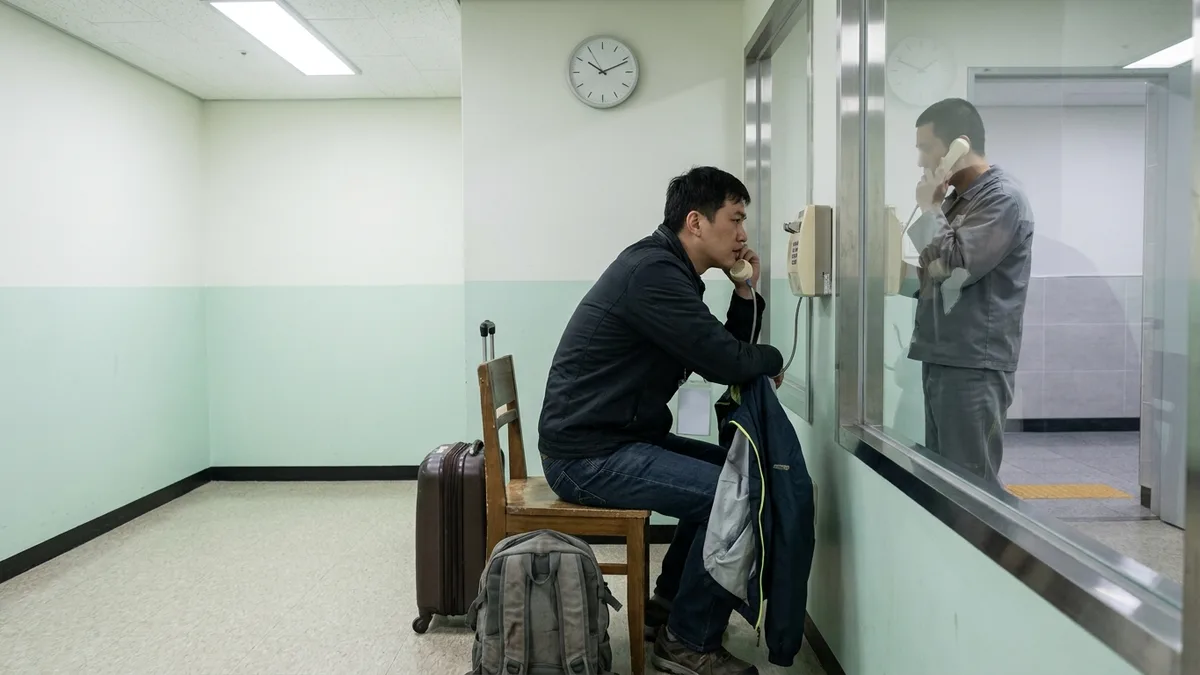
"Detention" Comes in Two Kinds — Since June 2025 There's a Cap
| Category | Detention at the review stage | Detention after a deportation order |
|---|---|---|
| Governing article | Article 52(1) (as of 2026) | Article 63 (as of 2026) |
| When | To review and decide whether you're subject to deportation | When you can't be repatriated immediately because you have no passport or no transport is available |
| Basic period | Within 10 days | Within 2 months |
| Extension | Only once, within 10 days, where unavoidable | Every 3 months, with prior approval from the Foreigner Detention Committee |
| Overall cap | 20 days maximum | 9 months in total; 20 months in total only where a proviso ground applies |
This is where this subject goes wrong most often. On March 23, 2023, in case 2020Hun-Ga1 and 2021Hun-Ga10 (consolidated), the Constitutional Court held the former Article 63(1) constitutionally nonconforming on the grounds that it set no upper limit on the detention period and so made indefinite detention possible, and that there was no control procedure by a neutral body independent of the enforcement agency at the initiation and extension stages; it set May 31, 2025 as the legislative deadline. The Immigration Act was accordingly amended by Act No. 20794 (promulgated March 18, 2025, effective June 1, 2025), creating the cap on detention periods and the Foreigner Detention Committee.
So the explanation that "Korea can hold foreign nationals with no time limit" doesn't match the law as it stands. At the same time, the "18 months maximum" that also circulates isn't a number in the provision as enacted. The enacted Article 63(2) says the total may not exceed 9 months, and only where a proviso ground applies may it not exceed 20 months.
There are only two exceptions that can take you to 20 months (the proviso to Article 63(2)). ① Where repatriation has been delayed because, after receiving a deportation order, you applied for refugee status or filed litigation over a refugee-related decision; and ② where you violated the National Security Act, the Anti-Terrorism Act, or the Prohibition of Financing for Terrorism Act, committed a crime of insurrection, foreign aggression, or an offense against foreign relations or public peace under the Criminal Act, or were sentenced to imprisonment or a heavier penalty for a crime prescribed by Presidential Decree. That last item, "a crime prescribed by Presidential Decree," is exhaustively listed in Article 78-2 of the Enforcement Decree.
Conversely, "9 months and you're automatically out" isn't right either. Someone who has been released can be detained again if they flee, if they come to fall under a subparagraph of Article 46(1) on another ground, or if they breach a release condition, and the previous detention period is not counted when calculating the re-detention period (Article 63-3). That means the cap starts over from zero.
Extensions aren't automatic. The head of the office must send an application for approval of an extension to the Foreigner Detention Committee no later than 3 weeks before the day the detention period ends, and the committee must decide and notify the head of the office and the Minister of Justice by the day before that period ends (Enforcement Decree Article 78(2) and (4)). If the cap is passed or approval isn't granted, the detention must be lifted (Article 63-2(1) and (2)). Which provision your own detention is being counted under is hard to work out on your own, so check with ☎1345.
The Route for Challenging Detention — a Review Request to the Foreigner Detention Committee (Article 55)
Since June 1, 2025, both the name of the procedure and who it goes to have changed. The current Article 55 is titled "Request for Review of Detention," and the detained person or their legal representative and others file it with the Foreigner Detention Committee through the head of the competent immigration office. Sending it to the Minister of Justice, as under the old law, puts you on the wrong procedure.
One thing to hold on to here. This review request has no filing deadline written into the statute. That means you can challenge the detention for as long as it continues. For someone whose 7 days on the deportation order have already run out, this is exactly the road that's left.
The procedure is simple. You submit a review request with materials supporting your grounds attached to the head of the immigration service, office, branch office, or detention center, and they attach their written opinion and forward it to the committee without delay (Enforcement Decree Article 69). The committee must decide within 3 weeks from the day it receives the request, and where unavoidable it may extend that once, by up to 2 weeks (Enforcement Decree Article 70(1)). If the request is without merit it's dismissed; if it has merit the decision is to release you, and once a release decision comes down the detention must be lifted without delay.
The committee sits within the Ministry of Justice but performs the work within its authority independently (Article 66-4), and it handles review of objections to detention, approval of extensions of the detention period, review of objections to re-detention and approval of its extension, and decisions on temporary release (Article 66-5). It is set to exist from June 1, 2025 through May 31, 2030 (Article 66-11). We couldn't confirm a channel for contacting the committee directly, though, so filing your papers through the head of the office, the way the law prescribes, is the accurate route.
The Route for Challenging a Deportation Order — 7 Days From the Day You Receive It (Article 60)
The starting point matters. Within 7 days from the day you receive the deportation order, you file a written objection with the Minister of Justice through the head of the competent immigration office (Article 60(1)). The head of the office that receives it attaches the written review decision and the investigation record and sends them to the Minister of Justice, who reviews and decides whether the objection has merit (Article 60(2) and (3), Enforcement Decree Article 75(1)). If the decision is that it has merit, you must be notified without delay and released immediately if you're in detention (paragraph 4).
Even if the decision goes against you, one road is left. The Minister of Justice may permit you to stay where it is recognized that the suspect once held Korean nationality or that there are other special circumstances requiring the person to stay (Article 61). This is discretionary, though, not a right.
Heads-up: Filing an objection does not automatically stop the deportation from being carried out. The Immigration Act has no provision to that effect, and Article 62(3) requires that the order be presented and the person repatriated without delay. To stop enforcement, you have to file administrative litigation and separately obtain a suspension-of-execution decision, which requires showing an urgent need to prevent irreparable harm (Administrative Litigation Act Article 23).
Administrative litigation is a separate track from the objection. A revocation suit must be filed within 90 days from the day you learn that the disposition was made, that period is a peremptory one, and the suit cannot be filed once 1 year has passed from the day the disposition was made (Administrative Litigation Act Article 20). But the "another 90 days from the day you receive the objection result" calculation you often see in writing about other fields must not be carried over here. Article 36 of the General Act on Public Administration, which that calculation rests on, excludes matters concerning the entry and departure of foreign nationals, refugee recognition, naturalization, and reinstatement of nationality from its application under subparagraph 5 of paragraph 8 of the same Article. Calculating the filing period and judging your chances of winning is a lawyer's territory, so don't run the numbers off this article — start by asking ☎132 whether you're eligible.
Refugee matters have their own provisions. If you've applied for refugee status and no decision has been made, or the review of an objection under Article 21 of the Refugee Act hasn't finished, you must not be repatriated (Article 62(4)), and Article 3 of the Refugee Act likewise bars forcibly repatriating a recognized refugee, a person granted humanitarian stay, or a refugee applicant against their will. The refugee procedure itself is outside this article's scope, so it isn't covered here.
Waiting on the Outside — Temporary Release and Release From Detention
Temporary release runs on two tracks (Article 65). One is where the head of the office, acting on their own authority, weighs the circumstances, the grounds given in the release request, your assets and so on, has a deposit of up to KRW 20 million lodged, and grants temporary release with conditions attached. The other is where the Foreigner Detention Committee decides on an application from the detainee, a guarantor, a legal representative, or others. The application moves through the same structure as the review request — you submit it to the head of the office, they attach their written opinion and forward it to the committee, and the committee decides within 3 weeks from the day it's received (extendable once, by up to 2 weeks, where unavoidable) (Enforcement Decree Article 79-2). For the form, use the one kept on hand at the office.
The review criteria are set out in five items in Article 79-3(1) of the Enforcement Decree. ① Whether there's concern of a serious threat to life or body, or of irrecoverable property damage; ② whether there's concern of harm to the national interest, such as national security, social order, or public health; ③ criminal record, age, character, and manner of living; ④ whether there's a risk of flight; and ⑤ other serious humanitarian grounds.
Heads-up: Don't trust anyone who offers to pay the deposit for you or guarantees your release. KRW 20 million is the ceiling the law sets, not a standard amount, and paying a deposit doesn't guarantee release. The decision follows the five review criteria above, so nobody can promise you the outcome. Don't judge your own chances of release either — check with ☎1345 and ☎132.
Being released doesn't create a status of stay, either. Both release from detention and temporary release can come with conditions such as residence restrictions, regular reporting, designation of a personal guarantor, and payment of a deposit (Article 63-2(4), Article 65(1)). You're simply waiting on the outside while keeping to the conditions. If you flee, fail to comply with an order to appear, or breach a condition, the temporary release can be revoked and you can be detained again, and all or part of the deposit can be forfeited to the national treasury (Article 66). A deposit that has been lodged is returned to whoever paid it when you leave the country or when the temporary release is revoked, except where it's forfeited to the treasury (Enforcement Decree Article 79(5)).
The statutory penalties are clear too. A person under detention or temporary detention who flees, or who flees while being escorted, faces up to 1 year of imprisonment or a criminal fine of up to KRW 10 million (Article 95(8)), and someone who breaches conditions attached to a release or a re-detention faces the same penalty (Article 95(9)).
What You Can Ask For Inside the Facility
When you're detained, notice of the time, place, and reason for the detention must be given in writing within 3 days to your legal representative, spouse, lineal relative, sibling, family member, or defense counsel who is in Korea, or to a person you designate (Article 54(1)). That notice must also state that you may file a review request (Enforcement Decree Article 68). Turn that around and it means that if your whole family is back home, the notice may not reach anyone at all. So picking one acquaintance in Korea in advance and memorizing their name and phone number is a practical way to prepare.
Consular notification works differently. Article 54(2) provides that the consul be notified "where the detained person so wishes." In other words, it happens only if you ask. Saying "I request that my country's consulate be notified" is enough, and the same goes for notification of a change when your place of detention changes or the period is extended (Enforcement Rules Article 60). What a mission actually does for you is laid out in What Your Home Country's Mission in Korea Actually Does.
| Category | Who | Time and frequency | Basis |
|---|---|---|---|
| Ordinary visit | Family, acquaintances, and so on | Reception 09:30–11:30 · 13:30–16:30, visit within 30 minutes, once a day per visitor, twice a day per detainee, bring photo ID | Rules on the Detention of Foreigners Article 33 |
| Special visit | Your own country's consul, an attorney serving as defense counsel (including someone seeking to become counsel), and commissioners and staff of the National Human Rights Commission handling a petition | No limit on visit length within working hours | Article 34 of the same Rules |
Documents and letters sent by those three categories of special visitors can't be inspected (proviso to Article 35(3) of the same Rules). When you have to write documents in Korean and it's hard to reach anyone who can help, special visits with no time limit and phone calls (Article 56-6(1)) are the realistic channels.
Here are the other things the law guarantees. If you're unhappy with your treatment you can petition the Minister of Justice or the head of the office, and you can't be treated unfavorably because you petitioned (Article 56-8). The procedures for review requests, visits, and petitions, and for temporary release and its revocation, must be posted somewhere clearly visible inside the facility (Article 56-9, Article 66-2). Patients, pregnant women, the elderly and infirm, and people under 19 must be given special protection, and men and women must be held separately (Article 56-3(2) and (3)). The living rules and the ways to seek remedy must be posted in Korean, English, and Chinese, and if someone who doesn't understand those asks, it must be interpreted for them (Rules on the Detention of Foreigners Article 8) — plenty of people don't know they can even ask for this.
Don't tough it out if you're sick. If you fall ill or get injured you must be seen by the facility's doctor, for an illness the facility can't treat you can request outside treatment at your own expense, and if your life is in danger you must be moved to an outside medical institution without delay (Article 21 of the same Rules). If your human rights have been violated, you can report it to the human rights officer in writing or orally, and you must not be treated unfavorably for reporting (Articles 28-2 and 28-3).
A petition to the National Human Rights Commission is a separately protected route. A detention facility is a confinement or protection facility under Article 30(1)1 of the National Human Rights Commission of Korea Act, and Article 31 of the same Act requires that the time, place, and facilities needed to write a petition be provided immediately, bars facility staff from sitting in on, listening to, or recording the interview, and bars inspection of a petition written for submission to the commission. Counseling is at ☎1331 (no area code needed), and Human Rights e (case.humanrights.go.kr) provides petition guidance in 8 languages.
If you have children, there are provisions for that. Where a detained foreign national supports a child under 14 and there's no one else to support them, the child may be permitted to live with them even if the child isn't subject to detention, and a child under 3 may be permitted to stay with their detained birth parent even where another supporter exists (Article 4(2) of the same Rules). A child under 18 held for a month or more must be given education suited to their age and ability, or may be entrusted to an outside specialized welfare facility.
What People on the Outside Can Do, and the Tracks That Must Not Get Mixed
First, the passport. If you have no passport or it's expired and repatriation can't happen, the detention structurally drags on — and reissuing a passport is your own country's mission's job, not a Korean office's. Where you unavoidably have to appear in person at your own mission to be issued a passport or a similar document, where you want outside medical treatment, or where you've been summoned to appear for an investigation, a criminal inquiry, or a trial, an outing may be permitted (Rules on the Detention of Foreigners Article 28(1)).
The best-known facilities are the Hwaseong Immigration Detention Center (739 Hwaseong-ro, Mado-myeon, Hwaseong-si, Gyeonggi-do, ☎031-8055-7000) and the Cheongju Immigration Detention Center (☎043-290-7552), but those two aren't the whole picture. Article 52(2) defines the place of detention as "a foreigner detention room, a foreigner detention center, or any other place designated by the Minister of Justice," so you could be held in the foreigner detention room of a local immigration service or office, and Enforcement Rules Article 59 provides that those designated places may include detention houses and correctional institutions. Conversely, Article 3 of the Rules on the Detention of Foreigners bars using a detention facility as a place for housing inmates under the Act on the Execution of Sentences. To know where someone actually is, you have to check with the competent office.
Don't mix the tracks. Unpaid wages and workers' compensation run on completely different statutes, channels, and deadlines, so read those separately in Wage and Workers' Comp Rights for Undocumented Workers and Where to Get Help — Official Support Hotlines for Foreigners. Advance reporting of voluntary departure, penalty notice fines (범칙금), and re-entry restrictions are covered in What to Do If Your Visa Expires or You Overstay. For reference, the Ministry of Justice's special voluntary departure program ran on a temporary basis from December 1, 2025 to February 28, 2026 and that window has now passed, and even that program excluded people subject to deportation — those who failed to comply with a departure order, for instance — from the start. Check ☎1345 and Hi Korea's notices for whether a program like that is open again.
There's also a special provision in the statute (Article 46-2) for people in the middle of a remedy procedure as victims of domestic violence, sexual violence, child abuse, or human trafficking. We couldn't confirm the requirements and how to apply from primary sources, though, so if you think it applies to you, check with ☎1345, ☎132, and ☎1577-1366 together.
| Where | Number | For what |
|---|---|---|
| Immigration Contact Center, Ministry of Justice | 1345 (interpretation available) | Stay and immigration, what the disposition you just received actually is, how much time you have left |
| Korea Legal Aid Corporation | 132 (klac.or.kr) | Free legal counseling; ask whether deportation and detention cases qualify for legal aid |
| National Human Rights Commission of Korea | 1331 (case.humanrights.go.kr) | Petitions about human rights violations in detention facilities, guidance in 8 languages |
| Ministry of Employment and Labor Customer Center | 1350 | Unpaid wages and working conditions — a separate track from immigration |
Let's also clear up the sentences that get mixed around. Staying beyond the scope of your status of stay or period of stay (a violation of Article 17(1)) and working without employment-eligible status (a violation of Article 18(1)) fall under Article 94, subparagraphs 7 and 8, and carry up to 3 years of imprisonment or a criminal fine of up to KRW 30 million. Working somewhere other than your designated workplace when you do have employment-eligible status (a violation of Article 18(2)), by contrast, falls under Article 95(5) and carries up to 1 year of imprisonment or a criminal fine of up to KRW 10 million. Plenty of sources have these two swapped.
The Hwaseong and Cheongju detention centers aren't easy to reach by public transport, and visit reception is split into weekday morning and afternoon slots. If you're family or a friend making the trip, locking in the day's travel and payments in advance cuts down on wasted journeys. LACHA is a transport and payment super app for foreign nationals that works right away with no Korean identity verification, letting you pay for KTX, express buses, taxis, the Airport Railroad, and transit cards in one place. That said, LACHA is a private transport and payment service with no connection whatsoever to immigration procedures.
Need transit and payments while you wait for your residence card? Check out LACHA.
Built to work without a Korean phone number or bank account, with overseas payment methods like Alipay, WeChat Pay, and Apple Pay. Taxi hailing plus KTX, express bus, and airport railroad (AREX) booking — all in one app.
Up to 60% off Korea transit with a coupon (max ₩3,000): enter code at sign-up. KTX gets up to 18% off on top
Download now


Frequently Asked Questions (FAQ)
Q1. It's been more than 7 days since I got my deportation order. Is there nothing I can do now? The 7 days is the window for filing an objection against the deportation order (Immigration Act Article 60(1), as of 2026). But the review request that challenges the detention itself has no filing deadline written into the statute (Article 55), and neither does an application for temporary release (Article 65(2)). For both procedures you submit your papers to the head of the office, who attaches a written opinion and forwards them to the Foreigner Detention Committee, and the committee decides within 3 weeks (extendable once, by up to 2 weeks, where unavoidable). Check with ☎1345 first about which road is still open in your situation.
Q2. How many months can I be held in a detention center at most? I heard "18 months." "18 months" isn't a number in the provision as enacted. The current Article 63(2) says the total detention period may not exceed 9 months, and only where a proviso ground applies (repatriation delayed by a refugee application or litigation; National Security Act, terrorism-related, or serious crimes prescribed by Presidential Decree) may it not exceed 20 months. Detention at the stage of reviewing whether you're subject to deportation is separately capped at 20 days (Article 52(1)). That said, if you're detained again after being released the previous period is left out of the calculation (Article 63-3(3)), so don't read it as "9 months and you're automatically out."
Q3. Will my country's consulate be contacted automatically? No. Notice to family, defense counsel, and others in Korea has to be given in writing within 3 days (Article 54(1)), but notice to the consul happens "where the detained person so wishes" (Article 54(2)). In other words, you have to ask for it. Saying "I request that my country's consulate be notified" is enough, and notice of a change of detention place or an extension of the period works the same way (Enforcement Rules Article 60). Visits with your own country's consul have no time limit within working hours (Rules on the Detention of Foreigners Article 34).
Q4. Can I get out if I pay a deposit? Someone has offered to pay it for me. Paying a deposit doesn't guarantee release. KRW 20 million is only the ceiling the law sets (Article 65(1)), and the actual decision follows the five review criteria in Article 79-3(1) of the Enforcement Decree (threat to life or body, concern for the national interest, criminal record and manner of living, risk of flight, serious humanitarian grounds). Don't trust anyone who promises you an outcome. Release can also come with conditions such as residence restrictions, regular reporting, and designation of a personal guarantor, and breaching a condition carries up to 1 year of imprisonment or a criminal fine of up to KRW 10 million (Article 95(9)).
Q5. I was detained while I still had unpaid wages coming. What happens to the wage problem? Wages and workers' compensation are a separate track from immigration, with different governing statutes, different channels, and different deadlines. This article doesn't determine how the two procedures affect each other — that varies case by case, so you have to check with ☎1350 (wages and working conditions) and ☎1345 (stay and immigration) separately. The legal basis and time limits for wage and workers' comp claims are set out in Wage and Workers' Comp Rights for Undocumented Workers, and which desk to ask what is in Where to Get Help — Official Support Hotlines for Foreigners.
Note: This article is general information compiled from publicly available statutes, not legal advice. The articles, periods, and amounts in the text are current as of 2026-08 and were confirmed against the original text of the Immigration Act (Act No. 20992, effective Jan. 23, 2026), its Enforcement Decree (Presidential Decree No. 35540, effective June 1, 2025), its Enforcement Rules (Ministry of Justice Decree No. 1106, effective Jan. 23, 2026), the Rules on the Detention of Foreigners (Ministry of Justice Decree No. 1038, effective Mar. 6, 2023), the National Human Rights Commission of Korea Act, the Refugee Act, and the Administrative Litigation Act on the Korean Law Information Center; the detention procedures reflect the amendment that took effect on June 1, 2025 (Act No. 20794). Statutes and how they're administered can change, and phone numbers and visiting hours can change too, so before you act, confirm things again for your own situation with ☎1345 (stay and immigration, interpretation available), ☎132 (Korea Legal Aid Corporation), ☎1331 (National Human Rights Commission of Korea), and ☎1350 (wages and working conditions). Judging the chances of success in an individual case, suspension of execution, and litigation are a lawyer's territory. Figures we couldn't confirm from primary sources — acceptance rates, average detention periods, penalty notice fine amounts, re-entry restriction periods — aren't included in this article. LACHA is a private transport and payment service unaffiliated with the organizations above, and it does not act as an agent for immigration procedures.