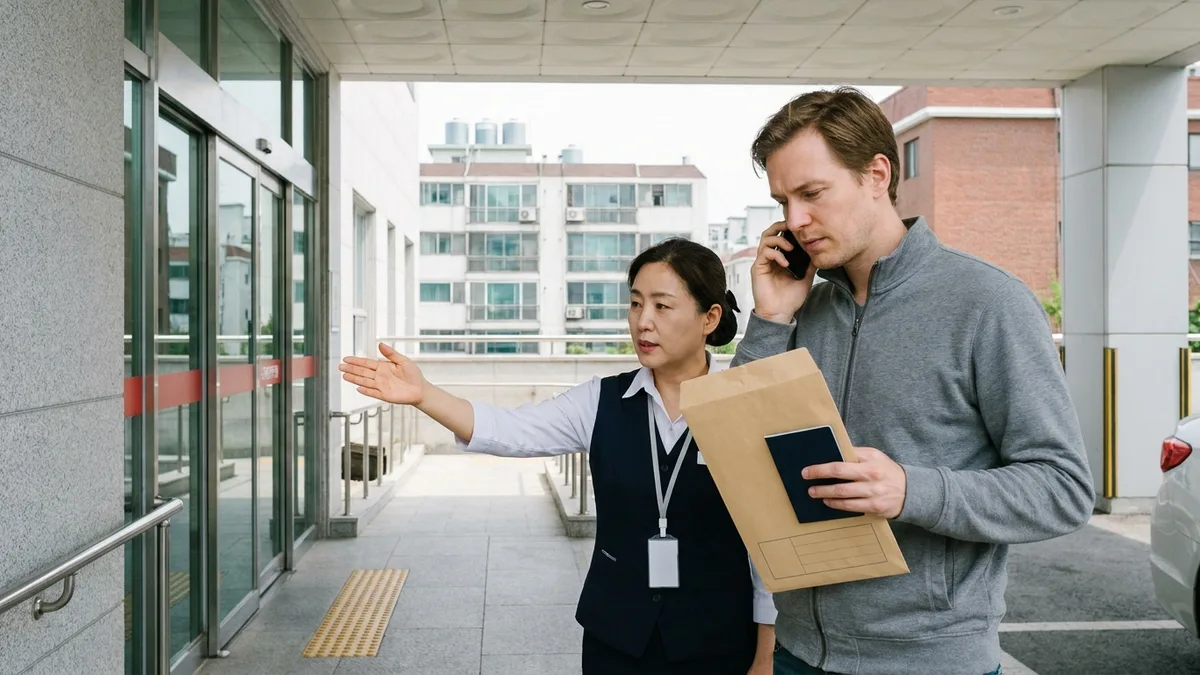
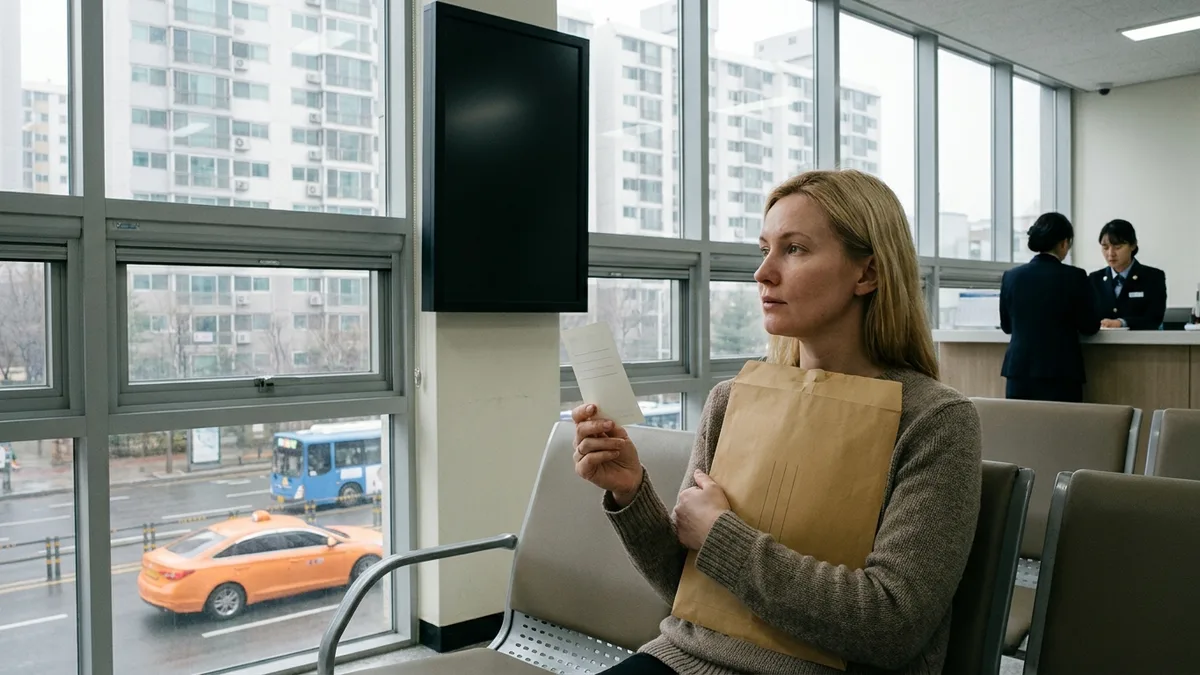
Your country's mission in Korea is a window to your own government. It isn't a place that changes your Korean visa status, collects your unpaid wages, or pays your criminal fines for you. What it does is reissue your passport, notarize home-country documents, and connect you to your own government when you're in trouble. Getting this distinction straight first will save you a wasted trip.
The legal basis is the Vienna Convention on Consular Relations. Adopted in 1963, this treaty entered into force for the Republic of Korea on April 6, 1977 as Treaty No. 594 (the instrument of accession was deposited on 1977-03-07, which lines up with the "30 days after deposit" rule in Article 77(2) of the Convention). Article 5 lists consular functions including issuing passports and travel documents, assisting nationals, notarial and civil registry services, safeguarding interests in succession matters, and protection related to guardianship.
The other side of the list has been published by countries like the UK and Canada themselves. The consular services guidance from the UK Foreign Office (FCDO, posted 2022-08-31) and the Government of Canada (updated 2025-12-01) are separate documents, yet both state the same four things they cannot do: pay money on your behalf, get you out of jail or intervene in trials, give legal advice, and interfere with entry or deportation decisions.
And here's the single most important line in this article. If you're arrested or detained by police, consular notification is not automatic — you have to request it (Convention Article 36(1)(b); Police Investigation Rules Article 91(2) and (3)). You will be informed of the right, but if that notice goes by in Korean, you may never even realize you had it.
Note: This article is general information compiled from treaty texts, statutes, and government guidance publicly available as of 2026-08, and is not legal or administrative advice. Whether an appointment is required, office hours, fees, processing times, 24-hour emergency lines, Korean-language support, and jurisdictional coverage vary enormously by country, so always confirm your own case with your mission's official guidance.
First, Sort Out Which Door — Korean Agency or Your Own Mission?
If what you're stuck on concerns "the Korean system," the answer is a Korean hotline. For residence, visas, and alien registration call ☎1345; for unpaid wages and unfair dismissal ☎1350; for crimes, accidents, and emergencies 112 and 119; and for travel troubles or interpretation ☎1330. If you need free legal aid, there's the Korea Legal Aid Corporation at ☎132. Your own country's mission replaces none of these. The consultation languages and procedures for each number are covered separately in Labor and Living Help Desks for Foreigners, so I won't repeat them here.
The things you go to your own mission for are a different animal. It's easy to remember if you think of it as "moments when you need something from your own country." Passports, home-country identity and family records, authentication of home-country documents, and situations your government needs to know about — accidents, detention, death. A Korean government office can't issue a foreign passport, and your mission can't create Korean residence status.
Caution: If you're in the middle of a refugee application or have a conflict with your home government, do not apply this article's guidance as written. Contacting your own mission could be dangerous for you or affect your case. Consult the Korea Legal Aid Corporation at ☎132 or a refugee support organization first.
What Most Missions Generally Do — The Consular Functions Set by Treaty
The table below is not a service menu for any individual mission; it's the scope of consular functions defined by treaty. Which means "I didn't see this on my embassy's website" is entirely possible.
| What they do | When you'd need it | Convention basis |
|---|---|---|
| Issuing passports and travel documents | When your passport is lost or expired. No Korean agency can do this for you | Article 5(d) |
| Assisting and protecting nationals | When you're in trouble due to an accident, crime victimization, hospitalization, etc. | Article 5(e) |
| Notarial and civil registry services | Power of attorney and signature authentication; registering births, marriages, deaths back home | Article 5(f) |
| Safeguarding interests in succession | When a national dies in Korea and inheritance issues arise | Article 5(g) |
| Guardianship of minors and persons lacking capacity | Protecting the interests of national children or adults who need it | Article 5(h) |
| Visiting detained nationals | Visits, interviews, correspondence. Not done if you expressly object | Article 36(1)(c) |
| Receiving notification of death | Korean authorities must notify the competent consular post without delay | Article 37(a) |
The articles cited come from the Vienna Convention on Consular Relations (Republic of Korea Treaty No. 594, in force 1977-04-06); since I couldn't obtain the official Korean text, the wording here follows the UN's authentic English text. And there's a caveat that must go with it. The treaty defines the scope of consular functions and the Korean government's obligations — it does not create an individual right to demand a particular service from your own mission. How far any given country actually goes depends on its own domestic law, budget, and policy.
There's one more spot that's easy to misread. Article 5 also includes "arranging representation," but the representation in subparagraph (i) is not unlimited litigation representation. It's limited to arranging representation so that provisional measures under Korean law can be obtained when a national is unable to defend their own rights in time due to absence or other reasons. It does not mean "the mission will handle my lawsuit."
What Multiple Countries' Missions Openly State They "Cannot Do"
Caution: The table below is not an exhaustive list. If something isn't listed here, that doesn't mean they'll do it.
| What they can't do | What the two governments' guidance says | So where instead |
|---|---|---|
| Paying money on your behalf | They won't pay fees, bail, legal costs, or medical bills, and won't give you money | Some countries do offer private funds transfer assistance to forward money sent by family (Canada) |
| Securing release or intervening in trials | They won't get you out of jail or interfere in criminal or civil proceedings | Providing lists of lawyers and interpreters is where assistance ends |
| Legal advice | They won't provide legal advice or cover its cost | Free legal aid is at the Korea Legal Aid Corporation, ☎132 |
| Intervening in entry or deportation decisions | They won't help you enter or stop your deportation | Residence and forced departure fall under Korea's Ministry of Justice, ☎1345 |
| Getting involved in private disputes | They won't get involved in property, employment, travel, or commercial disputes (UK) | Wages and dismissal: ☎1350 and your regional labor office |
| Job placement | They won't find you a job overseas (Canada) | Employment Permit System and workplace changes: ☎1345 and job centers |
The sources are the UK FCDO's consular assistance guidance (2022-08-31) and the Government of Canada's consular services guidance (updated 2025-12-01). Because the two countries list the same four items independently of each other, this can be read as a limit that many countries state in nearly identical wording, not one nation's peculiar policy. That said, what's cited here is the UK and Canada, not every country.
Once more: this list is not exhaustive. An item not appearing here doesn't mean it's possible — it varies by country, so check directly using the next table.
Korea's own consular assistance for its citizens is designed on the same structure. Article 19(1) of the Consular Assistance Act for Protection of Overseas Koreans (Act No. 18081, in force 2021-04-20) provides that costs for protecting life, body, and property are borne by the individual (with exceptions for indigence, overseas disasters, and so on). Article 10(3) provides that consular assistance is given "only where the matter cannot be resolved by other means," and Article 10(4) states the level of assistance "shall not exceed the level of protection the government provides to citizens in comparable situations occurring domestically." In criminal proceedings, Article 11(2) directs the head of the overseas mission to provide assistance "to the extent possible, such as providing lists of lawyers and interpreters." Not retaining counsel or covering the cost — providing a list is what the text defines assistance as.
📌 Important: This is Korean law that applies to Korean nationals when they're abroad. It doesn't apply to foreign nationals in Korea; treat it only as a mirror example of how consular assistance tends to be structured.
7 Things You Must Confirm Directly With Your Own Mission
The two tables above only get you as far as "generally." The seven items below can't be generalized, so I can't put the answers in this article. It's the same reason I haven't hard-coded individual missions' phone numbers, addresses, fees, and hours into the text — the moment they change, it becomes wrong information.
| Item to confirm | Why you need to ask |
|---|---|
| Whether an appointment is required | If it's appointment-only, showing up unannounced gets you nowhere. Some booking windows run on the home country's system and time zone |
| Office hours | The consular section's intake hours are often shorter than the mission's overall working hours |
| Fees and payment methods | Cash only, bank transfer, or home currency — it varies. Ask in advance whether a card issued in Korea works |
| Processing time | Documents produced back home can take weeks, not days |
| Whether there's a 24-hour emergency line | Accidents and detentions don't happen during office hours. Check whether a number exists and what situations it covers |
| Level of Korean and English support | Many missions post notices only in their own language. This determines whether you need to bring an interpreter |
| Jurisdiction and regional offices | Whether there's only one office in Seoul or also one in Busan can reshape your entire day |
These seven differ fundamentally by country and can't be generalized from public information alone, so this article only lays out what to ask. Many missions are hard to reach by phone in the first place, so it's efficient to ask all seven in a single call. Where and how to check these items is covered separately in How to Find Your Country's Mission in Korea.
If You're Arrested or Detained — Notification Happens Only If You Ask
Article 36(1)(b) of the Convention provides that when a national is arrested, committed to prison, or taken into custody, Korean authorities must, "if he so requests," notify the relevant consular post without delay, and must also inform the person of that right without delay.
Korean domestic law says the same thing. Article 91(2) of the Police Investigation Rules (Ministry of the Interior and Safety Ordinance No. 483, in force 2024-05-24) requires judicial police officers, when arresting or detaining a foreign national, to inform them that they may freely communicate with and be visited by consular officers, and that they may request that the consular post be notified of the arrest or detention. Paragraph 3 of the same article requires notification of the relevant consular post without delay upon request.
The duty to inform sits with the Korean authorities. The Supreme Court has held that if an investigative agency arrests or detains a foreign national without informing them of consular notification rights without delay, the arrest or detention procedure violates Article 36(1)(b) of the Convention and is unlawful (Supreme Court Decision 2021Do17103, April 28, 2022).
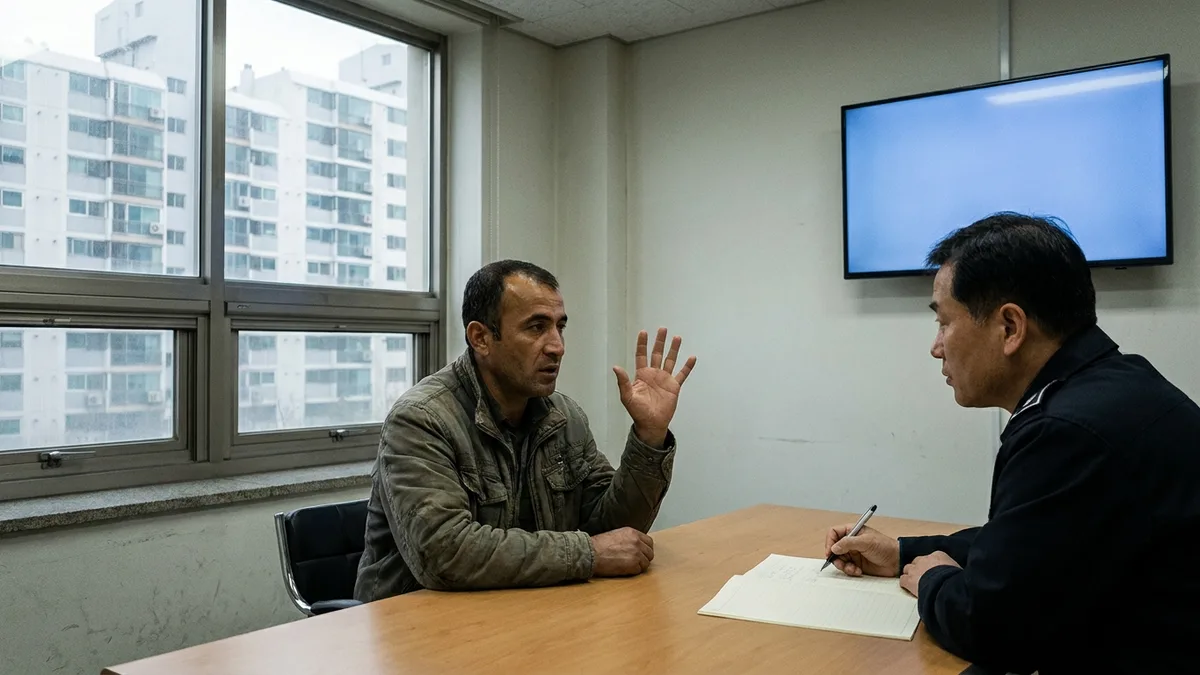
The sequence is the key. They inform you — but if you don't request it, no notification goes out. If the notice goes by while you don't understand the language, the investigation proceeds while you have no idea the right exists. So it helps to memorize what to say on the spot.
- "Please call an interpreter." Not signing anything while you don't understand Korean comes first.
- "Please notify my country's consular post." This single sentence is the "request" under Article 36(1)(b) of the Convention.
- "I want to meet a consular officer." Visits, interviews, and correspondence are in subparagraph (c) of the same article.
That said, a consular officer showing up doesn't resolve the situation. As the earlier table shows, multiple countries state they won't secure release, intervene in trials, give legal advice, or cover costs. Think of a consular visit and arranging defense counsel as two separate tracks, and pursue the counsel side separately through ☎132.
Caution: This section covers arrest and detention in criminal proceedings. Detention under immigration enforcement falls under different rules and isn't covered here. If that's your situation, check your own case first with ☎1345 and ☎132.
If There's a Death or Serious Accident — Notification Is Mandatory, Costs Are Not
If a foreign national dies in Korea, the notification itself is a duty of the Korean authorities. Article 37(a) of the Convention requires notifying the competent consular post without delay, and Article 91(4) of the Police Investigation Rules likewise requires notifying the relevant consular post when an unnatural death case involving a foreign national occurs.
But notification and costs are two entirely different stories. Canada's guidance explicitly states the government does not pay for burial, cremation, or repatriation of remains. The Assistance-to-Nationals (ATN) services listed by the Philippine Embassy in Korea likewise cover repatriation assistance, help for nationals who are hospitalized, in distress, or destitute, support for human trafficking and crime victims, passport issuance for those subject to deportation, handling of remains, trial monitoring, locating missing persons, and referrals to legal and welfare agencies and NGOs (as viewed 2026-08). "Paying attorney fees" and "direct cash assistance" are not on that list.
So in practice it breaks down like this: contact, paperwork, and agency referrals come from the mission; money comes from family, insurance, and home-country systems. If the accident happened at work in Korea, start by checking whether it qualifies as an industrial accident; if you were traveling, start with your travel insurance coverage.
How Much It Varies by Country — Names, Jurisdictions, and Affiliated Offices
First, sometimes it isn't called an "embassy." Taiwan's presence in Korea isn't an embassy but the 駐韓國台北代表部 (Taipei Mission in Korea, Seoul) and the 駐韓國台北代表部釜山辦事處 (Busan Office). The two split jurisdiction for consular (領務) work. I couldn't verify which regions fall under which, so I won't reproduce that here — please check both offices' official sites. For reference, the Ministry of Foreign Affairs' "Status of Overseas Diplomatic Missions" (as of July 2026) lists no Korean embassy, consulate general, or representative office in Taiwan either.
Second, some countries have separate windows apart from the consular section. The Philippine Embassy in Korea's website lists, in addition to consular services (passports, civil registry, notarials, assistance to nationals), the Migrant Workers Office–OWWA, the Philippine Consulate General in Busan, the social security agency SSS, and the housing fund Pag-IBIG Fund as separate entities. In effect, labor and social security matters sit at an entirely different window from the consular section.
Two things need to be clear here. Having a labor and welfare window is one thing; that window resolving unpaid wages, industrial accidents, or unfair dismissal is another. Labor cases that arise in Korea ultimately go through the Ministry of Employment and Labor's ☎1350 and your regional labor office, plus the ☎132 process. And whether Vietnam, Nepal, Indonesia, Thailand, and others maintain similar windows is something I couldn't verify this time. "It depends on the country" is as far as the confirmed facts go.
Third, some countries impose a reporting duty back home. Japanese nationals staying abroad for three months or more have a residence notification (在留届) obligation under Article 16 of Japan's Passport Act, and Japan's Ministry of Foreign Affairs' online filing system (ORRnet) says it can be submitted starting three months before departure. This is Japanese domestic law and doesn't apply as-is to nationals of other countries. Ask your own mission whether a similar obligation exists for you.
How to Find Your Country's Mission
The one official route to check is the Ministry of Foreign Affairs' Directory of Foreign Missions in Korea (mofa.go.kr). That said, the "last updated" date attached to individual entries was in some cases 2023 as viewed in 2026-08, so you need a two-step approach: find it there, then confirm the phone number and hours again on the mission's official website or social media notices.
Since it may not be called an "embassy," look for representative offices, branch offices, and consulates general too, and jot down the seven items above before calling so you can ask everything in one go. How to read the directory, plus the traps around jurisdiction, appointments, and hours — the "where it is and when and how to go" side — is covered in How to Find Your Country's Mission in Korea. This article only handles "what a mission does and doesn't do for you."
📌 Tip: Be especially wary of anyone who approaches you claiming they "have a connection at the embassy." Passport issuance, notarization, and civil registration are procedures you complete yourself at the mission's official counters. Steer clear of offers demanding extra fees or promising to prepare documents on your behalf.
Caution: If you've overstayed, note that a mission is not Korea's immigration authority — and the safest order of steps in your particular situation varies from person to person. Before you make any move, check your own case with ☎1345 and ☎132 first. The practical side of voluntary departure is covered in What to Do If You've Overstayed.
5 Common Misunderstandings
① "The mission will extend my visa, right?" — Extending and changing Korean residence status falls under the Ministry of Justice. Your own mission has no decision-making power. Outcomes depend on your status and history, so check your own case with the Immigration Contact Center at ☎1345.
② "The mission will collect my unpaid wages, right?" — They won't collect them for you. UK guidance explicitly states they don't get involved in property or employment disputes. Complaints and investigations go through ☎1350 and your regional labor office; if it goes to court, free legal aid is at ☎132.
③ "The mission will pay my criminal fine or bail, right?" — Both the UK and Canadian guidance state they can't pay money on your behalf. Canada does say it offers private funds transfer assistance for money sent by family or friends, so the realistic route is a remittance from family back home.
④ "The mission will handle my hospital bill, right?" — Canada's guidance explicitly says it won't pay medical expenses. Instead, if you're enrolled in national health insurance, your out-of-pocket cost drops dramatically. For treatment procedures and cost structure, see Using Hospitals as a Foreigner.
⑤ "They'll arrange accommodation, right?" — Providing accommodation isn't on any confirmed assistance list. As with the Philippine Embassy's guidance, referrals to welfare agencies and NGOs are as far as the listed services go. In an emergency, 112 and 119 come first; for life-crisis counseling, the Danuri Call Center for multicultural families and migrants at ☎1577-1366 is the first stop.
On the flip side, there are situations where you do go through your mission. Things like the embassy certification needed when converting a home-country driver's license to a Korean one (sometimes replaced by an apostille), or the consular authentication that may be required for National Pension lump-sum refund paperwork. Those procedures are already covered in Driver's License Exchange and National Pension Lump-Sum Refund, so I won't repeat them here. Document authentication works the same way. The Hague Apostille Convention entered into force for the Republic of Korea on July 14, 2007, and documents from member states go the apostille route while documents from non-member states go the consular authentication route. Which one applies and the exact authentication sequence differ by country, so follow the guidance in the driver's license exchange article.
One last practical note. Many countries have only a single mission in Seoul, so if you live outside the capital you have to factor travel time in just to make the consular section's intake hours. If it's appointment-only, missing that slot means writing off another whole day. That's why it's safer to lock in your KTX or express bus time first and then attach the taxi leg from the station to the mission. LACHA is a transit-and-payment super app for foreigners that works without identity verification, so you can book KTX, express buses, taxis, and the airport railroad all in one place without a Korean bank account or phone number. That said, the mission's own services have nothing to do with LACHA.

Need transit and payments while you wait for your residence card? Check out LACHA.
Built to work without a Korean phone number or bank account, with overseas payment methods like Alipay, WeChat Pay, and Apple Pay. Taxi hailing plus KTX, express bus, and airport railroad (AREX) booking — all in one app.
Up to 60% off Korea transit with a coupon (max ₩3,000): enter code at sign-up. KTX gets up to 18% off on top
Download now


Frequently Asked Questions (FAQ)
Q1. Can my country's embassy extend my Korean visa? No. Extending, changing, and registering residence status in Korea falls under the Ministry of Justice, so your mission has no authority over it. UK FCDO and Government of Canada guidance also state explicitly that they can't intervene in entry or deportation decisions. Since outcomes depend on your status and history, check your own case with the Immigration Contact Center at ☎1345. Ask your own mission only about "my country's documents," like passport validity.
Q2. If I'm arrested by police, does the embassy get contacted automatically? No, it's not automatic. Article 36(1)(b) of the Vienna Convention on Consular Relations provides for notification without delay "if he so requests." Article 91(2) of Korea's Police Investigation Rules (in force 2024-05-24) requires informing you that you may make such a request, and paragraph 3 requires notification without delay if you do. So you have to say it yourself: "Please notify my country's consular post." If you can't communicate, requesting an interpreter comes first.
Q3. Will the embassy pay my attorney fees or criminal fine? No. Both the UK FCDO (2022-08-31) and Government of Canada (updated 2025-12-01) guidance state they can't pay money on your behalf. Canada specifically names bail, legal costs, and medical expenses. Korea's own Consular Assistance Act for Protection of Overseas Koreans likewise provides in Article 19(1) that costs are borne by the individual, and Article 11(2) describes criminal-procedure assistance as "providing lists of lawyers and interpreters, etc." For cost issues, look to family remittances or free legal aid at ☎132.
Q4. My country doesn't seem to have an embassy in Korea — where do I go? It may not be called an "embassy." For example, Taiwan's presence in Korea consists of the 駐韓國台北代表部 (Seoul) and its Busan Office, which split jurisdiction for consular work. Search by country name in the Ministry of Foreign Affairs' Directory of Foreign Missions in Korea and check for representative offices, branch offices, and consulates general as well. Note that entries in that directory carry their own last-updated dates, and as of 2026-08 some were from 2023 — so before calling, confirm the number and hours once more on that institution's official website.
Q5. I'm in the middle of a refugee application. Is it okay to contact my country's mission? Don't apply this article's guidance as written. If you have a conflict with your home government or are in the refugee application process, contacting your own mission could be dangerous for you or affect your case. This is an area where the right judgment depends entirely on individual circumstances, so I won't make a blanket statement here. Before you act, consult the Korea Legal Aid Corporation at ☎132 or a refugee support organization, and check residence-related matters for your own case at ☎1345.
Note: This article is general information compiled, as of 2026-08, from the authentic English text of the Vienna Convention on Consular Relations (Republic of Korea Treaty No. 594), Article 91 of the Police Investigation Rules (in force 2024-05-24), the Consular Assistance Act for Protection of Overseas Koreans (in force 2021-04-20), the consular services guidance of the UK FCDO and the Government of Canada, Supreme Court Decision 2021Do17103 of April 28, 2022, Japan's Ministry of Foreign Affairs online residence notification system (ORRnet), the Ministry of Foreign Affairs' Directory of Foreign Missions in Korea, and the official sites of the Philippine Embassy in Korea and the Taipei Mission in Korea — and it is not legal or administrative advice. I couldn't verify the official Korean text of each subparagraph of Convention Article 5 or the refugee-related provisions this time, so I've avoided asserting them in the text, and the "detention" procedure under the Immigration Act operates under different rules and isn't covered here. Whether an appointment is required, office hours, fees, processing times, 24-hour emergency lines, Korean-language support, and jurisdiction all vary by country and change frequently based on each mission's circumstances, so always re-confirm through your own mission's official channels before visiting or calling. LACHA is a transit and payment service, unrelated to consular affairs, and does not handle any procedure such as passport issuance, consular authentication, or detention notification on your behalf.