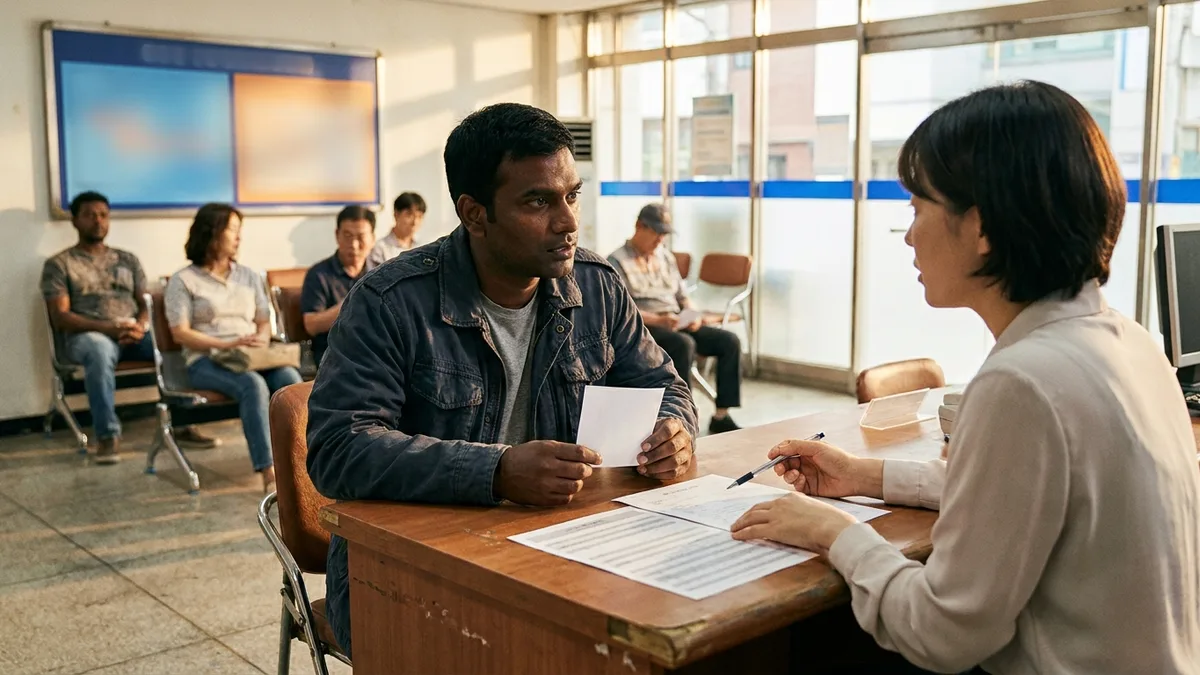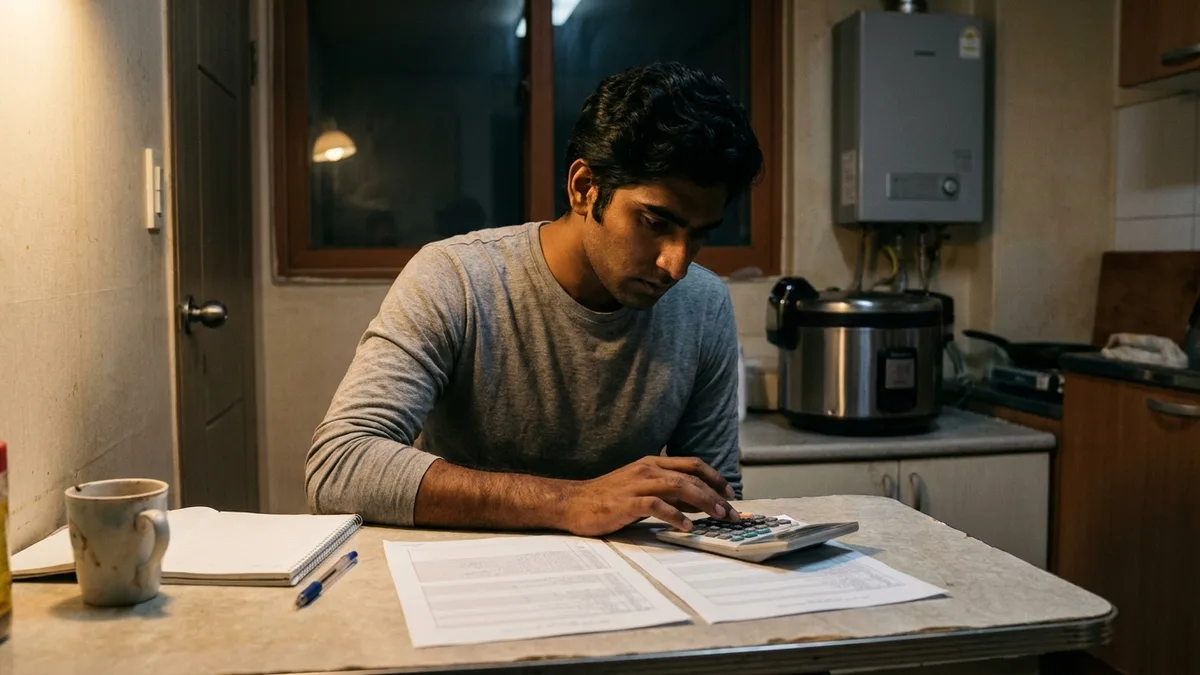
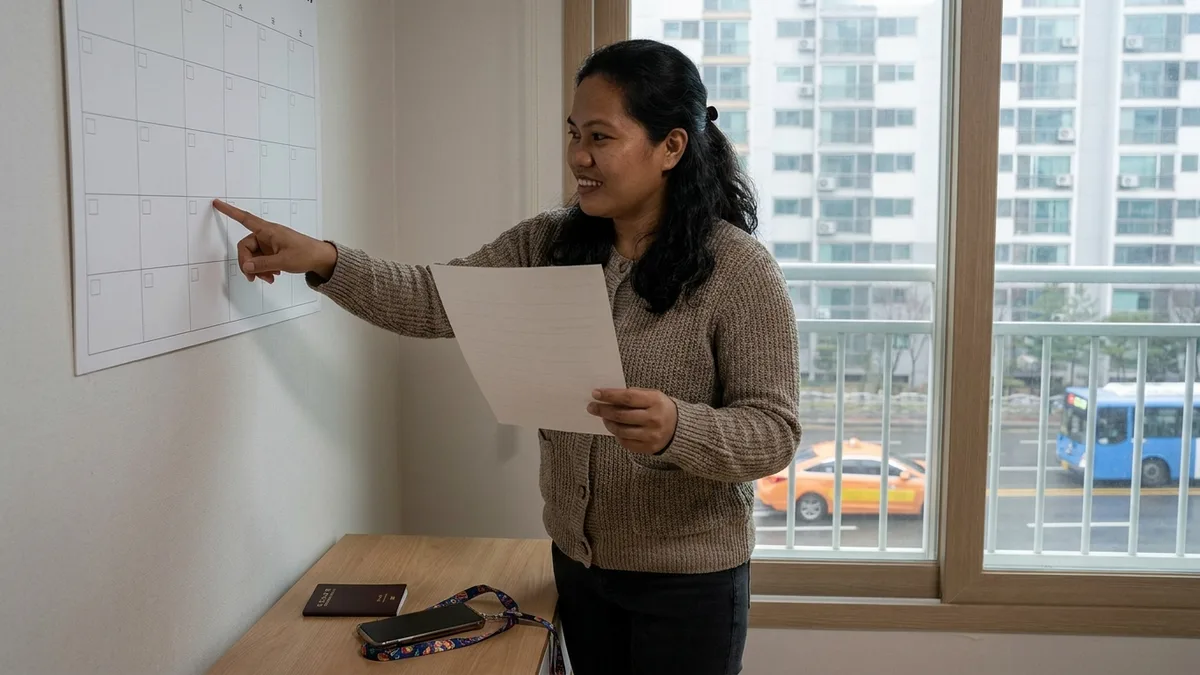
If you've been unfairly dismissed in Korea, you can file a request for remedy with the Labor Relations Commission. The deadline is within 3 months from the day the unfair dismissal occurred (Labor Standards Act Article 28(2), as of August 2026). This isn't a period that can be extended or restarted midway — it's a statutory limitation period, so once it passes, your eligibility to file disappears entirely. If you're even one day late, the Commission won't rule on your case no matter how unfair the dismissal was.
But before you start writing the application, there's a filter to pass first. The Labor Standards Act applies to workplaces using 5 or more regular employees (Article 11(1)), and for workplaces with 4 or fewer regular employees, only the restriction on the timing of dismissal (Article 23(2)) and the advance notice of dismissal (Article 26) apply among the dismissal-related provisions, per Table 1 of Article 7 of the Enforcement Decree. Because Article 23(1), which prohibits dismissal without just cause, is left out, workplaces with fewer than 5 employees are not subject to unfair dismissal remedy requests before the Labor Relations Commission.
Filing itself costs nothing. According to the Government24 service guide, there is no fee, and if your average monthly wage is under 3,000,000 KRW, you can appoint a certified public labor attorney or a lawyer as your representative free of charge (Labor Relations Commission Act Article 6-2; the threshold amount is set by public notice of the Minister of Employment and Labor and can change, so check at the time you file). Nationality is not an eligibility requirement either. If you're a worker under the Labor Standards Act, Korean or foreign, the same procedure applies to you.
What's genuinely hard for foreigners isn't the requirements — it's the timeline. If you're on E-9, you must apply to the Employment Center for a workplace change within 1 month from the day your labor contract ended, and you must obtain permission to change workplaces within 3 months from the application date (Act on Foreign Workers' Employment Article 25(3)). Meanwhile, the Labor Relations Commission holds a hearing within 60 days of the filing date and sends the written decision within 30 days after the hearing. In effect, two clocks are running at once.
Note: This article is general information, not legal advice. The provisions, deadlines, and amounts are organized as of 2026-08 from the original text of the Labor Standards Act on the Korea Law Information Center and from guidance by the Ministry of Government Legislation, the Labor Relations Commission, and Government24. Before filing, please double-check for your own case with the Ministry of Employment and Labor Customer Counseling Center ☎1350 and your local Regional Labor Relations Commission (nlrc.go.kr).
The 3-Month Clock — From the Day the Unfair Dismissal Occurred, Until When?
Labor Standards Act Article 28(1) provides that "if an employer commits unfair dismissal, etc. against a worker, the worker may request remedy from the Labor Relations Commission," and Article 28(2) fixes that deadline at within 3 months from the day the unfair dismissal, etc. occurred (as of August 2026).
The phrase "dismissal, etc." matters here. Article 23(1) provides that an employer shall not, without just cause, subject a worker to "dismissal, layoff, suspension, transfer, wage reduction, or any other punishment." That means it's not only outright termination — a unilateral suspension, wage cut, or reassignment can also be the subject of a remedy request.
Where the count starts is set by Article 40 of the Labor Relations Commission Rules. The principle is the "date of dismissal" stated on the written dismissal notice under Labor Standards Act Article 27. However, if the dismissal date stated on the notice is earlier than the day you actually received the notice, then the day you received the notice becomes the starting date. This provision exists for cases where the company backdates the notice.
Caution: In this article we won't calculate an expiration date for you, as in "if you were dismissed on such-and-such date, then you have until such-and-such date." Whether the first day counts changes the answer by one day, and the publicly available summaries disagree, so we couldn't confirm it. Don't aim for the last week of the 3 months — file as early as you possibly can, and ask your local Regional Labor Relations Commission directly for the exact expiration date.
Is My Workplace Covered? — Start with the 5-Employee Threshold
Before preparing documents, you have to clear this question. Labor Standards Act Article 11(1) provides that the Act applies to businesses or workplaces using 5 or more regular employees. The provisions that apply to workplaces with 4 or fewer regular employees are listed separately in Table 1 of Article 7 of the Enforcement Decree; on dismissal, it includes the restriction on the timing of dismissal (Article 23(2)) and advance notice of dismissal (Article 26), while Article 23(1) is excluded.
So dismissals at workplaces with fewer than 5 employees are not subject to remedy requests before the Labor Relations Commission. Agriculture, livestock, and small-scale manufacturing — where many E-9 workers are employed — often have fewer than 5 regular employees, and a lot of people really do get filtered out at this stage. How the number of regular employees is counted depends on the workplace's circumstances, so if you're unsure, call ☎1350 before you start writing the application.
That said, not being covered and having no rights are two completely different things. Even at workplaces with fewer than 5 employees, the following still stand.
- Advance notice of dismissal: The employer must give notice 30 days before dismissal or pay at least 30 days' ordinary wages (Article 26, as of August 2026). Exceptions include continuous service of less than 3 months.
- Penalty for violating advance notice: Imprisonment of up to 2 years or a criminal fine of up to 20,000,000 KRW (Article 110(1), as of August 2026).
- Unpaid wages and severance pay: You can file a complaint with the Regional Employment and Labor Office regardless of workplace size. Money you should collect before leaving, organized by which office handles what, is covered in How to Get Your Severance Pay and Departure Guarantee Insurance.
- Industrial accident compensation: If you were injured at work, that's a separate matter from workplace size.
Watch out for the opposite misunderstanding too. Being at a workplace with 5 or more employees and filing within 3 months only gives you the right to be heard. Whether there was just cause for the dismissal is judged case by case, so meeting the requirements doesn't determine the outcome.
Important: Nationality has nothing to do with eligibility to file. Labor Standards Act Article 6 provides that an employer shall not discriminate in working conditions on the grounds of nationality, and a violation carries a criminal fine of up to 5,000,000 KRW (Article 114(1), as of August 2026). Article 22 of the Act on Foreign Workers' Employment likewise provides that an employer shall not give unfair discriminatory treatment on the ground that a worker is a foreign worker.
A Labor Office Complaint and a Labor Relations Commission Remedy Request Are Different Tracks
This is where a lot of people get confused. The procedure for collecting unpaid wages and the procedure for reversing a dismissal differ in the agency, the governing provisions, and the outcome.
| Category | Regional Employment and Labor Office complaint | Regional Labor Relations Commission remedy request |
|---|---|---|
| Main issues handled | Unpaid wages and severance pay, labor contract violations | Unfair dismissal, unfair suspension, unfair wage reduction, and other punishments |
| Governing provisions | Labor Standards Act Article 36 (settlement of money and valuables), etc. | Labor Standards Act Article 28 |
| Possible outcome | Payment of unpaid money and criminal proceedings | Reinstatement to the original position, an amount equivalent to wages for the dismissal period, monetary compensation |
| Deadline | Based on the statute of limitations for wage claims (confirm the period at ☎1350) | 3-month statutory limitation period from the day the unfair dismissal, etc. occurred |
| Cost | Confirm fee matters at ☎1350 | No fee (Government24 service guide) |
Many people are dismissed and also left with unpaid wages — but the two things are not handled together in one place. Unpaid wages go through a complaint to the Regional Employment and Labor Office; the dismissal goes through a remedy request to the Regional Labor Relations Commission. If both apply to you, pursue both.
And don't assume that having one process underway pushes back the deadline for the other. The two procedures are separate, so it's safest to count the 3 months as its own clock. The saddest situation is when the remedy deadline slips by while you're getting counseling at the labor office window. If you're unsure which office to take what to, you may want to read Labor and Daily Life Counseling Channels for Foreigners first. One more thing: separately from a Labor Relations Commission remedy request, you can also file a court action seeking confirmation that the dismissal is void (per Ministry of Government Legislation guidance). That's another separate track, so if you're considering litigation, also book a consultation with the Korea Legal Aid Corporation at ☎132.
Start with the Dismissal Notice — Without Writing, the Dismissal Has No Effect
Labor Standards Act Article 27(1) provides that in order to dismiss a worker, the employer must give written notice of the grounds and timing of dismissal, and Article 27(2) provides that a dismissal takes effect only when notified in writing (as of August 2026). A dismissal delivered only verbally — "don't come in from tomorrow" — has no effect in itself. Note, however, that Article 27 is also a provision that applies to workplaces with 5 or more regular employees.
But there's a trap here. The absence of written notice helps you contest the validity of the dismissal, yet conversely it makes it harder to pin down "the day the dismissal occurred." Meaning the starting point for the 3 months becomes blurry. If you didn't receive a notice, it's urgent to create your own record of the fact and the date of the dismissal.
- Leave a trail by text or messenger: That same day, ask something like "Just to confirm, you told me to stop working as of the ○○th, correct?" and get a reply.
- Secure attendance records: Gather materials showing your last working day — entry logs, work journals, messages exchanged with coworkers.
- Pay statements and bank records: When your pay stopped coming in supports the timeline.
- Organize recordings: If you have a recording you made as a party to the conversation, organize it together with the date.
Tip: Giving advance notice doesn't make a dismissal just. Notice 30 days in advance or payment of 30 days' ordinary wages is only a procedural requirement; whether there was just cause is judged separately under Article 23(1). If someone told you "you got the notice allowance, so that's the end of it," check whether that's true at ☎1350.
How to File and What It Costs — What to Submit to Which Regional Labor Relations Commission
You file the remedy request with the Regional Labor Relations Commission having jurisdiction over the location of the workplace (Labor Standards Act Article 28(1); Labor Relations Commission Act Article 3(2)). It's based on where the company is, not where the worker lives. If you moved to another region after the dismissal, check this first. There are three filing routes and no fee. The application form is Form 3 attached to Article 5 of the Enforcement Rules of the Labor Standards Act.
| Filing route | How it works | Where foreigners get stuck |
|---|---|---|
| Online (Government24) | File under the "Request for remedy against unfair dismissal, etc." service | Identity verification is a prerequisite, so if a company-registered phone line is cut off, you're blocked at the verification step |
| In person | Submit directly at the public service room of the Regional Labor Relations Commission with jurisdiction over the workplace | If you moved to another region, that's at least two round trips — filing and the hearing |
| Post | Send the application and statement of reasons to the competent Regional Labor Relations Commission | You need an address to receive replies. If you've moved out of the dormitory, settle a mailing address first |
Here's how the schedule runs after filing. Per Labor Relations Commission guidance, a hearing is held within 60 days of the filing date, and the written decision is sent within 30 days after the hearing ends. The standard processing period listed in the Government24 service guide is 90 days.
You should also know in advance that language is the first hurdle. The application and statement of reasons use Korean forms, and the hearing is conducted in Korean. We could not confirm from official guidance whether the Labor Relations Commission automatically provides an interpreter. If you need interpretation, inquire with the competent Regional Labor Relations Commission in advance at the filing stage. The Ministry of Employment and Labor runs multilingual counselors and interpretation services at its local offices, and local governments operate interpretation support through Foreign Workers' Support Centers, so you can get help at the document-writing stage.
You Can Get a Labor Attorney or Lawyer for Free — The Rights Remedy Representative Program
The Labor Relations Commission has a rights remedy representative program. A worker whose average monthly wage is under 3,000,000 KRW can appoint a certified public labor attorney or a lawyer as a representative free of charge for an unfair dismissal remedy request (Labor Relations Commission Act Article 6-2; Article 3(5) of the Enforcement Rules of the same Act). The support threshold is set by public notice of the Minister of Employment and Labor, and it was raised from under 2,500,000 KRW to under 3,000,000 KRW effective January 2022. The notice amount can change, so re-confirm the current threshold with your local Regional Labor Relations Commission or ☎1350 at the time you file.
The problem is proof. There really are cases where the employer never issued a pay statement showing the average monthly wage, or took it back. Whether bank deposit records or a labor contract can substitute in such a case varies by situation, so it's faster to ask the competent Regional Labor Relations Commission which documents are accepted before filing. If it looks like your case may go as far as litigation, also check whether you qualify for free legal counseling from the Korea Legal Aid Corporation at ☎132. This article doesn't recommend specific labor attorney offices or law firms. Checking the public, free channels first is the safe order.
What Do You Get If You Win? — Reinstatement, Wage-Equivalent Amount, Monetary Compensation
If unfair dismissal, etc. is established, the Labor Relations Commission issues a remedy order to the employer; if not, it dismisses the request (Labor Standards Act Article 30(1)). The outcome you can get depends on the situation.
| Situation | What the Labor Relations Commission can do | Basis |
|---|---|---|
| When you want reinstatement | Order reinstatement to the original position and payment of an amount equivalent to wages for the dismissal period | Article 30(1) |
| When you don't want reinstatement | Order payment of money and valuables equal to or greater than the wage-equivalent amount in lieu of reinstatement (monetary compensation) | Article 30(3) |
| When reinstatement is impossible due to expiry of the contract term or retirement age | Issue a remedy order or dismiss the request; if established, order payment of the wage-equivalent amount | Article 30(4) |
| When it is found not to be unfair dismissal | Dismissal of the request | Article 30(1) |
The third row is especially important for E-9 and E-7 readers on fixed-term contracts. It means that even if your labor contract term expires while the procedure is underway, the case doesn't simply end — if unfair dismissal is established, the Commission can order payment of the wages you could have earned during that period. Before you give up because someone told you "the contract's over anyway, so it's pointless," check this provision. We won't calculate amounts for you in this article. The wage-equivalent amount depends on your own wages and the dismissal period, and any number given as an example won't be your result. Nor can we assert that you'll recover every won you're owed. It's more accurate to get counseling based on your own case.
After the Order — Enforcement Fines and Appeal Deadlines
Even after a remedy order, the company may dig in — or you may be unhappy with the outcome. Both are matters with deadlines attached.
If the Other Side Doesn't Comply — Enforcement Fines and Violation of a Final Remedy Order
There are two mechanisms to make a company move. First, the enforcement fine. The employer's compliance deadline is within 30 days from the day it received written notice of the remedy order (Enforcement Decree Article 11), and if it fails to comply, the Labor Relations Commission imposes an enforcement fine of up to 30,000,000 KRW (Article 33(1), as of August 2026). It can be imposed repeatedly up to twice a year, counted from the day the first remedy order was issued, and cannot be imposed or collected beyond 2 years — so up to 4 times in total (Article 33(5)).
Caution: The enforcement fine is money the state imposes and collects from the employer, not compensation paid to the worker. What the worker receives is the wage-equivalent amount or monetary compensation under the remedy order (Article 30(3) and (4)). Don't read it as "I get 30,000,000 KRW."
The second mechanism is criminal proceedings. A person who fails to comply with a final remedy order is subject to imprisonment of up to 1 year or a criminal fine of up to 10,000,000 KRW (Article 111, as of August 2026). This offense can be prosecuted only upon a complaint (accusation) by the Labor Relations Commission (Article 112(1)). If the company is ignoring a final order, start by reporting that fact to the competent Labor Relations Commission.
If You Disagree with the Outcome — 10 Days for Reexamination, 15 Days for Administrative Litigation
Three months is short, but the deadlines after a decision comes out are far shorter. You may request reexamination by the National Labor Relations Commission within 10 days from the day you received notice of the remedy order or the decision dismissing the request (Article 31(1)), and you may file an administrative lawsuit within 15 days from the day the written reexamination decision was served (Article 31(2)). If you don't challenge it within those periods, the decision becomes final (Article 31(3)).
| Deadline | Counted from | How long | Basis |
|---|---|---|---|
| Remedy request | The day the unfair dismissal, etc. occurred | Within 3 months | Labor Standards Act Article 28(2) |
| Employer's compliance deadline | The day the employer received written notice of the remedy order | Within 30 days | Enforcement Decree of the Labor Standards Act Article 11 |
| Request for reexamination | The day notice of the remedy order or dismissal decision was received | Within 10 days | Labor Standards Act Article 31(1) |
| Administrative litigation | The day the written reexamination decision was served | Within 15 days | Labor Standards Act Article 31(2) |
This part is most dangerous if you were dismissed while working at a workplace that provided a dormitory. The 10 and 15 days are counted from the day you receive the documents or the day they are served, so if you've packed up and left and the decision goes to your old dormitory address, the period can run out before you ever see it. When you file, put down an address and contact number where you can actually receive mail, and if you move in the meantime, notify the competent Regional Labor Relations Commission immediately.
Note: The deadlines and amounts above are based on the statutes as of 2026-08. Laws and public notices get revised, so re-confirm at the time you file at nlrc.go.kr (Labor Relations Commission), moel.go.kr (Ministry of Employment and Labor), and law.go.kr (Korea Law Information Center).
On E-9, You Have Two Clocks — Overlapping the 1-Month Workplace Change and 3-Month Re-employment Windows
If you're working on E-9 (Non-professional Employment), there's one more deadline to calculate. Article 25(3) of the Act on Foreign Workers' Employment requires you to apply to the Employment Center for a workplace change within 1 month from the day the labor contract ended, and provides that if you fail to obtain permission to change workplaces within 3 months from the application date, you become subject to departure (as of August 2026). The procedure itself is covered separately in E-9 Workplace Change Procedure. On top of that comes the Labor Relations Commission schedule. A hearing within 60 days of filing, then the written decision within 30 days — that's 90 days by simple addition. Almost exactly the same length as the 3 months you have to find a new job.
The proviso to the same Article lists grounds for extending the period as "occupational injury or disease, pregnancy, childbirth, etc." Having a Labor Relations Commission remedy request underway isn't written into the provision. But we also can't declare that "the deadline absolutely does not stop." The scope of "etc." and the grounds for extension are set by public notice of the Ministry of Employment and Labor, and we couldn't verify the original text of that notice in this write-up.
So we won't tell you which to do first. Instead, we'll tell you exactly how to check. On the same day, ask these three places.
- Your competent Employment Center: Ask what happens to the 1-month workplace change application window and the 3-month workplace change permission window while a remedy request is pending. If you don't know which office has jurisdiction, ☎1350 can tell you.
- Your competent Regional Labor Relations Commission: Ask whether there's a way to proceed when the case involves a stay deadline. Check jurisdiction at nlrc.go.kr.
- Foreigner Comprehensive Information Center ☎1345: This is the channel for stay status and departure matters. Counseling is available in 20 languages.
If the E-9 system itself is unfamiliar, reading How the Employment Permit System (EPS) Works alongside this makes it easier to understand why the two deadlines are structured this way.
If You No Longer Have Valid Stay Status — Check Whether You'd Be Reported Before You File
Please read this part carefully. There are three things to know.
First, you can claim payment for work you have already performed regardless of your stay status. The Supreme Court held that a labor contract concluded without a stay status permitting employment activity is not automatically void, and that a foreigner who has already provided labor and received wages is recognized as a worker under the Labor Standards Act (Supreme Court Decision 94Nu12067, September 15, 1995). Wages and industrial accident compensation fall under this.
Second, that doesn't mean the same conclusion extends to reinstatement remedies. According to Ministry of Government Legislation guidance, unless the employment relationship has already been formed, an employment relationship with a person lacking work eligibility is suspended, and both the employer and the worker may terminate the labor contract at any time on the ground of lacking work eligibility. That means the practical effectiveness of a remedy asking to go back and keep working may be limited.
Third, an exemption from the reporting duty now exists, but its scope is defined. From November 6, 2025, an exemption from public officials' immigration reporting duty took effect for foreign workers who are victims of unpaid wages. What was added to the exemption is the case where a labor inspector or similar official, in the course of investigating or supervising unpaid wages, etc. under labor-related laws, discovers a fact making the person subject to forced departure; and Article 84 of the Immigration Act also provides an exception where reporting is deemed to make it impossible to achieve the purpose of the official duties.
Caution: The confirmed scope of the exemption is the "investigation and supervision of unpaid wages, etc." process. We could not verify from the original statutory text in this write-up whether the same exemption applies to Labor Relations Commission unfair dismissal remedy proceedings. Don't read the coverage above in reverse as "I'm safe" or "everything else gets reported." Before you report or file, check whether you'd be reported, based on your own case, with ☎1345 (Foreigner Comprehensive Information Center) or a nearby Foreign Workers' Support Center.
The options when your period of stay has already expired are covered separately in What You Can Do When Your Period of Stay Has Expired. This article only covers what the lawful procedures are; it does not, in any form, explain how to hide your status or falsify documents.
Wrap-Up — 3 Things to Check Today and the Phone Numbers
Since this is deadline-driven, here's a short order of operations.
- Check your dismissal notice. If you received one, record the dismissal date written on it; if you didn't, record the day you were told you were dismissed. Without a notice, the starting date itself can be disputed, so work from the earliest possible date and confirm the exact starting date with your competent Regional Labor Relations Commission.
- Check the number of regular employees at your workplace. Under 5 means you're not eligible for a remedy request, but advance notice of dismissal, unpaid wages, severance pay, and industrial accident coverage all still stand.
- Make the calls today. Dismissal goes to ☎1350; stay status goes to ☎1345. Two calls will clarify what to do next.
- Ministry of Employment and Labor Customer Counseling Center ☎1350: Where to ask about dismissal, wages, the number of regular employees, and jurisdiction.
- Foreigner Comprehensive Information Center ☎1345: The channel for stay status, visas, and departure, with counseling in 20 languages.
- Korea Legal Aid Corporation ☎132: Check free legal counseling and whether you qualify for legal aid.
- Labor Relations Commission nlrc.go.kr: Inquire about your competent Regional Labor Relations Commission, filing methods, and interpretation availability.
- Foreign Workers' Support Centers: You can get help with paperwork and interpretation support; the operating organization differs by region.
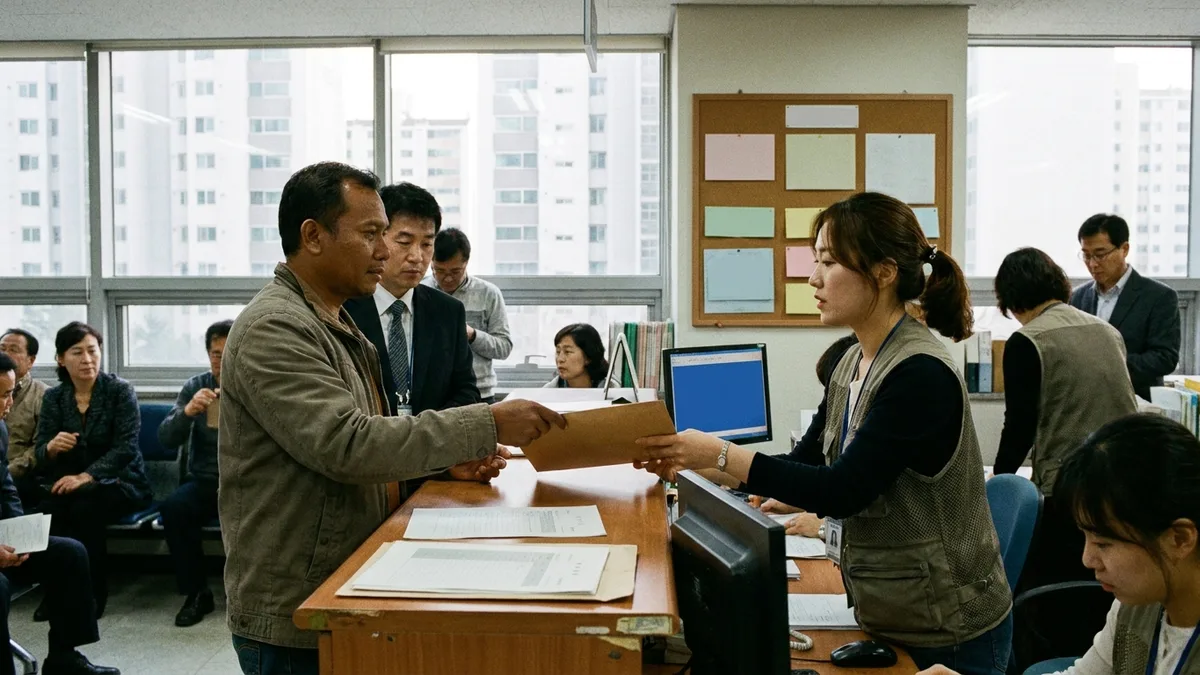
Because jurisdiction follows the workplace location, anyone who moved to another region after being dismissed ends up making at least two round trips to that city — for filing and for attending the hearing. If you also have to visit the Employment Center separately, that number goes up. LACHA is a transportation and payment super app for foreigners that you can use right away without identity verification. You can start with just your passport — no Korean bank account or phone number needed — and use KTX, intercity buses, taxis, the Airport Railroad, and a transit card all in one place, paying with overseas simple payments like Alipay or WeChat Pay. When a company-registered phone line has been cut off, even arranging travel can be blocked, and this app removes just that part of the friction. It has nothing to do with the remedy request procedure, documents, or interpretation.
Need transit and payments while you wait for your residence card? Check out LACHA.
Built to work without a Korean phone number or bank account, with overseas payment methods like Alipay, WeChat Pay, and Apple Pay. Taxi hailing plus KTX, express bus, and airport railroad (AREX) booking — all in one app.
Up to 60% off Korea transit with a coupon (max ₩3,000): enter code at sign-up. KTX gets up to 18% off on top
Download now


Frequently Asked Questions (FAQ)
Q1. Can foreigners file an unfair dismissal remedy request too? Yes — if you're a worker under the Labor Standards Act, you're covered regardless of nationality. Labor Standards Act Article 6 prohibits discrimination in working conditions on the ground of nationality, with a criminal fine of up to 5,000,000 KRW for violations (Article 114(1), as of August 2026), and Article 22 of the Act on Foreign Workers' Employment likewise prohibits unfair discriminatory treatment of foreign workers. That said, the workplace must have 5 or more regular employees (Article 11(1)), and you must file within 3 months from the day the unfair dismissal, etc. occurred (Article 28(2), as of August 2026). If you don't currently have valid stay status, read Q5 first.
Q2. Once 3 months pass, is there really nothing I can do? The Labor Relations Commission remedy request has a statutory limitation period, so once 3 months pass, your eligibility to file disappears entirely (Article 28(2), as of August 2026). However, unpaid wages and severance pay run on a different track — a complaint to the Regional Employment and Labor Office — and filing a court action seeking confirmation that the dismissal is void is a separate option as well. Check your remaining options for your own case at ☎1350 and ☎132.
Q3. If my workplace has fewer than 5 employees, do I have no rights at all? No. It only means you're not eligible for an unfair dismissal remedy request before the Labor Relations Commission. Advance notice of dismissal applies even to workplaces with fewer than 5 employees, so the employer must give notice 30 days in advance or pay at least 30 days' ordinary wages (Article 26, as of August 2026), and a violation carries imprisonment of up to 2 years or a criminal fine of up to 20,000,000 KRW (Article 110(1), as of August 2026). Exceptions include continuous service of less than 3 months. Unpaid wages, severance pay, and industrial accident coverage also still stand.
Q4. I never got a written dismissal notice — I was only told verbally. What do I do? If the workplace has 5 or more regular employees, a dismissal without written notice has no effect (Article 27(2), as of August 2026). But without a written notice, it becomes harder to pin down "the day the dismissal occurred," which can work against you in counting the 3 months. That same day, get the fact and date of the dismissal confirmed by text or messenger, gather your attendance records and pay deposit history, and call ☎1350 for counseling right away.
Q5. I don't have valid stay status — will filing lead to an immigration crackdown? The Supreme Court has held that wages for work already performed and industrial accident compensation can be claimed regardless of stay status (Decision 94Nu12067, September 15, 1995). In addition, from November 6, 2025, an exemption from public officials' reporting duty took effect for foreign workers who are victims of unpaid wages. However, the confirmed scope of the exemption is the process of investigating and supervising unpaid wages, etc., and whether the same applies to Labor Relations Commission remedy proceedings has not been confirmed. So before you act, first check whether you'd be reported in your own case with ☎1345 or a Foreign Workers' Support Center.
Note: This article is general information, not legal or administrative advice. The provisions, deadlines, amounts, and penalties in the text are organized as of 2026-08 from the original text of the Labor Standards Act on the Korea Law Information Center, the Ministry of Government Legislation's Easy-to-Find Everyday Legal Information (easylaw.go.kr), the National Labor Relations Commission (nlrc.go.kr), and the Government24 service guide. The exact expiration-date calculation for the 3-month limitation period, whether interpretation is provided at Labor Relations Commission hearings, the amount brackets for enforcement fines, the current public notice setting the rights remedy representative threshold, the public notice on grounds for extending the deadlines under Article 25 of the Act on Foreign Workers' Employment, and whether the reporting-duty exemption that took effect in November 2025 extends to Labor Relations Commission proceedings could not be confirmed from primary sources, so we did not state them as settled in the text. Laws and public notices are revised and change, so before filing, please re-confirm for your own situation at nlrc.go.kr, moel.go.kr, and law.go.kr, and at ☎1350 and ☎1345. LACHA is unaffiliated with the public agencies above and does not handle rights remedy procedures on your behalf.