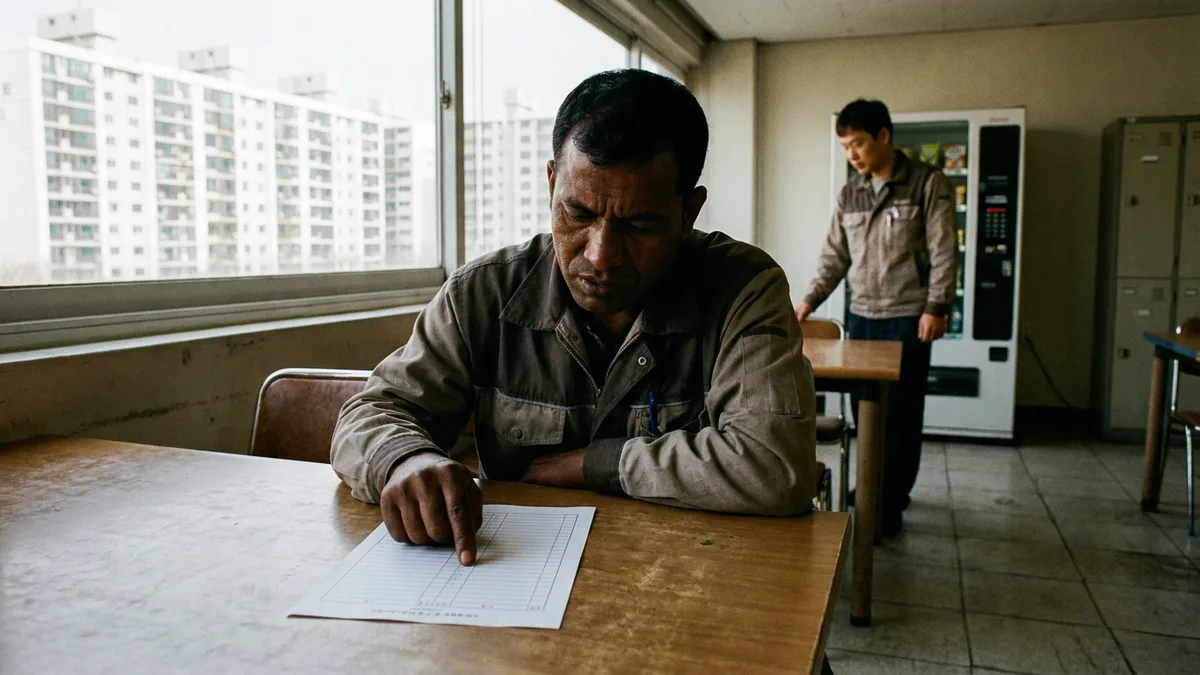

The National Health Insurance Service officially states: "The sudden increase in workplace insurance premiums in April is due to the billing of employee year-end settlement premiums" (as of 2026). Your company didn't make a calculation error — the system is working as designed.
Workplace enrollees' premiums are first calculated based on the previous year's total salary, then recalculated and settled once that year's actual total salary is finalized (National Health Insurance Act Enforcement Decree Article 34(1), 2026 standard). The monthly amounts you paid were provisional amounts, not final figures.
Settlement goes two ways, but one direction is far more common. According to an NHIS press release (April 23, 2026), of the 16.71 million people subject to the 2025 settlement, 10.35 million (62%) owed additional payments, 3.55 million (21%) received refunds, and 2.81 million (17%) saw no change.
Notice: This guide summarizes publicly available statutes and NHIS guidance as of August 2026; it is general information, not legal or administrative advice. Coverage requirements, medical use, and benefit scope are covered in the Foreigner Health Insurance Enrollment & Use Guide. Here we focus only on settlement and leaving Korea. Always confirm your status and amounts through the official channels below.
The Monthly Premium You Paid Wasn't Final
What drives the settlement amount isn't the rate — it's the salary you received last year. The higher your salary or the more bonuses and overtime pay you earned that year, the bigger the amount you'll have to pay later.
The rate is easy to misunderstand. Settlement premiums are calculated using the rate from the attribution year, not the billing year. The NHIS clarified that even though the 2025 settlement is billed in April 2026, the 2025 rate of 7.09% applies. The 2026 rate is 719 per 10,000, or 7.19% (Enforcement Decree Article 44(1), amended December 23, 2025), and workplace enrollees split this 50-50 with their employer.
Long-term care insurance premiums are also settled on the same notice. They're calculated by multiplying health insurance premiums (minus reductions/exemptions) by a set rate (Long-Term Care Insurance Act Article 9(1)), and the 2026 rate is 9,448 per 1 million (same Act Enforcement Decree Article 4).
Tip: Rates are usually set each December by Enforcement Decree amendment for the following year. The figures in this guide are as of August 2026; 2027 values have not yet been announced.
Why Settlement Comes in April — March 10 Reporting, April Billing
Employers must report to the NHIS by March 10 each year the total amount of salary paid in the previous year and the period of service (Enforcement Decree Article 35(1)). The recalculated monthly salary base is then applied from April of that year through March of the next year (same Decree Article 34(2)(ii)), and the difference is added to the April premium.
| Type | Reporting Deadline | Billing Month | Monthly Salary Base Application Period |
|---|---|---|---|
| Employee | March 10 | April | April–March next year |
| Self-employed business owner | May 31 | June | June–May next year |
| Diligent reporting employer | June 30 | July | July–June next year |
Per NHIS guidance, year-end settlement applies to those who maintained workplace enrollee status as of December 31 each year (2026 standard).
The reporting method has also changed. Starting in 2026, the NHIS automatically processes year-end settlement for all businesses using the National Tax Service's simplified withholding statement for earned income, without requiring a separate report from the employer. If the employer filed the simplified statement with the tax office, it counts as having reported total salary (Enforcement Decree Article 35(3), added August 20, 2024).
Notice: "April premium" and "which month's paycheck it's deducted from" are separate issues. The law only states that the premium for that month is deducted from salary, so depending on your company's pay date, it could be deducted from your April or May paycheck. For an accurate answer, ask your company payroll staff.
The NHIS Does Not Settle Individually with Employees
This is the most important sentence in this guide. The NHIS FAQ states: "The NHIS goes through this settlement process with the business's employer and does not settle individually with employees" (2026 standard).
That's how the law is structured. The obligation to pay monthly salary-based premiums rests with the employer (National Health Insurance Act Article 77(1)(i)), and the NHIS refunds overpayments to or collects shortfalls from the employer (Enforcement Decree Article 39(1)). The employer then settles the employee's share separately with the employee (same Article (3)).
| 2025 Settlement Result | Number of People | Average per Person |
|---|---|---|
| Additional payment | 10.35 million (62%) | 219,000 KRW |
| Refund | 3.55 million (21%) | 115,000 KRW |
| No change | 2.81 million (17%) | — |
According to the NHIS press release (April 23, 2026), the total settlement amount was 3.7064 trillion KRW. These are aggregate figures for all enrollees, not your personal amount.
So the inquiry sequence is set: ①For settlement details and deduction amounts, contact your company payroll staff; ②For system rules, coverage status, and refund procedures, call the NHIS at ☎1577-1000 (press 6 for foreigner inquiries). Reversing the order will just waste your time with "ask your company" responses.
📌 Important: Employers must inform employees of the deduction amount when deducting the employee's share from their salary (National Health Insurance Act Article 77(3)). Asking how much was deducted for settlement is a legitimate request. How to read the statement itself is covered in How to Read Your Korean Payslip.

When a Lump Sum Is Too Much — Your Company Files the Request
If the employee's share of the additional amount to be collected exceeds that month's monthly salary-based premium, it can be divided into up to 12 installments (Enforcement Decree Article 39(4), amended May 7, 2024). If the amount is smaller than that, you're not eligible to apply in the first place.
The key is who applies. The provision states "upon the employer's request," so employees cannot apply directly. You must request it from your company, and the deadline is tight — by the April premium payment deadline (May 11, 2026 for 2026) based on 2026 practice; for businesses on automatic withdrawal, by two business days before the payment deadline, so the billed amount can be updated.
When You Resign Before April — Separation Settlement
People who resign are subject to separation settlement, not year-end settlement. When reporting the loss of coverage, the employer also reports the total salary received up to the resignation date and the number of months worked, and the monthly salary-based premium previously paid is recalculated and settled on the spot (Enforcement Decree Article 39(2)). That's why they're excluded from year-end settlement reporting.
For people planning to leave Korea, timing matters. Settlement happens when you resign, not in April, so it can all be deducted from your final paycheck. The impact feels bigger because it overlaps with airfare, moving costs, and deposit refunds.
The outcome isn't predetermined. If your actual salary in your final year was higher than the previous assessment basis, you'll owe more; if it was lower, you'll get a refund. If the reported total salary is inaccurate, you can file for recalculation using the "Workplace Enrollee Premium Settlement Error Correction Request Form" and supporting documents.
Between Resignation and Departure — When You Switch to Community Enrollment, the Rhythm Changes
Workplace enrollee status changes the day after the employment relationship ends (Act Article 9(1)(iii), Ministry of Health and Welfare Notice No. 2025-69 Article 3(2)(vi)). Premiums are collected from the month after gaining coverage through the month containing the day before losing coverage (Act Article 69(2)).
Two things change when you become a community enrollee. First, for foreign community enrollees, when premiums calculated from income and property fall short of the previous November's average premium for all enrollees, that average premium is charged; the 2026 amount is 158,630 KRW (including long-term care insurance). If you have income or property, it could be more, and this method does not apply to recognized refugees and their families or to single-person households under age 19.
Second, the payment timing moves up. Foreign community enrollees must pay that month's premium in advance by the 25th of the previous month (Act Article 109(8)). Permanent residents (F-5) and marriage migrants (F-6) follow the domestic schedule of the 10th of the following month (Act Article 78(1), Enforcement Decree Article 76-4).
There's also a buffer mechanism. If you maintained workplace enrollee status for a combined total of one year or more during the 18 months before resignation, you can choose voluntary continued enrollment to pay only your pre-resignation employee share for up to 36 months (Act Article 110, Enforcement Decree Article 77). This makes sense only when community premiums would exceed your former workplace premium, and the application deadline is before two months elapse from the payment deadline of the first community premium notice. If you still don't pay the first billed amount after that, you revert to community enrollee status.
Notice: For foreigners residing in Seoul, Incheon, or Gyeonggi Province, coverage and billing matters are handled not by your local branch but by the relevant Foreigner Service Center. There is one in Seoul (Sindorim Technomart Business Building 3F, 97 Saemal-ro, Guro-gu) and four in Incheon/Gyeonggi (Ansan, Suwon, Incheon, Uijeongbu). Going to a center outside your jurisdiction won't get your case processed. "Foreigner voluntary continued enrollment application" is also handled at these centers.
When Coverage Ends After Leaving Korea — Three Different Paths
The one-liner "it ends automatically when you leave" is not accurate. Ministry of Health and Welfare Notice No. 2025-69 (Health Insurance Application Standards for Long-Term Resident Overseas Koreans and Foreigners, effective April 23, 2025) sets three separate types.
| Type | Does Departure End Coverage? | When Coverage Ends |
|---|---|---|
| Workplace enrollee | No | The day after employment ends or stay period expires (Notice Article 3(2)) |
| Community enrollee | Conditionally yes | If you leave with stay period remaining and stay abroad for 1 month or more, the day after departure (Article 4(2)(vi)) |
| Dependent | Conditionally yes | Same as above, or the day the policyholder loses coverage or switches to community enrollment (Article 5(2)) |
Departure is not listed at all as a reason for workplace enrollees to lose coverage. The six reasons the notice specifies are: death, dependent acquisition, stay period expiration, deportation order, application for coverage exclusion, and employment termination. This is where people who resigned but delayed departure misjudge their status.
The stay period expiration date and insurance coverage expiration date are effectively tied to the same date. The NHIS warns: "If you receive medical treatment with health insurance after your stay qualification expiration date, unjust enrichment charges may occur." If you haven't left yet, there's a "stay period extension permit for departure" under Immigration Control Act Enforcement Regulations Article 32, with no fee charged. For actual case-by-case judgment, check with Hi Korea (hikorea.go.kr) and ☎1345.
Premium exemptions during overseas stay have period requirements. The standard is three months; one month if the NHIS recognizes it as a stay for work purposes (Enforcement Decree Article 44-2), and the exemption applies starting the month after departure, not the departure month itself (Act Article 74(3)). Short-term departures are not eligible for exemption. For workplace enrollees with dependents remaining in Korea, the exemption may be a reduction rather than a full waiver (Act Article 74(1) proviso; NHIS guidance: 50% reduction with dependents, 100% exemption without).
Money Left Over and Debts Left Behind — Refunds Require an Application
Let me draw a line first. Health insurance has no system like the National Pension lump-sum refund. The agencies, laws, and procedures are all different (lump-sum refund inquiries: ☎1355; procedure: How to Claim Your National Pension Lump-Sum Refund), and what you can get refunded from health insurance is only overpaid amounts (Act Article 86(1)). Even that, the NHIS first applies to overdue premiums, late fees, and disposition costs, and refunds only the remaining balance (same Article (2)).
Refunds are not automatic deposits. ①NHIS determines remaining balance as refundable and sends notice to the obligor → ②application submitted by mail, fax, internet, or customer center (☎1577-1000) → ③account holder identity verification → ④after account registration, account transfer usually within 2 days. If you don't apply, it won't come out.
Two points trip up foreigners. Refunds are paid in principle to the obligor in person, so payment to another person's account is possible only when you visit a branch in person to claim it. And because each bank displays foreign names in English differently, if the name doesn't match, internet application itself is blocked and you can apply only by phone, fax, or text.
📌 Important: The right to claim a refund expires by statute of limitations after three years (Act Article 91(1)(ii)). Whether you can receive a wire transfer to an overseas account was not confirmed in NHIS guidance, so before closing your Korean account, inquire first at ☎1577-1000 or a Foreigner Service Center. Registering for automatic withdrawal/advance refund accounts and reporting changes of stay address (down to the building and unit number) can also reduce the chance of mail being returned.
Arrears are the opposite side. If you fall behind on premiums, health insurance benefits are restricted at hospitals and clinics until you pay in full, you may face disadvantages when applying to the Ministry of Justice for stay permits, and if arrears persist after dunning, disposition will be taken against income and property (NHIS guidance). Foreign community enrollees who are delinquent for one month or more have insurance benefits suspended until payment is complete (Act Article 109(10), Enforcement Decree Article 76-5). The NHIS's right to collect also has a three-year statute of limitations, but it is interrupted by billing and dunning (Act Article 91(1)(i) and (2)).
Neither "it's fine because I'm leaving anyway" nor "there's no way out" is true. Installment payment and reduction consultation are legal routes. If you dispute the disposition itself, you can file a written objection within 90 days of becoming aware of the disposition (Act Article 87(1) and (3)).
| Where | Number | What |
|---|---|---|
| Company payroll staff | — | My settlement amount, deduction amounts, installment payment request |
| National Health Insurance Service | 1577-1000 (press 6 for foreigner inquiries) | Coverage status, billing, refund procedures |
| NHIS foreign language consultation | 033-811-2000 | English, Chinese, Vietnamese, Uzbek |
| Calling from overseas | +82-33-811-2001 | Weekdays 09:00–18:00 (Korea time), toll call |
| Stay & visa | 1345 (hikorea.go.kr) | Stay period, re-entry judgment |
| National Pension lump-sum refund | 1355 | This is a different system from health insurance |
| Wages & working conditions | 1350 | When company won't provide deduction amounts |
Don't self-diagnose which category your stay status falls under; confirm it at ☎1577-1000 (press 6) or your relevant Foreigner Service Center. Income tax year-end settlement is under the National Tax Service, so the contact point is completely different (Hometax Foreign Tax Filing).
NHIS branches and Foreigner Service Centers accept visits only during weekday business hours, so when it overlaps with resignation and departure prep, same-day travel can be a burden. LACHA is a foreigner transportation and payment super-app you can use immediately without identity verification, letting you book and pay for KTX, express buses, taxis, airport rail, and transit cards all in one place. That said, LACHA has nothing to do with health insurance premiums or refund issues; it's a private transportation and payment service.
Need transit and payments while you wait for your residence card? Check out LACHA.
Built to work without a Korean phone number or bank account, with overseas payment methods like Alipay, WeChat Pay, and Apple Pay. Taxi hailing plus KTX, express bus, and airport railroad (AREX) booking — all in one app.
Up to 60% off Korea transit with a coupon (max ₩3,000): enter code at sign-up. KTX gets up to 18% off on top
Download now


Frequently Asked Questions (FAQ)
Q1. My April paycheck had a much bigger health insurance deduction than usual. Did my company calculate it wrong? The NHIS officially states: "The sudden increase in workplace insurance premiums in April is due to the billing of employee year-end settlement premiums." The monthly premiums you paid were provisional amounts based on the previous year's salary, and once that year's salary is finalized, the monthly salary base is recalculated and the difference is settled (Enforcement Decree Article 34(1)). However, "April premium" versus which month's paycheck it's deducted from depends on your company's pay date. Employers are obligated to inform you of the deduction amount (Act Article 77(3)), so request the settlement details from your company payroll staff.
Q2. I heard I'm getting a refund. Can I apply directly to the NHIS? Settlement takes place between the NHIS and the employer. The NHIS FAQ also states, "The NHIS goes through this settlement process with the business's employer and does not settle individually with employees," and the law designates the employer as the obligor (Act Article 77(1)(i)). The NHIS refunds overpayments to the employer (Enforcement Decree Article 39(1)), and the employer settles the employee's share separately (same Article (3)). That's why your first inquiry goes to your company payroll staff, not ☎1577-1000.
Q3. The settlement amount is too large to pay all at once. Can I split it? If the employee's share of the additional amount exceeds that month's monthly salary-based premium, you can pay in up to 12 installments (Enforcement Decree Article 39(4), amended May 7, 2024). However, the provision states "upon the employer's request," so employees cannot apply directly and must ask the company. The 2026 practice deadline is by the April premium payment deadline (May 11, 2026 for 2026); for businesses on automatic withdrawal, by two business days before the payment deadline.
Q4. When I leave Korea, do I get back all the health insurance premiums I paid? No. Health insurance has no system like the National Pension lump-sum refund. The agencies, laws, and procedures are all different, and lump-sum refund inquiries go to ☎1355. What you can get refunded from health insurance is only overpaid amounts (Act Article 86(1)), and even that is first applied to arrears, then the remainder is transferred to your account after going through the application procedure. The right to claim a refund expires by statute of limitations after three years (Act Article 91(1)(ii)). Whether overseas account wire transfer is possible was not confirmed, so before closing your account, inquire at ☎1577-1000 or your relevant Foreigner Service Center.
Q5. I resigned but haven't left Korea yet. What happens to my health insurance? Workplace enrollee status changes the day after the employment relationship ends (Act Article 9(1)(iii), Notice No. 2025-69 Article 3(2)(vi)). Departure is not a reason for workplace enrollees to lose coverage. If you then become a community enrollee, foreigners must pay that month's premium in advance by the 25th of the previous month (Act Article 109(8); F-5 and F-6 by the 10th of the following month), and if the calculated premium falls short of the average premium, 158,630 KRW may be charged as of 2026. If community premiums would exceed your former workplace premium, consider voluntary continued enrollment (Act Article 110), but the application deadline is short, so confirm immediately at ☎1577-1000 (press 6).
Reference: This guide is based on August 2026 information compiled from the full text of the National Health Insurance Act, Enforcement Decree thereof, Long-Term Care Insurance Act, Immigration Control Act Enforcement Regulations, Ministry of Health and Welfare Notice No. 2025-69, NHIS website guidance and FAQs, and NHIS press releases (January 19 and April 23, 2026) found on the Korea Law Information Center; it is general information, not legal or administrative advice. Premium rates and average premiums are usually set each December by Enforcement Decree amendment for the following year, and phone numbers and operating hours are also subject to change. For your settlement amount and deduction amounts, contact your company payroll staff; for coverage status, billing, and refunds, call ☎1577-1000 (press 6 for foreigner inquiries), foreign language consultation ☎033-811-2000, or from overseas ☎+82-33-811-2001; for stay issues, re-verify based on your own situation through Hi Korea and ☎1345. LACHA is a private transportation and payment service unrelated to the above agencies and does not handle premiums or refund procedures.