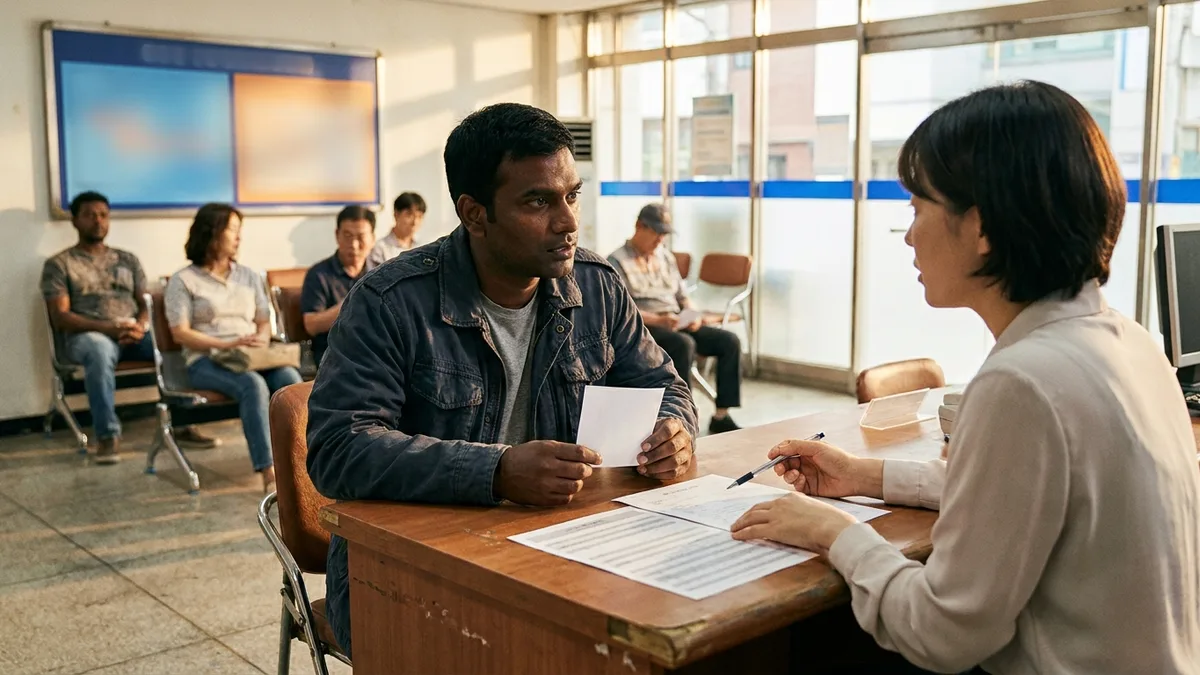
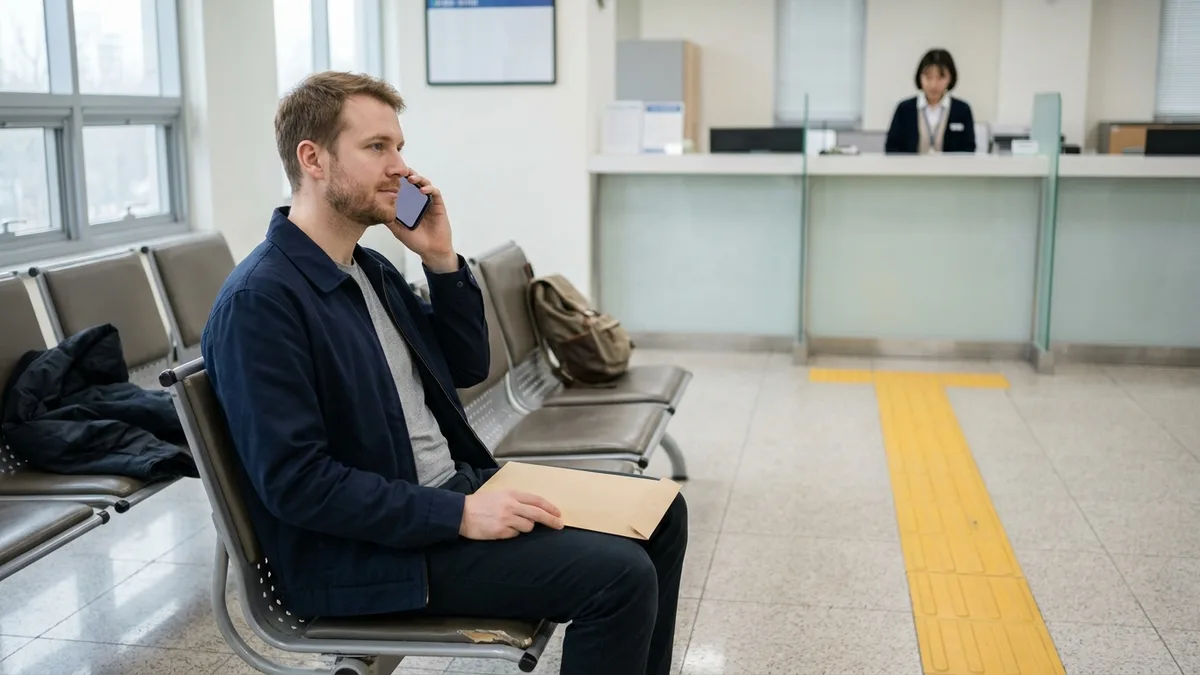
Employment centers are evenly distributed nationwide. Article 22(2) of the Presidential Decree on the Organization of the Ministry of Employment and Labor and its Affiliated Organizations (effective July 21, 2026) requires that regional employment and labor offices maintain separate employment centers to handle employment stabilization affairs. There are seven regional offices—Seoul, Gyeonggi, Central, Busan, Daegu, Gwangju, and Daejeon—each with sub-offices below them (Article 2(1) of the same decree). Because they're national agencies established by presidential decree, they don't disappear due to local circumstances.
Counters run by city, county, or district governments are different. Article 4-2(1) of the Employment Security Act says local government heads "may" provide job placement, career guidance, and job information services when necessary (current as of 2026). It's discretionary, not mandatory. That's why some cities have these counters and others don't.
The confusingly similar names are another barrier. Foreign Worker Counseling Center, Foreign Residents Comprehensive Information Center, Foreign Residents Center, Employment Center, Employment Welfare Plus Center—even Korean speakers get these mixed up. Go to the wrong place and you've lost the whole day you took off. This guide is a map to help you choose where to go. It won't decide your case for you.
Note: This guide provides general information only and is not legal, visa, or immigration advice. Always confirm your specific situation through the official channels below. Agency names, phone numbers, hours, and supported languages change frequently. The information here is current as of August 2026, so always call ahead to confirm they're open today and can serve you in your language before you visit.
Four types of counters — national, public corporation, local government, and private, each doing different things
Sorting them out first prevents wasted trips. What the law calls "employment security agencies" are the employment centers you'll deal with in practice. Article 2-2(1) of the Employment Security Act defines employment security agencies as regional employment and labor administration agencies that perform employment stabilization duties such as job placement and career guidance, and Article 6(1) of the Act on the Employment, etc. of Foreign Workers (hereafter "Foreign Employment Act") adopts that same definition. So when a statute says "apply to the head of the employment security agency," it means your local employment center.
| Counter | Legal basis | What they do | What they can't do |
|---|---|---|---|
| Employment Center (national) | Decree Art. 22(2), Employment Security Act Art. 2-2(1) | Career guidance, job placement, E-9 work permit and workplace change applications, H-2 job applications | Visa status changes, workplace change permit decisions |
| Foreign Worker Counseling Center (Ministry of Employment & Labor, Human Resources Development Service of Korea for Industry) | Counseling services under Foreign Employment Act Art. 21 | Native-language counseling, real-time interpretation, three-way calls (worker, employer, counselor) | Cannot accept or decide work permit or workplace change applications |
| Local government counters (provincial, city, county, district) | Employment Security Act Art. 4-2(1) "may provide" | Local job listings, life counseling, interpretation, support programs set by ordinance | Existence, scale, and languages vary by region |
| Private employment agencies | Reporting (free) under Art. 18, registration (paid) under Art. 19 of Employment Security Act | Domestic job placement within registered scope | Barred from involvement in E-9 and H-2 hiring |
This table helps you choose where to go, not whether you qualify. The agency information is current as of August 26, 2026, confirmed against the original text of statutes on the National Law Information Center website (law.go.kr) and each agency's official site.
📌 Important: Just because something isn't listed here doesn't mean it doesn't exist, and just because it's listed here doesn't mean it's open today. Check with your city/county/district office and your local employment center to see what's available in your area.
What employment centers are legally required to do, and what's beyond their authority
What you can demand at an employment center is written in the statutes. Article 14(1)(1) of the Employment Security Act says the head of an employment security agency "shall" provide career guidance to persons seeking new employment (current as of 2026). Not "may"—"shall." Career guidance means vocational aptitude testing, job information provision, career counseling, training, referrals, advice, and so on (Article 2-2(3) of the same Act). There's no nationality or visa status requirement in this provision.
It's also prohibited for employers to discriminate unfairly in treatment on the basis that a worker is foreign (Foreign Employment Act Article 22, current as of 2026).
On the other hand, there are things this counter doesn't do. Visa status changes and workplace change permits are under the jurisdiction of the Ministry of Justice's immigration offices. Employment centers belong to the Ministry of Employment and Labor and handle job placement—they don't issue visas. For questions involving immigration status, call ☎1345 to avoid a second wasted trip. What jobs are allowed under each visa status is laid out separately in work permission by visa status.
Find your nearest employment center through three routes. Memorize just one and you'll lose the link when that page gets redesigned.
- Work24 (work24.go.kr) user guide's "Find Employment Center"
- Ministry of Employment and Labor's jurisdiction finder — moel.go.kr/minwon/rigion/rigion_C1.do
- Employment Welfare Plus Center website (workplus.go.kr) city/province and city/county/district search — shows center name, jurisdiction, and contact info together
Employment Welfare Plus Centers are a collaborative model that brings employment and welfare services under one roof, so the makeup of agencies in each building varies by region. The accurate statement is only that employment centers are often located inside.
Tip: We couldn't confirm whether interpreters are on-site full-time. If you need service in your language, call ahead or use the three-way call system described below. For programs like the National Employment Support System where eligibility varies, don't self-diagnose—ask ☎1350 and your local employment center.
The number to call when words fail — Foreign Worker Counseling Center 1577-0071 and three-way calling
Counseling for foreign workers is a national program established by law. Article 21 of the Foreign Employment Act says the Minister of Employment and Labor shall carry out projects including immigration support, education for workers and employers, cooperation with sending-country agencies, counseling and convenience provision for workers and employers, and promotion of the employment system (current as of 2026).
The counter that handles this counseling is the Foreign Worker Counseling Center. Established by the Ministry of Employment and Labor and the Human Resources Development Service of Korea for Industry, its phone number is ☎1577-0071. The address is 3F Emerald Building, 16 Gojan 2-gil, Danwon-gu, Ansan-si, Gyeonggi-do (15359). According to the center's website, counseling hours are 09:00–18:00, 365 days a year, with weekend and holiday coverage on an on-call shift system.
The phone system is ARS-based—you dial the main number, then press your country code and the star key in sequence. So it's faster to check the website first to see if your language has a number assigned. As of the center's website as of a December 3, 2025 update, the English-only number no longer appears in the ARS list. If you need service only in English, confirm availability by phone first.
The most useful function of this center is three-way calling. This lets the worker, employer, and counselor all talk at once, so you can bring in an interpreter on the spot when communication breaks down at the workplace. According to the center's own description, the center opened on July 1, 2011, and three-way calling started on May 9, 2012. If your employer says "I can't understand you" and shuts down the conversation, dialing this number in front of them is faster than hunting for an interpreter on your own.
Note: The hours, address, and services in this paragraph were confirmed only from the center's own website, and we did not secure an independent second source (as of August 2026). Call ☎1577-0071 to confirm they're open today before you visit.
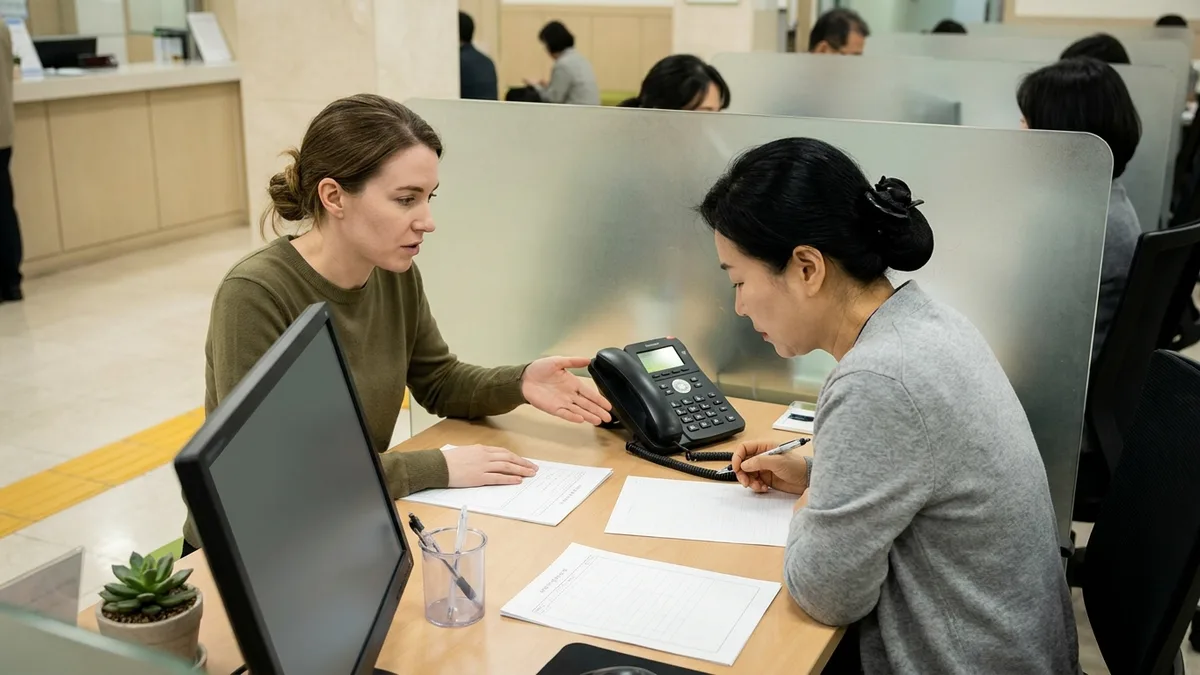
E-9 and H-2 have designated counters — from job application to workplace change
People who entered under the Employment Permit System don't need to choose a counter. The law designates employment centers.
| Procedure | Where and what to submit | Deadline / processing time | Statutory basis (2026 current) |
|---|---|---|---|
| H-2 job application | Submit Form 9 job application + copy of Alien Registration Card or passport + copy of H-2 visa to employment center of residence | Apply after completing foreign worker employment education | Foreign Employment Act Art. 12(2), Enforcement Rule Art. 12 |
| E-9 workplace change application | Submit Form 13 or 13-2 to employment center of residence | Apply within 1 month of labor contract termination date | Act Art. 25(1)(3) |
| Processing of change application | Processed by the employment center that received it | Within 15 days of receipt (may extend once for another 15 days if unavoidable) | Enforcement Rule Art. 16(4) |
| Number of changes | Certain reasons not attributable to the worker don't count toward the limit | In principle 3 times during employment period, 2 times during extension period | Act Art. 25(4) |
H-2 job applications can be handled all at once during employment education. According to guidance from the Human Resources Development Service of Korea for Industry, submitting the job application form to the employment education institution is treated as applying for a job at the employment center. The Alien Registration Certificate that attaches to the workplace change application form is confirmed directly by the agency through administrative information sharing, so if you consent, you don't need to obtain it separately (Enforcement Rule Article 16(3)).
This guide doesn't cover deadline calculations. Since there's also a provision that you must leave the country if you don't receive Immigration Act Article 21 workplace change permission within three months of the application date, check the date issues in order at E-9 workplace change.
It's good to understand the referral structure too. Employment centers recommend qualified candidates from the foreign job-seeker registry (Act Article 8(3)), and when the employer selects someone from among them, they issue a work permit (same Article, paragraph 4).
The H-2 sequence is a bit different. According to guidance from the Human Resources Development Service of Korea for Industry, you receive your visa and enter the country, complete employment education, apply for a job at the employment center, the employer obtains a Special Employment Availability Confirmation, then you sign a standard labor contract through employment center referral or the employer's own recruitment. After signing the contract, the employer files an employment commencement report with the employment center, and you file an employment commencement report with the immigration office. Because the reporting deadlines are stated inconsistently across different government materials, we didn't include the numbers in this guide—confirm both with the employment center and ☎1345 on the day you sign the contract.
📌 Important: That's why involvement by anyone other than an employment security agency in E-9 or H-2 hiring is prohibited (Act Article 8(6)). Violators face up to one year imprisonment or a criminal fine of up to 10 million KRW (Article 29(1)). It's also prohibited for undesignated persons to receive money or goods in exchange for filing applications on someone's behalf (Article 27(4); the designated-agent system is in Article 27-2). How to spot this is laid out separately in job scams and illegal brokers.
Fifteen days after entry, your first in-person counter is the employment education center
If you entered on E-9, the first counter you'll meet isn't the employment center—it's the employment education center. Article 11(1) of the Foreign Employment Act requires that within a period set by Ordinance of the Ministry of Employment and Labor after entry, you receive employment education at the Human Resources Development Service of Korea for Industry or a foreign worker employment education institution, and Enforcement Rule Article 10 of the same Act sets that period at 15 days (current as of 2026).
The content and cost of education are also specified. Enforcement Rule Article 11(1) sets the education hours at 16 hours or more, and paragraph 2 requires inclusion of basic skills by industry, the Employment Permit System, industrial safety and health, related laws including the Labor Standards Act and Immigration Act, and Korean culture and daily life. Upon completion you receive a certificate of completion in Form 8 (same Article, paragraph 4).
📌 Important: The cost of employment education shall be borne by the employer (Enforcement Rule Article 11(3)). If an employer fails to have a worker receive employment education, they face an administrative fine of up to 5 million KRW (Act Article 32(1)(2)). If they say they'll deduct the education fee from your wages, point to this provision.
It's not just workers who receive education. Employers receiving foreign worker employment permits for the first time must also receive education on labor-related laws, human rights, etc. (Act Article 11-2, added April 13, 2021), and failure to do so is subject to an administrative fine (Article 32(1)(2-2)).
Employment education institutions operate on a designation system. Find education center locations and schedules through the contact information for regional headquarters and branches on the Human Resources Development Service of Korea for Industry's H-2 Foreign National of Korean Heritage Employment Education website (eps.hrdkorea.or.kr). The overall process flow is in Employment Permit System (EPS) employment procedures and H-2 Visit Employment job placement and change.
Local government and private support organization counters exist or don't depending on where you live and that year's budget
This is the most frequently misunderstood section of this guide. Local government counters vary by region not because the administration is lazy but because that's how the law is designed. Article 4-2 of the Employment Security Act says "may," and Article 21 of the Framework Act on Treatment of Foreigners in Korea also says the state and local governments "may" commission projects and support costs—both are discretionary provisions.
Private support organizations are the same. Article 24(1) of the Foreign Employment Act says the state may support part of the costs within the limits of the budget for institutions and organizations that provide counseling, education, etc. for foreign workers (current as of 2026). It's not mandatory and is limited by "within the limits of the budget." The Ministry of Employment and Labor Notice (No. 2013-23) setting facility and equipment standards for supported organizations remains current as of August 2026. The framework of the system remains in place, but whether doors are actually open depends on that year's budget and local circumstances.
Regional disparities are also visible in the number of ordinances. A search of the National Law Information Center's local regulations database for regulations with "foreign resident support" in the name returns 193 items, and those with "foreign worker support" return 114 items (queried August 26, 2026). Whether there's a counter in your city, county, or district depends on the local ordinance. It also means services you received may disappear when you move.
Note: If you saw the name "Foreign Worker Support Center" in an old handout or blog post, call first to confirm it's still operating before you go. As of August 2026, that name doesn't appear in either Work24's list of related organizations or the Foreign Worker Counseling Center's list of related organizations. That said, in 2026 the Ministry of Employment and Labor held another open call and selected local governments to provide residence support services such as counseling and Korean language classes under the "Foreign Workers' Regional Settlement Support Project" (announced February 23, 2026), so depending on where you live, there may be a support facility for foreigners run by the local government or an organization it has contracted. For reference, "Foreign Worker Counseling Center" and "Foreign Worker Support Center" are different names.
That doesn't mean national and local counters are disconnected. Enforcement Rule Article 2 of the Foreign Employment Act says that when the head of an employment security agency provides job placement, they "shall actively utilize the job placement services of public institutions such as local governments and domestic free job placement businesses."
Take Seoul as an example: the Seoul Global Portal (global.seoul.go.kr) brings support facilities together in one place and runs "Job Search" and "Job Posting" bulletin boards. Similar-named organizations are mixed in, so be careful when copying numbers. By the portal's labeling, 02-2229-4900 is the Seoul Foreign Residents Center (40 Dosin-ro, Yeongdeungpo-gu), and Seoul Global Center is a different organization in Jongno-gu. Outside Seoul, rather than searching by agency name, it's more accurate to ask the provincial foreign residents portal or the foreign residents section of the city/county/district office.
Private counters are divided by whether they're free or paid. To operate a domestic free job placement business, you must report to the mayor, county head, or district head, and you must be a non-profit corporation or public-interest organization (Employment Security Act Article 18(1)(2)). Job placement done by the Human Resources Development Service of Korea for Industry is a case that can be done without this reporting and is stated separately in the statute (same Article, paragraph 4, item 1). So counters involving the public corporation and neighborhood placement offices operate under different legal authority to begin with.
If you use a paid placement office, there's a minimum verification line. Domestic paid job placement businesses are on a city/county/district registration system (Employment Security Act Article 19(1)), and operating without registration is punishable by up to five years imprisonment or a criminal fine of up to 50 million KRW (Article 47(1)). Receiving money or goods other than the fees announced by the Minister of Employment and Labor is also prohibited (Article 19(3)). Receiving money or goods from applicants by persons recruiting workers (Article 32), and false job advertisements and false job condition presentations (Article 34) are each separately prohibited. How to verify postings is in how to read job platforms with visa sponsorship.
Job fairs: don't memorize dates, bookmark the bulletin board
Fair schedules change every year, so writing them down somewhere makes them obsolete from that moment. Instead, memorize the location of the permanent menu. The "Recruitment Info > Recruitment Events > Job Fair" menu on Work24 (work24.go.kr) operates year-round, and the same section includes "Recruitment Calendar" and "Jobs Near Me." Local government events are posted on each region's foreign residents portal job posting board.
There's one scene to be careful about at the fair: being asked to sign a contract on the spot. If it's a document whose contents you don't understand, take a photo before signing, check whether wages, working hours, and workplace are written in, and check whether you can receive a copy. If they demand an introduction fee or commission, stop right there and confirm with ☎1350 or ☎1577-0071. As we saw above, involvement by anyone other than an employment security agency in E-9 or H-2 hiring is itself prohibited (Act Article 8(6)). Violation is punishable by up to one year imprisonment or a criminal fine of up to 10 million KRW (Article 29(1)).
Counters are only open weekdays 09:00–18:00, so for people working in manufacturing or agriculture/livestock, it's a schedule that requires taking time off. If the employment center, immigration office, and employment education center are in different cities, you have to plan the travel too. LACHA is a foreigner transport and payment super-app you can use immediately without identity verification, letting you pay for KTX, express buses, taxis, airport rail, and transit cards all in one place. But LACHA is a private transport and payment service with no connection to employment counseling or application procedures. Counseling, filing, and decisions happen only at the public agencies above.
Need transit and payments while you wait for your residence card? Check out LACHA.
Built to work without a Korean phone number or bank account, with overseas payment methods like Alipay, WeChat Pay, and Apple Pay. Taxi hailing plus KTX, express bus, and airport railroad (AREX) booking — all in one app.
Up to 60% off Korea transit with a coupon (max ₩3,000): enter code at sign-up. KTX gets up to 18% off on top
Download now


What to do in the 30 minutes before you go — one call, one envelope of documents
The biggest loss this guide aims to prevent isn't misinformation but wasted trips. Thirty minutes before departure can prevent most of them.
- Call to confirm they're open today. Ask about operating hours and whether the person in charge is on duty.
- Ask if interpretation in your language is available. If not, confirm whether you can use three-way calling with ☎1577-0071.
- Ask what forms and documents are needed. Writing down the form number speeds up the conversation at the counter.
- Put your passport, Alien Registration Card, labor contract, company business card and address in one envelope.
- Write down the exact address and floor number of where you're going. If you write it in Korean as-is, you can show it to the driver.
| Counter | Number | What for |
|---|---|---|
| Ministry of Employment and Labor Customer Service Center | 1350 (weekdays 09–18, paid call) | Employment and labor system inquiries, pre-visit confirmation for employment centers |
| Foreign Worker Counseling Center | 1577-0071 (09:00–18:00, 365 days) | Native-language counseling, real-time interpretation, three-way calls |
| Foreign Residents Comprehensive Information Center | 1345 (from overseas +82-2-1345) | Immigration status, visa, alien registration information |
| Korea Legal Aid Corporation | 132 | Free legal counseling |
| Work24 system inquiries | 1577-7114 (weekdays 09–18, paid call) | Website use and errors |
This information is current as of August 2026 and numbers, hours, and systems may change.
There are four points where the answer will differ for each person: whether your visa status is subject to employment center referral, whether there's a local government counter in your area, whether you're eligible for the National Employment Support System, and whether interpretation is available. All four are determined not by this guide but by ☎1350 or your local employment center. If immigration status is involved, call ☎1345 as well. Reporting procedures for disputes that have already occurred, like wage theft or wrongful dismissal, are organized in complete guide to official foreigner labor counseling channels.
It's also good to know in advance where calls get routed. Calls about employment and labor systems themselves go to ☎1350, and problems with the Work24 website not opening or login being blocked go to ☎1577-7114, run by the Korea Employment Information Service. The two numbers have different jurisdictions, so calling the wrong one means you have to call again. ☎1345 uses +82-2-1345 when calling from overseas.
For reference, employment centers may establish a Foreign Worker Rights Protection Council with participation from labor organizations and employer organizations in the jurisdiction (Foreign Employment Act Article 24-2(1)). If there's a problem you keep running into at the counter, it's better to know such a body exists when you go for counseling.
Frequently Asked Questions (FAQ)
Q1. I don't speak Korean—can I go to the employment center alone? Article 14(1)(1) of the Employment Security Act says the head of an employment security agency shall provide career guidance to persons seeking new employment, and there's no nationality or visa status requirement in this provision. However, we couldn't confirm whether interpreters are on-site full-time at employment centers. Before you visit, call to ask about interpretation availability, and if it's not available, use the three-way call system with ☎1577-0071 Foreign Worker Counseling Center. It's a system where the worker, employer, and counselor all talk at once, so you can use it when communication breaks down at the workplace too.
Q2. Should I go to the "Foreign Worker Support Center" I read about in an old article? If you saw that name, call first to confirm it's still operating. As of August 2026, that name doesn't appear in either the Ministry of Employment and Labor's Work24 list of related organizations or the Foreign Worker Counseling Center's list of related organizations. It's a different name from the "Foreign Worker Counseling Center" (☎1577-0071), so don't trust guidance that combines the two names with a slash. Cost support for private support organizations is a discretionary provision in Foreign Employment Act Article 24(1) that says the state "may support within the limits of the budget," so circumstances can change every year. In 2026, the Ministry of Employment and Labor held another open call and selected local governments to provide residence support services under the "Foreign Workers' Regional Settlement Support Project" (announced February 23, 2026). Check with the foreign residents section of your city/county/district office for counters in your area.
Q3. Can the employment center change my visa too? No. Employment centers belong to the Ministry of Employment and Labor and are employment security agencies. Visa status changes and workplace change permits are under the jurisdiction of the Ministry of Justice's immigration offices. Mixing up the two counters means two wasted trips in one day. Even in cases like E-9 workplace changes where the two procedures are linked, the application is filed at the employment center and the workplace change permit is issued by immigration (Foreign Employment Act Article 25(3) presupposes Immigration Act Article 21 permission). For questions about immigration status, call ☎1345.
Q4. Someone wants to introduce me to a job and is demanding an introduction fee. If you're E-9 or H-2, stop right there. Article 8(6) of the Foreign Employment Act prohibits anyone other than an employment security agency from involvement in the selection, referral, or other hiring of foreign workers, and Article 29(1) punishes violators with up to one year imprisonment or a criminal fine of up to 10 million KRW (current as of 2026). Even general paid placement offices are on a city/county/district registration system (Employment Security Act Article 19(1)), and operating without registration is punishable by up to five years imprisonment or a criminal fine of up to 50 million KRW (Article 47(1)). Receiving money or goods other than announced fees is also prohibited (Article 19(3)).
Q5. My company says they'll deduct the employment education fee from my wages. Enforcement Rule Article 11(3) of the Foreign Employment Act says the cost of foreign worker employment education shall be borne by the employer (current as of 2026). Education must be received within 15 days of entry (Act Article 11(1), Enforcement Rule Article 10) and runs 16 hours or more (Enforcement Rule Article 11(1)). If an employer fails to have a worker receive employment education, they face an administrative fine of up to 5 million KRW (Act Article 32(1)(2)). Actual handling varies by workplace circumstances, so describe the situation as-is to ☎1350 or ☎1577-0071 and confirm.
Note: This guide organizes publicly available statutes and government guidance as general information and is not legal, visa, or immigration advice. Statutory provisions, form numbers, and agency information in the text are current as of 2026-08 and were confirmed against the original text of the Presidential Decree on the Organization of the Ministry of Employment and Labor and its Affiliated Organizations, the Employment Security Act, the Act on the Employment, etc. of Foreign Workers and its Enforcement Rule, and the Framework Act on Treatment of Foreigners in Korea on the National Law Information Center website (law.go.kr), and from the Ministry of Employment and Labor's Work24 (work24.go.kr), Employment Welfare Plus Center (workplus.go.kr), Foreign Worker Counseling Center, Human Resources Development Service of Korea for Industry H-2 Foreign National of Korean Heritage Employment Education website, and Seoul Global Portal (global.seoul.go.kr). Statutes and systems are subject to revision, and agency names, addresses, phone numbers, hours, and supported languages can change without notice, so before you move, confirm again based on your own situation with ☎1350 (employment and labor systems), ☎1577-0071 (Foreign Worker Counseling Center), ☎1345 (immigration status and visa), or ☎132 (free legal counseling). LACHA is a private transport and payment service unrelated to the public agencies above and does not represent or file employment counseling or application procedures.