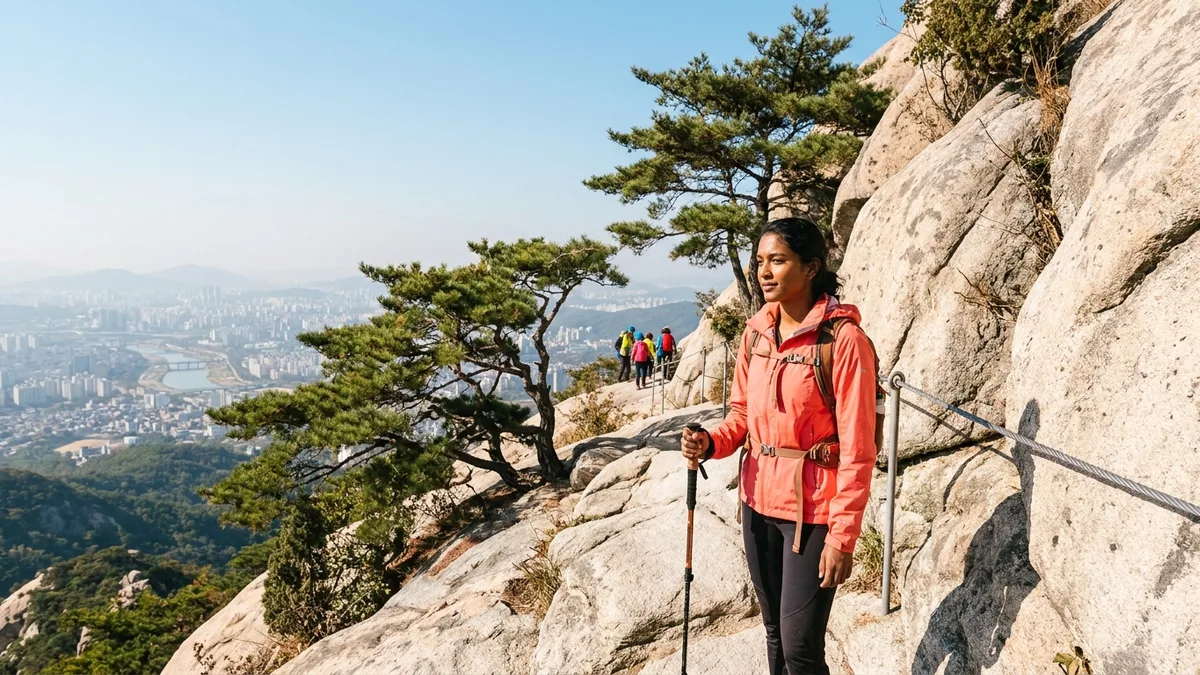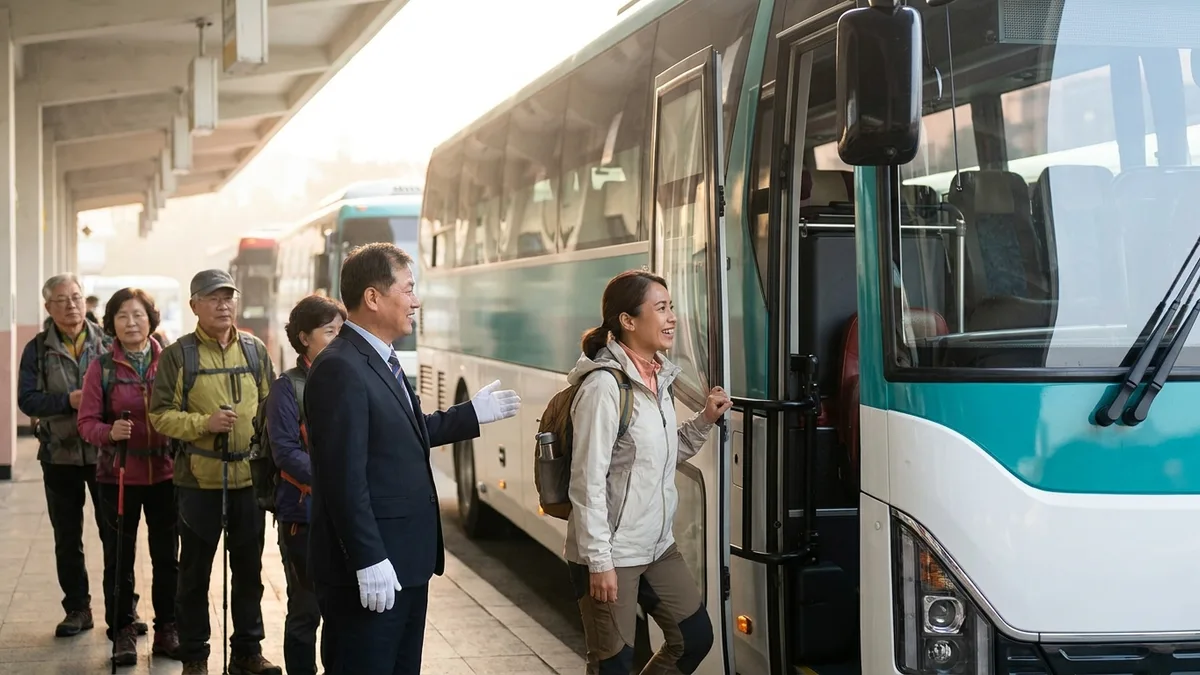
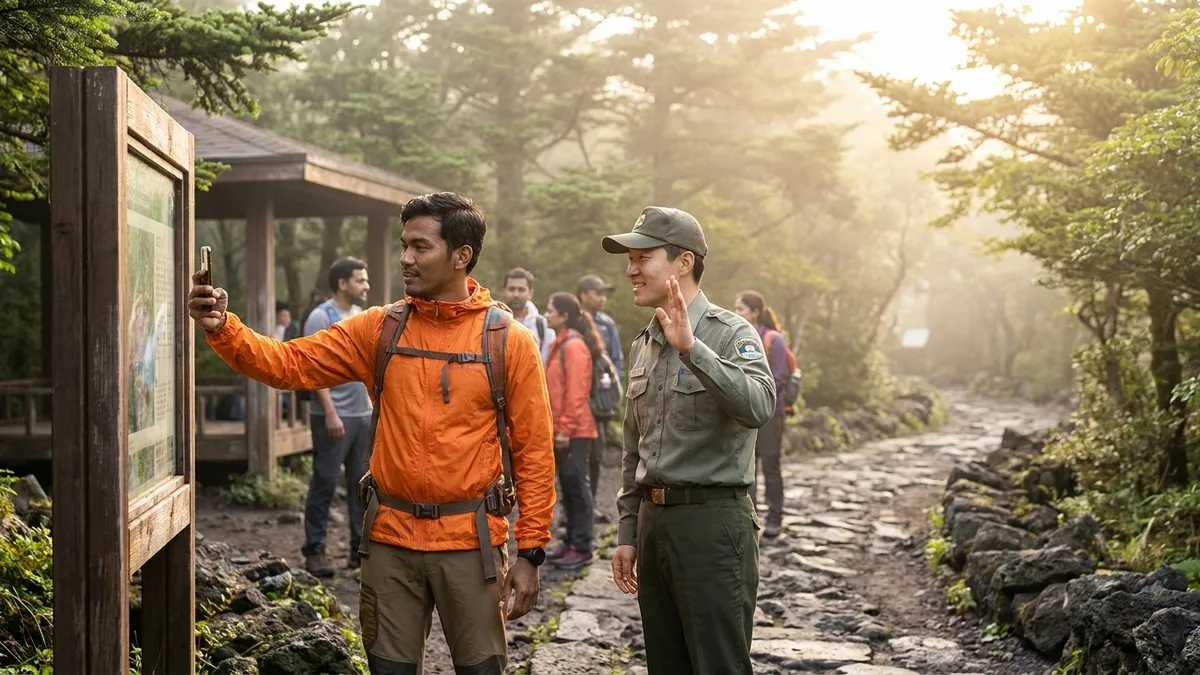
Hallasan (1,947m) is Korea's highest mountain — and a mountain you cannot summit without a reservation. There really are foreign travelers who fly to Jeju on a dawn flight, reach the Seongpanak entrance, and get turned back at the mid-mountain checkpoint because they had no reservation. The Seongpanak and Gwaneumsa trails leading to the Baengnokdam summit have fixed daily entry quotas, and only those with reservations are let through.
The reservation itself is free and not hard. The problem is that the process is unfamiliar. The booking site opens a whole month at once, the month before your hike; weekend and peak-season dates fill up right after opening; and a step that looks like Korean-style phone verification makes you freeze. The good news: foreigners can book with email verification, no Korean phone needed.
In this article we'll walk through the booking screens step by step, then cover the same-day kiosk QR and ID-check procedure, your alternatives if you missed the reservation, and pre-dawn transport from Jeju Airport to Seongpanak. Korea-wide hiking basics (free entry, wildfire-precaution periods, map apps) are covered separately in the Guide to Hiking in Korea.
The quotas, times, and fares below are based on publicly available information as of Aug 2026. Hallasan's reservation rules and entry cutoff times change by season and year, so before your hike, be sure to double-check the notices on the Hallasan reservation system (visithalla.jeju.go.kr).
Why reservations exist, and which trails need them
As crowds wore down the summit area, Hallasan introduced a trail reservation system that caps daily numbers on the two trails to Baengnokdam. It applies to the Seongpanak and Gwaneumsa trails, the ones that run to the summit, with daily quotas of 1,000 for Seongpanak and 500 for Gwaneumsa (as of Aug 2026).
Since May 2025, the reservation-only stretch has been narrowed to the summit section. From the Seongpanak entrance to the Jindallaebat checkpoint (at the 7.3km mark), and from the Gwaneumsa entrance to Samgakbong (at 6km), you can walk without a reservation; only the climb from there up to Baengnokdam checks for one. In other words, it's not that "you'll be turned away at the entrance without a reservation" — you'll be stopped at the summit-bound checkpoint. (as of Aug 2026)
| Trail | Baengnokdam summit | Reservation | Notes |
|---|---|---|---|
| Seongpanak | Yes | Required for the summit section | 9.6km one way, gentle but long; 8–9 hours round trip |
| Gwaneumsa | Yes | Required for the summit section | 8.7km one way, steeper but with fine valley and ridge scenery |
| Yeongsil / Eorimok | No (up to Witse Oreum) | Not needed | Half-day courses; decide on the day, no reservation |
For first-timers, the popular combination is up Seongpanak, down Gwaneumsa — you climb on the gentler grade and get the better scenery on the way down. Reservations are per trail, so for this combination, book the Seongpanak side. Note that this combo tends to take longer than an out-and-back (usually 9–10 hours), so calculate your before-sunset descent from that figure.
How to book, step by step
Reservations are taken only through the Hallasan reservation system run by Jeju Province. It's something you do yourself — not through a travel agency or a booking app.
Step 1 — Open visithalla & choose your language
Go to visithalla.jeju.go.kr. The page supports English, Chinese, and Japanese, so switch the language at the top of the screen first. Booking from a foreign-language page is what routes you into the foreigner-oriented (email-based) verification step later.
Step 2 — Pick your date and trail when bookings open
Reservations for the entire following month open at 9:00 AM (Korea time, KST) on the first business day of the month before your hike. A May hike, for example, opens on April 1 — but since the official rule says "first business day," it slips to the next business day if the 1st falls on a weekend or holiday. Setting an alarm from abroad? Don't forget it's Korea time. Weekends, public holidays, and foliage season often sell out right at opening, so we recommend logging in on the dot. Pick your date on the calendar, choose Seongpanak or Gwaneumsa, then select an entry time slot — most of the quota is allocated to the pre-dawn slots. (as of Aug 2026; check official sources)
Step 3 — Identity check (no Korean phone needed)
If you don't have a Korean phone, proceed with email verification — a code is sent to your email address and you enter it. Verification emails often land in the spam folder, so if you don't see one, check spam first. If it's not there either, retry with a different address (Gmail, etc.), and if you're still stuck, ask the travel helpline 1330 (English supported). Enter the booking name exactly as the roman-letter name in the passport you'll present on the day. One reservation can cover up to 4 people including companions (as of Aug 2026), and companions' names may also need to match their own passports exactly. (check official sources)
Step 4 — Booking complete: keep your reservation number
When the booking is done, you receive a reservation number. Screenshot the screen along with the confirmation email. Reception can be unreliable at the mountain entrance, and people do hold up the line on the day because they can't pull their number up.
If your plans change, you can modify or cancel from the reservation lookup screen on the same site. The lookup may require your reservation number, so don't delete the confirmation email — and note the number down separately. If you can't make it, cancel before your hike date; the spot goes to someone waiting on a cancellation.
Failing to show up without canceling brings a no-show penalty: one unexcused absence blocks Hallasan reservations for 3 months, two or more for a year (as of Aug 2026; check official sources). Even on a day you give up because of weather, just pressing the cancel button before the hike keeps you penalty-free.
Step 5 — On the day: issue your QR at the kiosk & ID check
At the trail entrance, use your reservation number at the kiosk to issue a QR code. Whether the kiosks support foreign languages needs confirmation, so keep that screenshot of your reservation number ready to pull up, and if you get stuck, show it to the on-site staff. Then at the gate (for Seongpanak, on the way to the Jindallaebat checkpoint), staff match your ID against the booking name and scan the QR. A passport is the sure form of ID. If you live in Korea, confirm in advance via 1330 or the visithalla notices whether an Alien Registration Card is accepted — and when in doubt, even residents should bring their passport. Entry can be refused if the booking name and ID don't match, so if you have companions, everyone in the party should carry their own passport.
If you missed the reservation
- Watch for cancellations: No-shows are fairly common, so spots often reopen in the last few days before the hike, sometimes as late as the day before. Refresh the reservation site's calendar frequently.
- Walk only as far as Jindallaebat: As noted above, you can hike to the Jindallaebat checkpoint without a reservation. You won't stand on the summit, but it's a proper 5–6 hour round-trip hike, and the Saraoreum viewpoint along the way is a fine one.
- Switch to the Yeongsil or Eorimok trail: These need no reservation at all. They climb toward Witse Oreum instead of Baengnokdam — and going by scenery alone, plenty of people say this side is actually better. You can decide on the morning of.
- Move your dates to next month: If your schedule is flexible, rebooking on the next opening day is the sure route. Weekday pre-dawn slots tend to have relatively more room.
Planning your day
Hallasan runs on strict time control. There are really only two times to remember — the entry start time and the summit-bound cutoff.
- Entry start: Entry opens from 5:00 AM with no summer/winter distinction (unified since 2024 — as of Aug 2026). You must enter within your reserved time slot; if a flight or bus delay looks likely to make you late, changing or canceling in advance is the safe move. Already missed it? Ask at the on-site checkpoint or information desk right away — handling can vary with the day's conditions.
- Summit-bound cutoff: The Jindallaebat checkpoint closes the summit direction around 12:00 noon in winter and around 1:00 PM in summer. Past that time, even with a reservation, Baengnokdam is off the table. (Varies by season — check official sources.)
- Round-trip time: 8–9 hours round trip on Seongpanak is the standard. Work backward from the cutoff and the math says a pre-dawn start is non-negotiable.
- Arrive on Jeju the day before: The first morning flight cuts it too close for your entry window. The safe itinerary is a night in Jeju City and a pre-dawn transfer.
- Descent time: National parks prohibit hiking after sunset. Days run short in fall and winter, so plan your descent backward from sunset.
Winter adds one more variable. On days with heavy-snow or gale advisories, entry can be banned outright, reservation or not. For a winter date, check the visithalla notices and closure updates once more the night before and again at dawn before setting out.
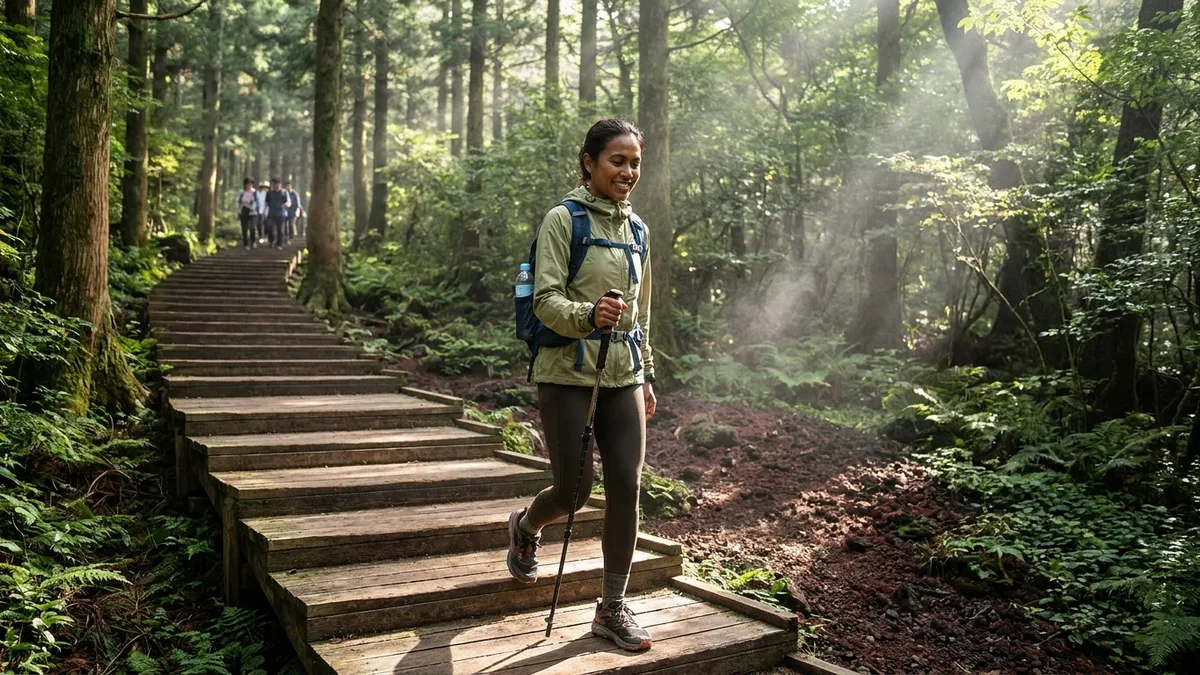
Getting from Jeju Airport to Seongpanak
Coming from Seoul, the usual route into Jeju is a domestic flight from Gimpo Airport. Getting to Gimpo and domestic-flight tips are in the Gimpo Airport Transport Guide. From Jeju Airport to the Seongpanak trailhead, here's how it goes.
- Limited-stop bus 181 (geuphaeng): Goes straight from the Jeju Airport stop to Seongpanak. About 40–50 minutes, with a fare of at most ₩3,000 (as of Aug 2026). Bus 281 (a ganseon / "trunk" main-line route) also passes Seongpanak, but you have to board it at Jeju Bus Terminal. Riding with a transit card is easiest — for topping up, see How to Recharge a Transit Card with a Foreign Card.
- Pre-dawn means taxi: The first 181 departs around 6 AM (as of Aug 2026 — shifts by day and season, so check the same-day timetable), so if your reserved entry slot comes earlier than the first bus can get you there, you'll need to call a taxi. From the airport or downtown Jeju to Seongpanak is about 40 minutes and in the mid-₩20,000s, with a 20% surcharge late at night (11 PM to 4 AM) (as of Aug 2026). How to call a taxi without a Korean phone is covered in How to Call a Taxi Without a Phone.
- If you descended via Gwaneumsa: Bus 475 is effectively the only route past the Gwaneumsa entrance, and it doesn't run straight into downtown Jeju — you transfer around Jeju National University — with long gaps between buses on top of that (as of Aug 2026). So a taxi call is the realistic way back. Requests pile up right after the descent rush, so putting in your call before you walk out of the gate shortens the wait. If calls won't connect or your signal is shaky, ask the visitor information center for call-taxi phone numbers or check the 475 timetable.
- Seongpanak back to Jeju City: Take the same 181 or 281 from the Seongpanak stop in the opposite direction. The last evening bus runs early, so if your descent might run late, photograph the stop's timetable in advance.
- Driving? Mind the parking: The Seongpanak lot is small and often fills before dawn. When it's full, signs direct you to a nearby transfer parking lot to continue by bus — factor that in if you're on a rental car itinerary.
What to wear and bring
- Ready for sudden weather: At 1,947m, the summit's weather is a different world from downtown Jeju. A clear day routinely turns to gale, fog, or rain at the top, so pack a windbreaker even at the height of summer. In bad weather, the checkpoints may bar entry for the day.
- All water and snacks from below: There's effectively nowhere to refill water mid-course, and it's safest to plan as if the shelter kiosks aren't operating. Buy 1.5–2L of water per person plus trail food (chocolate, gimbap, and the like) at a trailhead convenience store beforehand. A little cash is worth carrying too — for getting won at a good exchange rate, see the Korea Currency Exchange Guide.
- Crampons are a must in winter: In the snowy season, entry to Hallasan can be barred without crampons and gaiters (check official sources). You can buy them at outdoor shops in Jeju City or stores near the trailhead.
- Toilets first: Toilets exist only at the trailhead and the mid-mountain shelters, with long stretches between them. Stop at the trailhead before you set out, and marking shelter locations in your map app buys peace of mind.
- Footwear: Seongpanak's rock isn't rough going, but the trail is long, so shoes with firm soles serve you well.
Want to warm up near Seoul first? See the subway-accessible Bukhansan guide, or for one more overnight mountain, the Seoraksan guide. Boot and gear rental info is in the Bukhansan guide as well — and it's a good way to gauge in advance whether you have the stamina for a full day on Hallasan.
Transport & payment tips
The real gateway to Hallasan isn't the mountain — it's the travel. Transport to Gimpo Airport from Seoul, the hotel transfer after arriving on Jeju the day before, the pre-dawn taxi to Seongpanak, the trip back from Gwaneumsa after the descent — moments that require payment stack up several times a day. And many Korean transport apps assume Korean phone verification or a Korean card, so travelers stall right at the hailing or booking step.
Installing one transport and payment app designed to work without identity verification makes this whole route far simpler. If you can call a taxi without a Korean phone and pay directly with overseas payment methods (Visa, Mastercard, Alipay, and more), the pre-dawn run to Seongpanak and the post-descent return from Gwaneumsa stop being worries. And if Seoraksan is your next mountain, the same app carries you on through express bus booking too.
Want to handle everything from your first ride after landing in one app? Check out LACHA.
Built to work without a Korean phone number or bank account, with overseas payment methods like Alipay, WeChat Pay, and Apple Pay. Taxi hailing plus KTX, express bus, and airport railroad (AREX) booking — all in one app.
KTX now up to ₩10,000 off. Enter code at sign-up for 3,000P on top
Download now


Frequently Asked Questions (FAQ)
Q1. What happens if I go to Seongpanak without a reservation? The summit direction is closed to you at the Jindallaebat checkpoint — for alternatives, see the "If you missed the reservation" section above. It's safest to assume there's no on-site walk-up sign-up desk; even when spots remain, they're allocated through the reservation site. (check official sources)
Q2. I don't have a Korean phone — can I still book? Yes. On visithalla's foreign-language pages (English, Chinese, Japanese), you can book with email verification. The confirmation email later becomes your key to lookups and cancellations, so book with an address you'll keep checking during your trip, not a throwaway.
Q3. Does the reservation or entry cost anything? No — both the reservation and entry are free. What actually costs money: flights to Jeju, the pre-dawn taxi, bus fares, and parking if you're renting a car.
Q4. Seongpanak or Gwaneumsa — which trail is better? If stamina is the worry, Seongpanak; if scenery comes first, Gwaneumsa (see the comparison table above). Gwaneumsa's steep grade is hard on the knees, so with little hiking experience, an out-and-back on Seongpanak is the safe call — and if you choose the descend-via-Gwaneumsa combination, factor in that the return bus (475) is inconvenient enough that in practice you'll need to call a taxi.
Q5. Do I get a certificate for reaching Baengnokdam? Yes — Hallasan has a summit certificate program. You apply on visithalla with a photo of yourself at the summit marker stone; issuance methods and fees can vary over time, so check the site's guidance. As hiking souvenirs go it's hard to beat, and it's especially popular with foreign hikers.
Note: This article is for general travel information purposes. Reservation quotas, restricted sections, entry cutoff times, and transport fares are as of Aug 2026 and change often by season and year. Before hiking, be sure to check the latest rules on the Hallasan reservation system (visithalla.jeju.go.kr) and in Hallasan National Park notices, and for English inquiries use the travel helpline 1330 (24 hours; English, Chinese, Japanese, and more). LACHA does not arrange or guarantee Hallasan reservations or trail access.