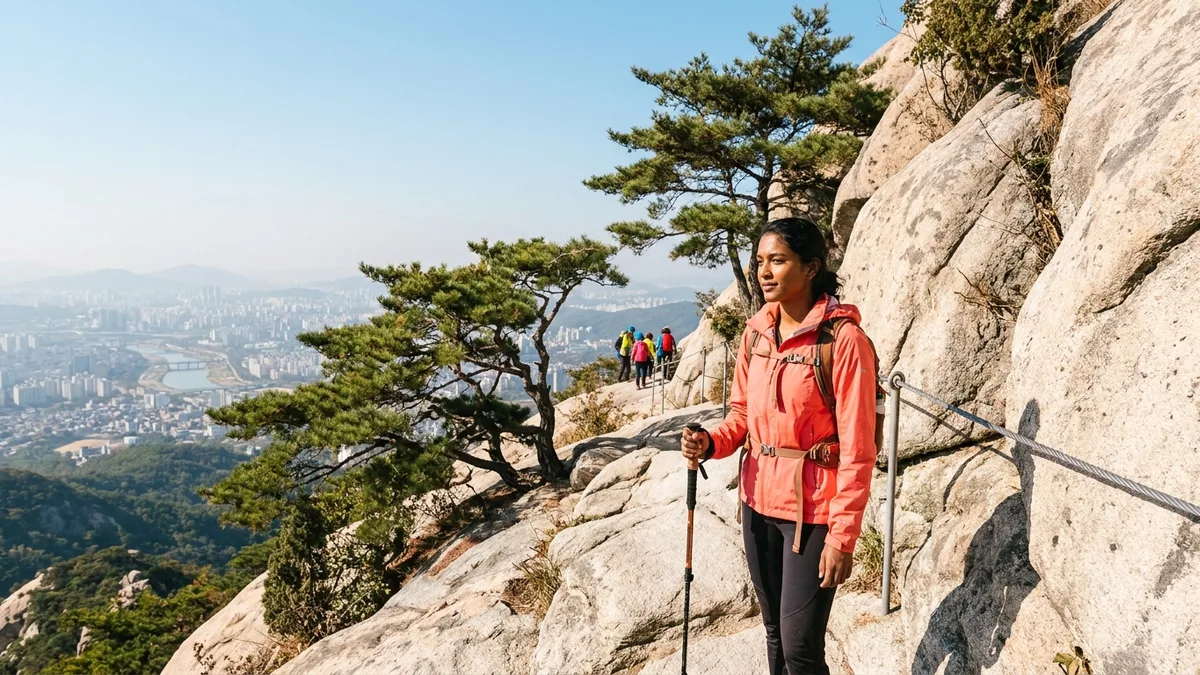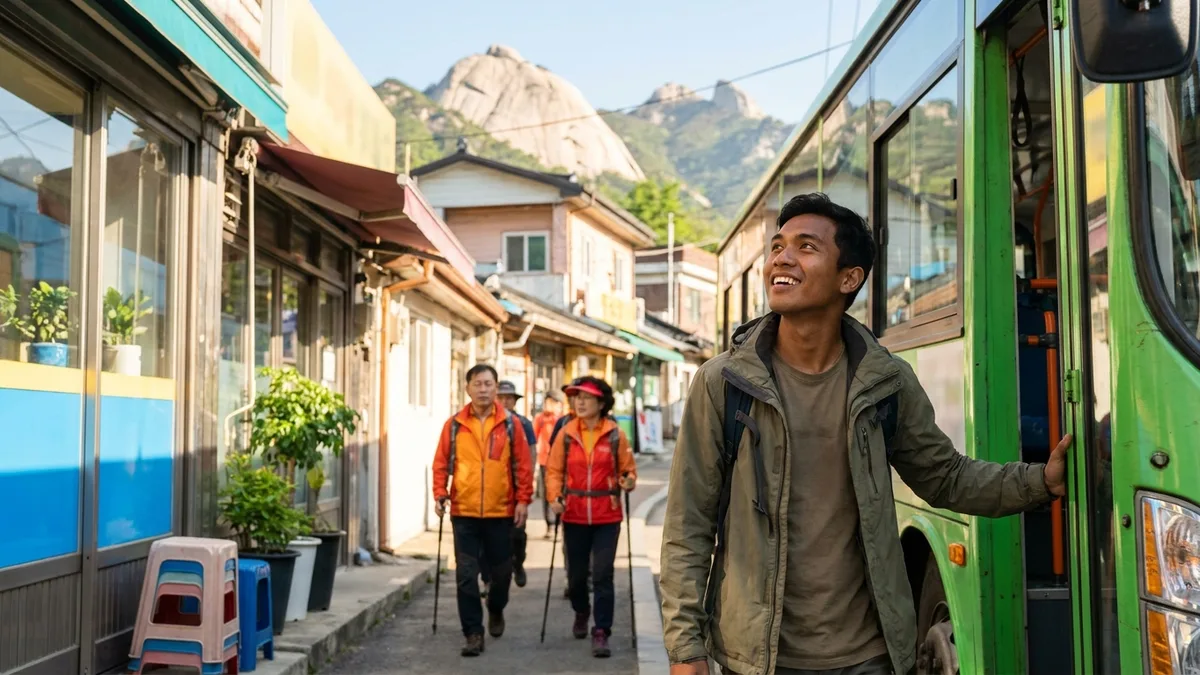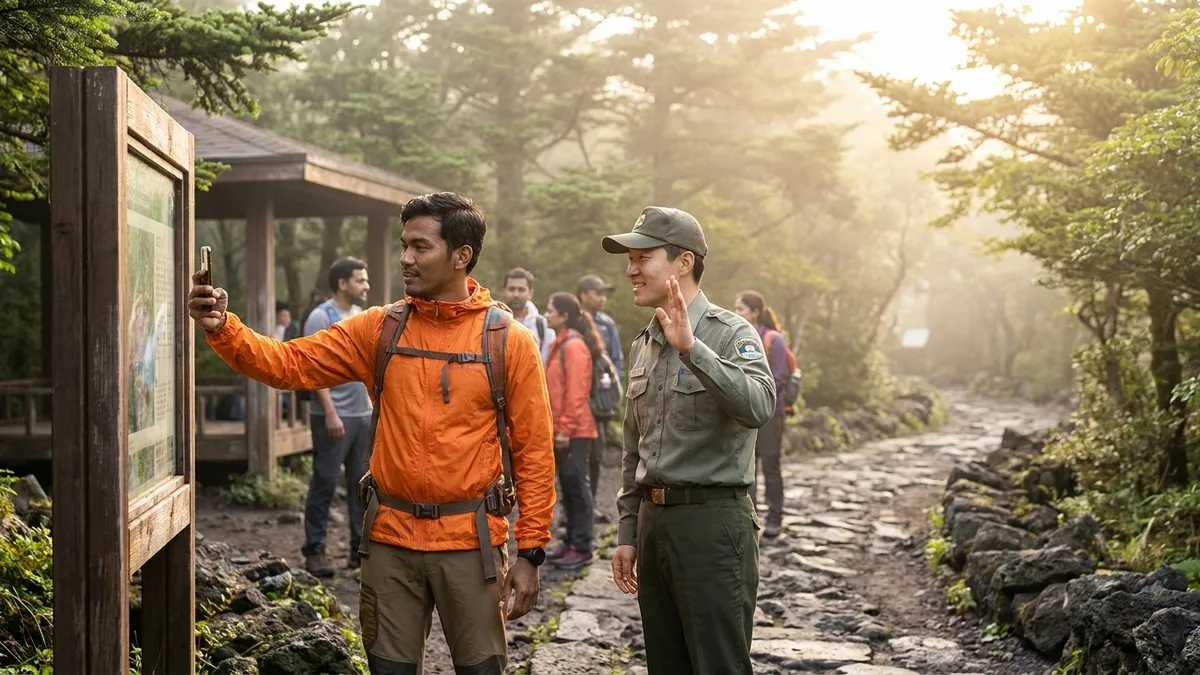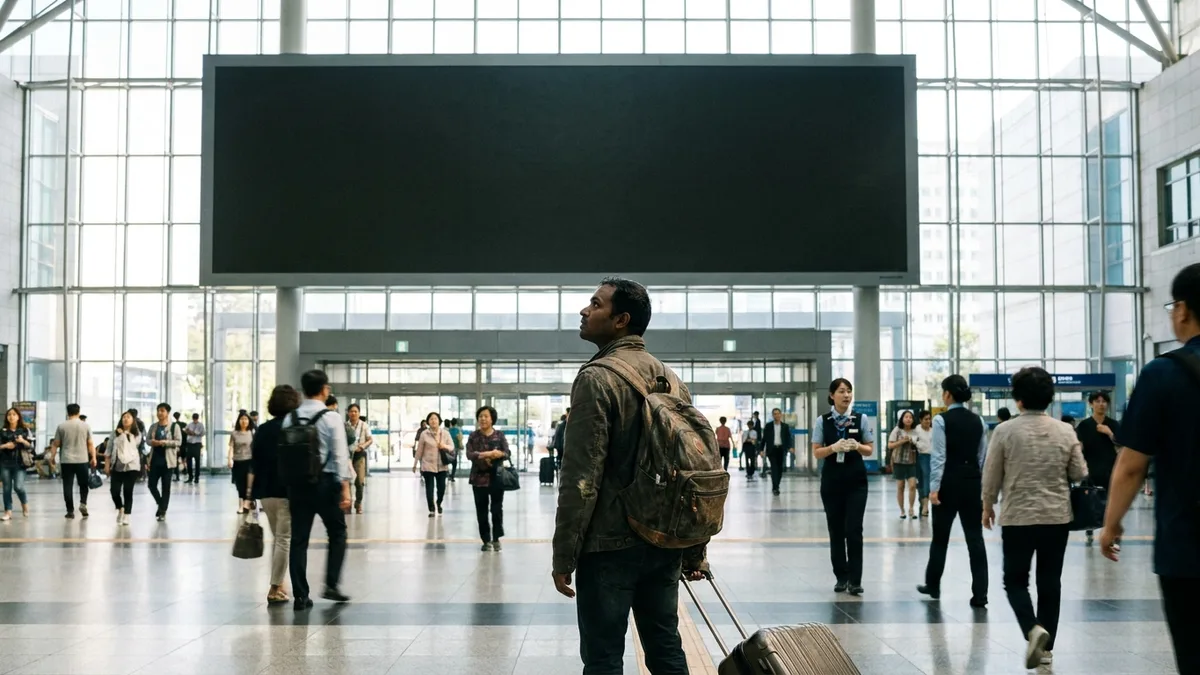
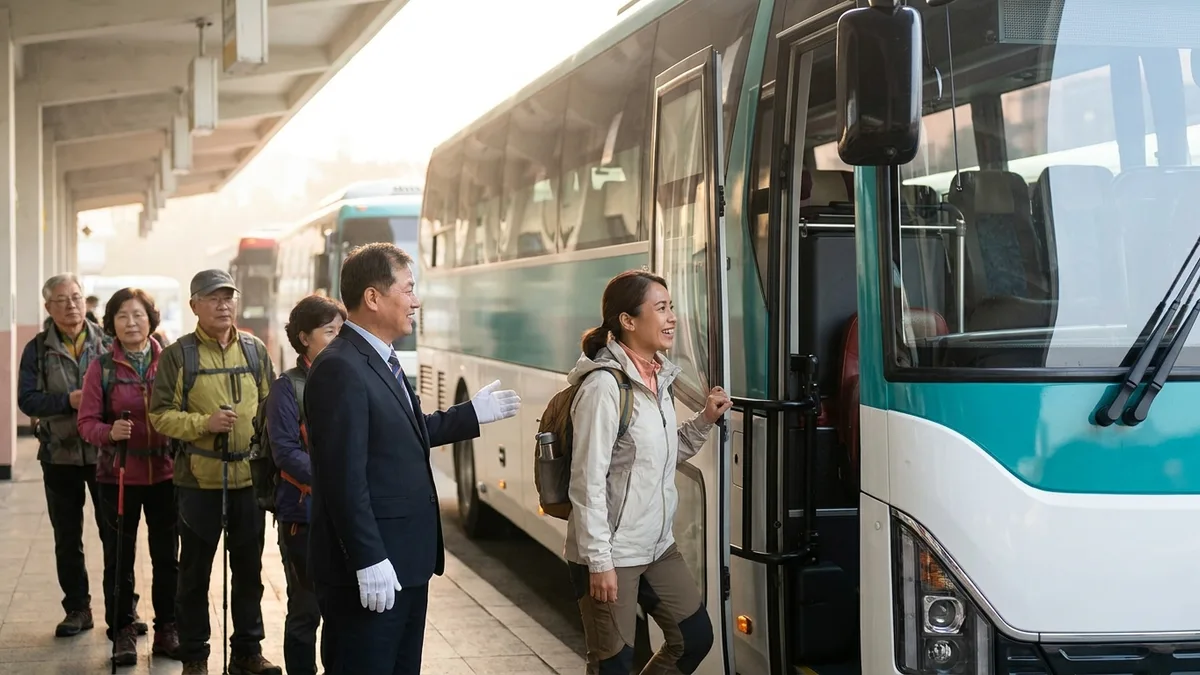
In fall foliage season, the early-morning express buses to Seoraksan fill up with hikers. Foreign visitors number around 110,000 a year (2025, Korea National Park Service estimate based on roaming data), putting Seoraksan among the top five national parks foreigners visit most.
The problem is getting there. Sokcho, Seoraksan's gateway city, still has no train service, so even travelers used to the KTX will find that here, the express bus is effectively the only public transport. On top of that, there are two terminals in Seoul and two more in Sokcho, so even where to board and where to get off can be confusing at first.
The good news: learn it once and it's a very simple route. About two and a half hours by bus from Seoul, then 20–40 minutes by city bus or taxi from Sokcho, and you're at Sogongwon, the entrance to Seoraksan. Even without hiking at all, the cable car lifts you to a rocky ridge, so this is a mountain open to travelers in sneakers too. This article walks through it all in order, from bus booking to course selection to your return-ticket strategy.
The fare and operating information below is based on publicly available information as of Aug 2026. Bus timetables, cable car operations, and trail closures change with the seasons, so before departure, be sure to double-check with the express bus booking site (kobus.co.kr) and Seoraksan National Park notices (knps.or.kr).
Seoraksan without the hiking? Totally fine
Despite its "experts only" image, Seoraksan actually offers a wide range of options by fitness level. Entry itself is free (Korean national parks have no entrance fees); what costs money are facility charges like the cable car, and transport.
| How to enjoy it | Fitness needed | Time (round trip) | Reservation |
|---|---|---|---|
| Gwongeumseong cable car | Almost none | 1–2 hours | Not possible — same-day on-site purchase only |
| Biseondae walk | Beginner | 2–2.5 hours | Not needed |
| Ulsanbawi Rock | Intermediate | 4–5 hours | Not needed |
| Daecheongbong Peak (1,708m) | Advanced | 8+ hours depending on course | No trail reservation needed |
All four start from the same place: the Sogongwon visitor support center area, reachable by bus or taxi from downtown Sokcho. So you can read every transport section in this article as "how to get to Sogongwon."
For reference, Korea-wide hiking rules — free entry, wildfire-precaution closures, the no-drinking rule — and the right map-app combo are covered separately in the Intro Guide to Hiking in Korea. If this is your first mountain in Korea, start with that article.
Seoul to Sokcho — the express bus is the default
Buses from Seoul to Sokcho depart from two terminals. Just pick whichever is closer to where you're staying.
| Departure | Arrival | Time | Fare (as of Aug 2026) |
|---|---|---|---|
| Seoul Express Bus Terminal (Express Bus Terminal Station, Lines 3·7·9) | Sokcho Express Bus Terminal (Joyang-dong, near Sokcho Beach) | About 2 hr 30 min | Standard ₩16,400 – Premium ₩27,600 |
| Dong Seoul Terminal (Gangbyeon Station, Line 2) | Sokcho Intercity Bus Terminal (Dongmyeong-dong, near Dongmyeong Port) — some runs arrive at the express terminal | About 2 hr 10–30 min | Varies by class — similar to Seoul Express Bus Terminal fares (check the booking screen) |
- Departures from Seoul Express Bus Terminal are booked on the integrated express bus site (kobus.co.kr). Late-night runs carry a surcharge, climbing into the low ₩30,000s (as of Aug 2026). How to use the site and app in English is covered step by step in the Express Bus Booking in English Guide.
- Departures from Dong Seoul Terminal are mostly intercity buses (arriving at the Dongmyeong-dong intercity terminal), so the booking site is different — book via the intercity bus portal (txbus.t-money.co.kr) or Bustago (bustago.or.kr). Some runs operate as express buses (arriving at the Joyang-dong express terminal), so be sure to check the arrival terminal on the booking screen. For intercity booking tips and how the terminals work, see the Intercity Bus Terminal Guide.
- Curious how the standard, "excellent" (udeung), and premium classes differ? See the Express Bus Class Comparison — "excellent" is simply how the booking site labels the roomier 3-across udeung seats. For a 2.5-hour ride, many travelers find standard class perfectly sufficient.
- Foliage season (October) and weekend-morning runs sell out early. Once your dates are set, we recommend booking both directions in advance.
- Sokcho's two arrival terminals are quite far apart, but on the way in it hardly matters — whichever one you arrive at, city buses to Seoraksan stop nearby.
From the Sokcho terminals to Seoraksan Sogongwon
- City buses 7 and 7-1 run between downtown Sokcho and the Seoraksan entrance. It's 30–40 minutes to the Sogongwon side, with fares around ₩1,500–2,000 (as of Aug 2026). You can board near either terminal, but check the stop location and arrival times on Naver Map before moving — some times of day have sparse service.
- City bus fares are easiest paid with a transit card like T-money. If you don't have one yet, buy a T-money at a convenience store near the terminal (CU, GS25) and top it up with cash. Whether cash fares are accepted varies by route — even in Sokcho, some routes have already gone cashless (as of Aug 2026). For topping up with a foreign card, see the Transit Card Recharge Guide.
- If time is precious or you have company, a taxi is the better call: 15–20 minutes from the terminal to Sogongwon, around ₩12,000–15,000 (as of Aug 2026). Split among 3–4 people, it costs little more than the bus.
- Get off in front of the Sogongwon ticket office and the visitor support center, Sinheungsa Temple, and the cable car station follow right on. Buy water and snacks at the entrance shops in advance — there are almost no shops up on the mountain. Overseas cards may not work at the cable car ticket office or the entrance restaurants, so carrying a little cash is the safe move.
The cable car and plans by course
Half a day — Gwongeumseong cable car + Sinheungsa Temple
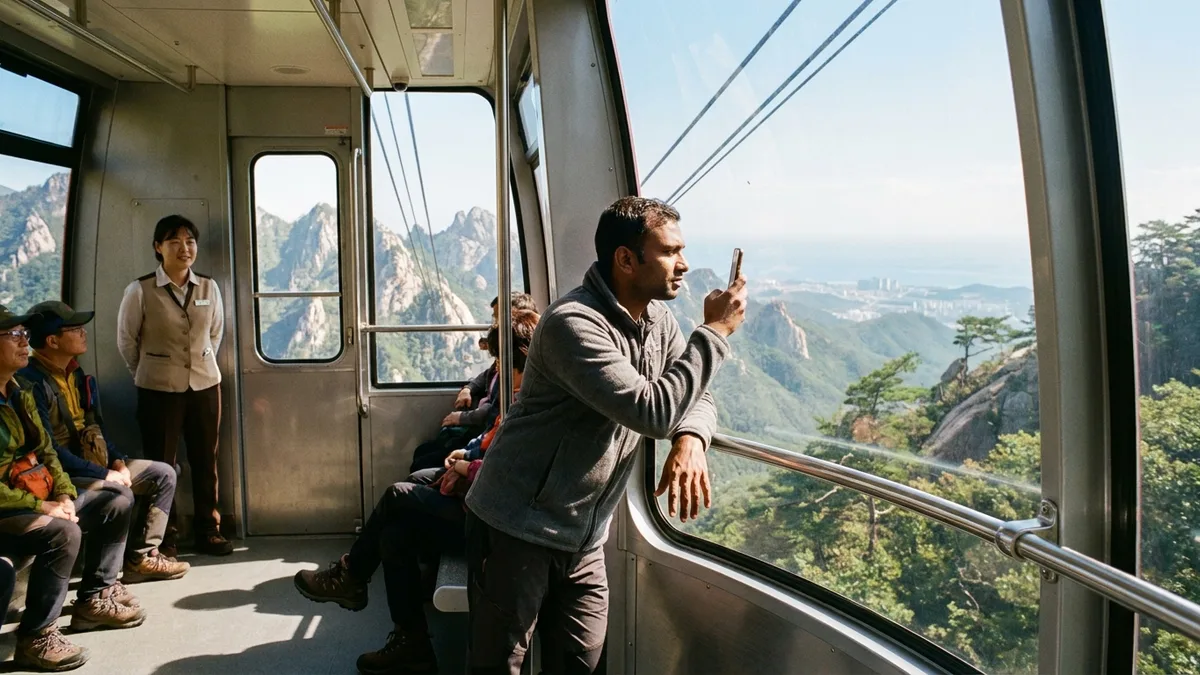
This is the easiest way to take in Seoraksan's rocky scenery without hiking. The Gwongeumseong cable car from Sogongwon costs ₩16,000 round trip for adults (as of Aug 2026), takes no online or phone reservations, and sells tickets same-day on site only. In peak season and on weekends there's a wait between buying and boarding, so the efficient order is: buy your ticket the moment you arrive, then look around Sinheungsa while you wait.
Step off the cable car, walk about 10 minutes, and you're on the Gwongeumseong rocky ridge — downtown Sokcho and the East Sea in a single sweep. Service does stop on some days because of wind and weather, though, so if the cable car is your goal, checking the operation notice on the official site (sorakcablecar.co.kr) before setting out saves you a wasted trip. Phone inquiries (033-636-4300) are handled in Korean, so if Korean is hard, the realistic route is to ask the travel helpline 1330 (English and other languages) to check for you, or to ask your hotel front desk.
The fallback for days the cable car is down is the Biseondae walk. It's about 3km one way from Sogongwon, reached in just over an hour, and the first 2km are flat enough for sneakers. The stream valley and rock cliffs run on and on — remarkably generous scenery for "not really hiking."
A full day — Ulsanbawi Rock round trip
This is Seoraksan's most popular intermediate course. From Sogongwon past Heundeulbawi (the "Rocking Rock") to the top, it's about 7.6km round trip, 4–5 hours. The final stretch is a steep steel staircase that will test your legs, but since it's stairs all the way up, there's no chance of losing the trail. The reward is the view of the East Sea and Sokcho from the rocky crest. Non-slip shoes and plenty of water — those two things are all you need.
Advanced — Daecheongbong Peak
Seoraksan's summit, Daecheongbong (1,708m), is the third-highest peak in South Korea. Even the shortest route, from the Osaek side, runs about 5km one way of sustained steep grade — budget more than 8 hours round trip, and a same-day return presupposes a pre-dawn start. Entry hours are set by course and season, so if you're taking it on, check closures and entry times in the Seoraksan National Park notices first. This article is for first-time visitors, so we'll stop here — if it's your first visit, we recommend starting with the cable car or Ulsanbawi.
Shuttles and hiking communities are options too
If planning the itinerary yourself feels like a burden, there are other paths. Day shuttles and tours aimed at foreigners — departing central Seoul in the morning and returning in the evening — are listed on travel booking platforms like Klook. Many run mainly on weekends with English-speaking staff aboard. You skip all the bus booking and transfers; the trade-off is that your time on the mountain is fixed.
For solo long-term residents, foreigner hiking communities like the Seoul Hiking Group are a great option too. They run regular chartered-bus trips to far-off mountains like Seoraksan and Jirisan, so you solve transport and gain hiking friends in one move. And if you want your time fully your own, the independent express-bus itinerary remains the most flexible.
The return ticket is the real crux
When a Seoraksan day trip fails, it's usually not on the way there — it's on the way back.
- If you couldn't book a round trip from Seoul, book your return ticket the moment you arrive in Sokcho. Weekend-afternoon Sokcho→Seoul runs sell out often; go looking for a ticket after your descent and it's common to find only the late-night departures left.
- When booking the return, be sure to check whether the departure terminal is Joyang-dong (express) or Dongmyeong-dong (intercity). The two are about 10 minutes apart by taxi (as of Aug 2026). Buses 7 and 7-1 out of Sogongwon stop at different stops depending on the route, so it's safest to scout the stop near your return terminal on Naver Map in advance.
- If every Seoul-bound departure is sold out, there's a Plan B. Search both the express (kobus.co.kr) and intercity (txbus.t-money.co.kr) schedules, and widen your destination to Dong Seoul, Seoul Nambu, and so on. Failing that, there's a workaround: take an intercity bus to Gangneung (about 1 hr to 1 hr 20 min) and return to Seoul by KTX from Gangneung Station — you'll need one more hop from Gangneung's terminal to the station by city bus or taxi, and same-day service and seats need official confirmation. Converting to a night in Sokcho is another way out (see the section below).
- The last city bus from Sogongwon back to downtown Sokcho runs early — usually around 8 PM (varies by season and day of week; check official sources). If you plan to stay on the mountain until sunset, photograph the timetable at the stop where you got off, or look up the last 7/7-1 departure on Naver Map in advance. Miss it and you'll be calling a taxi.
- How to call a taxi without a Korean phone number is covered in How to Call a Taxi in Korea Without a Korean Phone. Empty taxis are rare outside Sogongwon, so a ride-hailing app is effectively a must.
- Last departure times to Seoul shift by season and day of week. The booking app's same-day timetable is the most accurate source.
Stay the night, and Sokcho is your bonus
If a same-day round trip feels tight, we recommend sleeping a night in Sokcho. Book a room near the express bus terminal and Sokcho Beach is within walking distance, and the next morning's first city bus gets you into the mountain with time to spare.
For dinner, Sokcho Tourist & Fishery Market (Jungang Market) is the answer. The local specialties are gathered there: dakgangjeong (sweet-glazed Korean fried chicken), which Sokcho claims as its birthplace, and ojingeo-sundae (squid stuffed with noodles and vegetables, then steamed and sliced). The Korean tradition of finishing a hike with pajeon at the trailhead restaurants was covered in the Intro Guide to Hiking in Korea — in Sokcho, wrap up the Sokcho way.
If your Seoul itinerary runs longer, the subway-accessible Bukhansan Hiking Guide and the reservation-required Hallasan Reservation & Hiking Guide together sketch out an itinerary of Korea's three great mountains.
Transport & payment tips
The cost and prep of a Seoraksan trip ultimately go into the travel, not the mountain. Round-trip express bus booking, the Sokcho city bus, and the post-hike taxi are all one package. Even if you muddle through the express bus booking on the English screens, travelers often stall in front of apps that demand Korean phone verification — like calling a taxi after the descent.
Installing one transport and payment app designed to work without identity verification makes this whole route far simpler. If round-trip bus booking and taxi calls can be handled in one app with overseas payment methods (Visa, Mastercard, Alipay, and more), everything from your Sokcho tickets to the post-hike taxi finishes on one phone. And if Busan is your next destination, you can carry straight on to KTX booking in the same app.
Want to handle everything from your first ride after landing in one app? Check out LACHA.
Built to work without a Korean phone number or bank account, with overseas payment methods like Alipay, WeChat Pay, and Apple Pay. Taxi hailing plus KTX, express bus, and airport railroad (AREX) booking — all in one app.
KTX now up to ₩10,000 off. Enter code at sign-up for 3,000P on top
Download now


Frequently Asked Questions (FAQ)
Q1. Can I do Seoraksan as a day trip from Seoul? Yes — but with 5 hours of round-trip travel, the realistic day-trip scope is the cable car plus Biseondae. To fit in Ulsanbawi, leave Seoul early in the morning and book your return ticket as soon as you arrive in Sokcho. A same-day Daecheongbong round trip is not recommended for first-time visitors.
Q2. Can the cable car be reserved? No — same-day on-site purchase only (as of Aug 2026). Service usually starts around 8:30–9:00 AM and ends around 5–6 PM (varies by season; check official sources), and the ride to Gwongeumseong takes about 10 minutes each way. On-site buying tips and how to check weather-dependent operation are covered in the "Half a day" section above.
Q3. Which of the two Seoul terminals should I use? Whichever is closer to your accommodation. Around Gangnam or Seocho, Seoul Express Bus Terminal at Express Bus Terminal Station is convenient; on the east side (Konkuk University or Jamsil area), Dong Seoul Terminal at Gangbyeon Station is easier. Travel times are similar from both — around 2 hr 10–30 min.
Q4. Can I book a bus without speaking Korean? Yes. The express bus site (kobus.co.kr) supports an English interface, and there are plenty of cases of paying with overseas-issued cards. A follow-along, screen-by-screen walkthrough is in the Express Bus Booking in English Guide. Finish seat selection online and board with your QR code or booking number.
Q5. Can I visit in winter or spring? The cable car and the Sogongwon area generally stay open year-round when the weather allows, but during the spring and fall wildfire-precaution periods, trails like Ulsanbawi and Daecheongbong can be partially or fully closed. And in winter, the upper sections are dangerous without gear like crampons. How to check closures by season is in the Intro Guide to Hiking in Korea.
Note: This article is for general travel information purposes. Bus fares and timetables, cable car fares and operations, and trail closures are as of Aug 2026 and change often by season and year. Before departure, be sure to check the latest information through official channels such as the express bus booking site (kobus.co.kr) and the Korea National Park Service (knps.or.kr). LACHA does not guarantee seats, cable car operation, or trail access.