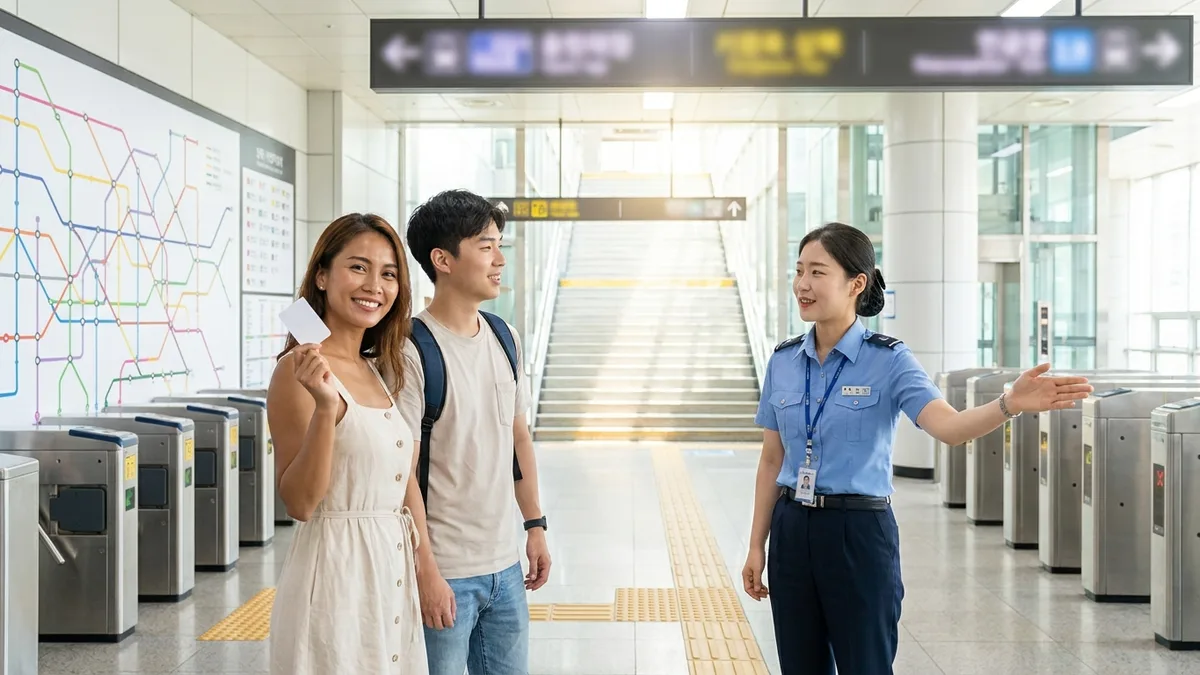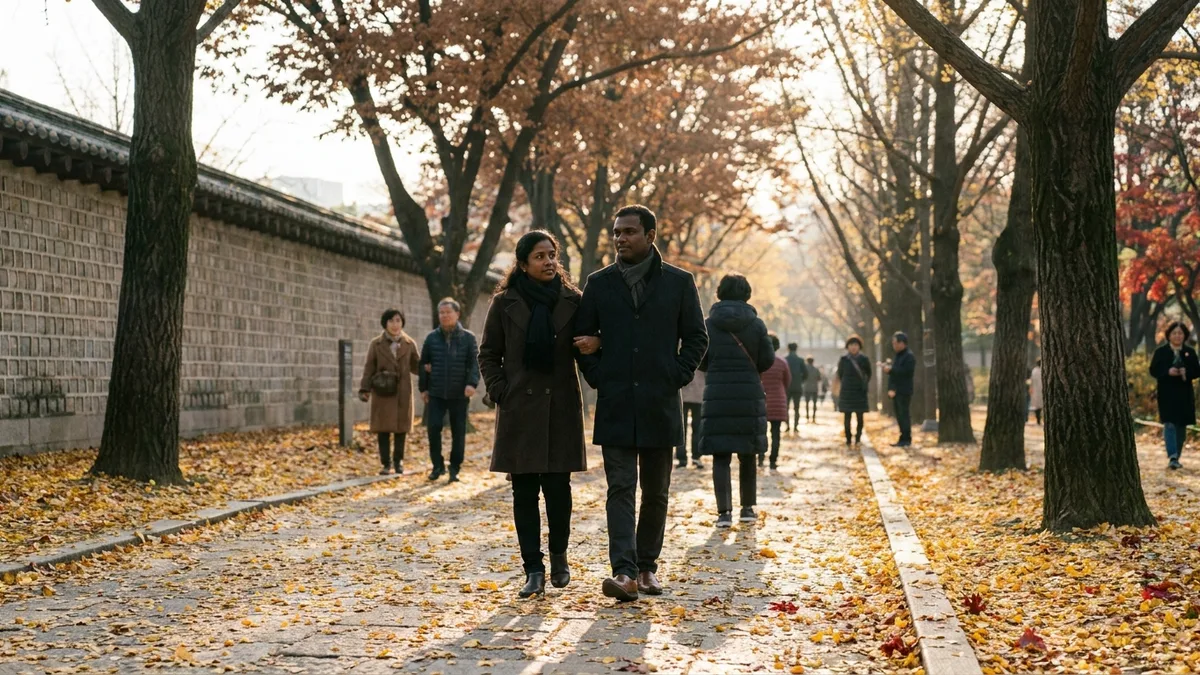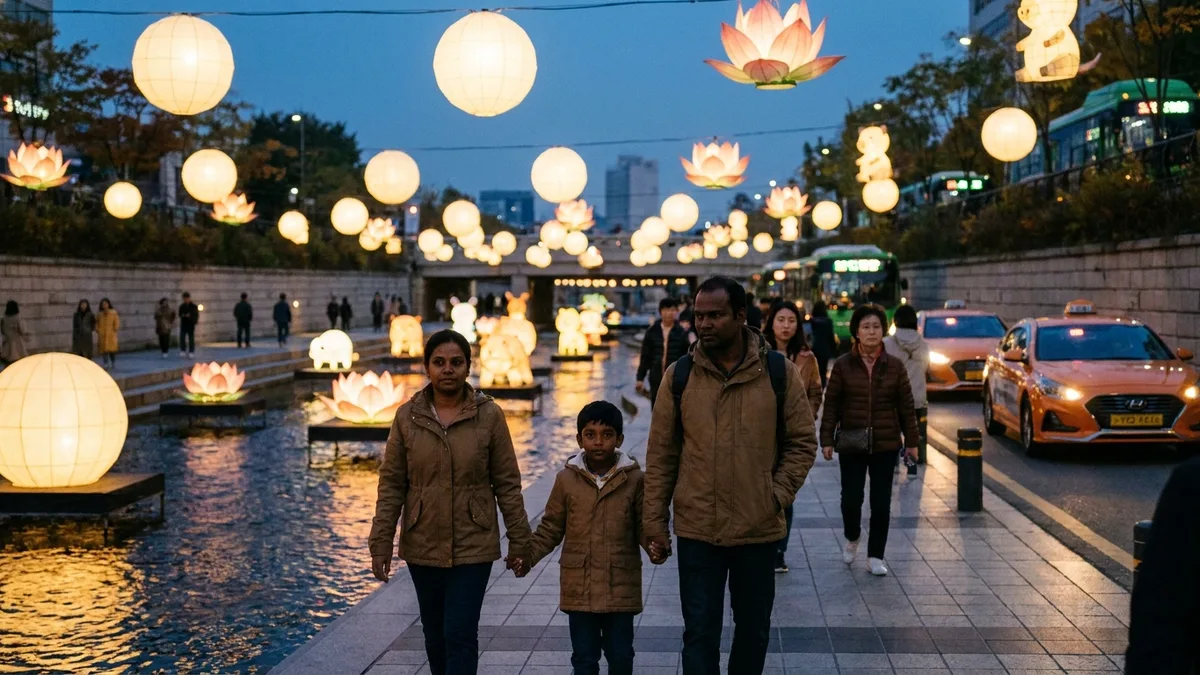
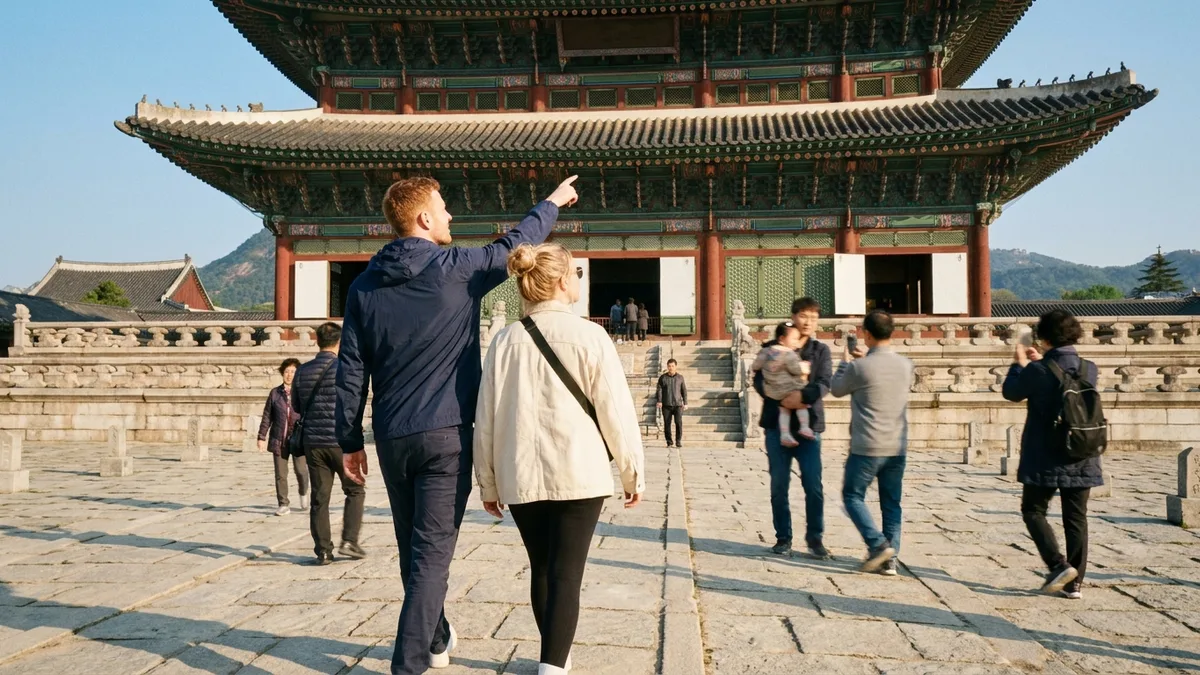
Tuesday morning, in front of Gwanghwamun. The first line of the itinerary you looked up said Gyeongbokgung Palace — and the gates are shut. That Gyeongbokgung closes every Tuesday was nowhere in that itinerary. You turn around and head down into the subway station, and now you don't know which line to take or what it costs, so you end up queuing at a ticket machine all over again at every station.
Search for a three-day Seoul itinerary and you'll drown in articles telling you where to go, while the part you actually need — how to get between those places and what a day costs — is rarely there. This article is the itinerary with that arithmetic already done. Every leg comes with its mode of transport, travel time, and fare, and we've worked out the daily transport totals and even when to top up your transit card. If the subway itself is new to you, it's quicker to read How to Ride the Seoul Subway first.
The fares, times, and operating days below are based on publicly available information as of Aug 2026. Admission fees, opening hours, and palace closing days change often, so before you visit, be sure to double-check official sources such as the Royal Palaces and Tombs Center (royal.khs.go.kr) and the Seoul city transport announcements (news.seoul.go.kr).
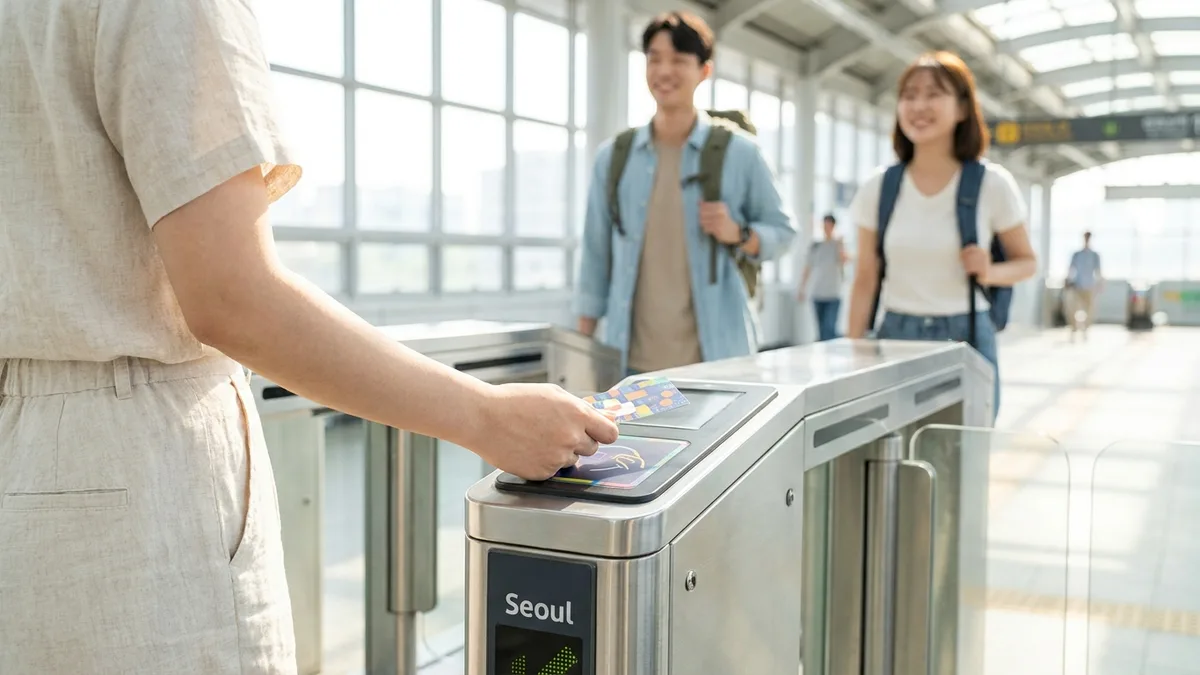
Before you start: choosing a transit card and when to top up
Follow this itinerary and your three-day public transport total comes to around ₩12,000. You have three broad card options.
| Card | Upfront cost | What it's like |
|---|---|---|
| T-money (the standard T-money card) | Card itself around ₩2,500–4,000 + top-ups | Sold at convenience stores (CU, GS25, and the like); top-ups are cash only (as of Aug 2026) |
| TTC+ (Tmoney Travel Card Plus) | ₩6,000 + top-ups | Made for foreigners. Can be topped up in the WOWPASS app (no cash needed), and comes with a 10% N Seoul Tower discount tie-in |
| Climate Card (기후동행카드) short-term pass | ₩10,000 for the 3-day pass | Unlimited Seoul subway and buses; starts the moment you load it (you can't set a start date) |
What decides it is how many rides you take. The 3-day short-term pass works out to about ₩3,333 a day, so if you have a lot of days with four or more rides, the unlimited pass wins; at two or three rides a day, as in this itinerary, T-money is plenty. Short-term passes also come in 1-day ₩5,000, 2-day ₩8,000, 5-day ₩15,000, and 7-day ₩20,000 versions, but they may not work outside the Seoul city boundary, so the coverage area needs checking against official sources. For what it's worth, the 30-day standard pass is on track to be discontinued in the second half of 2026, so travelers only need to look at the short-term passes.
If you go with T-money, the timing is simple. Load ₩15,000 in one go at a convenience store on your first morning and you won't have to touch it again for three days. Convenience store top-ups are cash only (as of Aug 2026), so get some won in cash first, and for a detailed card-by-card comparison see Comparing the 3 Transit Cards.
The 3-day transport bill at a glance
| Day | Route | Public transport | Admission & activities (extra) |
|---|---|---|---|
| Day 1 | Gyeongbokgung → Bukchon → Insadong | ₩3,100 (2 subway rides) | Gyeongbokgung ₩3,000 |
| Day 2 | Myeongdong → Namsan → Gwangjang Market | About ₩4,500 (2 subway rides + shuttle bus) | Cable car round trip ₩15,000, etc. |
| Day 3 | Hongdae & the Han River, or Gangnam & Seongsu | About ₩4,650 (3 subway rides) | Cruise from ₩18,900 |
| Total | — | Around ₩12,000 | Depends on your choices |
Travel times and fares are rough figures based on setting out from a Myeongdong hotel during daytime hours. Subway fares within the city center are mostly the ₩1,550 base fare, with ₩100 added per 5km beyond the first 10km (as of Aug 2026). Actual travel times shift with the hour and transfer waits, so it's a good habit to run each route through a map app before you set off.
Day 1: Gyeongbokgung, Bukchon, Insadong — a walking day
- 09:00 Hotel → Gyeongbokgung Station (Line 3): about 15 minutes by subway, ₩1,550. From June to August Gyeongbokgung opens 09:00–18:30 (last admission 17:30), so you can start early.
- 09:30 Touring Gyeongbokgung: admission is ₩3,000 for adults, and free if you're wearing hanbok. Ages 18 and under are free, so you don't need to buy separate tickets for children.
- 10:00 Royal guard changing ceremony at Heungnyemun Gate (about 20 minutes): miss it and there's a 14:00 round, while the Gwanghwamun sentry ceremony runs at 11:00 and 13:00. It has been suspended during severe heat waves before, so in summer check the day's notices.
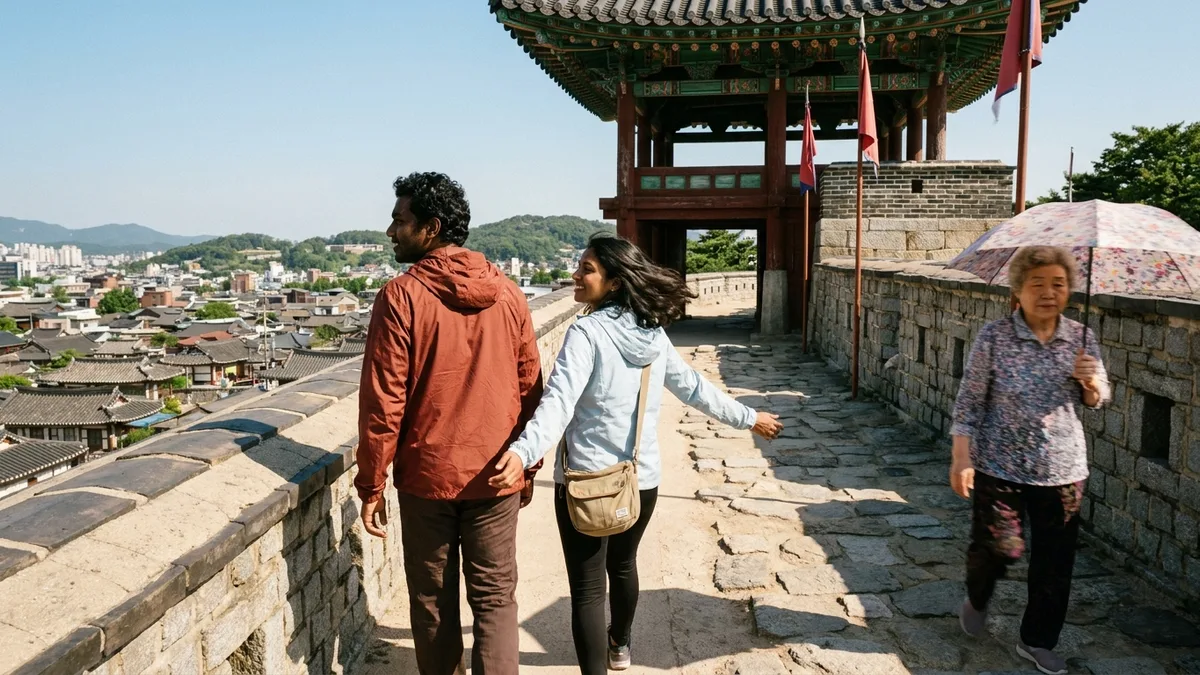
- 12:30 Gyeongbokgung → Bukchon Hanok Village: about 15 minutes on foot. Have lunch at the entrance to Bukchon or over in Samcheong-dong and your route stays unbroken.
- 14:00 Strolling the Bukchon lanes: to protect residents, some blocks are restricted to visiting hours of 10:00–17:00 (parts of Samcheong-dong and Gahoe-dong). Violations are posted as carrying a fine of ₩100,000 (per the Seoul city announcement), so a route that has you back down the hill before 5pm is the safe one.
- 16:00 Bukchon → Insadong: about 10 minutes on foot. A good place to browse souvenir shops and tea houses and stay on through dinner.
- 19:00 Anguk Station (Line 3) → hotel: ₩1,550 by subway.
Day 1 comes to ₩3,100 in public transport — just two subway rides, with everything else on foot. The palace grounds are broad and flat, easy walking with children, so we'd recommend this one as a family day. If you plan to see Changdeokgung and Deoksugung as well, the combined ticket at ₩6,000 (four palaces plus Jongmyo Shrine, valid 6 months from purchase) is the better buy from the Gyeongbokgung ticket office — and if you've landed on a Tuesday, see the Plan B section below.
Day 2: Myeongdong, Namsan, Dongdaemun — sunset and a night market
- Morning, hotel → Myeongdong Station (Line 4): ₩1,550 by subway (₩0 if you're staying in Myeongdong). Start slow with street food and shopping.
- 15:30 Myeongdong Station area → Namsan cable car boarding station: about 10 minutes uphill on foot (longer depending on the heat and your bags).
- 16:00 Namsan cable car: posted at ₩15,000 round trip and ₩12,000 one way for adults (on-site fares, subject to change). Open 10:00–23:00 year-round, with last ticket sales 30 minutes before closing, and it can be suspended in bad weather.
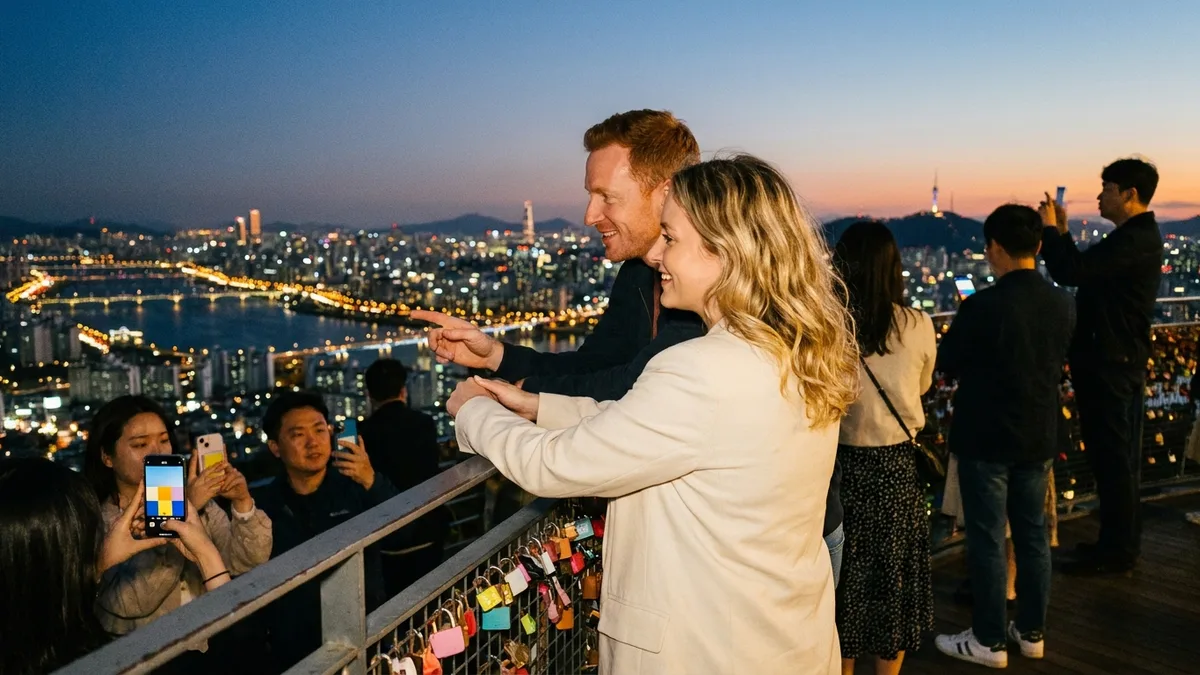
- 17:00 N Seoul Tower observatory (optional): the official site lists adult tickets in the high ₩20,000s, but the figure differs by booking channel, so it needs rechecking right before you book. TTC+ holders get a 10% discount tie-in (as of Aug 2026). This is the sunset-view window, which makes it especially good as a couples' day.
- 19:00 Heading down: come back by cable car, or take the Namsan circular shuttle bus 01A or 01B (toward Chungmuro Station and Dongguk Univ. Station, every 7–10 minutes). The fare is posted at around ₩1,400 with a transit card (check official sources).
- 19:30 Transfer to the subway within 30 minutes of getting off the bus and the transfer discount applies, so you aren't charged the base fare twice (it's 60 minutes between 9pm and 7am the next morning, for up to 5 legs).
- 20:00 Jongno 5-ga Station → Gwangjang Market: the food alley runs roughly 09:00–23:00, though it varies by stall, and the general shops often close on Sundays. If you want more night views, a walk around the exterior of the DDP (Dongdaemun Design Plaza) is free.
- 22:00 Back to the hotel: ₩1,550 by subway.
Day 2 comes to around ₩4,500 in public transport (2 subway rides plus one shuttle bus, varying with how your transfers combine), with the cable car and observatory on top of that.
Day 3: Hongdae and the Han River, or Gangnam and Seongsu — your pick
Option A. Hongdae → Yeouido Han River (good for families)
- 11:00 Hotel → Hongik Univ. Station (Line 2): ₩1,550 by subway. Daytime Hongdae is mostly street performances and shopping.
- 15:00 Hongik Univ. Station → Yeouinaru Station: ₩1,550 by subway. Han River Park is free to enter, and the picnic mats on the lawn and the convenience-store ramyeon are a sight in themselves.
- 18:00 E-Land Cruise (departing Yeouido): daytime Han River tour ₩18,900, sunset cruise (18:00) ₩22,900, moonlight music cruise (19:00 and 20:30) ₩27,900 — it varies by program. Jamsil departures run weekends only, so on a weekday plan around Yeouido.
- 20:00 Banpo Moonlight Rainbow Fountain (optional, free): in 2026 it runs Mar 16–Oct 31, with weekday evening shows posted at 20:00, 20:30, and 21:00. It's adjusted for weather, so check on the day whether it's running, and stopping by adds one more subway ride.
- 21:30 Back to the hotel: ₩1,550 by subway. Option A totals around ₩4,650.
Option B. Gangnam → Seongsu (good for couples)
- 11:00 Hotel → Gangnam Station (Line 2): ₩1,550 by subway. Lunch and shopping in Gangnam.
- 15:00 Gangnam → Seongsu: straight there on Line 2 with no transfer, ₩1,550. Work through the cafe street and carry on into a sunset walk in Seoul Forest and you have a couples' course that lacks nothing.
- 20:00 Back to the hotel after dinner: ₩1,550 by subway. Option B totals ₩4,650.
How to bend the itinerary for who you're with
| Who you're with | Change it like this |
|---|---|
| Family with kids | Center it on the Gyeongbokgung courtyards, Han River Park, and the Moonlight Rainbow Fountain. Do Gwangjang Market in the daytime rather than the crowded evening, and take a daytime cruise |
| Couples | Time Namsan on Day 2 for sunset, and make Day 3 Option B (Seongsu) or pair it with the sunset cruise |
| With older parents | On Namsan, cut the uphill walking with the cable car and the shuttle bus, and keep the Bukchon hill lanes short |
Plan B — when the day of the week, the weather, or a shutdown blocks you
- If a Tuesday falls in the middle: swap Gyeongbokgung for Changdeokgung. Changdeokgung closes on Mondays, so the two palaces rest on different days.
- If the heat is severe: the guard changing ceremony has been fully suspended before (it was actually suspended and then resumed in early Aug 2026). For a summer visit, check the day's notices.
- If the cable car is out of service: it took about a month off for facility maintenance in early 2026. When that happens you can go up on the 01A or 01B shuttle bus or on foot (stairs and forest paths), and you can check whether it's running through the Namsan Cable Car notices (namsancablecar.com).
- If it's raining or windy: cruises and the fountain get canceled or adjusted with the weather. Better to switch to indoor plans like the DDP or a museum.
- If you're after Gyeongbokgung's night opening: it isn't year-round but a spring and autumn season program. As of Aug 2026 it isn't running and the second-half schedule will be announced separately, so check the Royal Palaces and Tombs Center notices (royal.khs.go.kr) around the time of your visit.
Transport & payment tips
There are more moments in this itinerary that need a payment than you'd think. Topping up a transit card at a convenience store (cash), booking the observatory and the cruise, calling a taxi on the night your plans run late. And a good many Korean apps ask for Korean phone identity verification, so travelers often get stuck right at the booking or hailing step.
Installing one transport and payment app designed to work without identity verification makes this whole route much simpler. You can pay straight through with overseas payment methods (Visa, Mastercard, Alipay, and more), and when your three days in Seoul are done and you move on to Busan or Gangneung, you can carry on into KTX and intercity coach booking in the same app.
Want to handle everything from your first ride after landing in one app? Check out LACHA.
Built to work without a Korean phone number or bank account, with overseas payment methods like Alipay, WeChat Pay, and Apple Pay. Taxi hailing plus KTX, express bus, and airport railroad (AREX) booking — all in one app.
Up to 60% off Korea transit with a coupon (max ₩3,000): enter code at sign-up. KTX gets up to 18% off on top
Download now


Frequently Asked Questions (FAQ)
Q1. I arrive in Seoul on a Tuesday — how should I plan the palace day? Gyeongbokgung closes on Tuesdays and Changdeokgung on Mondays, so they never overlap. Put Changdeokgung on a Tuesday and Gyeongbokgung on a Monday — just move all of Day 1 to fit the day of the week. If you plan to see several palaces, the combined ticket (₩6,000, valid 6 months) is the better buy.
Q2. Which is better value, the 3-day Climate Card or T-money? On this itinerary, three days of public transport comes to around ₩12,000, so the ₩10,000 3-day short-term pass is slightly ahead, and you don't have to think about ride counts. The more days you take four or more rides, the further ahead the short-term pass gets. That said, it may not work outside the Seoul city boundary (the coverage area needs checking against official sources), and it starts the moment you load it, so top it up on the morning of your first real sightseeing day rather than the day you land.
Q3. Do I have to take the cable car up Namsan? No. You can get near the top on the 01A or 01B shuttle bus from Chungmuro Station or Dongguk Univ. Station (posted at around ₩1,400 with a transit card; check official sources), and there are walking routes up the stairs and forest paths too. The cable car is less a way of getting there than an experience in itself, so if you're saving money, the bus is the answer.
Q4. Do I need to book the Han River cruise in advance? Fares differ by program (tour, sunset, moonlight music, fireworks music) from ₩18,900 to ₩43,900 and the sailing times differ too, so it's safest to look at the timetable on the official booking channel and reserve. The fireworks music cruise in particular runs Friday evenings only, and Jamsil departures run weekends only (as of Aug 2026).
Q5. Can I get around on single-journey tickets without a transit card? It is possible. But a single-journey ticket costs ₩1,650 a ride, ₩100 more than with a transit card, you have to put down and get back a ₩500 deposit every time, and you don't get the bus transfer discount. This itinerary has you on public transport two or three times a day, so buying one card on the first day also saves you the time spent queuing at ticket machines.
Three days done? Next, head outside Seoul
Once the routes around central Seoul feel familiar, next up are the places you can do in half a day or a day. Courses laid out the same way, with the transport costs worked out, are in the Guide to Day Trips Near Seoul, and adding KTX and intercity coaches in the same manner extends it into a nationwide itinerary.
Note: This article is for general travel information purposes. The fares, opening hours, and operating days in this article are publicly available information as of Aug 2026 and change frequently. Check the palaces with the Royal Palaces and Tombs Center (royal.khs.go.kr), public transport fares with the Seoul city transport announcements (news.seoul.go.kr), and the cable car, cruises, and observatory with each operator's official channels right before you visit; for inquiries in a foreign language, use the travel helpline ☎1330 (English, Chinese, Japanese, and more). LACHA is not the operator of any of these facilities and does not guarantee their operation or booking availability.