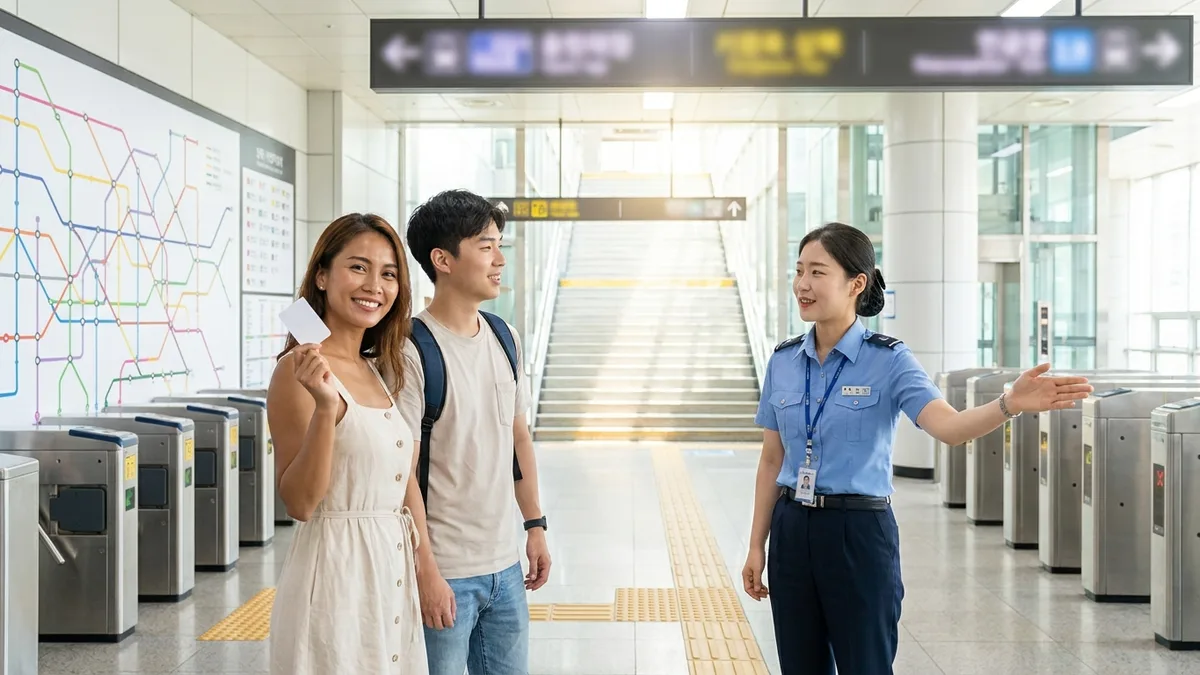
Day three in Seoul, the city sights are more or less done, and a whole day has opened up. A quick search makes Nami Island look lovely, so you head to Yongsan Station with a transit card in hand — and the card won't open the gate. The ITX-Cheongchun is a reserved-seat train you cannot board with a transit card, so you have to buy a ticket separately. You queue at the counter to ask, and the seats on the nearby departures are sold out. That's how day trips go: one snag in the "how do I get there" part and the whole day slides.
The good news is that there are three excellent day-trip directions you can reach from Seoul on subway, commuter rail, and buses alone. Suwon, Gapyeong, and Incheon. This article focuses on route design — round-trip transport, travel time, total cost, the half-day/full-day call, and how well each suits families or couples. A deeper dive into the transport connections to Everland and Nami Island themselves lives separately in the Everland and Nami Island transport guide.
The fares, times, and procedures below are based on publicly available information as of Aug 2026. Admission prices, train timetables, and ferry operations change by season and year, so before you set out, be sure to double-check official sites such as Visit Suwon (visitsuwon.or.kr), Nami Island (namisum.com), and the Wolmi Sea Train (wolmiseatrain.or.kr).
The three directions at a glance
Seoul-area subway and commuter rail runs on a base fare of ₩1,550 (with a transit card; ₩1,650 for a cash single-journey ticket), with a distance-based amount added on top. The base fare covers the first 10km, and beyond that ₩100 is added every 5km — so going as far out as Suwon or Incheon lands you in the ₩2,000s one way. All three routes also share the transfer discount: get off the subway and board a bus within 30 minutes and the fare carries over (60 minutes between 9 PM and 7 AM the next morning, as of Aug 2026).
| Direction | Headline sights | Round-trip fare (per person) | Verdict |
|---|---|---|---|
| ① Suwon | Hwaseong Haenggung, the fortress wall, Tongdak-geori | Around ₩4,000 round trip by subway | Half day to full day |
| ② Gapyeong | Nami Island, Petite France | About ₩13,800 round trip by ITX / around ₩4,000 by commuter train | Full day |
| ③ Incheon | Chinatown, Songwol-dong, Wolmido | Around ₩4,000 round trip by subway | Half day |
The subway fares in the table are rough figures from the distance formula, and the ITX fare needs a final check on the booking screen. The exact amount from your own departure station is shown alongside the results in a Naver Map route search, so one look before you leave is enough.
① Getting to Suwon Hwaseong — Line 1, the Mugunghwa-ho, or a metropolitan express bus
Suwon has the widest choice of ways in. All three run from central Seoul without a transfer.
- Subway Line 1: about 55 minutes to an hour from Seoul Station on an all-stops train, or about 45–50 minutes on the Gyeongbu Line rapid service. The fare runs to the low ₩2,000s one way (with a transit card).
- Mugunghwa-ho train: Seoul Station to Suwon Station in about 30–36 minutes, around ₩2,700. Faster than the subway, and you get a seat (timetable and fares need official confirmation).
- Metropolitan bus 7770: a seated express bus (직행좌석) running direct from Sadang Station to Suwon Station. Around ₩2,800 with a card, and on weekdays it comes roughly every 2 minutes — very short headways (about every 20 minutes on weekends, as of Aug 2026).
From Suwon Station to Hwaseong Haenggung, take a city bus toward Paldalmun (팔달문) from the stop in front of the station, 10–15 minutes (routes 11, 13, 36, 39 and others, as of Aug 2026), then about a 4-minute walk from the Paldalmun stop. Since you're transferring within 30 minutes of tapping out, the transfer discount applies.
① Suwon: planning the route and the costs
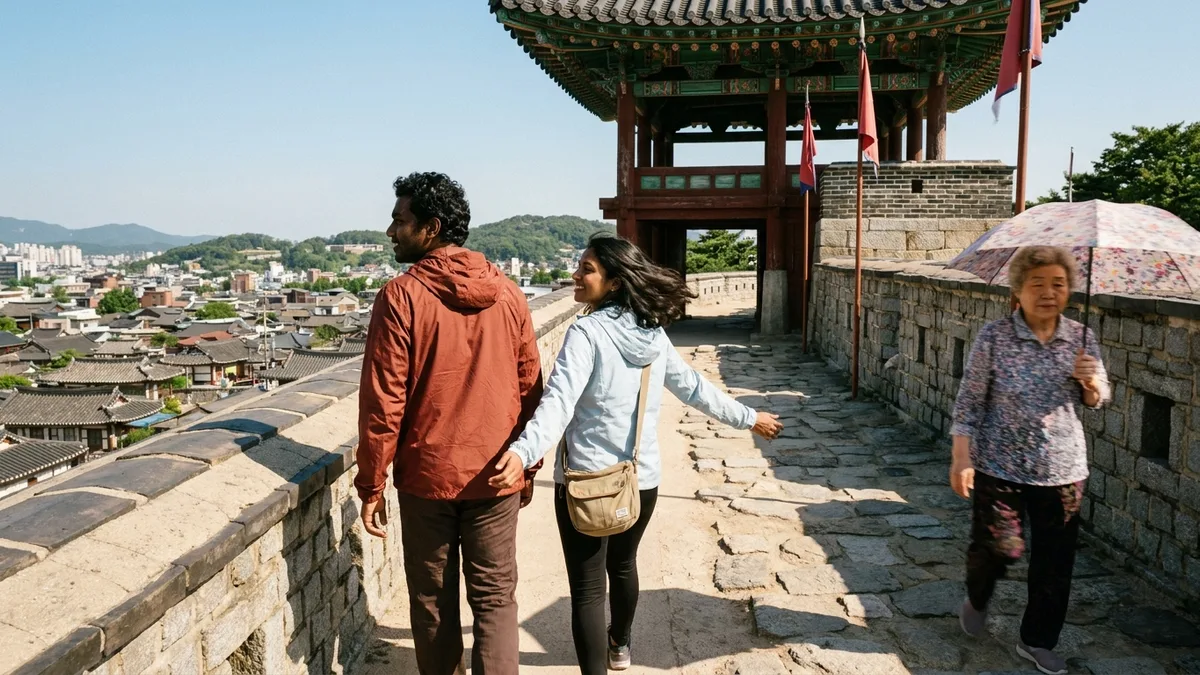
Suwon Hwaseong is a walled city built under King Jeongjo in the Joseon era, and a UNESCO World Heritage Site. Here's how to lay out the core route.
- Hwaseong Haenggung (₩2,000 for adults, 09:00–18:00, open every day; last admission 1 hour before closing): the temporary palace where King Jeongjo stayed. A combined ticket bundling the Suwon Hwaseong Museum and others is ₩4,000 for adults.
- Walking the fortress wall (free): the wall walk is open free of charge at all times, so it costs nothing, and night visits are said to be possible as well (as of Aug 2026). Circling the whole circuit takes a good while, so on a half-day schedule we'd walk only the sections around Hwaseong Haenggung.
- Hwaseong Eocha trolley: if you're with family and the walking sounds like a lot, the sightseeing trolley that departs from Yeonmudae (₩6,000 for adults, ₩2,000 for children) takes you around in comfort.
- Finish at Tongdak-geori: the alley north of Paldalmun Market is Suwon's famous Tongdak-geori, or "whole fried chicken street." Decades-old shops cluster there, and you can walk over from Hwaseong Haenggung or Paldalmun. Check individual shops' hours and closing days on Naver Map right before you go.
Cost comes to under ₩10,000 per person for round-trip transport plus admission to Hwaseong Haenggung (meals extra). See only the palace and part of the wall and it's a half day; walk a long stretch of the wall and add dinner at Tongdak-geori and it becomes a full-day course.
② Getting to Gapyeong — ITX-Cheongchun vs. the Gyeongchun Line commuter train
With Gapyeong, the train choice is half the trip. Two trains serve the same direction, and they're completely different animals.
| ITX-Cheongchun | Gyeongchun Line commuter train | |
|---|---|---|
| Departure stations | Yongsan, Cheongnyangni | Sangbong, Cheongnyangni, and others |
| Time to Gapyeong | About 50 minutes (from Yongsan) | About 55–70 minutes |
| One-way fare | Around ₩6,900 | ₩2,000s (distance-based) |
| How you board | Ticket booking required, assigned seat | Tap in with a transit card |
Two things to watch for.
- You cannot board the ITX-Cheongchun with a transit card. You have to buy a ticket in the app or at a station counter, and standing-room tickets are sold only once the seats are gone (as of Aug 2026; check official sources). Confirm the fare and timetable on the booking screen as well.
- The booking app has changed. As of August 3, 2026, the old Korail Talk switched over to the unified app "Korail+," and trains traveling on or after September 1 can be booked only through Korail+. How far the new app's foreign-language support and overseas card payments extend is hard to state definitively yet, so if the app blocks you, try Korail's foreigner-only web booking site alongside it (check official sources). The spots where foreigners most often get stuck in the Korail app, and how to get past them, are laid out in the Korail app guide for foreigners.
Want to sit down and get there fast, take the ITX; want to save money and keep your departure time flexible, take the commuter train. Just factor in that the commuter train has no reserved seats, so on a weekend morning you may be standing.
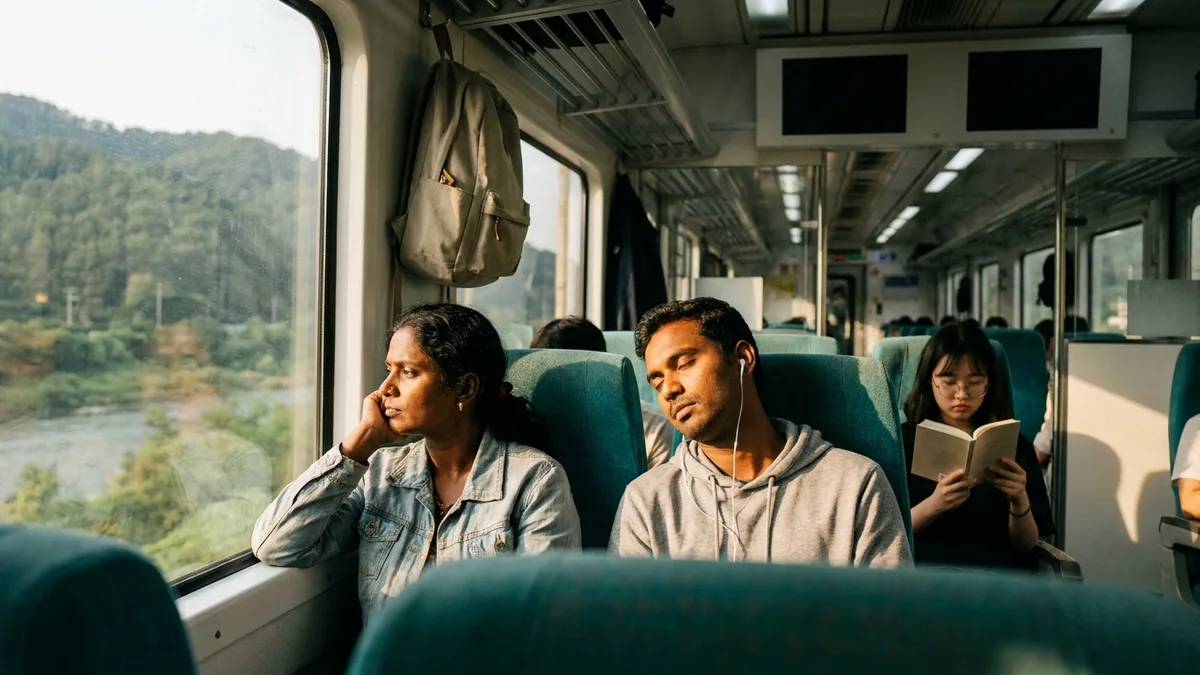
② Gapyeong: the Nami Island and Petite France route and costs
Get off at Gapyeong Station and it's about 1.5km to the Nami Island ferry pier. About 5 minutes by taxi (roughly ₩4,000–5,000), or about a 20-minute walk.
- Nami Island: admission is ₩19,000 for general entry (as of Aug 2026), and it includes the round-trip ferry. Boats run from 8 AM and the crossing takes about 5 minutes. The time of the last boat off the island can shift with the season and the day's conditions, so check that day's final departure as soon as you enter (check official sources).
- Petite France: a French-style village themed on The Little Prince. Tickets run around ₩12,000 depending on the sales channel, and a combined ticket with the Italian Village next door runs around ₩19,500 (as of Aug 2026; check official sources).
- To do both: a 1-day pass on the Gapyeong tourist loop bus (city tour) costs ₩8,000 and circles Gapyeong Station, Nami Island, Petite France, and more. Booking through the Kakao T app is sometimes discounted, but that's promotional in nature so whether it continues needs official confirmation. Buses come every 1 hour to 1 hour 30 minutes, so photograph the timetable before you start moving.
Totals come to about ₩40,000 per person going by ITX (₩13,800 round trip + ₩19,000 for Nami Island + getting between the station and the pier), or about ₩30,000 by commuter train. Adding Petite France puts another ₩10,000-plus on top, and at that point it's unquestionably a full-day itinerary. Paid round-trip shuttle packages departing from Hongdae, Dongdaemun, and other spots in Seoul are also sold on travel platforms, so if transfers feel like a lot with family in tow, compare those too (admission not included).
③ Incheon: a half day in Chinatown and Wolmido
The charm of the Incheon route is its simplicity. Get off at Incheon Station, the end of the line on Line 1, and Exit 1 puts you right at the paeru gate marking the entrance to Chinatown. About an hour to 1 hour 13 minutes from Seoul Station, with a fare in the low ₩2,000s one way (with a transit card).
There's one trap, and it's the rapid service. Many Gyeongin Line rapid trains terminate at Dongincheon Station, so if you boarded a rapid, you'll have to switch to an all-stops train at Dongincheon for one more stop to reach Incheon Station (it varies by service, check official sources). If it gets confusing, taking an all-stops train bound for Incheon Station from the start is easier on the mind.
The route runs in the order you walk it.
- Chinatown: the street known as the birthplace of jjajangmyeon (noodles in black bean sauce). Handling lunch here keeps the route tidy.
- Songwol-dong Fairy Tale Village: about a 5-minute walk from Chinatown, a free, open mural village that's great for photos with kids.
- Wolmido: about 10 minutes by bus from the stop in front of Incheon Station. Transfer within 30 minutes of tapping out and the Seoul-area integrated transfer discount applies to Incheon city buses too. The Wolmi Sea Train that loops around the waterfront (6.1km circuit, about 35–42 minutes) is ₩11,000 for adults on weekdays and ₩14,000 on weekends, and it's closed every Monday (it runs if the Monday is a public holiday). Trains come about every 15 minutes, and one re-boarding on the same day is said to be allowed as well (as of Aug 2026).
Cost is around ₩4,000 for the round-trip subway plus the Wolmi Sea Train, which lands you at the mid-₩10,000s per person on a weekday (weekend train fares are higher, so it runs a bit more; meals extra). Leave in the morning and you're back in Seoul before dinner — a half-day-plus course, and the easiest of the three on your legs.
Half day or full day, and who each trip suits
Slicing the three directions by who you're traveling with, it comes out like this. The verdicts assume an average walking pace, so adjust for your group's stamina and your kids' ages.
| Direction | Verdict | Families (with kids) | Couples | The draw |
|---|---|---|---|---|
| ① Suwon | Half day to full day | Good (the Hwaseong Eocha trolley) | Good | World Heritage wall walk + Tongdak-geori |
| ② Gapyeong | Full day | Manageable (lots of moving around) | The best fit | Nami Island's tree-lined paths, Petite France |
| ③ Incheon | Half day | The best fit (Wolmido) | Good | Fewest transfers, food-centered |
- With kids, Incheon is the easiest by far. One subway ride gets you there, and the walking distances and number of transfers are the lowest.
- For a couple's day trip, Gapyeong is the classic. In exchange there are more variables — train booking, getting to the pier, ferry times — so map the route out in advance.
- On a rainy day, Suwon's Hwaseong Haenggung or Incheon's Chinatown, which have some indoor element, leave you less disappointed.
When the plan goes sideways
- The ITX-Cheongchun is sold out: switch to the Gyeongchun Line commuter train and you can board straight away with a transit card. It takes longer, but the day trip isn't off.
- The Mugunghwa-ho to Suwon is sold out: Line 1 needs no booking, just a transit card. It takes about 20 minutes more, but trains are frequent enough that your schedule won't slip much.
- You spent too long on Nami Island: missing the boat off the island leaves you no options, so work back from the last departure you checked on arrival and leave yourself about an hour of slack. Check the time of the last train back to Seoul in the app in advance too.
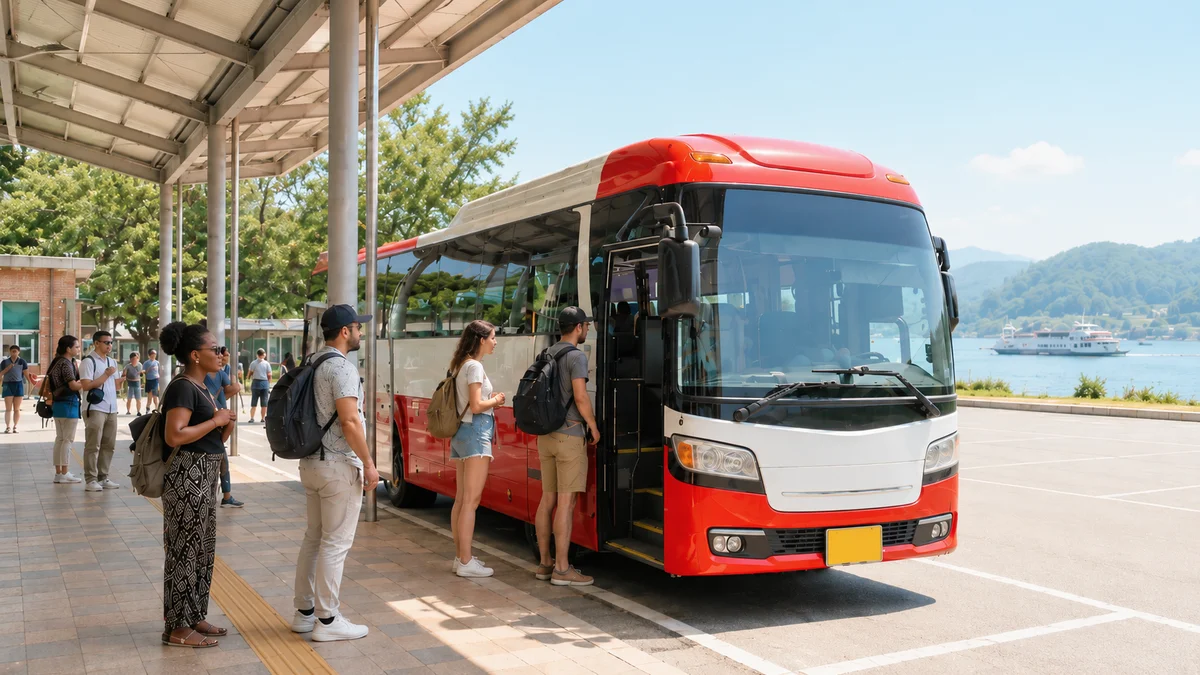
- You missed the Gapyeong loop bus: the gaps are long, so the next one can be over an hour away. Realistically, either drop Petite France and focus on Nami Island, or switch to a taxi.
- You took the wrong rapid train in Incheon: get off at Dongincheon Station and go one more stop on an all-stops train to reach Incheon Station. Transfer without leaving the fare gates and the fare carries straight over.
- You went to Wolmido on a Monday: the Wolmi Sea Train is closed for its regular day off. Build the day around Chinatown and Songwol-dong instead, and adjust Wolmido down to a seaside walk.
Transport & payment tips
What all three routes come down to is two things to prepare — a transit card with enough balance on it, and, if you're heading to Gapyeong, app payment for the train booking. But a fair number of Korean transport apps assume Korean phone verification or a Korean card, so foreign travelers often stall right at the booking step.
Installing one transport and payment app designed to work without identity verification makes the rest of the route simple. Since you can reserve KTX and intercity coach (고속버스) seats and even hail a taxi with overseas payment methods (Visa, Mastercard, Alipay, and more) and no Korean phone number, everything from calling a taxi back to your accommodation late at night from Suwon's Tongdak-geori to booking the long-distance trip that follows your day trip is handled in one app.
Want to handle everything from your first ride after landing in one app? Check out LACHA.
Built to work without a Korean phone number or bank account, with overseas payment methods like Alipay, WeChat Pay, and Apple Pay. Taxi hailing plus KTX, express bus, and airport railroad (AREX) booking — all in one app.
Up to 60% off Korea transit with a coupon (max ₩3,000): enter code at sign-up. KTX gets up to 18% off on top
Download now


Frequently Asked Questions (FAQ)
Q1. Can one transit card (T-money) cover all three routes? Suwon (Line 1 and the metropolitan bus), Incheon (Line 1), and the Gyeongchun Line commuter train to Gapyeong all work with a transit card. The one exception is the ITX-Cheongchun — it's a reserved-seat train, so you have to book a ticket separately (as of Aug 2026). Top up with enough of a cushion that the round-trip fares can come off it.
Q2. Which app do I book the ITX-Cheongchun in? Korail+, the unified app released on August 3, 2026, is the main channel. Trains traveling on or after September 1 can be booked only in this app (updating the old Korail Talk switches you over automatically). If an overseas card is declined, try Korail's foreigner-only web booking site (the new app's range of support needs official confirmation).
Q3. Does the Nami Island admission include the ferry? Yes — the general ₩19,000 ticket (as of Aug 2026) includes the round-trip ferry. Boats run from around 8 AM until night, but the last departure can shift with the season and the day's conditions, so checking it as you enter is the safe move.
Q4. If I can pick only one of the three, which is best? If you only have half a day, Incheon; if you can give it a whole day, Gapyeong; if you like walking and want history and food together, Suwon. If it's your first trip to Korea and you want to lower the odds of a misfire, we'd start with Incheon, which has the simplest transfers.
Q5. Can I take a rapid train to Incheon? You can, but many Gyeongin Line rapid trains terminate at Dongincheon Station, so you may have to switch to an all-stops train for one stop to reach Incheon Station (for Chinatown) (check official sources). If the transfer sounds like a hassle, taking an all-stops train bound for Incheon Station from the start is easier on the mind.
After the day trip, try an overnight
Get through one of the three routes without incident and you've got the feel for day-tripping on Korean public transport. For the next step, try an overnight trip on the KTX or an intercity coach. How to reach Seoraksan from Seoul is laid out in the Seoraksan guide, and if you want to pack your Seoul days more tightly, see the 3-day Seoul itinerary as well.
The pre-departure checklist is simple — transit card balance; train booking if you're headed to Gapyeong; whether it's a Monday if you're headed to Wolmido. Confirm those three and the rest sorts itself out on the ground.
Note: This article is for general travel information purposes. The fares, operating hours, and train services in the text are publicly available information as of Aug 2026 and can change by season and year, so before you set out, please double-check official channels such as Visit Suwon (visitsuwon.or.kr), Nami Island (namisum.com), the Wolmi Sea Train (wolmiseatrain.or.kr), and the Korail+ app. For English inquiries, use the travel helpline ☎1330 (24 hours). LACHA is not the operator of any of these attractions or rail services and takes no responsibility for outcomes arising from this guidance.