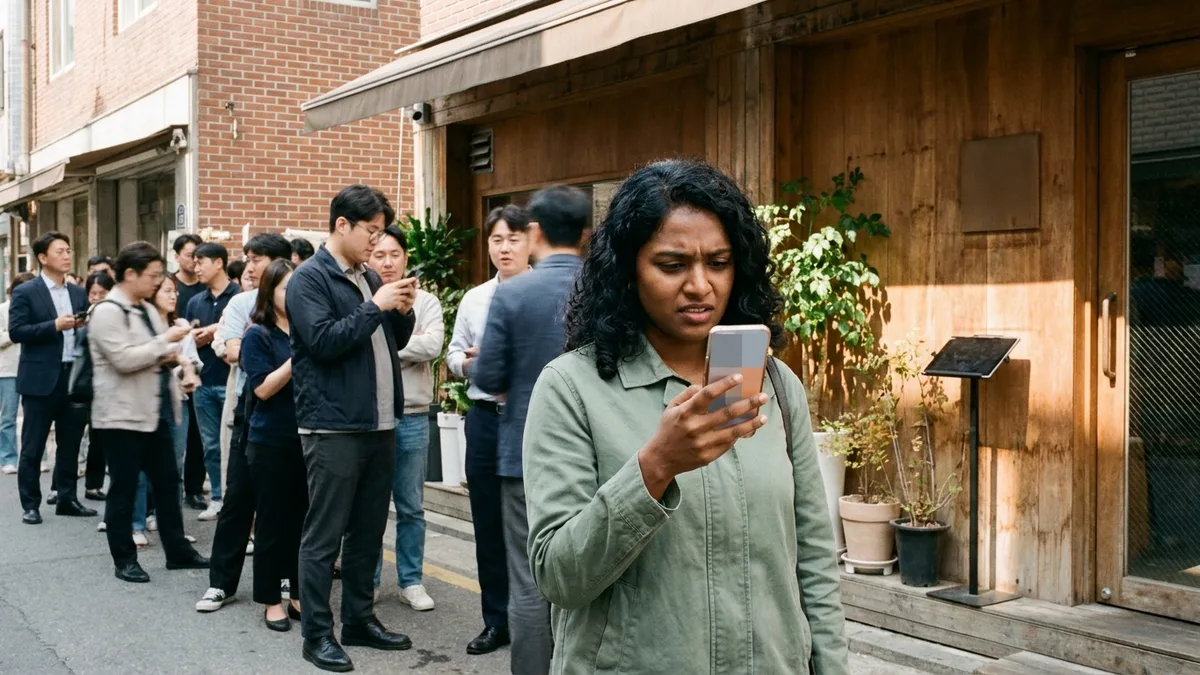
It's 7 PM in Seongsu, you're standing outside the restaurant you had your heart set on, and the waitlist app asks you to verify a Korean phone number. The place you rolled the stroller into turns out to be all floor seating, with nowhere to sit a child. And at the barbecue house you walked into alone, "meat starts at two servings" sends you back out the door, a little sheepish. The failures foreigners run into in front of Seoul restaurants mostly aren't about not knowing the good places — they come from a mismatch between who you're with and the restaurant you picked.
So this article isn't a list of restaurant names. It's about how to choose the type of restaurant, the neighborhood, and the booking method depending on who you're going with — family, a partner, yourself, or a group. We'll name only three specific places, all of them houses that have been running for decades. If your first question is what to eat rather than where, start with the Must-Eat Korean Food Guide.
The prices, opening hours, and app policies below are based on publicly available information as of Aug 2026. Dining prices and restaurant operating details change constantly, so right before you go, be sure to check again on Naver Map, on each restaurant's and app's own notices, and on official sites such as the Korea Consumer Agency's Chamgagyeok price survey (price.go.kr).
Pick the type of restaurant before the name
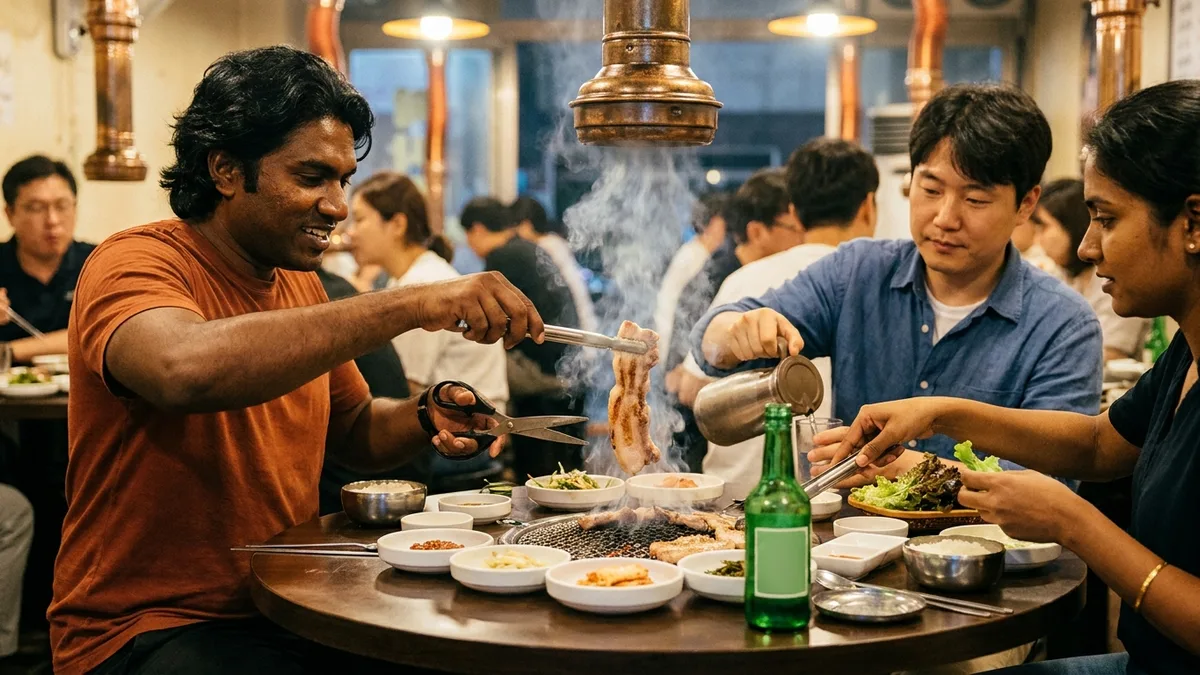
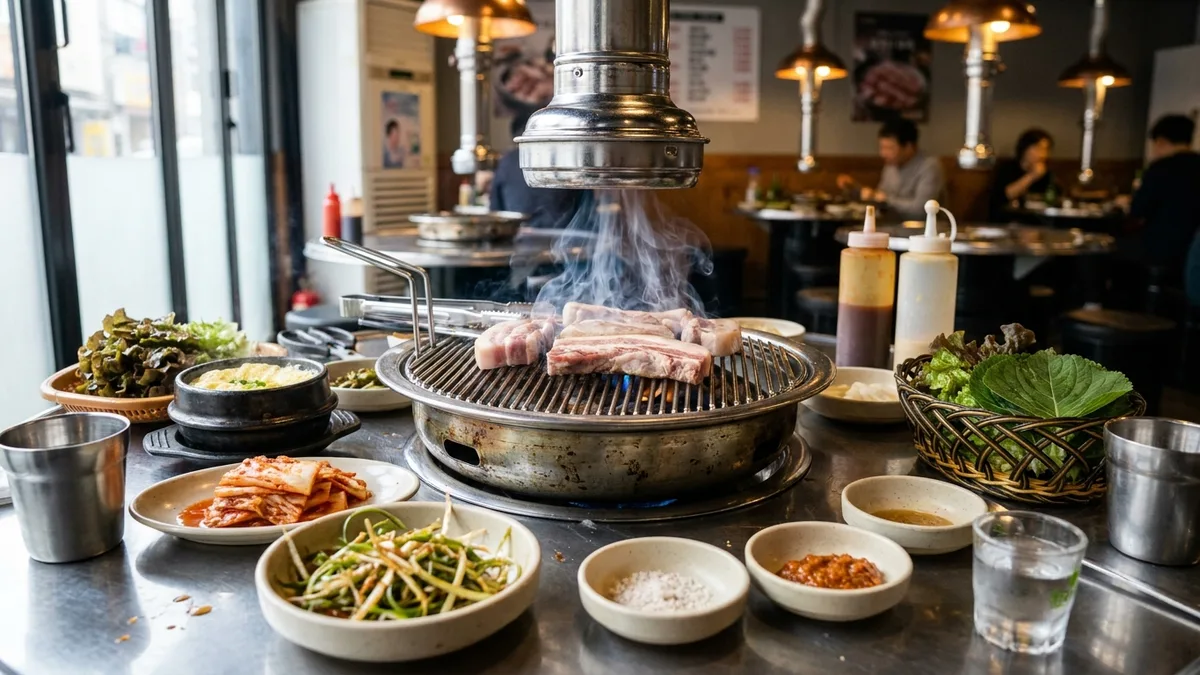
In Korea, a restaurant's type is its set of rules. A gukbap house (rice-and-soup joint) serves a single-person setting by default, so going alone feels natural; a gogijip (barbecue grill house) sets up a grill for the whole table, and many of them find a party of one awkward. Galbi houses (grilled ribs) and hanjeongsik places (multi-course Korean set menus) have private rooms, which suits families and groups. Deciding on the type that fits your situation before you search for a name cuts your failure rate sharply. For checking candidates, Naver Map alone is enough — it has menu photos, opening hours, and interior shots all in one place.
| Occasion | Types that fit | Common pitfalls |
|---|---|---|
| Family (with kids) | Korean buffet, galbi house, juk (rice porridge) specialist | No-kids zones, floor-seating-only, spicy by default |
| Couples | Renovated hanok restaurants, rooftops, fine dining | Turning up on a weekend evening with no booking |
| Eating alone | Gukbap, gimbap, ramen, baekban (set-meal) diners | The two-serving minimum at barbecue houses |
| Groups (5 or more) | Galbi houses, hanjeongsik, Chinese restaurants with rooms | Walking in unbooked and splitting across tables |
Going with family — high chairs, floor seating, spice
If you're with a child, check three things before you search for a name.
- A high chair: app filters don't reliably screen for this, so a request note in the booking app or a phone call is the surest route (as of Aug 2026). Galbi houses and Korean buffets that see a lot of family customers tend to have them.
- Floor seating or not: floor tables where you sit on the ground can't take a stroller and leave nowhere to put a high chair. Check the table style in advance from the interior photos on Naver Map.
- Adjusting the spice: Korean food runs spicy by default. Many places will tone it down if you ask "an maepge haejuseyo" (안 맵게 해주세요, please make it not spicy) when ordering, but choosing a type of restaurant that isn't spicy in the first place is easier.
- Stroller access: entrance steps and second-floor or basement locations are common, so previewing the doorway lip and whether there's an elevator from Naver Map's interior photos saves you a wasted trip.
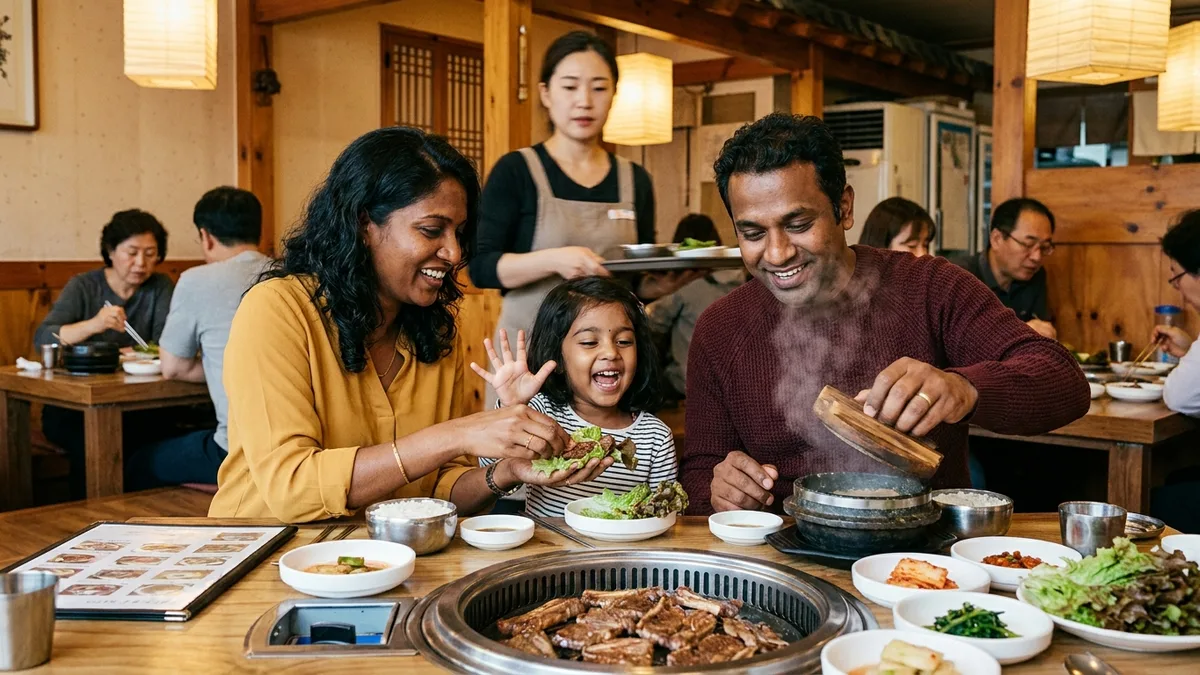
Three broad types work well. A Korean buffet lets everyone take what they want, so there's no risk of a dish a child won't touch, and at galbi houses staff often grill for you, which makes it easier to eat while keeping an eye on a kid. Juk specialists (rice porridge — nationwide chains such as Bonjuk) are mild and soft, a safety net when you're with children or older relatives — a bowl runs ₩8,000–13,000 as a benchmark, and dine-in and delivery prices differ (as of Aug 2026).
What to watch out for is the no-kids zone (an establishment that restricts entry to children). The government's first nationwide survey in 2023 identified 542 of them across the country (65 in Seoul), mostly cafés, but since there's no registration requirement the real number is presumed to be higher (the latest nationwide figures need official confirmation). The more atmospheric the café or brunch spot, the more it's worth checking before you go.
Going as a couple — Seongsu, Ikseon-dong, Haebangchon
Dining out on a date has one rule: at popular restaurants, dinner means booking ahead. Show up on a weekend evening without a reservation and you should expect a wait. Fine dining and omakase places often take a deposit, where ₩50,000 or more is common, and high-end omakase cases in the ₩300,000-plus per person range have been reported. Refunds usually follow a pattern of 100% two days out, 50% one day out, and nothing on the day, but it varies by restaurant (as of Aug 2026; confirm on the booking screen).
If the date you want is already full, switching to a weekday evening or a lunch course is more realistic than forcing your way onto a waitlist. At the same restaurant, lunch is often both easier to book and cheaper.
It's safer to choose by neighborhood rather than by name — individual venues turn over often.
- Ikseon-dong (익선동, Jongno): one of Seoul's oldest hanok villages, formed in the 1920s. Renovated cafés, restaurants, and dessert shops fill alleys of roughly 100-year-old hanok houses, and since most of the spaces are small, waits are common — a weekday afternoon or an early evening is the better bet.
- Haebangchon Sinheung Market (해방촌 신흥시장, Yongsan): a former knitwear-factory market below Namsan, remodeled into a cluster of rooftop cafés, wine bars, and fusion restaurants with a view of Namsan Tower. Time your climb up for sunset and dinner flows straight into the night view.
- Seongsu (성수, Seongdong): the trend neighborhood, packed with cafés, restaurants, and pop-ups converted from old factories and warehouses. At popular venues, registering on a waitlist app is effectively the default, so we'd suggest reading the app section below before you go.
For Han River–view restaurants, an individual venue's operating status and the view itself change often, so the safe approach is to check recent reviews in a map app and, while booking, ask the restaurant directly whether a view seat is possible (check official sources).
Eating alone — how to tell which places welcome a party of one
Honbap (혼밥, eating alone) is nothing unusual in Seoul. You do have to pick the right type of place, though.
Start with the types that welcome one. Gukbap houses serve a single-person ttukbaegi (stone pot) setting by default, and at gimbap and bunsik shops (quick snack food) the turnover is so fast that going alone is the standard — a roll of gimbap averages ₩3,838 in Seoul (per the Chamgagyeok survey, Jun 2026), so it's easy on the wallet too. Ramen shops are built around counter seats, and baekban diners (a set meal of rice with side dishes) and food courts are classic solo-dining ground.
Barbecue houses, on the other hand, are awkward. Between the grill, the charcoal, and the side-dish setup, many require a two-serving minimum. That's each restaurant's own policy rather than law, and places that allow a single serving are on the rise, but on a day when you want meat by yourself, it's easier to search from the start for a solo-barbecue place or somewhere with a meat set meal. Dishes that come by the pot, like jeongol (simmering hot pot) and jjim (braised dishes), also often start at two servings.
If it's your first time and you feel self-conscious, the basement food court of a department store or shopping mall is a good starting point. You order at a kiosk so there's no need to speak to anyone, and single seats are the norm, so there's nothing to get tense about in front of a menu board.
There's even an app (Baptori) that maps solo-friendly restaurants down to the seating detail, such as whether there are counter seats (iOS, as of Aug 2026). On days when going out is too much, delivery is the answer, and how to use Korean delivery apps in English is laid out in the English Guide to Korean Food Delivery Apps.
Going as a group
Once you're over five people, a reservation is effectively mandatory. Seoul restaurant tables are mostly built for two to four, so rolling in unannounced means splitting your party across tables or waiting a long time.
- Choose a type that has private rooms: galbi houses, hanjeongsik restaurants, and Chinese restaurants are the classics. When you book, give the headcount and ask with "rum-euro butakdeuryeoyo" (룸으로 부탁드려요, a room, please).
- Confirm the ordering unit in advance: jeongol, jjigae (stew), and barbecue are ordered in per-person servings, so things run smoothly only once your headcount is settled. If the numbers change, letting them know beforehand by phone or an app note is the polite move.
- Friday and Saturday evenings fill fast: that's when company-dinner demand piles up, so book as soon as the date is set. Plenty of places still take bookings by phone only, and if the restaurant does use an app, CatchTable Global below has the lower sign-up barrier for foreigners.
- One bill: many restaurants don't accept split payments where everyone pays separately. The usual approach is for one person to settle the whole thing at the counter and divide it up afterward.
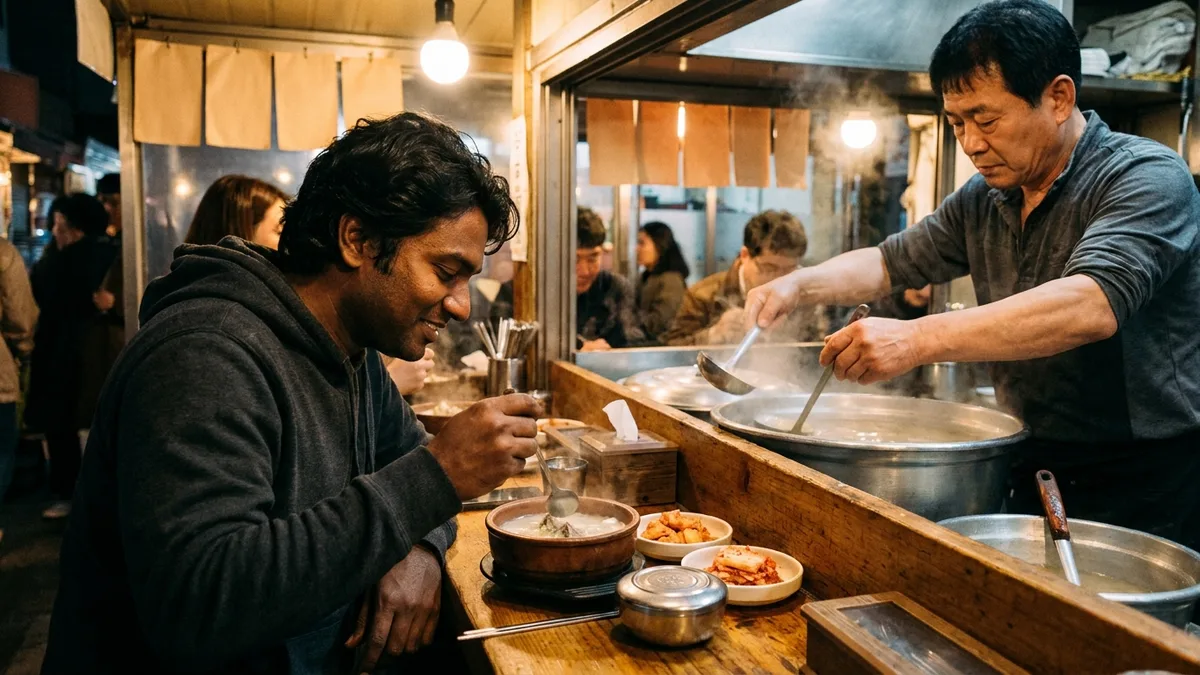
Getting a feel for Seoul dining prices
Per the Korea Consumer Agency's Chamgagyeok survey (price.go.kr), the average prices of Seoul's representative dining-out dishes in March 2026 were as follows. Most had passed ₩10,000, and it was the point at which kalguksu crossed ₩10,000 for the first time ever.
| Dish | Seoul average (as of Mar 2026) |
|---|---|
| Gimbap (seaweed rice roll, one roll) | ₩3,800 |
| Jajangmyeon (noodles in black bean sauce) | ₩7,692 |
| Kimchi-jjigae baekban (kimchi stew set meal) | ₩8,654 |
| Kalguksu (knife-cut noodle soup) | ₩10,038 |
| Bibimbap (rice mixed with vegetables) | ₩11,615 |
| Naengmyeon (cold buckwheat noodles) | ₩12,538 |
| Samgyetang (whole chicken and ginseng soup) | ₩18,154 |
| Samgyeopsal (grilled pork belly, 200g) | ₩21,218 |
As a rule of thumb, budget around ₩10,000 for a solo meal and roughly ₩20,000 per person for a meal built around meat or samgyetang, and you won't be far off (as of Aug 2026). Dining prices keep climbing — gimbap came in at ₩3,838 in the June 2026 survey, up 5.9% in a year — and Pyongyang-style naengmyeon at the long-running old houses runs more than 40% above the Seoul average (₩12,538), so budget "above average" for the famous ones.
Using booking and waitlist apps
The default app for foreigners is CatchTable Global. Officially introduced by the Korea Tourism Organization (visitkorea.or.kr) as a restaurant app for foreign visitors, it lets you sign up with a Google, Apple, or email account, with no Korean phone number. It supports English, Japanese, and Chinese (simplified and traditional), and handles reservations plus both on-site and remote waitlists in one app (as of Aug 2026).
- Joining a waitlist is free. Payment comes up only at restaurants that require a deposit, and deposits are for overseas-issued cards only (Visa, Mastercard, Amex, JCB).
- A path that runs from finding a restaurant on Google Maps into a CatchTable Global booking is also taking shape, so the two work well side by side (as of Aug 2026).
- Step-by-step instructions from sign-up through joining a waitlist and getting the call notification are in the separate CatchTable Waiting App Guide.
Tabling, which locals use heavily, is a remote-queueing app, but it's stated that using the full feature set requires Korean mobile identity verification, which is a barrier for foreigners (as of Aug 2026; check official sources). There's also a step where you enter a waiting confirmation code in front of the restaurant as your turn approaches. Some old houses take only Tabling's on-site waitlist (see Woo Lae Oak below), and at those places you simply register at the door.
When the waitlist is already closed or the app won't cooperate, changing your timing is the most practical fix. Right after opening, or an early evening that avoids the peak, is relatively quiet — and if even that's hard, moving to your second choice in the same neighborhood is often faster than waiting.
If you really do want names — three houses decades old
The option with the least risk of having closed or moved is, in the end, a long-running house that has survived for decades. We'll give just three examples. Hours and closing days can change, so be sure to check on Naver Map right before you go.
- Woo Lae Oak (우래옥, Jung-gu, founded 1946): the byword for Pyongyang-style naengmyeon. In April 2026 the naengmyeon went from ₩16,000 to ₩18,000. It's known to take only Tabling's on-site waitlist with no remote queueing and to close on Mondays, and unless you're there for the opening rush, a 30-minute to one-hour wait is normal (as of Aug 2026; check official sources).
- Imun Seolnongtang (이문설농탕, Jongno, founded around 1904): counted as the oldest surviving restaurant in Korea, and listed in the Michelin Guide Seoul 2025. The seolleongtang (milky ox-bone soup) is around ₩14,000 (as of Aug 2026).
- Hadongkwan (하동관, Myeong-dong, founded 1939): a house that has run on gomtang (clear beef-and-rice soup) alone for nearly 90 years. It's known to open only from 7 AM to 4 PM and to close early when ingredients run out, so a late lunch especially calls for checking. Gomtang is around ₩15,000 (check official sources).
All three are places you go to for the food and the history rather than for a date-night mood. They suit a family meal with older relatives, or a day when you want to taste the original form of Korean food.
Tips so ordering and paying don't throw you
- Water and cutlery are self-serve at many places. Cutlery lives in a drawer on the side of the table, and you pour your own water from the dispenser.
- Side-dish refills are free as a general rule. Say "banchan deo juseyo" (반찬 더 주세요, more side dishes, please) or use the self-serve bar.
- To call a server, press the call bell on the table or say "jeogiyo" (저기요, excuse me). Sit quietly with your hand up and you may go unnoticed for a long while.
- You pay at the counter on your way out as a rule, and there's no tipping culture. At places with no English menu, ordering by pointing at the menu photos on Naver Map works fine.
- Cards work almost everywhere, but at some small restaurants and market stalls an overseas card may not read. A little cash on hand is peace of mind.
Transport and payment tips
The real variable in an occasion-based restaurant plan isn't the restaurant — it's getting there. A date course that runs from dinner in Ikseon-dong over to a Haebangchon rooftop, the trip home at 11 PM after a group dinner: moments come up where the subway is awkward and you need a taxi. And a good share of Korean taxi-hailing apps require Korean mobile identity verification, so plenty of foreigners get blocked at sign-up right there outside the restaurant.
Installing one transport and payment app designed to work without identity verification simplifies this whole route. If you can call a taxi without a Korean phone and pay straight through with overseas payment methods (Visa, Mastercard, Alipay, and more), both making it back in time for your waitlist call and heading out early in the morning for an old house's opening rush get much easier.
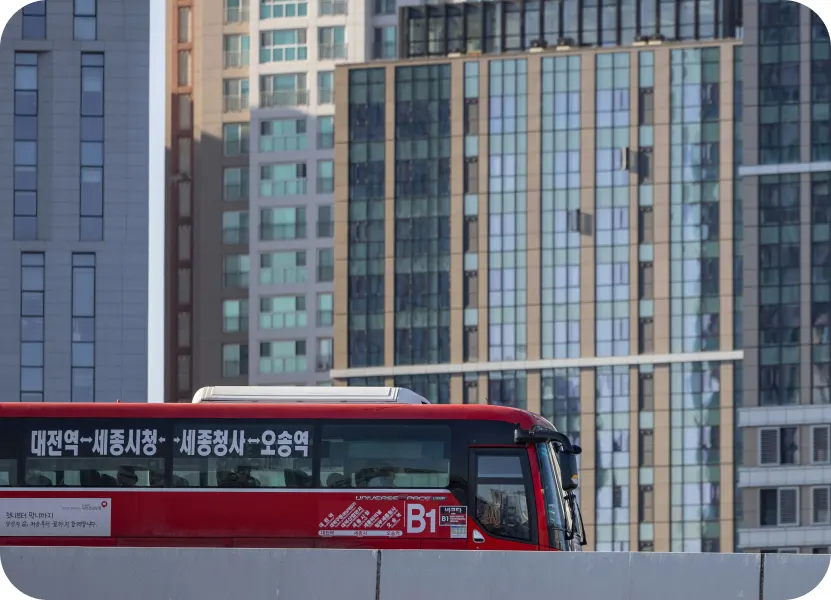
Want to handle everything from your first ride after landing in one app? Check out LACHA.
Built to work without a Korean phone number or bank account, with overseas payment methods like Alipay, WeChat Pay, and Apple Pay. Taxi hailing plus KTX, express bus, and airport railroad (AREX) booking — all in one app.
Up to 60% off Korea transit with a coupon (max ₩3,000): enter code at sign-up. KTX gets up to 18% off on top
Download now


Frequently Asked Questions (FAQ)
Q1. Do I need to tip at Korean restaurants? No, there's no tipping culture. Under Korea's Food Sanitation Act enforcement rule (식품위생법 시행규칙 별표 17 제7호 아목), a restaurant's price list has to show the amount the customer actually pays, with VAT and the like already built in, and the restaurant has to charge exactly what that list says. The rule itself never names a service charge, but the government's explanation of it (a Ministry of Health and Welfare briefing on 2012-07-11 and the Seoul city food safety notice) says VAT and service charges may not be listed separately and have to be folded into the menu price as the final amount due, so the menu price is the final price. Some upscale restaurants and hotel dining rooms do add a service charge to the bill, which doesn't line up with that explanation, so if you see a notice like that, check the amount before you order or before you pay. Leave a tip behind and staff have been known to chase after you to return it.
Q2. How do I find a restaurant with a high chair? App filters alone don't reliably screen for it, so a request note in the booking app or a phone call is the surest route (as of Aug 2026). Galbi houses, Korean buffets, and juk specialists that see a lot of family customers tend to have them; conversely, atmosphere-first cafés and dining rooms may be no-kids zones, so check for that at the same time.
Q3. Is it really not okay to go to a barbecue house alone? It's not that you can't. It's that many places require a two-serving minimum, so it's easier on the mind to seek out a solo-barbecue restaurant that sells single servings or somewhere with a meat set meal. Simply ordering two servings and eating them is a common solution too — it's each restaurant's own policy, so asking before you go in settles it.
Q4. What if I book and then can't make it? Cancel in advance through the app or by phone. At restaurants that take a deposit, the refund typically shrinks depending on when you cancel (patterns such as 100% two days out, 50% one day out, nothing on the day), but the exact rules differ by restaurant and are shown on the booking screen (as of Aug 2026). A no-show with no word means no refund for you and a seat lost for the next customer.
Q5. How do I order at a restaurant with no English menu? Opening the menu photos on the restaurant's Naver Map page and pointing is the quickest way. Aiming a translation app's camera translation at the menu board works well too. Just checking "igeo maewoyo?" (이거 매워요?, is this spicy?) before you order cuts your failure rate a lot.
Once you've chosen the restaurant, it's time to secure the seat
Settle on a type that fits your companions, save two or three candidates on Naver Map, and put in a booking or join a waitlist ahead of time — those three steps sharply cut the odds of a failed evening. For detailed waitlist app instructions, continue with the CatchTable Waiting App Guide, and for what to eat, the Must-Eat Korean Food Guide.
Note: This article is for general travel information purposes. Prices in the text are based on publicly available information as of Aug 2026, including the Korea Consumer Agency's Chamgagyeok survey (price.go.kr), and restaurant hours, closing days, and booking policies change often, so check again on Naver Map and on each restaurant's and app's notices right before you go. For English inquiries, use the travel helpline ☎1330 (24 hours; English, Chinese, Japanese, and more). LACHA is not involved in operating restaurants or booking apps, and does not guarantee any particular restaurant's operating status or quality.