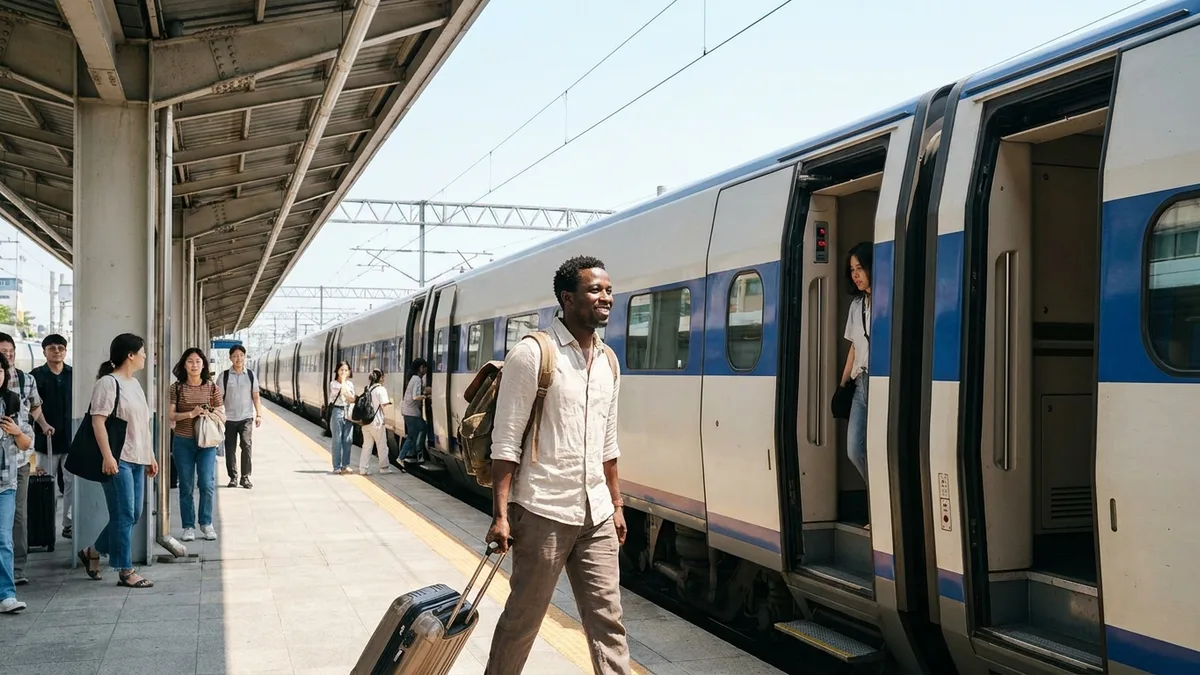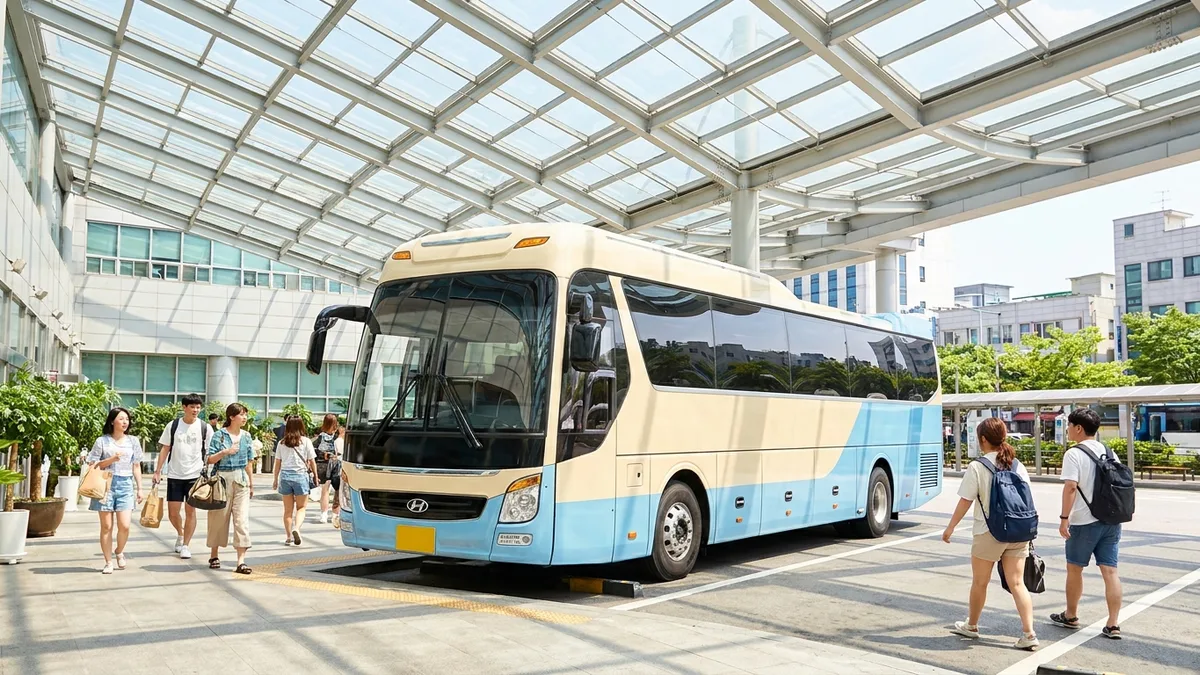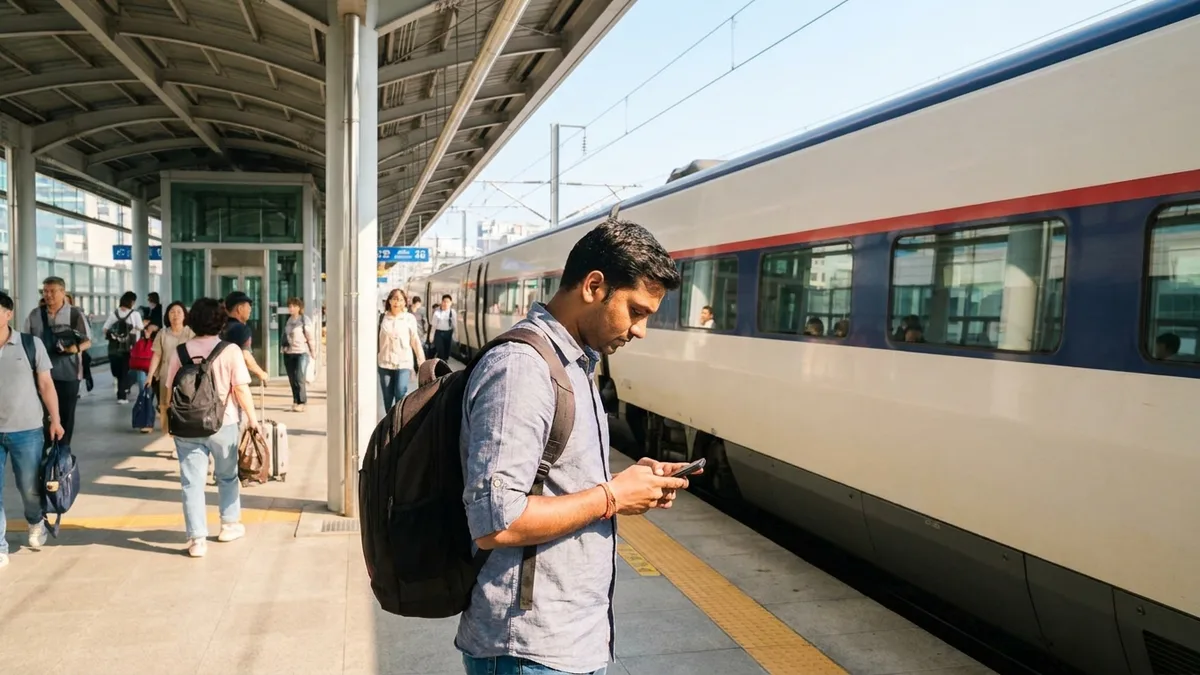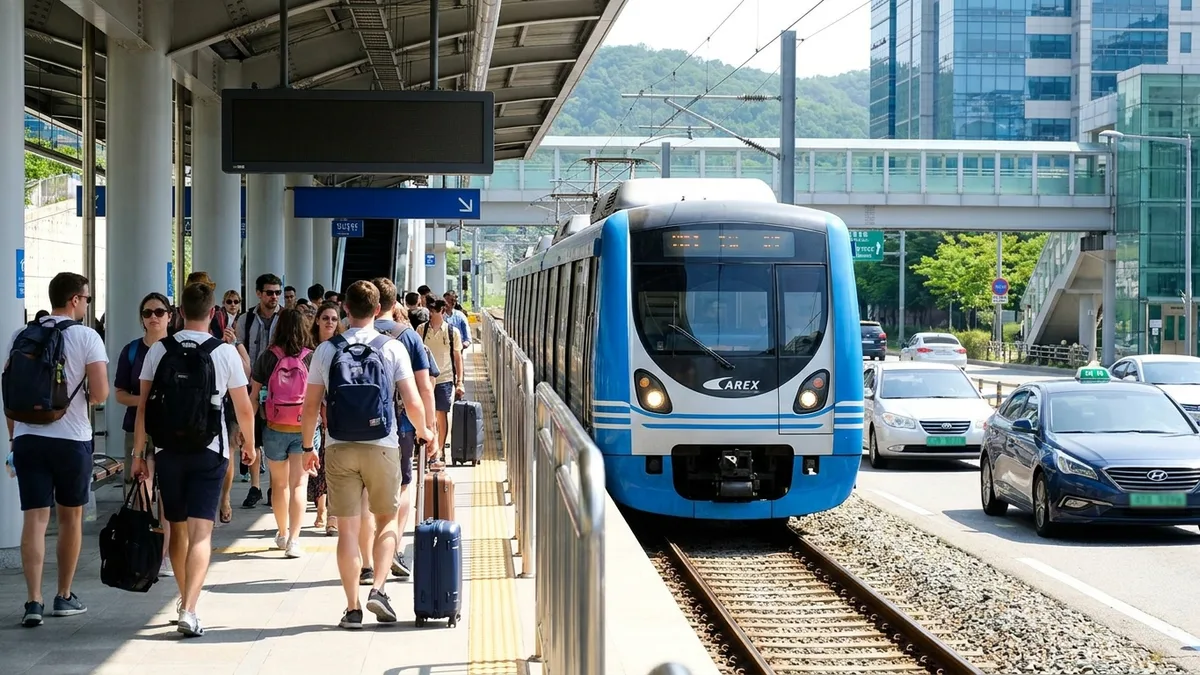
When traveling from Seoul to regional cities, the first mistake most people make isn't about the destination—it's about the departure station. Trains to Gyeongju and Busan leave from Seoul Station, trains to Jeonju and Yeosu depart from Yongsan Station, and trains to Andong leave from Cheongnyangni Station. These three stations are 15-30 minutes apart by subway, so if you memorize only "Seoul Station," you might arrive just as your train to Jeonju pulls away from Yongsan.
Here are the numbers: Seoul Station → Gangneung takes 1 hour 54 minutes and costs 27,600 KRW; Yongsan → Jeonju takes as little as 1 hour 31 minutes and costs 34,400 KRW; Seoul → Gyeongju takes approximately 2 hours 2 minutes and costs 49,300 KRW; Yongsan → Yeosu Expo takes approximately 2 hours 40 minutes and costs 47,200 KRW; Cheongnyangni → Andong takes about 2 hours and costs 25,100 KRW (all economy class one-way, based on the December 30, 2025 timetable).
Express buses generally take 1-2 hours longer but cost about half as much. However, this formula flips for one city: Gyeongju's KTX station is far from downtown, requiring an additional 20-40 minutes by bus or 15,000 KRW by taxi after arriving. Meanwhile, Gyeongju Express Bus Terminal is within walking distance of Daereungwon and Hwangridan-gil.
Additionally, starting with trains operating from September 1, 2026, KORAIL and SR merged. The name was unified as 'KTX,' and KTX fares on high-speed lines dropped by an average of 10% to the previous SRT level (Fair Trade Commission final approval of corporate merger on August 2, 2026). These fares will stay in place for at least three years, as set during the Fair Trade Commission's merger review. The fares below are based on August 2026, before the reduction, so the KTX amount on the booking screen may now be lower.
Note: The fares, travel times, and number of trains in this article are organized based on August 2026. With the KTX-SRT merger on September 1, 2026, KTX fares on high-speed lines dropped by an average of 10%, so actual KTX fares may be lower than those below, and timetables change seasonally, so please verify again through official channels—KORAIL (korail.com, Korail+ app) and Express Bus Reservation System (kobus.co.kr)—just before booking.
1. Three Different Departure Stations — Seoul, Yongsan, Cheongnyangni
Korea's high-speed rail lines have different Seoul-area terminals depending on the route. This is the biggest source of confusion for international travelers.
| Destination | Seoul Departure Station | Rail Line |
|---|---|---|
| Gyeongju, Busan | Seoul Station | Gyeongbu High-Speed Line |
| Jeonju, Yeosu | Yongsan Station | Honam & Jeolla Lines |
| Andong | Cheongnyangni Station | Jungang Line |
| Gangneung | Both Seoul & Cheongnyangni | Gangneung Line |
Jeolla Line trains (to Jeonju and Yeosu) depart primarily from Yongsan Station, with only a few services starting from Seoul Station. The confirmed train numbers are: southbound 503, 507, 515, 517 and northbound 502, 504, 514, 516, 520. If your train number doesn't match these, you need to go to Yongsan, not Seoul Station.
Gangneung Line trains depart from both Seoul Station and Cheongnyangni Station. Departing from Cheongnyangni is 28 minutes faster and 1,600 KRW cheaper (1 hour 26 minutes, 26,000 KRW vs. 1 hour 54 minutes, 27,600 KRW). If your accommodation is in Dongdaemun, Seongbuk, or Gangbuk areas, Cheongnyangni is more convenient.
Warning: If you simply select "Seoul" as your departure station in the booking system, trains to Jeonju, Yeosu, and Andong won't appear in search results or will show only as transfer options. Decide your destination first, then specify the departure station by its exact name.
2. Quick Comparison of Fares and Times for 5 Cities
Let's start with KTX. All fares are economy class, one-way.
| City | Departure → Arrival | Fastest Time | Economy | Higher Class | Daily Trains |
|---|---|---|---|---|---|
| Gangneung | Seoul Station → Gangneung | 1h 54min | 27,600 KRW | Deluxe 33,100 KRW | 14-20 trains/day |
| Gangneung (via Cheongnyangni) | Cheongnyangni → Gangneung | 1h 26min | 26,000 KRW | — | Included above |
| Jeonju | Yongsan → Jeonju | 1h 31min | 34,400 KRW | First class 48,200 KRW | ~26 trains/day |
| Andong | Cheongnyangni → Andong | ~2h | 25,100 KRW | Deluxe 30,100 KRW | 7 weekdays, 8 weekends |
| Gyeongju | Seoul Station → Gyeongju | 2h 2min | 49,300 KRW | First class 69,000 KRW | 25-26 trains/day |
| Yeosu | Yongsan → Yeosu Expo | 2h 40min | 47,200 KRW | First class 66,100 KRW | ~21-22 trains/day |
For comparison, Seoul → Busan KTX on the same Gyeongbu High-Speed Line takes 2 hours 17 minutes at the fastest. Its economy class fare was 59,800 KRW in August 2026, the baseline of this article, and became 54,400 KRW on September 1, 2026 with the KTX-SRT merger. Gyeongju is about 15 minutes closer than Busan. The roughly 10,000 KRW price gap comes from comparing the two routes' August fares. Gyeongju fares also changed on the same day, so check the current gap by comparing the current fares for both routes in the booking system.
Now for express buses. Note that Seoul departure terminals are split between two locations:
| City | Seoul Departure Terminal | Travel Time | Cheapest Grade | Deluxe | Premium | Daily Buses |
|---|---|---|---|---|---|---|
| Jeonju | Central City (Seoul Honam) | ~2h 30min-2h 45min | Standard 12,000 KRW | 22,000 KRW | 27,200 KRW | 89 buses/day |
| Andong | Seoul Express Bus Terminal | — | Standard 19,000 KRW | 24,400 KRW | 33,500 KRW | 15 buses/day |
| Gyeongju | Seoul Express Bus Terminal | ~3h 30min | Standard 22,700 KRW | 33,600 KRW | 43,600 KRW | 11-12 buses/day |
| Gangneung | Seoul Express Bus Terminal | ~3h 30min-4h | Deluxe is the cheapest | 24,600 KRW | 31,900 KRW | 23 buses/day |
| Yeosu | Central City (Seoul Honam) | ~4h 20min | Express 23,300 KRW | 34,600 KRW | 42,700 KRW | 16 buses/day |
Note: Fares were verified in August 2026, but the most recent revision date varies by route (Gyeongju Sep 2024 / Jeonju May 2025 / Andong Nov 2025 / Gangneung Aug 2026). Use this table as a reference baseline only and verify actual amounts in the booking system.
The Gangneung route discontinued standard class service on September 1, 2025, so deluxe at 24,600 KRW is now the cheapest option. Standard class fares for Gangneung that you might find online are no longer accurate.
Although both use Banpo subway station, Seoul Express Bus Terminal and Central City are separate buildings. If you're waiting in the Seoul Express Bus Terminal lobby with a ticket to Jeonju or Yeosu, you'll miss your bus. If the terminal layout confuses you, check the Intercity Bus Terminal Guide as well.
3. Gyeongju — The Only City Where the "Slower" Option Wins
Gyeongju is the most important case study in this article. It's the one route where KTX loses in total door-to-door travel time despite being faster station-to-station.
Gyeongju KTX Station is located in Hwacheon-ri, Geoncheon-eup, outside the city center. It's far from downtown tourist sites like Daereungwon and Hwangridan-gil, requiring one more leg of travel after arrival:
- City buses to downtown take about 20-40 minutes (varies widely by route and time of day).
- Taxis have Gyeongju's unique 55% compound surcharge. If you travel beyond 5km from Gyeongju Arts Center (measured by radius), the surcharge applies after the base distance (2km) even within the same district. Gyeongju Station in Geoncheon-eup falls into this zone.
- Actual fares average around 15,000 KRW to Hwangridan-gil/Intercity Bus Terminal and mid-to-late 20,000s KRW to Bomun Tourist Complex, according to media reports.
By contrast, Gyeongju Express Bus Terminal is at 2 Taejong-ro 685beon-gil (Noseo-dong), within walking distance of Daereungwon and Hwangridan-gil. Your itinerary can start the moment you step off the bus.
Here's the math: KTX takes 2 hours 2 minutes at 49,300 KRW, but add 20-40 minutes and 15,000 KRW for taxi to downtown. Express bus takes 3 hours 30 minutes at 33,600 KRW (deluxe) and drops you right in the city center. Door-to-door, the time gap shrinks to around 1 hour (approximately 50 minutes to 1 hour 10 minutes depending on connections).
Warning: Gyeongju taxi surcharges are based on zones, not distance, so the meter climbs faster than you might expect. The city's position is that fares can only be changed when the base rate is renegotiated, so this is likely to continue. If you're traveling light, the connecting buses below are much cheaper.
Don't Miss Gyeongju Station Shuttle Buses 710 & 711
Gyeongju launched new station shuttle buses starting February 27, 2023. The key improvement is that combining these routes cuts the headway from 1 hour 30 minutes to about 30 minutes (though individual routes run less frequently):
- Route 710: Gyeongju Station ↔ Bomun Tourist Complex, 07:25-22:20, 14 trips/day
- Route 711: Gyeongju Station ↔ Tongildaejeon ↔ Bulguksa Temple, 07:07-21:22, 10 trips/day
- Route 700: Gyeongju Station ↔ Bulguksa Temple, takes about 50-57 minutes
Tip: If your hotel is in Bomun Tourist Complex, Route 710 makes KTX quite viable. If you're staying near Hwangridan-gil or Daereungwon, the express bus is more convenient. In Gyeongju, your accommodation location determines your transportation choice.
The Name "Singyeongju Station" No Longer Exists
Many foreign-language blogs and map apps still show "Singyeongju" (新慶州), but this is no longer the official name.
When the old Gyeongju Station closed on December 28, 2021, due to the Jungang Line/Donghae Nambu Line realignment, it created grounds to drop the "Sin (新/New)" prefix. The Ministry of Land, Infrastructure and Transport's Station Naming Committee approved the change in January 2023, and by December 28, 2023, all signage, booking systems, and announcements had been updated. The name you need to search for in booking systems is simply Gyeongju Station.
4. Jeonju — KTX Advantage is Clearest Here
Jeonju is where choosing KTX is most straightforward among the five cities. From Yongsan, the fastest trains take 1 hour 31 minutes, with typical times of 1 hour 40 minutes to 1 hour 55 minutes. Express buses take about 2 hours 30 minutes to 2 hours 45 minutes—nearly an hour longer.
Service is frequent: about 26 KTX trains per day, with the first train at 06:25 and last at 23:11, making day trips feasible. Fares from Yongsan are 34,400 KRW economy, 48,200 KRW first class. Seoul Station departures add 200 KRW for the extended distance (34,600 KRW economy).
If you choose the express bus, it's about the fare: 12,000 KRW standard class is one-third the KTX price. Plus, Seoul → Jeonju runs 89 times daily with 10-20 minute intervals, so you can practically show up and catch a bus without reservations.
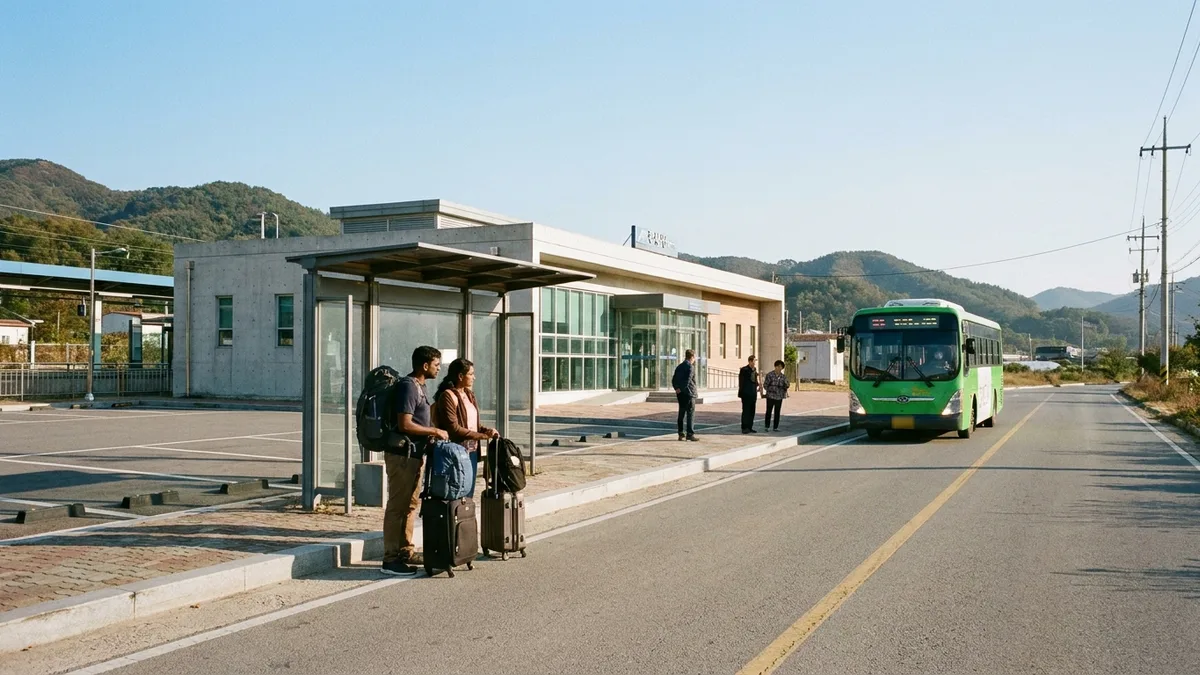
Jeonju Station is about 5km from Hanok Village, not walkable. City buses take about 25 minutes; routes include 112, 119, 101, 508, 536, 542, 545, 546, 79, and 999. Get off at Jeondong Cathedral (Hanok Village) stop.
5. Gangneung — KTX Wins, But Summer Tickets Sell Out
Gangneung is the opposite: KTX dominates. It takes 1 hour 54 minutes from Seoul Station or 1 hour 26 minutes from Cheongnyangni, while express buses take 3 hours 30 minutes to 4 hours. Even the fare difference is small: KTX 27,600 KRW vs. express bus deluxe 24,600 KRW—only a 3,000 KRW difference.
Gangneung Station is in Gyo-dong, offering the best accessibility among all five cities:
- A 10-minute walk gets you to the old downtown of Okcheon-dong/Jungang-dong and Gangneung Jungang Market.
- Gyeongpo Beach is about 30 minutes away on routes 202 or 202-1.
- Anmok Beach (Coffee Street) is accessible via routes 302-1, 314, 225, 212, or 212-1.
The problem is summer. According to KORAIL's 2026 summer holiday special transportation results (July 25-August 10, 17 days), rail passengers totaled 7.3 million, averaging 430,000 per day, up 4.6% from 6.98 million the previous year. KTX alone averaged 280,000 passengers daily, up 7.8% year-over-year, with a peak of 500,000 on August 1.
By route, Gangneung Line saw a 13.7% surge over normal levels, ranking first in growth rate, followed by Jeolla and Gyeongbu lines. The saying "Gangneung really sells out in summer" is confirmed by the numbers.
Warning: If you're heading to Gangneung during late July to early August weekends, plan to book on the day reservations open. According to KORAIL's notice, from October 1, 2026, tickets go on sale at 7 AM 2 months before the travel date (1 month before until then).
Express buses offer an alternative. Seoul Express Bus Terminal → Gangneung service began extended service to Gyeongpo Beach on May 3, 2024, and increased to 5 trips daily starting August 1, 2026 (600 KRW surcharge for the extension). If you have a lot of luggage and your hotel is near Gyeongpo, this service might be more convenient.
If you're going to Gangneung to see the winter sea, first check that your tourist train information isn't out of date. The Sea Train, which ran along the coast between Gangneung and Samcheok, made its last run on December 25, 2023. The tourist train that now departs from Gangneung Station is the Donghae Santa Train, and according to a KORAIL notice (September 2026), it makes one round trip a day, Thursdays through Sundays only (departs Gangneung 10:18 → arrives Yeongju 14:09, departs Yeongju 15:00 → arrives Gangneung 19:05). It passes Jeongdongjin, Mukho, and Donghae, then runs via Buncheon and Bonghwa all the way to Yeongju, and breaks of several days for regular maintenance are announced separately, so check the operating days with KORAIL (korail.com, Korail+ app) or the Korail rail customer center (☎1588-7788) before you go.
6. Yeosu — 3-Hour KTX vs. 4h 20min Bus
Yeosu is the farthest from Seoul. Yongsan → Yeosu Expo KTX takes 2 hours 40 minutes at the fastest, averaging about 2 hours 55 minutes, with the longest trip at 3 hours 8 minutes. Economy class is 47,200 KRW, first class 66,100 KRW.
The many stops account for the time: Haengsin-Seoul-Yongsan-Gwangmyeong-Cheonan Asan-Osong-Gongju-Seo-Daejeon-Gyeryong-Nonsan-Iksan-Jeonju-Namwon-Gokseong-Gurye-gu-Suncheon-Yeocheon-Yeosu Expo. It's the same line that passes through Jeonju to reach Yeosu, so no transfers are needed.
Service runs about 21-22 times daily, with first departure from Yeosu at 05:05 and last at 21:54. Plan at least one overnight stay when traveling between Seoul and Yeosu.
Express buses depart from Central City, taking about 4 hours 20 minutes (346.8km). Compared to KTX's average time (about 2 hours 55 minutes), buses take about 1 hour 25 minutes longer but cost roughly 12,600 KRW less (deluxe basis). Note there are different frequencies: Seoul → Yeosu runs 16 times daily, while Yeosu → Seoul runs 12 times, so check return schedules first.
From Yeosu Expo Station to Odongdo Island is about 2.5km, 5-7 minutes by taxi. City buses include routes 2, 6, 7, 109, and 111, though routes 109 and 111 only serve Expo Station during certain hours after the March 2022 route revision (tentative—verify with Yeosu transportation information).
Warning: Don't waste time waiting for a bus at Yeosu Expo Station without checking schedules. Given the short distance, if you're traveling with others, a taxi is reasonable. For fare structure, see the Korea Taxi Fare & Night Surcharge Guide.
7. Andong — KTX-Eum and the 'Converted Intercity' Bus Trap
Andong trains depart from Cheongnyangni Station using KTX-Eum. Economy class costs 25,100 KRW for about 2 hours to 2 hours 3 minutes—the cheapest fare among all five cities.
KTX-Eum uses different seat class names. What a regular KTX calls 'first class' is called 'Deluxe Class' here, and it costs 30,100 KRW. Don't waste time hunting for "first class" in the booking system.
Jungang Line has detailed segment pricing that benefits intermediate cities: Yangpyeong 8,400 KRW, Wonju 10,100 KRW, Jecheon 15,400 KRW, Yeongju 21,800 KRW, Andong 25,100 KRW, and the full Cheongnyangni~Bujeon route 49,800 KRW.
December 30, 2025 Revision Significantly Increased Service
KORAIL's service adjustment announced December 15, 2025 represents a major improvement for Jungang Line and Donghae Line passengers:
- Cheongnyangni~Bujeon service expanded from 6 trips daily (3 each way) to 16 trips weekdays (8 each way) and 18 trips weekends (9 each way).
- Of these, 8 trips extend through to Seoul Station.
- Signal system upgrades on the Andong~Yeongcheon section reduced Cheongnyangni~Bujeon fastest time to 3 hours 38 minutes.
- New stops added — Shinhaeundae 8 trips, Buk-Ulsan 4 trips, Centum 2 trips, Gijang 2 trips, Namchang 2 trips.
- First-ever Donghae Line Gangneung~Bujeon KTX-Eum service launched, 6 trips daily (3 each way), 3 hours 54 minutes—1 hour 10 minutes shorter than previous transfer routes.
- Seoul~Andong added 2 trips daily (1 each way).
In terms of station stops, you can now travel from Cheongnyangni to Shinhaeundae, Centum, and Gijang without transfers. However, not all trains stop at these stations—only the frequencies listed above—so always check the timetable.
Andong Station Relocated in 2020
Andong Station moved from Unheung-dong to 648 Songhyeon-dong on December 17, 2020—the first relocation in 90 years. The new station is right next to Andong Bus Terminal, making train-bus connections easy. It is, however, a ride away from the old downtown around the traditional market and Wolyeonggyo Bridge, so you'll need to hop on a city bus.
Main tourist routes from Andong City Tourism Portal. City bus fare is 1,500 KRW with free transfers within 1 hour after tapping out:
- Hahoe Village: Express 2, Route 210
- Dosan Seowon: Express 3 (first bus 06:10)
- Bongjeongsa Temple: Express 2, Route 310 (first bus 07:20)
- Andong Dam: Route 112 (first bus 07:30)
You Can't Judge 'Express' vs. 'Intercity' by Terminal Name Alone
Andong buses present the second major trap in this article. The Seoul Express Bus Terminal ↔ Andong route is a 'converted intercity' route that switched from express bus to intercity bus license on August 1, 2013. The license is intercity, but you board at the express bus terminal.
Even more confusing is booking: this route has used the KOBUS (express bus unified reservation) system since July 24, 2017. So it's classified as "15 express buses daily" in express bus operations. Fares are standard 19,000 KRW, deluxe 24,400 KRW, premium 33,500 KRW.
Warning: Neither "it boards at Seoul Express Bus Terminal so it's an express bus" nor "the license is intercity so it won't show up in the express bus app" are safe assumptions. The Dong Seoul ↔ Sokcho route has the same converted-intercity structure. Actually searching in the booking app is the only way to be sure.
8. Holiday Booking — 2026 Chuseok Won't Have Ticket Windows Open During Advance Sales
KORAIL announced the 2026 Chuseok ticket booking schedule on August 14, 2026. For international travelers, the sales method matters more than the fare:
- Pre-booking for mobility-challenged passengers: September 3-4, 09:00-15:00
- Sept 3: Gyeongbu, Gyeongjeon, Donghae, Jungbunaeryuk, Gyeongbuk, Daegu, Chungbuk, suburban lines
- Sept 4: Honam, Jeolla, Jungang, Gangneung, Janghang, Yeongdong, Taebaek, Seohae, Gyeongchun, Mokpo-Boseong lines
- General booking: September 7-11, 07:00-13:00
- Sept 7: Regular trains
- Sept 8-10: KTX by line
- Sept 11: Gyeongbu Line KTX
- Payment deadline: Starting September 12 at midnight, until September 15 for general bookings and September 18 for pre-bookings
Here are the two most important points: First, ticket windows will NOT operate during the booking period (Sept 3-11) and sales will be online-only through the 'Korail+' app and website. Remaining seats become available at ticket counters and vending machines after 3 PM on September 11. Second, if you were an SR-only member, you need to convert to unified membership in advance.
In other words, if you can't access the app or website when bookings open, good seats will be nearly gone. Complete app registration and payment setup before booking day. The holiday booking process is detailed further in the Chuseok/Seollal Train Booking Guide.
Express buses work differently: Special holiday period seats typically open all at once in special advance sales 3-4 weeks before the holiday (2025 Chuseok opened at 10 AM on September 3). Announcements vary each year, so check kobus.co.kr notices.
During normal periods, there's more flexibility. As mentioned earlier, according to KORAIL's notice, from October 1, 2026, tickets go on sale at 7 AM 2 months before the travel date (1 month before until then), so tickets for December 5 become available from 7 AM on October 5.
9. When You're Blocked at Payment After Choosing Your Ticket
Even after selecting your route, one final obstacle remains: without a Korean phone number or domestic bank account, many travelers get stuck at the last step of booking. Here's how it breaks down by channel:
| Booking Channel | What It Covers | Notes for International Travelers |
|---|---|---|
| Korail+ (formerly Korail Talk) | All KTX & KTX-Eum routes | Non-member booking possible with passport number; some cases blocked at 3D Secure for foreign cards |
| KOBUS, Express Bus T-Money | Express buses (including some converted intercity) | English support; payment steps oriented toward domestic cards |
| Bus Tago, TxBus | Intercity buses | Regional license routes; separate apps |
| Klook and travel platforms | Selected KTX & pass products | Pricing and cancellation policies vary by platform; verify before payment |
| LACHA | KTX, express buses, taxis, Airport Railroad, transit cards | Register without identity verification; supports international e-wallets and foreign cards |
LACHA is a foreigner-friendly transportation and payment super app you can use immediately without identity verification. Book both KTX and express buses in one app, then seamlessly continue with taxi calls and transit cards using the same wallet after arrival. It supports international e-wallets like Alipay, WeChat Pay, and Apple Pay, plus foreign cards including VISA, Mastercard, JCB, and UnionPay, making it easier to complete payment without a Korean bank account or domestic card. Note that LACHA supports express buses only, not intercity buses. For ambiguous "converted intercity" routes like Andong, search Seoul Express Bus Terminal → Andong directly in the app to confirm availability. If foreign cards keep getting declined, also check KTX Foreign Card Booking Solutions and Express Bus English Booking Guide.
Want to search and book KTX and express buses in one app? Check out LACHA.
Built to work without a Korean phone number or bank account, with overseas payment methods like Alipay, WeChat Pay, and Apple Pay. Taxi hailing plus KTX, express bus, and airport railroad (AREX) booking — all in one app.
Up to 60% off Korea transit with a coupon (max ₩3,000): enter code at sign-up. KTX gets up to 18% off on top
Download now


Frequently Asked Questions (FAQ)
Q1. Can I take KTX from Seoul Station to Jeonju or Yeosu? A. In principle, they depart from Yongsan Station. Jeolla Line has only a few trains originating from Seoul Station; confirmed numbers are southbound 503, 507, 515, 517 and northbound 502, 504, 514, 516, 520. When booking, always verify whether your departure is Yongsan or Seoul. The two stations are several subway stops apart.
Q2. For Gyeongju, which is better—KTX or express bus? A. Decide based on your accommodation location. Gyeongju KTX Station is in Geoncheon-eup, requiring an additional 20-40 minutes by bus or about 15,000 KRW by taxi to reach downtown (mid-to-upper 20,000s KRW to the Bomun area). If staying near Hwangridan-gil or Daereungwon, the express bus terminal is within walking distance and more convenient. If staying in Bomun Tourist Complex, Route 710 shuttle makes KTX viable.
Q3. Why doesn't 'Singyeongju Station' appear in searches? A. Because that name was discontinued on December 28, 2023. When the old Gyeongju Station closed, they dropped the "Sin (新)" prefix and changed the official name to Gyeongju Station, completing updates to booking systems and signage. Search for Gyeongju Station (Gyeongju) when booking.
Q4. How do I buy 2026 Chuseok train tickets? A. General booking is September 7-11, 07:00-13:00: Sept 7 for regular trains → Sept 8-10 for KTX by line → Sept 11 for Gyeongbu Line KTX. Ticket windows will NOT operate during the booking period; sales are online-only through Korail+ app and website (remaining seats sold at windows after 3 PM Sept 11). Former SR-only members should convert to unified membership in advance.
Q5. How much did fares drop with the September 1 KTX-SRT merger? A. KTX fares on high-speed lines dropped by an average of 10% to the previous SRT level. The Seoul-Busan economy class fare went from 59,800 KRW to 54,400 KRW. These fares will stay in place for at least three years, as set during the Fair Trade Commission's merger review. Capacity will increase by at least 15,000 seats weekdays and 17,000 weekends, with frequency increasing by 23 trains weekdays and 25-26 weekends. Check the actual route-specific amounts on the Korail+ booking screen. However, whether the reduction applies to KTX-Eum (Gangneung Line, Jungang Line) has not been confirmed in official documentation yet (tentative, official verification needed).
Reference: Fares, travel times, train frequencies, and booking schedules in this article are verified as of August 2026. With the September 1, 2026 KTX-SRT merger, KTX fares on high-speed lines dropped by an average of 10%, so actual amounts may be lower than the KTX fares in this article, and express bus fares may differ from stated amounts due to varying revision dates by route. Items not fully verified with primary sources—such as Yeosu bus routes 109/111 service hours or Seoul Express Bus Terminal ↔ Andong booking availability across different apps—are marked as tentative. Before actual travel, always reconfirm the latest information through official channels: KORAIL (korail.com, Korail+ app), Express Bus Reservation System (kobus.co.kr), and local government transportation information.