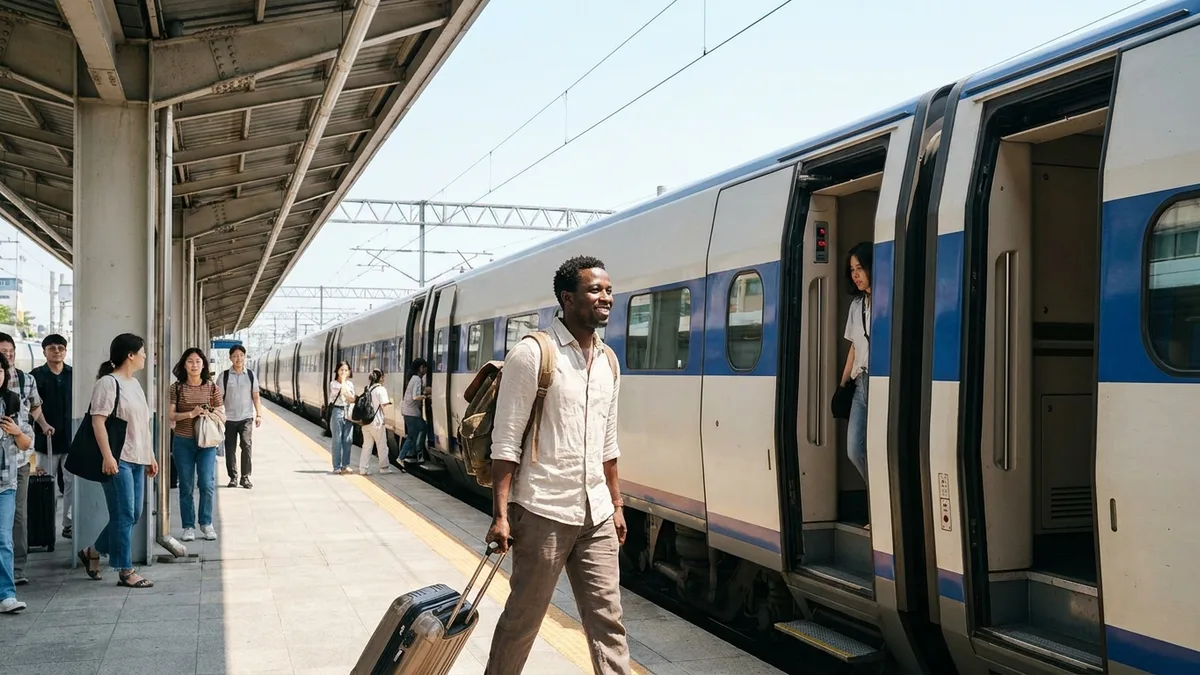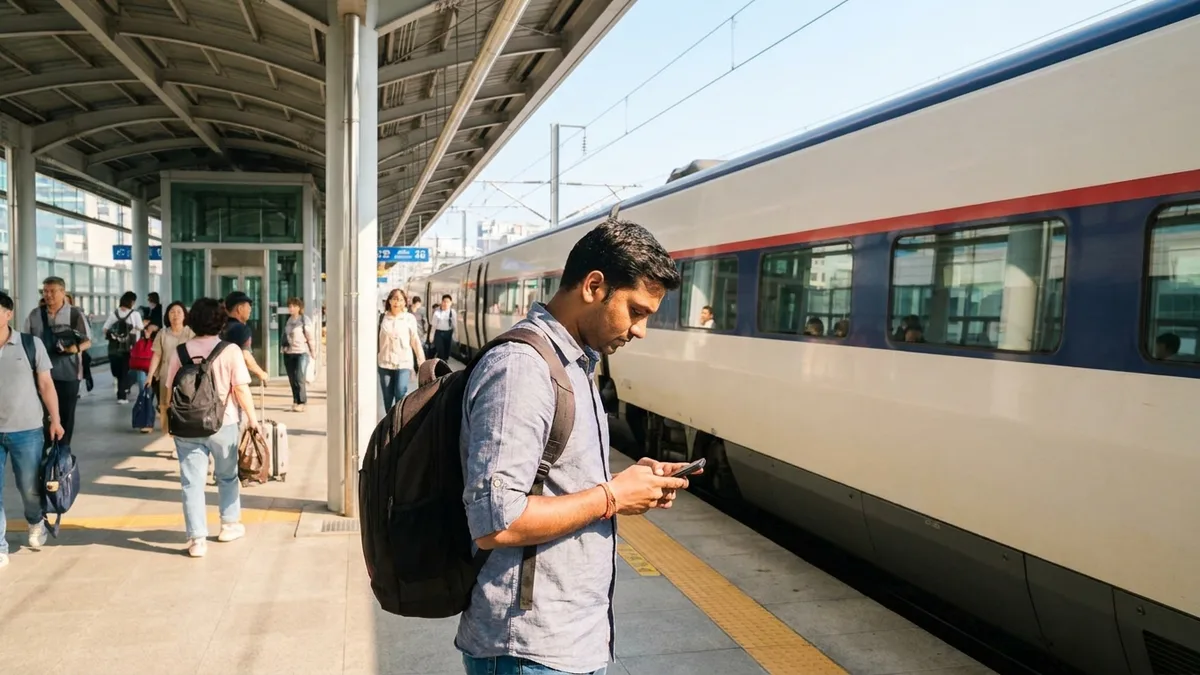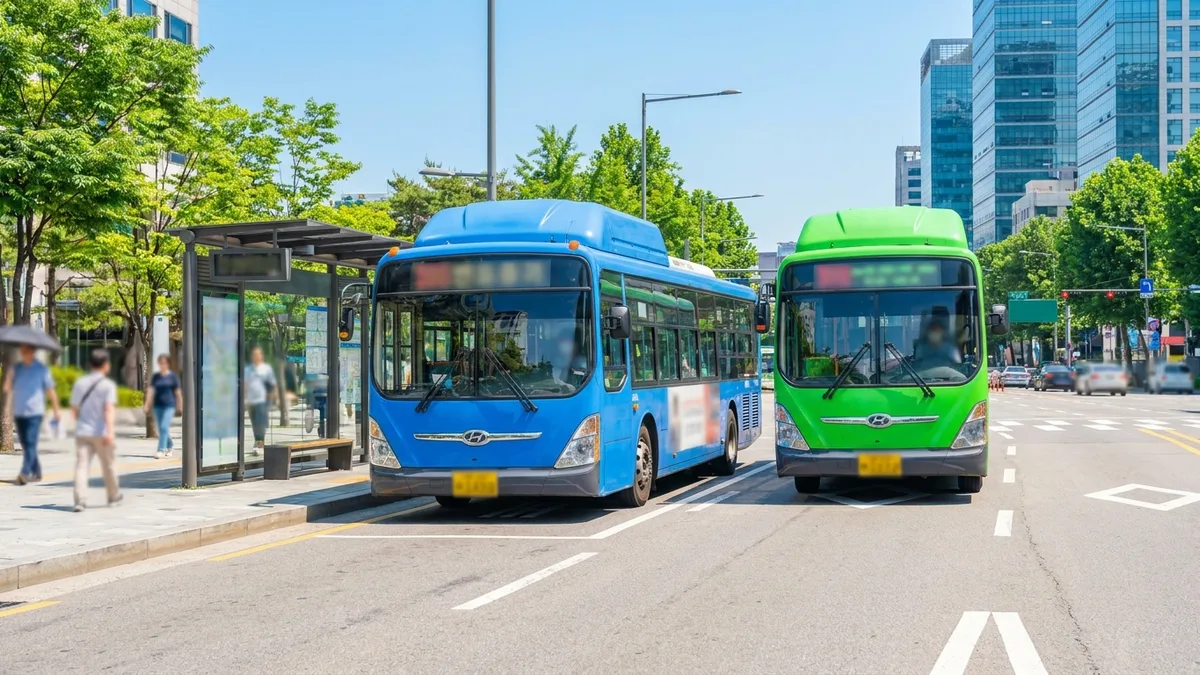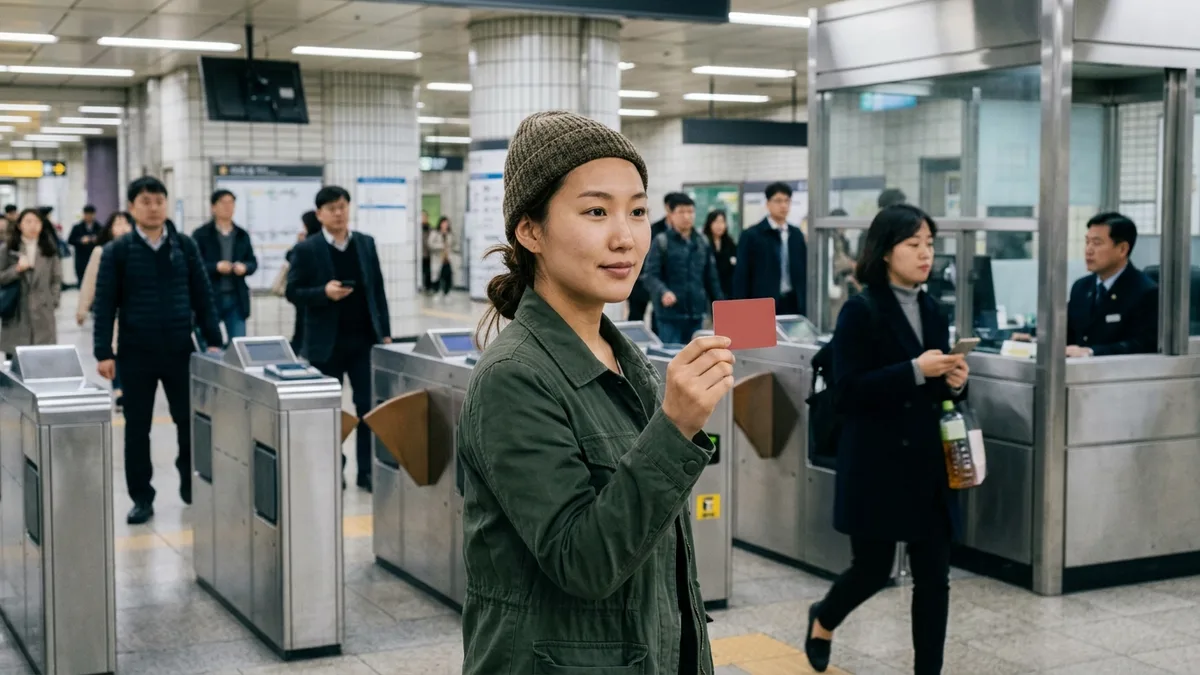
From Gimhae Airport to Sasang Station is just 3 stops, about 6 minutes, 1,600 KRW with a transit card on the Busan-Gimhae Light Rail Transit. The airport station falls under "Outer Zone 2" on the fare zone map, so the trip to Sasang counts as 1 zone instead of 2. The same trip by taxi costs around 18,000 KRW to Seomyeon or 25,000 KRW to Haeundae according to airport-posted estimates—quite a difference.
Here are the basics for Busan public transportation: Metro/light rail 1-zone is 1,600 KRW with a transit card, regular city buses are 1,550 KRW, and village buses are 1,480 KRW. Transfers are free up to 2 times within 30 minutes of tapping out. As of September 19, 2025, the regional transfer surcharge (500 KRW for adults) between Busan, Gimhae, and Yangsan has been eliminated, so transfers between these three cities no longer cost extra.
For foreign visitors, the real challenge in Busan isn't fares—it's payment. Station ticket machines don't accept credit cards (cash only), and you can't recharge T-money or E-Z cards with foreign-issued cards. However, the "Busan Metro" app has accepted Visa, Mastercard, and JCB since December 2025, and works without membership registration. You can buy single-ride tickets plus 1-day passes (6,000 KRW) and 3-day passes (13,000 KRW).
For taxis, the medium-size base fare is 4,800 KRW (2km), with late-night surcharges that vary by time slot: midnight to 2 AM is 30%, while 11 PM–midnight and 2–4 AM are 20%. If you assume "30% starting at 11 PM," the meter won't match.
Note: Fares and schedules in this guide are compiled from official sources (Busan Metropolitan City, Busan Transportation Corporation, Busan-Gimhae Light Rail Transit, Korea Airports Corporation) as of August 2026. Since transit fares and schedules change frequently and vary by route, please double-check with official channels or Busan BIMS right before your trip.
From Gimhae Airport to Downtown — Four Options Compared
From Gimhae Airport arrivals, you have four main choices: light rail, airport limousine, city bus 307, or taxi. If you don't have much luggage and you're headed to Seomyeon or Nampo-dong, the light rail is cheapest and most reliable.
| Mode | Adult Fare | Approx. Time | Notes |
|---|---|---|---|
| Busan-Gimhae Light Rail | 1,600 KRW (transit card, 1 zone) | Airport→Sasang 3 stops, ~6 min | Transfer to Line 2 at Sasang, Line 3 at Daejeo |
| Airport Limousine 1 | 9,500 KRW | ~90 min to Jangsan (34.4km) | To Haeundae/Gijang; no transfer discount |
| Airport Limousine 2 | 6,000 KRW | ~50 min (15.7km) | To Seomyeon/Bujeon; reduced from 7,500 KRW on Jan 5, 2026 |
| City Bus 307 | 1,550 KRW (transit card) | Gimhae Airport~Haeundae (Songjeong) | Regular city bus; transfer discount applies |
| Taxi (medium) | 18,000 KRW to Seomyeon / 25,000 KRW to Haeundae | 45–70 min | Airport-posted estimates; varies with traffic |
One thing to know upfront: the light rail Airport Station isn't right at the international terminal—it's between the international and domestic terminals near the outdoor parking lot. If you arrive internationally, you can walk or take the free shuttle bus.
The shuttle runs 05:00–22:48 at 12-minute intervals with fixed departure times: Long-term Parking (P3) at :00/:12/:24/:36/:48, International Terminal GATE1 at :05/:17/:29/:41/:53, Domestic Terminal GATE4 at :07/:19/:31/:43/:55.
Tip: If you're taking the light rail after arriving at the international terminal, check the shuttle schedule at GATE1 first. Even if you miss one, the 12-minute intervals mean you won't wait long.
Busan-Gimhae Light Rail Transit — Airport to Sasang in 1 Zone
The light rail connects Sasang Station in Busan to Gaya University Station in Gimhae. For airport travelers, it essentially functions as an airport rail line.
The fare zones are a bit unusual: the line is divided into Outer Zone 1 (Gaya University~Inje University), Central Zone (Gimhae University~Pyeonggang), and Outer Zone 2 (Daejeo~Sasang). Travel between Central and either Outer zone counts as 1 zone; only travel across both Outer zones counts as 2 zones.
Airport Station is in Outer Zone 2, so trips from the airport to Sasang or to downtown Gimhae (Central Zone) both cost 1,600 KRW for 1 zone. This requires reverse-engineering the official zone table, so many sources get it wrong.
Airport to Sasang is 3 stops via Seobusan Distribution Complex and takes about 6 minutes based on first-train schedules. At Sasang you can transfer to Metro Line 2, and at Daejeo to Line 3.
First/last train times vary slightly (1–2 minutes) across official sources, so it's safer to know the range. From Airport Station, toward Gaya University (Gimhae) runs roughly 05:05–23:47/23:48, and toward Sasang roughly 05:30–00:07/00:09 (same on weekdays, Saturdays, and holidays).
Caution: Busan Metro offers free rides to seniors 65+ with a welfare transit card, but Busan-Gimhae Light Rail charges regular fares even for those 65+. Only people with disabilities, national merit, or independence merit cards ride free. It's easy to get confused when the same card charges differently depending on the mode.
Airport Limousine 1 & 2 and City Bus 307
If you have lots of luggage or want to go directly to a Haeundae or Seomyeon hotel, the airport limousine is convenient. Routes were reorganized starting with the first bus on January 5, 2026, so fares and schedules differ from older sources.
- Limousine 1 (Haeundae/Gijang direction): Adult 9,500 KRW / Youth (middle/high school) 7,600 KRW / Child (elementary) 4,800 KRW
- Limousine 2 (Seomyeon/Bujeon direction): Adult 6,000 KRW / Youth 4,800 KRW / Child 3,000 KRW
- Limousine 2 was reduced 1,500 KRW from 7,500 KRW for adults after the reorganization
- One preschool child per passenger rides free if not occupying a seat; if seated, child fare applies
Here's the service data as published by Busan City. Limousine 1 runs 42.2km/110 min one-way to Gijang with 20–280 min intervals, 26 trips/day. Gijang first bus 04:50, last 16:30; Airport first 10:10, last 21:40. To Jangsan it's 34.4km/90 min with 20–60 min intervals, 16 trips/day: Jangsan 05:30–19:00, Airport 07:10–16:50.
Limousine 2 runs Bujeon Station~Bujeon Market~Seomyeon Station (Lotte Dept.)~Dong-eui Univ.~Jurye Station~Gimhae Airport for 15.7km/50 min one-way. Bujeon first bus 06:00, last 20:00; Airport 07:20–21:30 with 60–80 min intervals, 24 trips/day.
The reorganization also added a stop at Dongbusan Tourism Complex: Osiriya Theme Park toward the airport, Hanwha Mateye toward Gijang. Vehicles are 23-seat hydrogen buses from July 2025, 10 units.
Caution: Airport limousines don't offer free transfers and don't accept cash. You must book via QR ticket on the "Bus Tago" app or use the ticketing kiosk at Gimhae Airport 1F Gate 4; on-site payment is transit card only. Seating is first-come, first-served.
City Bus 307 is a regular city bus connecting Gimhae Airport and Haeundae (Songjeong). The fare is 1,550 KRW with transit card / 1,700 KRW cash, same as Busan city buses, and transfer discounts apply. You can transfer from Light Rail Airport Station exits 1 or 2. However, first/last bus times conflict across sources: first bus 05:00–05:15, last 21:35–23:20 (tentative—official confirmation needed). Roughly early 5 AM to just before midnight, but check Busan BIMS or a map app for exact times to be safe.
Busan Metro and Donghae Line — Routes, Fares & Passes
Busan Metro has 4 lines. Line 1 opened July 19, 1985, running Nopo~Dadaepo Beach 40.48km/40 stations. Line 2 is Jangsan~Yangsan 47.1km/43 stations (June 30, 1999). Line 3 is Daejeo~Suyeong 18.3km/17 stations (Nov 28, 2005). Line 4 is Minam~Anpyeong 12.7km/14 stations (March 30, 2011).
Line 4 is Korea's first driverless light rail. Line 2 extends into Yangsan (Hopo~Yangsan 8.0km/4 stations). Line 3 meets the Busan-Gimhae Light Rail at Daejeo.
Fares are zoned at 10km from the origin station. The Passenger Transport Terms (latest: effective Nov 1, 2025) set the structure.
| Category | Metro 1-zone | Metro 2-zone | Light Rail 1-zone | Light Rail 2-zone |
|---|---|---|---|---|
| Adult card/mobile | 1,600 KRW | 1,800 KRW | 1,600 KRW | 1,800 KRW |
| Youth card | 1,050 KRW | 1,200 KRW | 1,000 KRW | 1,150 KRW |
| Child card | Free | Free | Free | Free |
| Single-ride ticket (adult) | 1,700 KRW | 1,900 KRW | 1,700 KRW | 1,900 KRW |
| Child single-ride | 700 KRW | 800 KRW | 750 KRW | 850 KRW |
| Age 65+ | Free with welfare card | Free | Regular fare | Regular fare |
Even if the adult fare looks the same at 1,600 KRW, youth fares and senior benefits differ between metro and light rail. Since your first leg from the airport is light rail, knowing this difference prevents miscalculations.
If you stay inside a station longer than 3 hours after tapping in, a 2-zone fare is added. Good to remember if you plan to linger inside.
If you'll ride frequently, mobile passes are available: 1-day 6,000 KRW (unlimited on day of purchase), 3-day 13,000 KRW (unlimited within 3 days), 1-month 45,000 KRW (45 rides within 30 days) for adults. Youth: 4,000 KRW / 9,000 KRW / 33,000 KRW.
Caution: Passes are Metro only. Busan Transportation Corporation explicitly states they don't work on city buses, Donghae Line, or Busan-Gimhae Light Rail. So a 1-day pass won't cover the light rail leg from the airport on arrival day.
Donghae Line regional rail has Busan sections (Bujeon~Wolnae) and Ulsan sections (Wolnae~Taehwagang). Base fare matches Metro 1-zone at 1,600 KRW for adults, so transfer differential is zero. However, beyond 10km in the Busan section adds 200 KRW (adult) / 150 KRW (youth) / 100 KRW (child) per 10km, and continuous travel beyond 10km across Busan and Ulsan sections adds an extra 200 KRW inter-zone surcharge for adults.
There's one more catch with Donghae Line: children ride free on the metro but Donghae Line base fare is 650 KRW for children, so you'll be charged. Know this if traveling with kids.
Ticket Payment — Machines Take Cash, App Takes Foreign Cards
This is where foreign visitors in Busan get stuck most often. According to June 2026 reports, Busan Metro station ticket machines don't accept credit cards—cash only. You also can't recharge T-money or E-Z (Cashbee) cards with foreign-issued credit cards. This contrasts with Seoul, which since March 2026 began accepting foreign cards at new machines for single-ride tickets and Climate Card short-term passes only (even in Seoul, buying or recharging regular transit cards with foreign cards doesn't work).
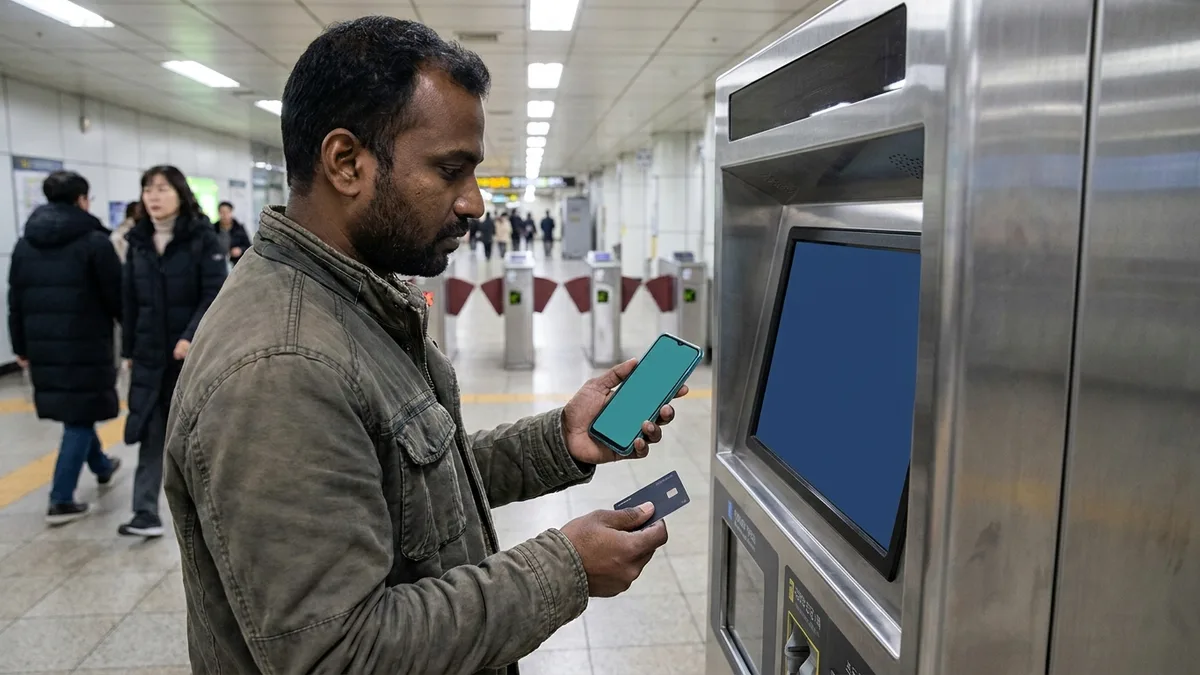
So knowing the workaround is crucial. The "Busan Metro" app officially supports credit card payment as of December 1, 2025, accepting Visa, Mastercard, and JCB, including foreign-issued cards. It works without membership; foreigners can use it with just email and a verification code.
You can buy single-ride tickets and 1-day/3-day unlimited passes through the app. This lets you avoid the no-cash, no-card situation at the ticket machine.
- If you have no cash and only plan to ride the metro, buy single-ride or day passes in the Busan Metro app
- To also ride buses, buy an E-Z or T-money card at a convenience store with cash and recharge it there
- E-Z is Cashbee's new name; you can cash-recharge at 7-Eleven, CU, and GS25
- T-money can also be recharged at unattended machines in Busan Metro stations
Transit card compatibility is broad: Hanaro, Mybi, EB, T-money, Cashbee (E-Z), and postpaid transit cards all qualify for Busan's regional transfer discount. So a card you used in Seoul works in Busan. The foreign-card recharge issue is covered in more detail at Recharging Transit Cards with Foreign Cards.
Note: In June 2026, a dynamic QR ticketing system appeared that lets you scan a QR at station info kiosks and reach a purchase page without installing the app. It was reported to support Korean, English, Japanese, Chinese, and even Alipay+ and UnionPay—but it launched at 17 major stations during a BTS Busan concert, and it's unclear if it's been expanded to all stations as a permanent service (tentative—official confirmation needed).
Mobile tickets bought via app or QR only work on the metro and can't be used for bus transfers. If you plan to mix buses, you still need a physical transit card.
Busan City Buses — Regular 1,550 KRW, Express 2,100 KRW
Busan city bus fares have been at the current level since 04:00 on October 6, 2023. The widely quoted "1,200 KRW with card" is the pre-increase figure and no longer accurate.
| Bus Type | Transit Card | Cash |
|---|---|---|
| Regular bus | 1,550 KRW | 1,700 KRW |
| Express/seat bus | 2,100 KRW | 2,200 KRW |
| Late-night bus (regular type) | 2,000 KRW | 2,100 KRW |
| Late-night bus (seat type) | 2,500 KRW | 2,600 KRW |
| Village bus | 1,480 KRW | 1,600 KRW |
Express buses like routes 1000, 1001, 1003 stop at fewer stops and have 2-column seating. The official Busan City fare table doesn't list express separately; it's grouped with seat buses at the same fare, so 2,100 KRW with transit card (some secondary sources cite 2,050 KRW, but the basis is unconfirmed).
Caution: Bus 2000 crossing Geoga Bridge to Geoje doesn't follow the table above. It's licensed as an express seat route, so the city and intercity portions are priced separately, and it gets no transfer discount with the metro, city buses, or village buses. Fares vary across sources and aren't listed here; check at the stop or call Busan Public Transit Info (1577-4207) before boarding.
Late-night fares apply to buses running from around 23:40 onward (exact start time may vary by route—tentative). Regular late-night buses are 2,000 KRW with transit card, 450 KRW more than daytime regular buses.
Children ride free with a transit card but pay full fare in cash. If you have kids, bring a card—it's cheaper.
For the logic behind bus numbers and colors, see How to Read Korean Bus Numbers & Colors before you hit the bus stop.
Transfer Discounts and Fare Refund Programs
Busan's transfer discount system has been running since July 2, 2008. Rules per BIMS official text:
- Transfer discount applies if you board the next mode within 30 minutes of tapping out
- Transfers allowed up to 2 times, i.e., 3 total rides
- Re-boarding the same route doesn't count as a transfer, even if you rode other routes in between
- Metro-to-metro transfers only count if done inside the fare gate; exiting the gate breaks the chain
- Cash payments don't get transfer discounts. You must tap out
- Using one card for 2+ people only gives the discount to the cardholder
Some sources mention extended wait times for infrequent routes, but BIMS official text only states 30 minutes. Stick to 30 minutes as the rule to be safe.
Regional transfer scope includes metro, city buses (seat/express included), village buses, Busan-Gimhae Light Rail, and Donghae Line. Coverage area is all of Busan, Gimhae, and Yangsan. As of September 19, 2025, the regional transfer surcharge (500 KRW adult / 260 KRW youth) has been abolished, so transfers across these three cities no longer cost extra.
Caution: Two restrictions on Donghae Line transfers: First, Donghae Line doesn't transfer with Gimhae or Yangsan transit. Second, combinations like "Line 2 → Donghae → Line 1" are considered re-boarding the same mode (metro) and break the transfer chain. Whether Donghae Line and Busan-Gimhae Light Rail directly transfer isn't stated in official documents; if needed, confirm with Busan Transportation Corporation (1544-5005) or Light Rail Customer Center (055-310-9800).
If you're staying in Busan for a month+, check out Dongbaek Pass. Use a Dongbaek Pay transit card (prepaid or postpaid) for Busan public transit spending over 45,000 KRW/month, and get up to 45,000 KRW back in Dongbaek Pay policy credits around the 15th of the following month. Applies to adults 19+; youth (13–18) get refunds for spending over 25,000 KRW, up to 25,000 KRW back. Launched August 1, 2023; you must separately enroll in Dongbaek Pass within the Dongbaek Pay app.
Eligible modes are city buses and village buses registered in Busan (excluding bus 2000 and buses registered in Gimhae, Yangsan, Ulsan), plus Metro Lines 1–4, Busan-Gimhae Light Rail, and the entire Donghae Line. Rides with 2+ people don't count toward the refund.
Starting April 1, 2026, enrolling in both Dongbaek Pass and K-Pass gives unlimited refunds beyond 45,000 KRW/month according to reports. However, the official Dongbaek Pass page (updated March 2026) still states "up to 45,000 KRW," so understand it as: solo enrollment caps at 45,000 KRW, dual enrollment with K-Pass removes the cap—and verify the latest announcement (tentative—official confirmation needed).
K-Pass refunds a percentage if you use transit 15+ times/month: general 20%, youth 30%, seniors 30%, 2 children 30%, 3+ children 50%, low-income 53.3%. From April to September 2026, commute time-shift hours (5:30–6:30, 9:00–10:00, 16:00–17:00, 19:00–20:00) get boosted rates: general 50%, youth 60%, 3+ children 80%, low-income 83.3% according to announcements (tentative—official confirmation needed). It's time-differentiated, so not all hours get the boost.
The 2026 K-Pass addition "Everyone's Card" refunds 100% above a base amount. Busan is a "general province" region with general type base 55,000 KRW (temporary 27,000 KRW), plus type 95,000 KRW (temporary 47,000 KRW). Final refund is the highest among percentage, general, and plus types; since it's early rollout, confirm details via official announcement (tentative—official confirmation needed).
Dongbaek Pass cards are K-Pass partner cards, so you don't need a separate card. However, both programs require a foreigner registration number to enroll, so short-term tourists without a foreigner registration card can't use them. Application steps are in the K-Pass Foreigner Application Guide.
Busan Taxis — Base 4,800 KRW & 3-Tier Late-Night Surcharges
Busan medium taxi fares have been at the current structure since 00:00 on June 1, 2023. Base fare is 4,800 KRW for 2km, then 100 KRW per 132m. When moving slower than 15 km/h, it's 100 KRW per 33 seconds. Base fare rose 1,000 KRW from the previous 3,800 KRW; Busan City stated this is an average 15.6% increase based on a mean trip distance of 5.4km.
Late-night surcharges are where published info is most often wrong. The official structure per Busan Taxi Division and Korea Airports Corporation Gimhae Airport info is:
- 23:00–24:00 — 20% surcharge
- 00:00–02:00 — 30% surcharge
- 02:00–04:00 — 20% surcharge
So late-night surcharge hours are 23:00 to 04:00, with only midnight–2 AM at 30%. Descriptions like "20% from 23:00 to 04:00" or "surcharge starts at midnight" are inaccurate.
Out-of-zone trips add 30% to the metered fare. If late-night and out-of-zone overlap, combined surcharge is 40–50%: midnight–2 AM is 50%, other late-night hours 40%. However, Gimhae Airport is within Busan's service zone, so airport–city trips don't incur the out-of-zone charge.
Deluxe/large taxis have a base of 7,500 KRW for 3km, then 200 KRW per 140m, time charge 200 KRW per 33 seconds. Deluxe taxis have no late-night or out-of-zone surcharges. So on late-night long trips, the gap between a medium taxi with 30% and a deluxe narrows more than you'd think.
Tip: If your route crosses Gwangan Bridge, passengers pay the toll (1,000 KRW for small vehicles) one-way actual cost. The driver asking for round-trip fare for their return is overcharging. Starting July 8, 2026, weekday 06–09 and 18–20 tolls are fully waived, so you pay nothing during those hours.
Gimhae Airport posts estimated fares to major destinations. These are estimates based on typical distance/time, not confirmed metered amounts, so actual meter readings may differ. Read all numbers below as "estimates." The deluxe taxi column is especially approximate, calculated from medium-taxi rates, so budget generously.
| Destination | Est. Time | Regular Taxi (est.) | Deluxe Taxi (est.) |
|---|---|---|---|
| Seomyeon (Lotte Hotel) | 45 min | 18,000 KRW | 32,400 KRW |
| Nampo-dong (Jagalchi Market) | 60 min | 20,000 KRW | 36,000 KRW |
| Gwangalli | 70 min | 25,000 KRW | 45,000 KRW |
| Haeundae (Paradise Hotel) | 70 min | 25,000 KRW | 45,000 KRW |
| Taejongdae | 80 min | 28,000 KRW | 50,400 KRW |
The airport notes these vary with traffic. For late-night trips, apply the surcharge rates above to estimate. For nationwide late-night taxi rates, see Korea Taxi Night Surcharge Summary.
Getting to Tourist Spots — Haeundae, Gwangalli, Nampo-dong, Gamcheon
Major destinations are mostly reachable by metro. Per official Busan City guidance:
- Haeundae Beach — Metro Line 2, Haeundae Station
- Gwangalli Beach — Line 2, Gwangan Station; Geumnyeonsan Station also nearby
- Nampo-dong/Jagalchi Market — Line 1, Nampo or Jagalchi Station
The tricky one is Gamcheon Culture Village. It's on a hillside, unreachable by metro alone—you must transfer to a village bus. The village has limited parking, so official guidance recommends public transit.
- Line 1 Toseong Station Exit 6 → Village buses Saha 1-1, Seogu 2, Seogu 2-2
- Line 1 Goejeong Station Exit 6 → Village buses Saha 1, Saha 1-1
- Either way, get off at Gamjeong Elementary and walk ~5 minutes
- From Busan Station, Seogu 2-2 goes direct
From Gimhae Airport, take the light rail to Sasang, then bus 8 to Seogu Office and transfer to Seogu 2 or 2-2, or take bus 161 from Sasang to Sampung Apt. and transfer to Saha 1 or 1-1. Village bus fare is 1,480 KRW with transit card, and the 30-minute transfer rule applies.
One more thing: starting April 3, 2026, tagless (contactless) payment pilot began centered on Haeundae-gu and Gijang-gun. It's running on 360 buses from 6 operators and 3 gates at Haeundae Station / 1 at Jangsan Station, with plans to expand citywide by 2028 according to reports (tentative—official confirmation needed). Coverage is still narrow, so don't expect "tagless everywhere in Busan."
Tying Busan Travel Together
A single transit card handles most movement within Busan. What's left are long-haul to/from Busan and taxi booking, where foreign visitors without Korean phone numbers or bank accounts often hit walls—foreign cards rejected on KTX booking screens, taxi apps requiring ID verification, etc.
LACHA is a transportation and payment super-app for foreign visitors that you can start using right away. It's built so that formal ID verification isn't part of the process, which means you can book KTX and express buses, hail a taxi, and use a transit card without a Korean bank account or phone number. Seoul↔Busan KTX takes as little as 2 hours 17 minutes (KTX-Cheongryong), and economy one-way was 59,800 KRW through August 2026, then dropped to 54,400 KRW on September 1 with the KTX-SRT merger (first class also came down, but the Seoul↔Busan first-class amount hasn't been published, so check the booking screen). After arriving in Busan, taxi booking continues in the same app.
| App | What Works in Busan | Friction for Foreigners |
|---|---|---|
| LACHA | KTX, express buses, taxis, transit cards, foreign payment | No intercity buses (express only) |
| Korail+ (formerly KorailTalk) | KTX booking | Passport + foreign card works, but UI/guidance is mostly Korean |
| Kakao T | Taxi booking | Often requires Korean number verification + domestic payment |
| Bus Tago | Gimhae Airport limousine QR tickets | Intercity bus network app; no substitute |
| Busan Metro app | Single-ride, 1-day, 3-day passes (Visa/Master/JCB) | Metro only; no bus transfers |
In summary: use Bus Tago for airport limousine booking, transit cards for Busan metro/buses, and LACHA for Seoul↔Busan KTX, express buses, and taxis—no gaps. To compare ways to get from Seoul to Busan, see Seoul→Busan KTX Guide and Cheapest Way to Busan.
Want to handle everything from your first ride after landing in one app? Check out LACHA.
Built to work without a Korean phone number or bank account, with overseas payment methods like Alipay, WeChat Pay, and Apple Pay. Taxi hailing plus KTX, express bus, and airport railroad (AREX) booking — all in one app.
Up to 60% off Korea transit with a coupon (max ₩3,000): enter code at sign-up. KTX gets up to 18% off on top
Download now


Frequently Asked Questions (FAQ)
Q1. What's the cheapest way from Gimhae Airport to Haeundae? City Bus 307 at 1,550 KRW with transit card is cheapest. It's a regular city bus connecting Gimhae Airport and Haeundae (Songjeong), and transfer discounts apply. Taking the light rail to Sasang and transferring to Line 2 to Haeundae Station is similarly priced. Airport Limousine 1 is 9,500 KRW, taxis are estimated at 25,000 KRW. However, bus 307 schedules conflict across sources, so check Busan BIMS or a map app for first/last times before your trip.
Q2. Station ticket machines don't take my foreign card—what do I do? Use the "Busan Metro" app. Since December 1, 2025, it officially accepts credit cards including Visa, Mastercard, and JCB. It works without membership—just email and a verification code—and you can buy single-ride tickets plus 1-day (6,000 KRW) and 3-day (13,000 KRW) passes. If you also need buses, buy an E-Z or T-money card at a convenience store with cash and recharge it there.
Q3. Can I use my Seoul T-money card in Busan? Yes. Hanaro, Mybi, EB, T-money, Cashbee (E-Z), and postpaid cards all qualify for Busan's regional transfer discount. T-money can be recharged at unattended machines in Busan Metro stations, and E-Z at convenience stores (7-Eleven, CU, GS25) with cash. Just note that foreign-issued credit cards won't recharge them, so bring a bit of cash.
Q4. When and how much is the Busan taxi late-night surcharge? Surcharge hours are 23:00–04:00. Within that, midnight–2 AM is 30%, and 23:00–midnight plus 2–4 AM are 20%. Out-of-zone trips add 30% separately; combined with late-night, it's 40–50%. Deluxe/large taxis have a higher base of 7,500 KRW for 3km but zero late-night or out-of-zone surcharges.
Q5. Can short-term tourists use Dongbaek Pass or K-Pass? Unfortunately, no. Both require a foreigner registration number to enroll, so short-term tourists without a foreigner registration card can't use them. For trips lasting a few days, the Busan Metro app's 1-day (6,000 KRW) or 3-day (13,000 KRW) passes are more realistic. Just remember these passes are metro-only and don't work on buses, light rail, or Donghae Line.
Reference: Fares, schedules, and program details in this guide are compiled from official sources (Busan Metropolitan City, Busan Transportation Corporation, Busan-Gimhae Light Rail Transit, Korea Airports Corporation) as of August 2026. Public transit fares, routes, and refund programs change frequently and vary by route and station, so they may differ by timing. In particular, bus 307 schedules, Donghae Line & Busan-Gimhae Light Rail transfer applicability, Dongbaek Pass refund caps, dynamic QR ticket permanent rollout, and tagless pilot coverage are items this guide couldn't finalize—please verify directly with each agency's official channels before use.