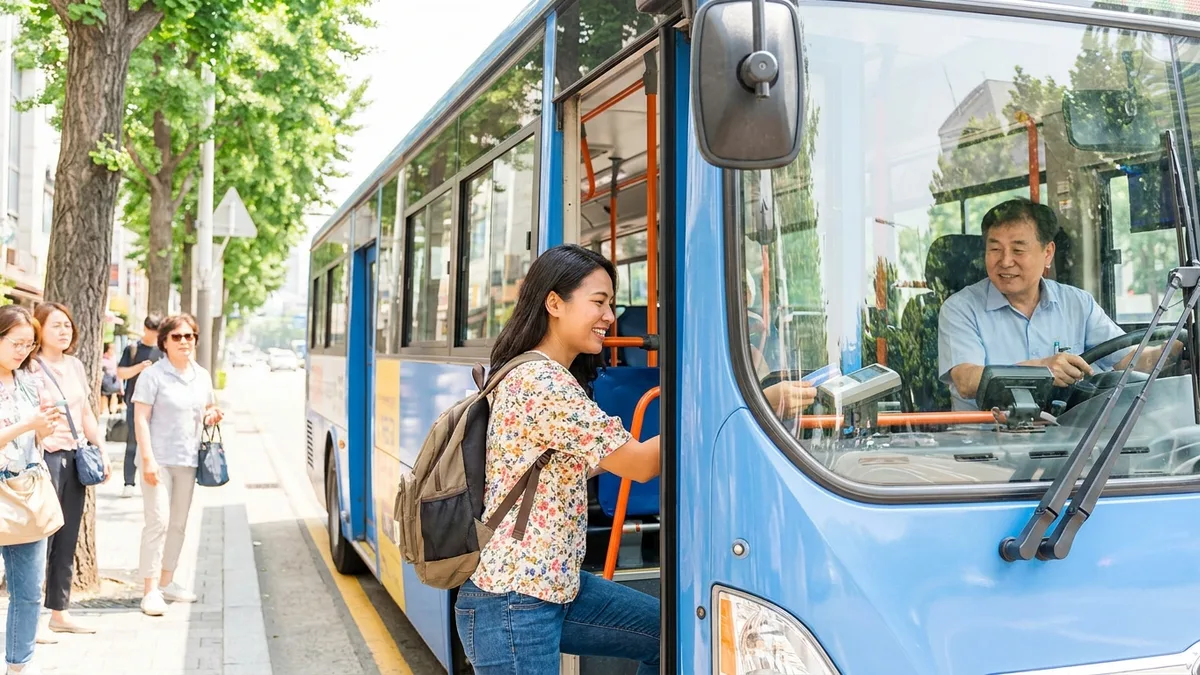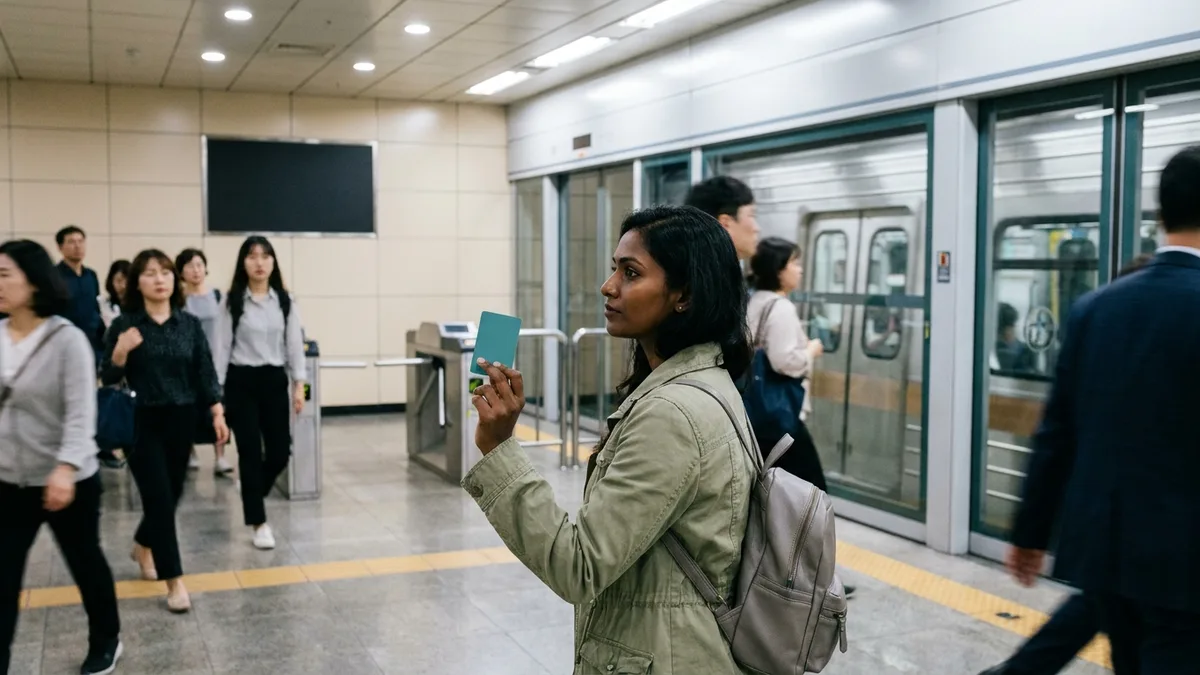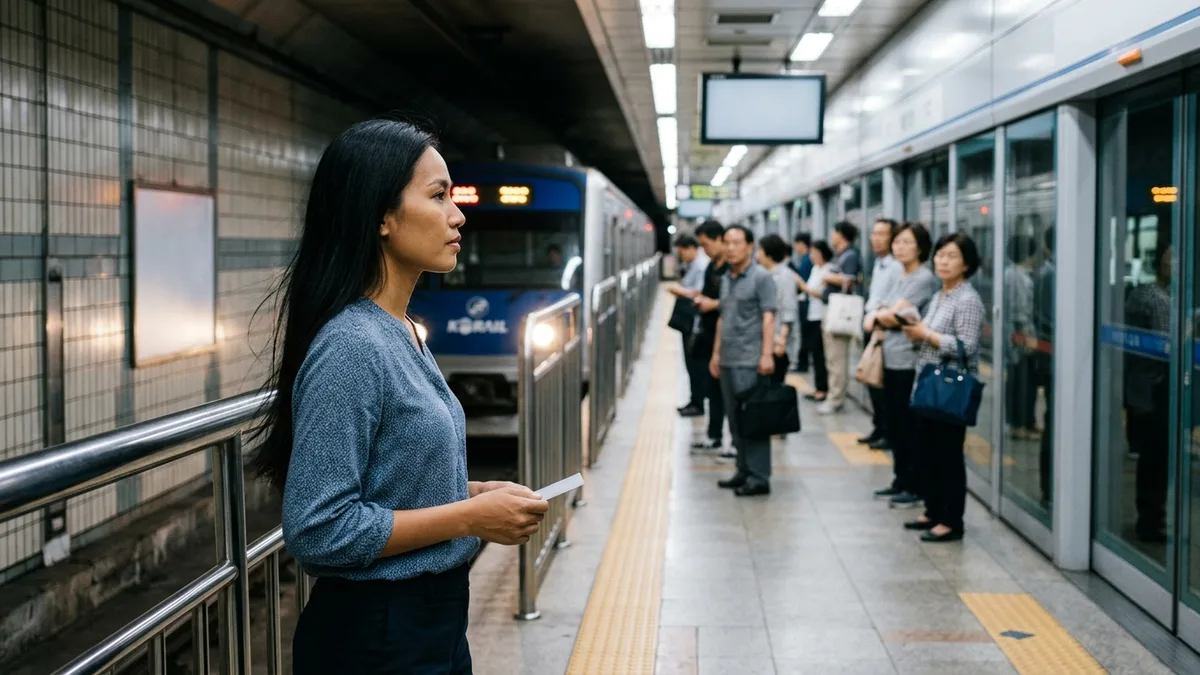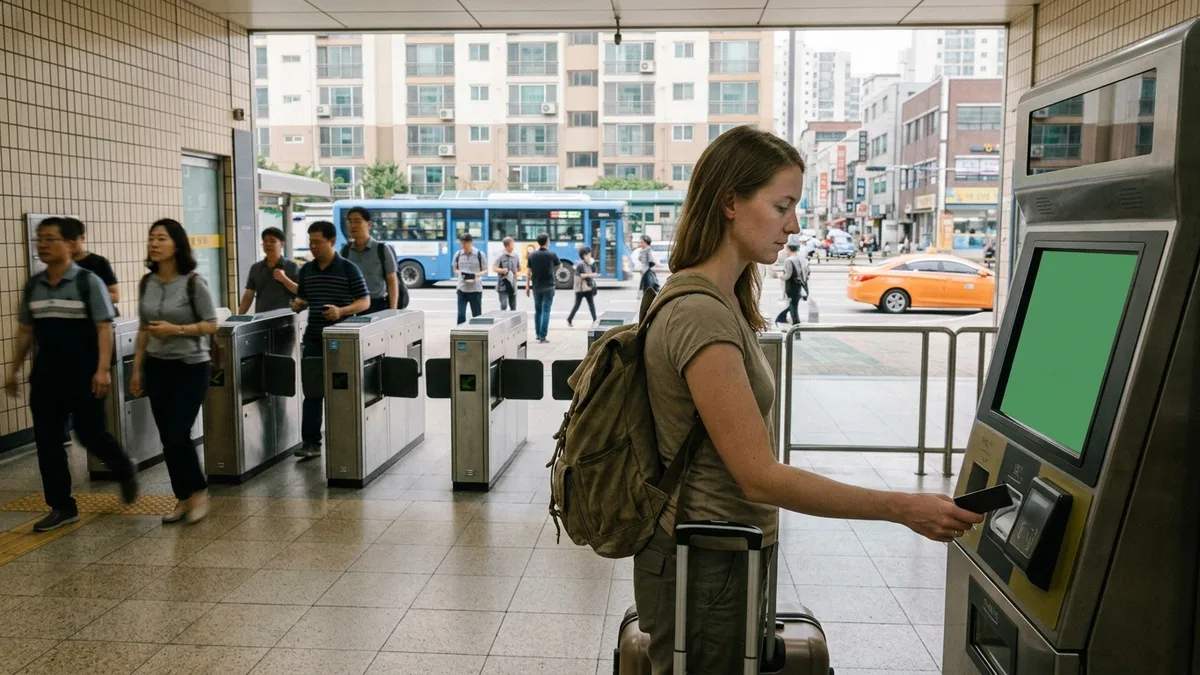
In Seoul, you don't pay the base fare again when you switch from the subway to a bus, or from a bus to a village bus. Up to 4 transfers (5 rides total) are counted as one continuous trip. But make the same journey in Busan, and a new fare kicks in from the third vehicle you switch to. Busan caps it at 2 transfers (Busan BIMS general transfer guidance, accessed 2026-08-25).
Lined up as numbers, here's how it splits: Seoul and the greater metro area allow 4, Busan 2, Daegu 2, Daejeon 3 (but only 1 of those on the subway), and Gwangju has no limit at all. All five cities share a similar "30 minutes after alighting" time standard, yet the transfer counts and surcharges diverge this much.
There's a reason this difference stays invisible to foreign visitors. A great many English-language guides to traveling and living in Korea teach it in a single sentence: "In Korea, transfers are free anywhere if you do it within 30 minutes." Koreans learn their own city's rules through daily habit, but foreigners learn the whole country from one English guide and travel accordingly. That's usually why your card balance doesn't match expectations the day after you move cities by KTX.
It's not that the card doesn't work. T-money works on the subway in 7 cities and provinces (Seoul, Gyeonggi, Incheon, Daejeon, Daegu, Busan, Gwangju) and on buses in all 17 cities and provinces nationwide (T-money transit usage guidance, accessed 2026-08-25). Separate these two issues first: card compatibility and transfer rules are entirely different things.
Note: The transfer rules and fares in this article are organized as of an access date of 2026-08-25, based on materials published by the Seoul Metropolitan Government, the Busan Metropolitan City Bus Information Management System (BIMS), the Daegu Metropolitan City Bus Information System, Daejeon Transportation Corporation, and Gwangju Bus Operation Information. These change frequently by local government notice, and some items conflict between agencies, so please re-check each city's official guidance before you travel.
The Card Works Nationwide, but the Rules Differ by City
Let's start with the good news. Using one card across multiple cities really does work. Nationwide transit card compatibility (One Card All Pass) was pushed by the Ministry of Land, Infrastructure and Transport starting in 2007 and officially launched on June 21, 2014, centered on T-money, Cashbee, and others. Onepass, the Daegu-area card, became compatible with the greater Seoul area on January 30, 2016, and can now be used on the metro-area rail network and the Busan and Gwangju subways.
But compatibility only guarantees "can I pay with this card." Whether a discount applies when you transfer, how many times it applies, and whether you pay extra depending on which direction you transfer — those are set separately by each city's own system. So a habit that worked perfectly in Seoul goes off by 50 KRW at a time in Daejeon, and breaks down entirely from the third transfer in Busan.
One more thing: some modes are genuinely excluded from the integrated transfer list. The Seoul Metropolitan Government's published list of services covered by the metro-area integrated transfer discount includes Seoul buses (trunk, branch, circular, wide-area, village), Incheon buses, Gyeonggi buses, all metro-area rail operators, AREX (Airport Railroad), the Shinbundang Line, GTX-A, and the Hangang Bus. Airport buses, intercity buses, and express buses are not on this list. It's safer to assume that if you get off an airport limousine and take the subway, you'll be charged a fresh subway fare.
Five-City Transfer Rule Comparison — Time, Count, and Surcharges
For each cell, we've noted which agency's guidance the value came from. Because each city's guidance page was updated at a different time, it's best to check the agency name along with the value when you cite it.
| City | Transfer window | Transfer count | Surcharge between modes | Source (accessed 2026-08-25) |
|---|---|---|---|---|
| Seoul & metro area | 30 min after alighting (60 min from 21:00 to 07:00 next day) | Up to 4 = 5 rides total | Beyond the 10 km base (30 km for wide-area buses), 100 KRW per 5 km | Seoul Metropolitan Government, "Integrated Transfer Discount System" |
| Busan | 30 min after alighting | 2 | Only the difference is charged, based on the highest fare among the modes used | Busan Metropolitan City BIMS, "General Transfer Guidance" |
| Daegu | 30 min after alighting | 2 | Transferring from a regular bus to an express or direct bus deducts the difference | Daegu Metropolitan City Bus Information System, "City Bus Fare Guidance" |
| Daejeon | 30 min from alighting (agency guidance conflicts — see note below) | 3, of which only 1 may be the subway | City bus → subway: 50 KRW (adult) / Village bus → subway: 200 KRW (adult) | Daejeon Transportation Corporation, "Transfer Fares" |
| Gwangju | 30 min after your first alighting | No limit | With Jeonnam rural and city buses, not free — a one-time 50% discount instead | Gwangju Bus Operation Information, "Transit Fares" |
Remember just two cells from this table: Daejeon's "3 transfers, only 1 on the subway" and Gwangju's "no limit." Neither is predictable if you only know the Seoul standard, and even materials that cover each city separately won't compare them side by side for you.
Caution: Agency guidance on Daejeon's transfer window is split. Daejeon Transportation Corporation states only "within 30 minutes from alighting," while the Daejeon Bus Transport Business Association says "on weekdays, routes with headways of 15 minutes or less get 30 minutes, and routes with headways of 16 minutes or more get up to 60 minutes." We were not able to confirm which is the current single standard. Plan around the shorter figure of 30 minutes, and if you intend to take a long break before transferring, check directly with Daejeon Transportation Corporation or the Daejeon City Public Transportation Division.
Seoul & Metro Area — 30 Minutes (60 at Night), Up to 4 Transfers, the Most Generous Standard
Of the five cities, the terms here are the most generous. If you tap on to your next mode within 30 minutes of the moment you tapped off the previous one, the transfer counts, and between 21:00 and 07:00 the next day the window extends to 60 minutes. It's a rule that accounts for wider headways in the late-night hours.
The count is capped at 4. Since that's four acts of transferring, you can actually ride five modes in a row. Subway → bus → subway → village bus → bus all counts as one trip.
Fares are calculated by distance. The base section is 10 km (30 km for wide-area buses), and beyond that, 100 KRW is added every 5 km. It's 80 KRW for youth and 50 KRW for children. This is where you see that "transfers are free" more precisely means "you don't pay the base fare again, only the distance difference." Even within the metro area, once you leave Seoul the bus fare table itself changes; we've laid out the amounts by bus type and the 30 km base-distance calculation in Gyeonggi & Incheon Bus Fares and How Transfers Are Calculated.
Here's what it looks like in numbers. If you ride 8 km on the subway and then 5 km more by bus, it's calculated as 13 km combined. The base fare covers the first 10 km, so you pay only 100 KRW more for the 3 km beyond it — you don't pay a whole new bus base fare.
The conditions that break it are just as clear. If you miss the tap-off, the transfer chain is cut, and switching to the same route or the same vehicle was never eligible for the discount in the first place. Detailed calculations and the pitfalls that only apply inside Seoul are covered separately in the Seoul Transfer Discount Guide.
Busan — 30 Minutes, 2 Transfers, "Same Route Reboarding," and a 0 KRW Wide-Area Transfer Fare
Busan matches Seoul on time but halves the count. The discount applies within 30 minutes of alighting and for up to 2 transfers only. The third vehicle you switch to gets no discount.
There's one more condition unique to Busan. Even if you rode a different route in between, the same route doesn't count as a transfer. So Bus A → subway → Bus A again means that last Bus A isn't a transfer. The instinct you picked up in Seoul — "just slip another mode in between" — breaks down here.
The fare calculation method is a bit different too. Busan applies the highest fare among the modes you used as the base fare and collects only the difference. If you start with a cheaper mode and switch to a pricier one, having the difference deducted is normal.
Heading out of the city is actually to your advantage. Busan's wide-area transfer fare is 0 KRW for adults, youth, and children alike, and it covers Busan buses, Gimhae buses, Yangsan buses, and the Busan subway. That said, the same 30-minute window and 2-transfer cap apply to wide-area transfers as well. Fares and payment options within Busan are covered in the Busan Transportation Guide.
📌 Important: In Busan, the transfer discount applies only if adults use adult cards, youth use youth cards, and children use children's cards. If you're traveling with a child and tap them through on an adult card, the discount disappears entirely. The discount also doesn't apply to cash payments, missed tap-offs, or boarding with an insufficient balance.
Daegu — 30 Minutes, 2 Transfers, Extended to Gyeongsan and Gumi but Conditional on Tapping Off
Daegu gives you up to 2 free transfers within 30 minutes of alighting. The count matches Busan, but the coverage area is noticeably wider.
That's because eligible transfers aren't limited to Daegu city buses (excluding the same route) and the subway — they also include the Daegyeong Line and the city buses of 8 cities and counties: Gyeongsan, Yeongcheon, Cheongdo, Goryeong, Seongju, Gumi, Gimcheon, and Chilgok. The Daegu-area wide-area transfer system and the Daegu-area regional railway (Daegyeong Line) launched together on December 14, 2024. The Daegyeong Line runs from Gumi through Waegwan, Seodaegu, and Dongdaegu to Gyeongsan.
In exchange, the conditions are strict. Three of them are spelled out in the official guidance.
- You must tap your transit card on the rear-door reader when getting off. If you don't tap off, the transfer doesn't register.
- You must use the same card to board and to alight. Tapping with your phone on the way in and a physical card on the way out doesn't work.
- Transfer benefits apply to one person per card only. Passing a card around within your group means no discount.
Fares are 1,500 KRW on a regular adult transit card (1,700 KRW cash) for regular buses, and 1,950 KRW on an adult transit card (2,200 KRW cash) for express and direct buses (effective February 24, 2025). Transferring from a regular bus to an express or direct bus deducts the difference. You can find the fare structure of the Daegu subway and the Daegyeong Line separately in the Daegu Subway & Daegyeong Line Guide.
Tip: The Daegu Comprehensive Transportation Information page notes that tapping the subway exit reader twice more than 3 minutes apart triggers a new fare. However, the fare table on that same page hasn't been updated, so we couldn't confirm its reliability (tentative, official confirmation needed). If you're in the habit of tapping your card twice at the gate, it's safer to switch to tapping just once.
Daejeon — 3 Transfers but Only 1 on the Subway, and What That 50 KRW Bus→Subway Charge Really Is
Daejeon allows 3 transfers, second only to Seoul. But there's a catch: only 1 of those 3 may be a subway transfer. That means an itinerary that slips the subway in twice simply doesn't work in Daejeon.
On top of that, Daejeon is the only one of the five cities that adds a flat surcharge (50 KRW or 200 KRW) in the bus → subway direction. Busan and Daegu also deduct the difference when you move up to a pricier mode, but that's a settlement based on the fare gap, so the amount varies by route. In Daejeon, the amount is set in advance by direction and mode.
| Transfer direction | Adult | Youth | Child |
|---|---|---|---|
| City bus → Subway | +50 KRW | 0 KRW | 0 KRW |
| Subway → City bus | 0 KRW | 0 KRW | 0 KRW |
| Village bus → Subway | +200 KRW | +230 KRW | +250 KRW |
Compare the first and second rows. The same two modes, but just reversing the order changes the amount. The reason is difference-based settlement. Daejeon's city bus adult transit card fare is 1,500 KRW and the subway Section 1 adult transit card fare is 1,550 KRW, so only the 50 KRW gap is collected. In the opposite direction, you've already paid the pricier fare, so it's 0 KRW.
Subway fares themselves are zone-based. Section 1 (within 10 km of your starting station) is 1,550 KRW by adult transit card and 1,700 KRW for a single-journey ticket; Section 2 (over 10 km) is 1,650 KRW by adult transit card and 1,800 KRW for a single-journey ticket. Youth transit card fares are 880 KRW and 960 KRW; children's transit card fares are 550 KRW and 600 KRW.
Keep the third row in mind separately. When transferring from a village bus to the subway, youth and children aren't exempt — in fact, they pay more than adults. If you often ride village buses with kids in Daejeon, it's worth checking your card balance movement once to see it for yourself.
Daejeon also requires you to tap both the boarding and alighting readers for a free transfer, doesn't allow transfers between the same route, and applies the one-card-per-person principle. Cash payments aren't eligible for the transfer discount. To look at the Daejeon and Gwangju subway fare tables in detail, see the Gwangju & Daejeon Subway Fare and Transfer Guide as well.
Gwangju — No Transfer Limit but a 30-Minute Clock, Plus the Administrative Reorganization of July 2026
In Gwangju, transferring between city buses, the subway, and village buses within 30 minutes of your first alighting is free, and there's no cap on the number of transfers. Gwangju is the only one of the five cities compared here with no transfer limit.
The fact that the time standard is "first alighting" matters. The guidance states that the 30 minutes doesn't restart with each transfer — it runs 30 minutes from the moment you first got off. Freedom on the count comes with tighter time.
Crossing city boundaries changes the terms. The wide-area transfer discount with nearby Jeonnam rural and city buses has been in effect since July 19, 2013, but it's not free — it's a 50% discount off the transit card fare (630 KRW for adults), limited to one transfer within 30 minutes of your first alighting. It applies only when entering or leaving the Gwangju boundary, and you have to tap off every time you get off.
Fares have stayed put for a long time. The adult city bus fare in Gwangju is 1,250 KRW by transit card and 1,400 KRW in cash, frozen since 2016. A proposed increase to 1,500 KRW by card starting in June 2026 was withdrawn on April 3, 2026, and pushed to a second-half review. Since the fare table on the official page itself is still labeled with 2016 figures, if you're planning a large outlay, double-check the current status on Gwangju Bus Operation Information.
And the administrative districts changed. With the official launch of Jeonnam-Gwangju Integrated Special City on July 1, 2026, Gwangju Metropolitan City and Jeollanam-do were abolished, and Jeonnam's 22 cities and counties merged with Gwangju's 5 districts into a single wide-area local government. The enabling legislation passed the National Assembly on June 24, 2026.
📌 Important: Although the administrative districts merged, transit fares and the transfer system are still operating under the previous standard for Gwangju's 5 districts. Only the name of the official bus information site changed, to "Jeonnam-Gwangju Integrated Special City Bus Information," while the fare and transfer guidance content stays the same. When and how the fare systems of Gwangju's 5 districts and Jeonnam's 22 cities and counties will be merged hasn't been confirmed yet. Even if map apps or English-language materials mix "Gwangju" and "Jeonnam-Gwangju Integrated Special City," you can assume the fare on the bus you're riding today hasn't changed.
Walls That Only Trip Up Foreigners — Cash, Tap-Off, Age-Specific Cards, One Card Per Person
If everything up to here was about differences in the systems, from here on it's about losses that almost never happen to Koreans and happen only to foreigners.
First, cash. Many people end up paying cash because topping up a transit card with an overseas-issued card is blocked — and in all five cities compared, cash payments get no transfer discount. Not being able to get a card converts directly into a fare loss. If you're stuck at the top-up stage, start with Topping Up a Transit Card with a Foreign Card.
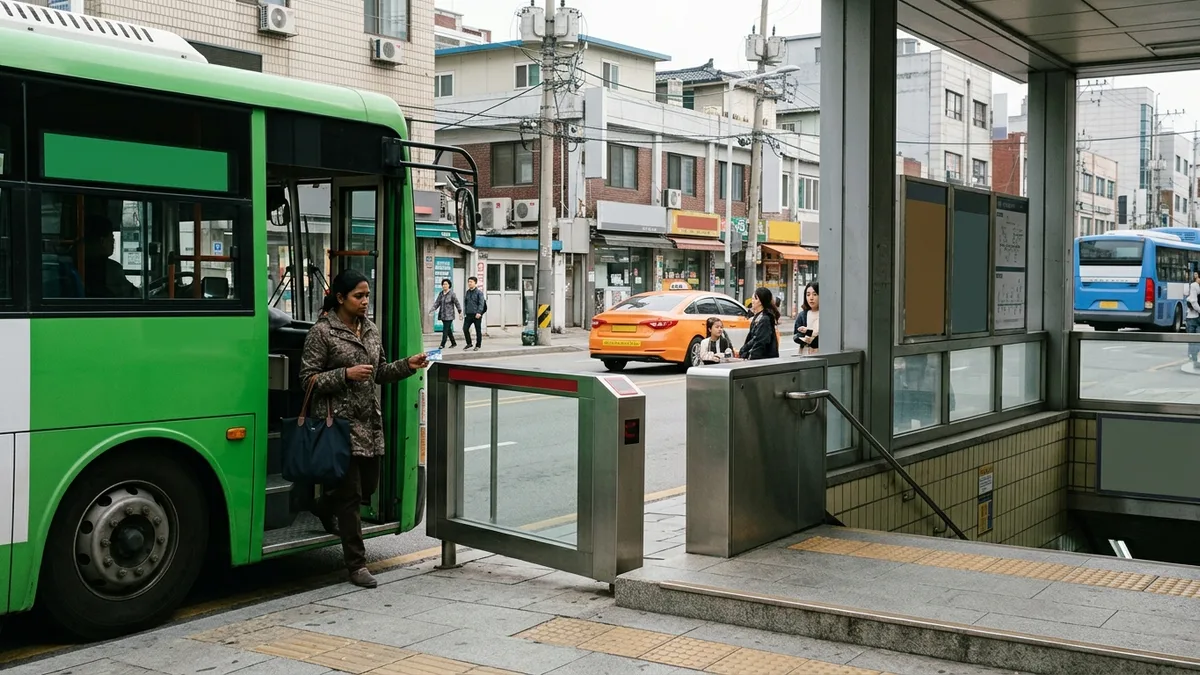
Second, tapping off. Tapping the rear-door reader again when getting off a bus is a completely unfamiliar procedure for anyone from a country without that habit. And the consequences of missing it differ by city.
| Where you missed it | What happens |
|---|---|
| Seoul city bus (flat-fare section) | No extra charge, but the transfer chain is broken |
| Busan | A missed tap-off isn't eligible for the transfer discount |
| Daegu | Tapping the rear-door reader is a condition for the transfer to register |
| Daejeon | You must tap both the boarding and alighting readers for a free transfer |
| Gwangju | Wide-area transfers require a tap every time you get off |
There's one thing we left out of the table and want to note separately. On routes with distance-based fares, like metro-area wide-area buses, it's reported that missing the tap-off does more than break the transfer chain — it adds a surcharge equal to "maximum fare − base fare." That said, the only evidence we could obtain was secondary sources, so we left it out of the table above (based on secondary sources, agency confirmation needed). Regardless of the amount, it's safest to make a point of tapping off on wide-area buses.
Third, card type and number of people. Just gathering the conditions spelled out in official guidance gives you this much.
| Condition | Which city states it | If you break it |
|---|---|---|
| Age-specific dedicated cards | Busan — use adult, youth, and children's cards respectively | Transfer discount doesn't apply |
| One person per transit card | Daegu, Daejeon | No transfer benefit is applied |
| Same card for boarding and alighting | Daegu | The transfer doesn't register |
| Same-route reboarding excluded | Seoul, Busan, Daegu, Daejeon (couldn't confirm in Gwangju's official guidance) | A new base fare is charged |
"Tapping several people through on one card" is especially common on foreign group trips, but Daegu's and Daejeon's official guidance nails down one card per person. Splitting up cards to match your headcount ends up cheaper. The usage range of each card is covered in Nationwide Transit Card Compatibility Explained.
Fourth, the ways to buy tickets close off differently by city. In Seoul, since March 2026 you can buy tickets at subway ticket machines with an overseas credit card, but ticket machines at Busan subway stations take cash only (verified in-house as of 2026-08). We also couldn't confirm whether ticket machines at Daegu, Daejeon, and Gwangju stations accept overseas-issued cards — you'd need to check directly with each city's subway operator. Methods that worked in Seoul don't work outside it, and almost no English-language guidance tells you this in advance.
On the day you move cities, what you need to check on your first ride comes down to four things. Do them in order and no fare will leak that day.
- First, check that your card has a comfortable balance. In Busan, an insufficient balance means no transfer discount at all.
- If you're with others, hand out one card per person. Daegu and Daejeon are one person per card.
- When getting off a bus, tap the rear-door reader exactly once. In Daegu, this is a condition for the transfer to register.
- Count out that city's transfer cap in advance. Busan and Daegu 2, Daejeon 3 (1 subway), Seoul 4.
One last thing to add. If your card doesn't read and you just walk through anyway, it can be treated as fare evasion. Article 10 of the Railroad Business Act (Collection of Additional Fares) allows collection of an additional fare of up to 30 times the fare for the section ridden, on top of the fare itself.
The same goes for the subway. The equivalent applies through each operator's terms of carriage, based on Article 32 of the Urban Railroad Act (Urban Railroad Transport Terms and Conditions). If the gate doesn't open, don't just walk past — speak to a station staff member first.
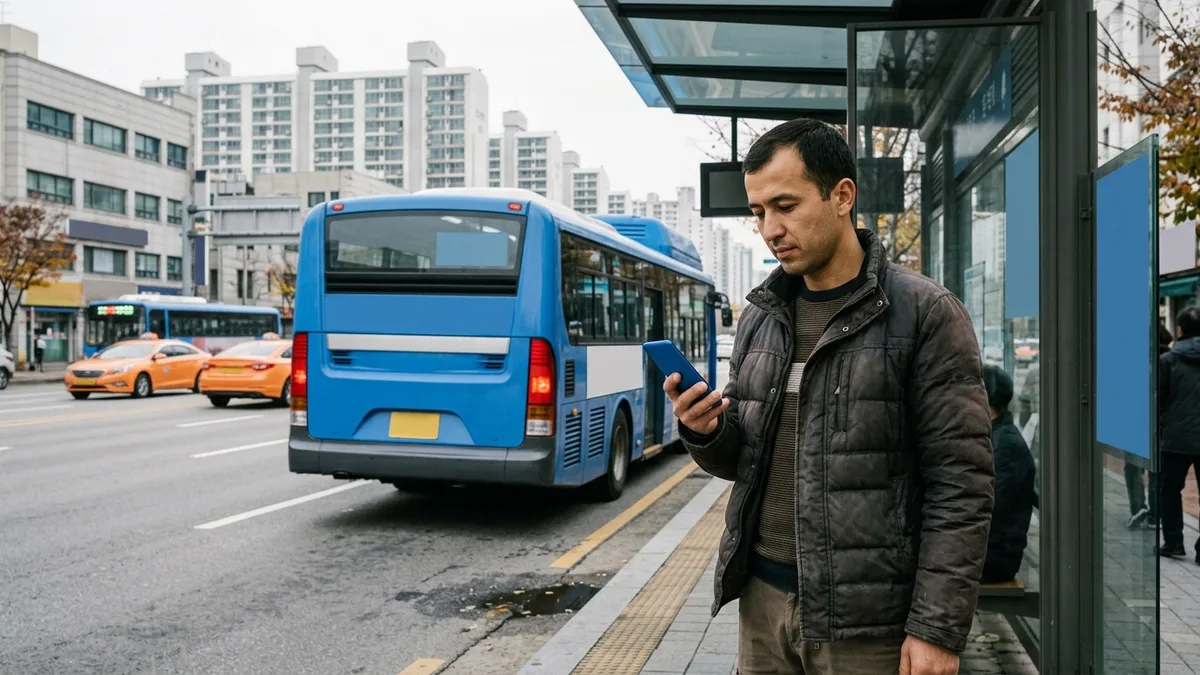
The moment the rules change is usually right after you move cities. The first bus or taxi you take after stepping off a KTX or express bus is the first test of the new rules. LACHA is a transportation and payment super app for foreigners that you can use right away without identity verification. You can start with just your passport — no Korean bank account or phone number needed — and book KTX and express bus tickets, hail a taxi at your destination, and use a transit card all from the same wallet. That said, the transfer time and count rules in the city you arrive in follow that city's standards exactly, so we recommend saving the comparison table above before you move.
Want to search and book KTX and express buses in one app? Check out LACHA.
Built to work without a Korean phone number or bank account, with overseas payment methods like Alipay, WeChat Pay, and Apple Pay. Taxi hailing plus KTX, express bus, and airport railroad (AREX) booking — all in one app.
Up to 60% off Korea transit with a coupon (max ₩3,000): enter code at sign-up. KTX gets up to 18% off on top
Download now


Frequently Asked Questions (FAQ)
Q1. Does the "30 minutes, 4 transfers" rule I learned in Seoul work in other cities? The time is roughly similar, but the count doesn't carry over. Seoul and the metro area allow up to 4 (5 rides total), while Busan and Daegu allow 2, and Daejeon allows 3 with only 1 of those on the subway. Only Gwangju has no transfer limit (each city's official guidance, accessed 2026-08-25). If you run a four-transfer itinerary built for Seoul in Busan, a new base fare kicks in from the third transfer.
Q2. Can I tap several people through on one transit card and still get the transfer discount? Not in Daegu or Daejeon. Both cities' official guidance states that transfer benefits apply to one person per transit card. Busan adds that adults, youth, and children must each use their own dedicated card type. We couldn't confirm Seoul's rules on multi-passenger tapping (unconfirmed), so it's safer to give everyone in your group their own card.
Q3. My foreign card wouldn't top up, so I paid cash. Can I still get the transfer discount? No. In all five cities compared, cash payments aren't eligible for the transfer discount. Busan also states that the discount doesn't apply if you boarded with an insufficient balance. Securing a top-up method first is the surest way to prevent fare losses.
Q4. Is Daejeon's transfer window 30 minutes or 60? Agency guidance is split. Daejeon Transportation Corporation says "within 30 minutes from alighting," while the Daejeon Bus Transport Business Association says "on weekdays, routes with headways of 15 minutes or less get 30 minutes, and routes with headways of 16 minutes or more get up to 60 minutes." We couldn't confirm which is the current single standard, so plan around the shorter figure of 30 minutes, and if you frequently ride routes with long headways, check directly with Daejeon Transportation Corporation or the Daejeon City Public Transportation Division.
Q5. I heard Gwangju Metropolitan City ceased to exist in July 2026 — did fares or transfers change too? On the transit side, nothing changed. Gwangju Metropolitan City and Jeollanam-do were abolished with the launch of Jeonnam-Gwangju Integrated Special City on July 1, 2026, but the fare and transfer system still operates under the previous standard for Gwangju's 5 districts. Only the name of the official bus information site changed; the guidance content is the same. However, whether — and if so when — the fare systems of Gwangju's 5 districts and Jeonnam's 22 cities and counties will be merged hasn't been confirmed yet.
Note: This article is intended for general information purposes. The transfer rules, fares, and effective dates in the text are as of 2026-08 (sources accessed 2026-08-25), verified from the Seoul Metropolitan Government's Integrated Transfer Discount System, the Busan Metropolitan City Bus Information Management System (BIMS), the Daegu Metropolitan City Bus Information System, Daejeon Transportation Corporation, Gwangju Bus Operation Information, and T-money's usage guidance. Daejeon's transfer window (conflicting between agencies), Daegu's rule on re-tapping the exit reader, the last update date of Gwangju's fare table, and whether ticket machines in regional cities accept overseas cards could not be confirmed, and are marked as tentative or unconfirmed. Public transit fares and transfer rules change frequently by local government notice, so be sure to re-check each city's official guidance before you travel. LACHA does not operate or modify any city's transfer discount system.