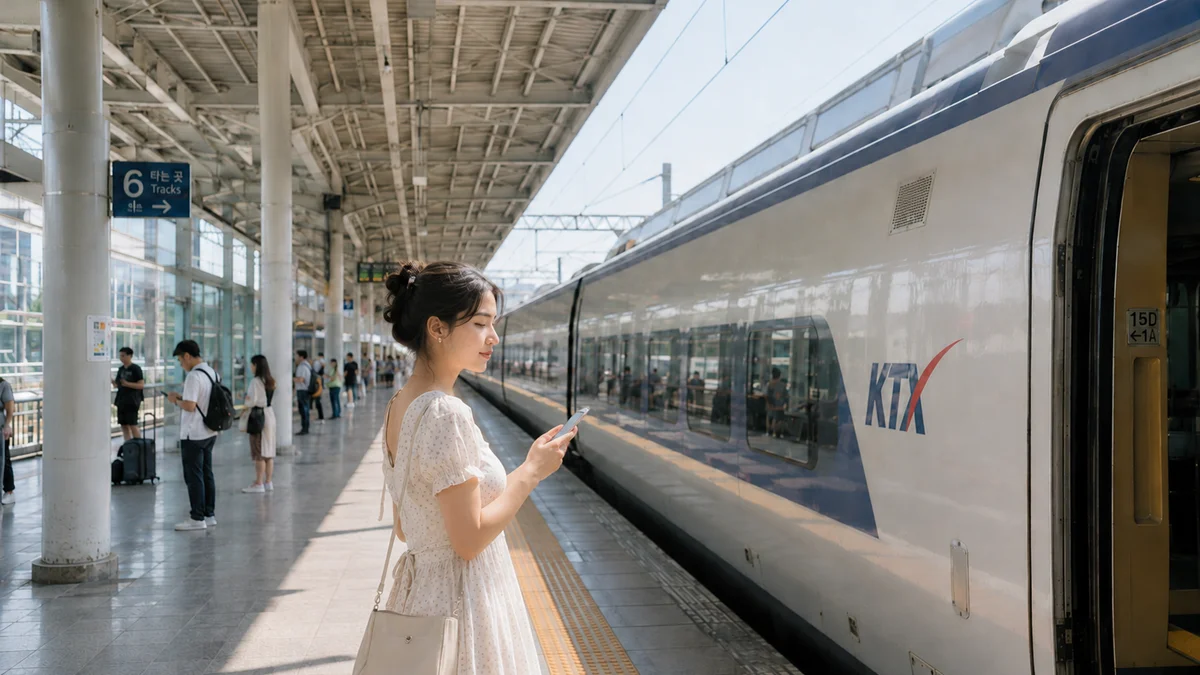

Have you ever walked out through the ticket gates after your train arrived an hour late, with no announcement and no apology text? Korea has a system that refunds part of the fare when a train runs late. But the conditions and where you claim are spelled out in quite fine detail.
The threshold is 20 minutes. If the delay is shorter than that, there's nothing to get back no matter how inconvenient it was, and even past 20 minutes, it doesn't count unless the delay was the operator's fault. Express buses measure it in a completely different way, judging not by minutes but by the ratio to the estimated travel time. So if you head to the terminal thinking "It was two whole hours late, so of course I'll be compensated," you may leave empty-handed.
Timing adds another wrinkle. On August 1, 2026, the rail delay compensation bands were split into five; on August 3, the booking app was renamed Korail+ (formerly KorailTalk); and on September 1, KTX and SRT were merged. That's why the older guidance you find through search doesn't match what you see on screen now.
Note: The compensation rates, deadlines, and counters below are summarized as of 2026-09 from Korea Railroad Corporation's Passenger Transport Terms (여객운송 약관) and its Customer Service Charter performance standards, the Fair Trade Commission's Consumer Dispute Resolution Standards notice, the Express Bus Transport Terms, and the Ministry of Government Legislation's Easy-to-Find Practical Law service. Compensation rules are set in terms that the carriers draw up and file themselves, so they can change without notice. Before you claim, check the current terms again on Korail (info.korail.com) and Kobus, the express bus integrated booking site (kobus.co.kr).
20 Minutes Is the Threshold — Shorter Delays Get You Nothing Back
Article 15(1) of Korea Railroad Corporation's Passenger Transport Terms is the root of this system. If, due to the Corporation's fault, your train arrives 20 minutes or more after the destination arrival time printed on your ticket, you can submit that ticket at a station within 1 year from the day you rode and claim the amount set in the Consumer Dispute Resolution Standards. "Station" here means any station except minor stations (간이역) and ticket sales agencies.
Hold on to two numbers first: 20 minutes and 1 year.
The punctuality target Korail set for itself is tighter. Its Customer Service Charter performance standards say: "We will operate passenger trains so that KTX trains are not 5 minutes or more behind the scheduled time, and other passenger trains not 10 minutes or more behind." The company's target is 5 minutes, but the threshold for getting money back is 20 minutes, so delays of 5 to 19 minutes are not eligible for compensation.
When the clock starts is also defined. Article 15(2) of the terms says that before your journey begins, the reference is the departure time from the departure station printed on the ticket, and after it begins, the arrival time at the destination station (for transfer tickets, the destination station of each leg). That means even if the train stood at an intermediate station for 30 minutes, it doesn't qualify if it still arrived at the time printed on the ticket.
The threshold also depends on what you rode. The performance standards give 20 minutes or more for KTX and conventional trains, 30 minutes or more for the last train on electric commuter lines (전동열차), and 3 hours or more for dedicated contract freight trains.
Compensation Rate Table — From August 2026, Delays of 120 Minutes or More Get the Full Fare
The appendix table of the Passenger Transport Terms effective August 1, 2026 (amended June 30, 2026) split the delay bands into five. High-speed trains and conventional trains both use the same table.
| Delay | Terms effective August 1, 2026 | Consumer Dispute Resolution Standards notice |
|---|---|---|
| 20 min or more, under 40 min | 12.5% of the fare | 12.5% of the fare |
| 40 min or more, under 60 min | 25% of the fare | 25% of the fare |
| 60 min or more, under 90 min | 50% of the fare | 50% of the fare |
| 90 min or more, under 120 min | 75% of the fare | 50% of the fare |
| 120 min or more | 100% of the fare | 50% of the fare |
A Korail press release confirms the same change: "Previously, a flat 50% of the fare was paid as compensation for trains delayed 60 minutes or more, but from this month, 75% of the train fare is paid for delays of 90 minutes or more, and the full fare for delays of 120 minutes or more."
Here's why the two columns differ. The Consumer Dispute Resolution Standards are a Fair Trade Commission notice (No. 2025-14, issued and effective December 18, 2025), and Article 16(3) of the Framework Act on Consumers says these standards apply "only where the parties to a dispute have not separately expressed an intention regarding how to resolve the dispute." The Ministry of Government Legislation's Easy-to-Find Practical Law service also explains that buses and trains follow each carrier's own terms, and the Consumer Dispute Resolution Standards are used only when those terms have no applicable provision. So when the terms are more favorable than the notice, the terms win.
The percentages in the table are based on the fare (운임), so charges (요금) such as the first-class surcharge may be left out of the calculation. High-speed rail guidance has also long stated that the first-class surcharge is not included in the compensation amount. That's why we give only the rates here rather than won amounts for each band. How fares and charges are split is covered in KTX seat classes, discounts, and refund rules.
With KTX and SRT operating as one service from September 1, 2026, SRT was renamed KTX-Sancheon. Passenger and sales services follow the existing Korail standards, so even if you rode a former SRT route, the table above is the one to use. For the differences before and after the integration, see SRT vs KTX: what changes for foreigners.
'Compensation' and 'Refund' Are Different Money — When You Give Up the Trip and When the Train Never Runs
The two concepts keep getting mixed up. Delay compensation means getting part of the fare back when you did ride but arrived late; a refund means getting back what you paid when you didn't ride at all.
If the train is delayed 20 minutes or more before departure, you have two options: ride anyway and get compensated for the late arrival, or give up the trip and get your money back. Article 15(3) of the terms says that a person who gives up the trip because of a delay of 20 minutes or more before the journey begins gets a full refund of the fare and charges, notwithstanding Article 14, which sets cancellation penalties. Normal refunds come with a penalty (the minimum penalty and minimum fee in the appendix table are ₩400, and they rise the closer it gets to departure time), but in this case the penalty is waived entirely.
When the train doesn't run at all, the math is different again. Article 16(1) of the terms uses the time the suspension was posted at stations, on the website, and elsewhere as the reference point. The terms themselves only word the second and third bands as "between 1 and 3 hours" and "after 3 hours," so they don't settle which band a train departing exactly 3 hours later falls into. That's why the boundaries in the table below follow the Customer Service Charter performance standards, which say "1 to within 3 hours" and "more than 3 hours."
| Suspension situation | What you get back |
|---|---|
| Train scheduled to depart within 1 hour of the posting time | Full refund + compensation of 10% of the amount paid |
| Train scheduled to depart more than 1 hour and up to 3 hours after the posting time | Full refund + compensation of 3% of the amount paid |
| Train scheduled to depart more than 3 hours after the posting time | Full refund (no compensation) |
| Suspended after the train had already departed | Refund of the fare and charges for the section you couldn't use + compensation of 10% of that section's fare and charges |
The later they tell you, the more they pay. If they announce it 10 minutes before departure, you get 10%; if they announce it half a day ahead, you get a refund with no compensation. There's a catch, too. If they put on a replacement train or arrange other transport and complete the connecting transport, there's neither a refund nor compensation (proviso to Article 16(1)). Whether to use the alternative transport is up to the passenger. If the suspension is caused by something that isn't the Corporation's fault, such as a natural disaster or severe weather, you get a refund only, with no compensation (Article 16(2)). For reference, Article 11(2) of the terms sets a ticket's validity as running until the arrival time at the destination station, extended by the length of any delay.
When There's No Compensation — Natural Disasters, Emergency Aid, and 'Tickets Bought Knowing About the Delay'
The line "If it's 20 minutes or more late, you always get paid" gets passed around online a lot. The actual terms aren't that generous. The proviso to Article 15(1) nails down the cases where no compensation is paid.
- Disasters caused by natural calamities or severe weather
- Rescue and aid measures for emergency patients and casualties on the train
- Measures taken for train safety, such as in response to terror threats
All three are situations that are hard to treat as the Corporation's fault. Tracks flooded by torrential rain, or waiting for paramedics after a passenger collapses, fall into this category.
The terms effective August 1, 2026 added a fourth reason: a ticket bought knowing the train was already delayed. Article 9(4) says that if, before a ticket is issued, the train is already delayed by 20 minutes or more or a delay is expected, the Corporation may issue the ticket on the condition that no compensation will be claimed, and a passenger's agreement to this was added to the exclusions in Article 15(1).
Caution: If the booking screen or the counter asks you to agree to "no delay compensation," don't just skip past it. Once you agree, that ticket isn't eligible for compensation no matter how late the train runs. The former SRT gave the same kind of notice: "Tickets for which 'no delay compensation' was agreed to are not compensated."
There's also one exemption that catches only foreigners. The foreigner-only KORAIL PASS is excluded from delay and suspension compensation altogether. Article 10(6) of the "Terms on the Use of KORAIL PASS" attached to the Passenger Transport Terms states: "When traveling with a KORAIL PASS, the Corporation is not responsible for interruption of travel en route, train delays, or service suspensions." Article 8(4) of the "Terms on the Use of Free Travel Passes," which apply to Naeilro, uses the same wording.
The exception is when trains stop because of the Corporation's fault or a natural disaster. With a KORAIL PASS, if train service is completely suspended and you couldn't use the pass within its validity period, you can claim a refund of the full amount paid from the designated place of purchase within 1 year from the pass's start date (Article 10(4)). Free Travel Passes such as Naeilro work differently (Article 8(2)). A pass you ride without a separate seat reservation (including standing/free-seating tickets) gets no refund; its validity is only extended by the number of days you couldn't use it because service was completely suspended. A pass that requires a seat reservation lets you claim a refund within 1 year from the start date if a service suspension kept you from using your seat reservation, but the base fare of any seat reservations you've already used is deducted. However, these attached terms don't appear in the full-text PDF of the terms effective August 1, 2026, so whether they still apply as written needs confirming. If you hit a major delay while using a pass, ask the rail customer center before you give up.
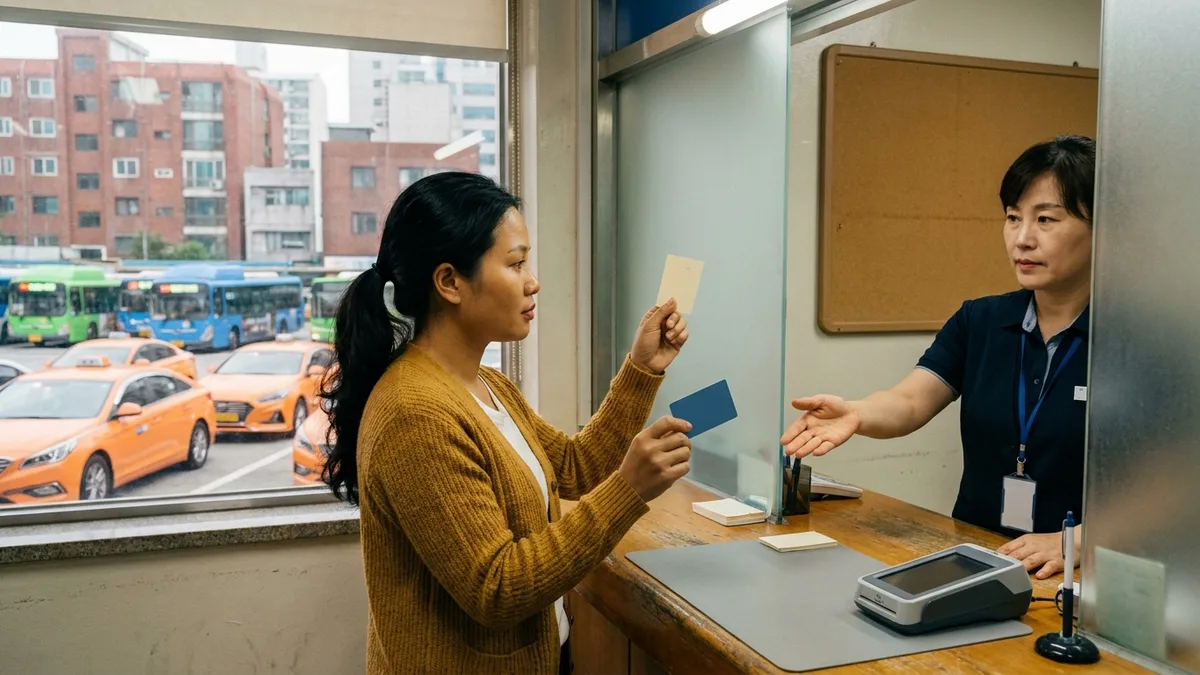
How the Money Comes Back Depends on How You Paid
Since August 1, 2021, Korail delay compensation has been an automatic refund. For tickets bought with a credit card or mobile payment (간편결제), the compensation is returned to that payment method the next day without any application. At the same time, the old delay discount voucher (지연할인증) was abolished, so there's no longer a step where you choose between cash and a discount voucher. Korail said that after the change, the refund rate rose from an average of around 60% to about 95%.
The problem is cash. For tickets bought with cash, you can only receive the money after you register your bank account details on the Korail website. This is where foreigners get stuck most often.
| Payment method | How you receive compensation | Where foreigners get stuck |
|---|---|---|
| Credit card / mobile payment | Returned automatically to that payment method the next day, no application needed | Whether overseas-issued cards and foreign mobile payments work the same way still needs checking |
| Cash | Deposited only after you register account details on the Korail website | Without a Korean bank account, this route is effectively closed |
| Mileage / points | No cash refund; the payment is canceled instead | The money doesn't come out anywhere other than the method you paid with |
The last row comes from Article 17(1) of the terms. For tickets paid with a credit card, mileage, or points, the fare and charges are not refunded in cash; the payment is canceled instead. If you bought with a card, the money only goes back to that card.
Equipment problems (not just delays) work the same way. Korail compensates 25% for the affected section if you can't use your seat because of a vehicle breakdown or faulty equipment, and 50% if the air conditioning is faulty. Since April 2022, purchases made by card or mobile payment are refunded automatically after the arrival time at the destination station, while customers who paid in cash or by mixed payment get a text message and collect it at a station counter within 1 year.
However, we couldn't confirm whether automatic refunds apply to overseas-issued cards and foreign mobile payments, whether bookings made without a membership are returned automatically, or whether the account you register must be a Korean bank account in the foreigner's own name. All three can decide whether your claim succeeds, so if any of them applies to you, ask the rail customer center first.
If you're stuck at the booking stage, start with how foreigners can book KTX without a Korean card and where the Korail app blocks foreigners.
Express Buses Use a Completely Different Standard — Not Minutes but a 'Ratio'
Where rail measures "how many minutes late," express buses measure how many percent longer the trip took than the estimated travel time. So the same 30-minute delay can lead to different results on a 1-hour route and on a 4-hour route. The basis is Article 15(4) of the Express Bus Transport Terms of the Korea Express Bus Transport Association (전국고속버스운송사업조합), effective May 1, 2025.
| Situation | Refund |
|---|---|
| The trip took 50% or more longer than the estimated travel time due to the operator's fault | 20% of the fare |
| The trip took 100% or more longer than the estimated travel time due to the operator's fault | 40% of the fare |
| Service canceled before departure | Refund plus an extra 20% of the fare |
| Trip not completed due to a breakdown or traffic accident en route | Refund plus an extra 20% of the fare |
| Couldn't board the assigned bus due to a system outage or other fault of the company | Refund plus an extra 20% of the fare |
On a route with an estimated travel time of 4 hours, the trip has to take 6 hours to reach 20%, and 8 hours to reach 40%. On a 2-hour route, 3 hours already puts you in the 20% band. Calculate it not as "how many hours late" but as "how many times the original duration it took."
The most disappointing clause comes right after. Article 15(5) of the same terms says the compensation provisions in paragraph 4 do not apply when a service is canceled or arrives late for the reasons in Article 8, that is, natural disasters, severe weather, road congestion, other force majeure events, and orders from government agencies.
Caution: Delays caused by road congestion are not eligible for compensation. Most express bus delays in Korea come from traffic, so cases that actually end in compensation are rare. Even if a holiday trip took eight hours, you can't claim if the cause was congestion, so managing your schedule, as covered in booking Seollal and Chuseok train tickets, is a more practical safeguard than compensation.
Express buses and intercity buses are separate businesses, so their standards differ too. The intercity bus item in the appendix to the Consumer Dispute Resolution Standards sets 10% of the fare for a delay of 50% or more of the normal travel time and 20% for 100% or more, lower than the express bus terms (20% and 40%). They share terminals and are easy to mix up, so use the express and intercity bus terminal guide to work out which one you actually rode.
There are calculation rules as well. Article 15(6) says that when calculating refunds and fees, amounts below the ₩100 unit are dropped, and Article 15(7) says the fare refund for a ticket issued with a credit card is made only by canceling the sale on that card.
There are also two things we couldn't confirm. There's no official definition of whether "estimated travel time" means the scheduled travel time or the measured average, and we couldn't find any guidance document setting out the procedure for claiming delay compensation (which terminal, which documents). The transport terms set only the refund standards, not how to claim. Before claiming, you'll need to check with the Kobus customer center at 1644-9030 or the departure terminal. If this is your first booking, see how to book an express bus in English.
How to Claim — The Station Counter, 1 Year, and Don't Throw Away Your Ticket
Let's start with rail and go step by step.
- Keep your ticket. The terms require you to "submit the ticket." If you throw it away because you've already passed the gates, you lose the basis for your claim.
- If you paid by card or mobile payment, wait a day. The money is returned automatically to that payment method the next day.
- If you paid in cash, register your bank account details on the website. Nothing is deposited until you do.
- If nothing arrives, go to a station counter. Minor stations (간이역) and ticket sales agencies are excluded.
- The deadline is 1 year from the day you rode. Compensation for suspensions works the same way.
Let's look a little more closely at step four. Article 2, item 3 of the terms defines a ticket sales agency as "a bank, travel agency, or similar business that has signed a ticket sales contract with the Corporation and sells rail tickets." In other words, even if you bought your ticket from a travel agency or a bank, you can't get compensation there; you have to go to a station counter in Korea.
If you need proof for your employer or school, Article 18(2) of the terms opens a path. When a train service is suspended or delayed, you can request a confirmation letter within 1 year (for Seoul-area subway and metropolitan rail lines, you can print a simple delay certificate (간편지연증명서) covering the last 7 days from Korail's subway app, 코레일 지하철톡, or the website; after that, you get a handwritten one at a station).
Express buses have even stricter counter rules. Article 9(5) of the transport terms says tickets issued at a terminal and internet tickets (home tickets, 홈티켓) can be canceled or changed only through the departure terminal (cancellation is possible until the assigned bus arrives). Only mobile tickets can also be handled in the mobile app.
📌 Important: When ticketing at an express bus counter, you must bring the credit card you used to book. Kobus guidance states plainly: "If you have lost the credit card used for the booking and do not know the card number, no change or cancellation of the ticket is possible." Refunds also go only to the card used at purchase, and you can't personally get a refund for a ticket bought with someone else's credit card. If you booked by bank transfer, the money goes back to the account it was withdrawn from at booking.
Here are the contacts in one place: Korail rail customer center (철도고객센터) 1588-7788 (ARS 24 hours, live agents 08:00 to 20:00), and the Kobus customer center 1644-9030 (for bus dispatch matters, the departure terminal). Former SRT inquiries were merged into 1588-7788 with the integration of Korail and SR on September 1, 2026.
Where Foreigners Get Stuck, and What Still Needs Confirming
The barrier in this system isn't the compensation rate; it's the procedure. Here are the points that catch foreigners in particular.
- Throwing away the ticket. People toss their used paper ticket right after the gates, but the terms say you have to submit it.
- No compensation on a KORAIL PASS. The irony is that the better prepared the traveler, the further they end up from compensation.
- Paying in cash with no Korean bank account. The account registration route is shut entirely.
- Claims limited to station counters. Even if you bought through an overseas travel agency, you have to go to a station counter in Korea.
- Paying with a friend's or company card. Express bus rules state you can't personally get a refund for a ticket bought with someone else's card.
- Express bus cancellations and changes only at the departure terminal. For a traveler who has already arrived in Busan, that door is effectively closed.
- Congestion delays aren't compensated. If you don't know Korean road conditions, you'll run into this at the terminal.
Language is another variable. Kobus (kobus.co.kr) offers a language menu in 4 languages: Korean, English, Chinese (中文), and Japanese (日本語), and the former SRT ticket site (etk.srail.kr) in 5: Korean, English, Simplified Chinese (中文(简)), Traditional Chinese (中文(繁)), and Japanese (日本語). However, we couldn't confirm whether the compensation claim and account registration screens are available in languages other than Korean. The Ministry of Land, Infrastructure and Transport has only said that the integrated app supports 7 languages, carried over from the former KorailTalk, without saying which ones.
Let's also be clear about who pays. The ones who pay compensation are Korail and the express bus operators. No sales channel, LACHA included, is responsible for compensation, and LACHA doesn't file claims on your behalf. That said, if you booked KTX or an express bus in the LACHA app, the ticket and payment method stay in your in-app booking history, which makes it easier to pull up your claim materials, and if you miss your plans, you can book the next KTX, express bus, or taxi in the same app (LACHA covers taxis, KTX, express buses, VANs (5- and 6-seat), and the Airport Railroad). We couldn't confirm where to claim for tickets bought through third-party apps, so ask the rail customer center before claiming.
Finally, here's what we couldn't confirm. We're leaving it as is rather than filling the gaps with guesses.
- When the new terms apply: As of early September 2026, the Korail website still labels the version amended May 29, 2026 as "current" and the version effective August 1, 2026 as "scheduled to take effect." The press release said the changes apply from August, but the labels haven't changed, so which table the counter uses needs to be confirmed at 1588-7788.
- Late-night transport compensation on former SRT routes: When a train was delayed 2 hours or more due to the company's fault and arrived at or after 23:00 so that public transport was no longer available, SR has reimbursed the actual cost of getting home, up to the amount of the ticket (applications through its website, with the ticket and proof of the transport cost). We couldn't confirm whether this continues after the integration.
- Other items: We couldn't find official documents on automatic refunds to overseas cards, handling of non-member bookings, account registration requirements, the express bus claim procedure, or the definition of estimated travel time.
Want to search and book KTX and express buses in one app? Check out LACHA.
Built to work without a Korean phone number or bank account, with overseas payment methods like Alipay, WeChat Pay, and Apple Pay. Taxi hailing plus KTX, express bus, and airport railroad (AREX) booking — all in one app.
KTX now up to ₩10,000 off. Enter code at sign-up for 3,000P on top
Download now


Frequently Asked Questions (FAQ)
Q1. My train was 15 minutes late. Can I get compensation? No. Article 15(1) of the Passenger Transport Terms covers cases where the train arrives 20 minutes or more late because of the Corporation's fault. Korail's own punctuality target is 5 minutes for KTX and 10 minutes for other passenger trains, so a 15-minute delay misses the company's target, but the target and the compensation threshold are different numbers. For electric commuter trains, the standard is the last train running 30 minutes or more late.
Q2. I bought my ticket with a card. Do I need to apply for compensation separately? If you paid with a credit card or mobile payment, it's returned automatically to that payment method the next day without any application. This has been the system since August 1, 2021, when the delay discount voucher was abolished. If you paid in cash, you need to register your account details on the Korail website for the money to be deposited. However, we couldn't confirm how overseas-issued cards, foreign mobile payments, and non-member bookings are handled, so ask the rail customer center (1588-7788).
Q3. I rode on a KORAIL PASS and the train was two hours late. It's not eligible for delay compensation. Article 10(6) of the attached Terms on the Use of KORAIL PASS states that the Corporation is not responsible for interruption of travel en route, train delays, or service suspensions. The exception is when train service is completely suspended due to the Corporation's fault or a natural disaster and you couldn't use the pass within its validity period; in that case you can claim a refund of the full amount paid from the designated place of purchase within 1 year from the pass's start date. However, these attached terms aren't in the full text of the terms effective August 1, 2026, so whether they still apply today needs confirming.
Q4. My express bus was three hours late during a holiday. Can I get compensated? If the cause was road congestion, it's unlikely. Article 15(5) of the Express Bus Transport Terms says the compensation provisions don't apply to late arrivals caused by natural disasters, severe weather, road congestion, other force majeure events, or orders from government agencies. If it was the operator's fault, such as a bus breakdown, you get 20% of the fare back when the trip took 50% or more longer than the estimated travel time, and 40% at 100% or more. The claim procedure needs to be confirmed with 1644-9030 or the departure terminal.
Q5. I threw my ticket away. Can I still claim? The terms require you to "submit the ticket," so without it, a claim at the counter is difficult. However, if you paid with a card or mobile payment, you're covered by automatic refunds, so the money may come back to your payment method the next day even without the ticket. If you paid in cash and don't have the ticket either, ask the rail customer center (1588-7788) whether it can be verified from your payment records. If you need proof, you can request a confirmation letter within 1 year under Article 18(2) of the terms.
Note: This article is for general information. The compensation rates, deadlines, counters, and phone numbers in the text are values we confirmed as of 2026-09 from Korea Railroad Corporation's Passenger Transport Terms and attached terms, its Customer Service Charter performance standards and press releases, the Fair Trade Commission's Consumer Dispute Resolution Standards notice (No. 2025-14), the Korea Express Bus Transport Association's Express Bus Transport Terms and Kobus guidance, SR's ticket usage guide, and the Ministry of Government Legislation's Easy-to-Find Practical Law service. Delay compensation is based not on law but on carrier terms (Article 11 of the Railroad Business Act and Article 9 of the Passenger Transport Service Act require those terms to be filed), so it can change without notice, and for express buses, the association's standard terms may differ from an individual operator's terms. When the new terms apply at the counter, whether overseas-issued cards get automatic refunds, how non-member bookings are handled, account registration requirements, where to claim for tickets bought through third-party channels, and the express bus claim procedure are not stated definitively because we couldn't secure primary sources for them. This article is not legal advice, and whether compensation is paid in an individual case depends on how the carrier judges fault. Before you claim, check again on the official channels of Korail (info.korail.com) and Kobus (kobus.co.kr). LACHA is not the party that pays delay compensation and does not file claims on your behalf, and it does not handle intercity buses, ferries, flights, city buses, or the subway.