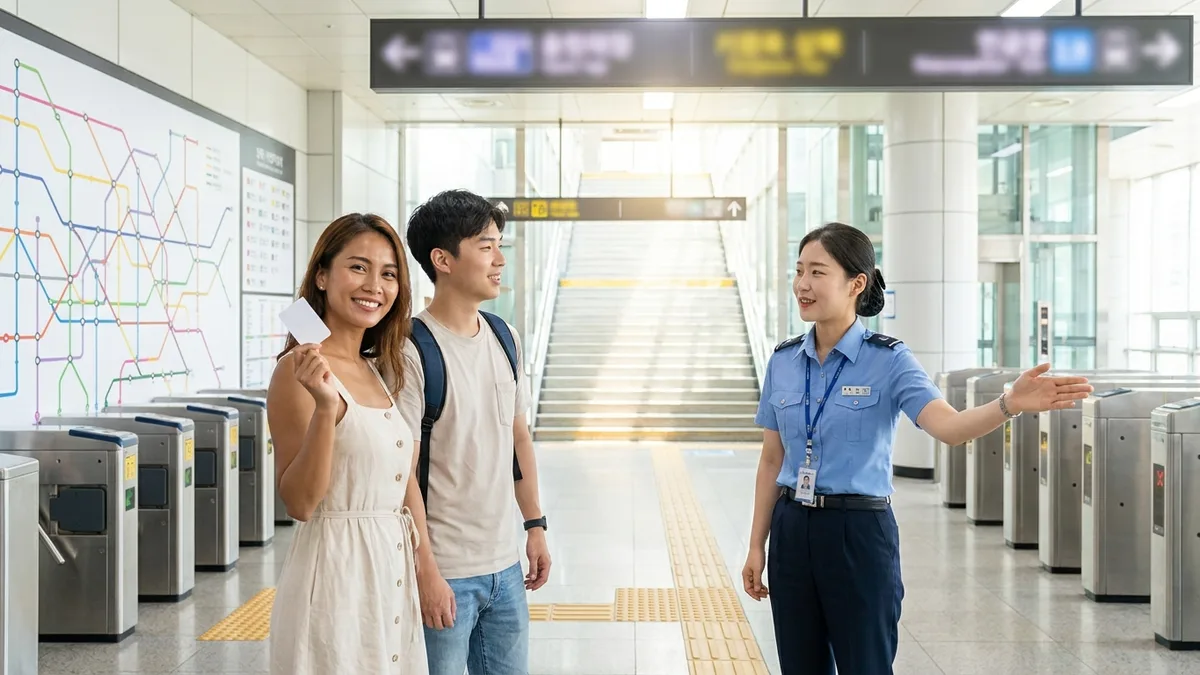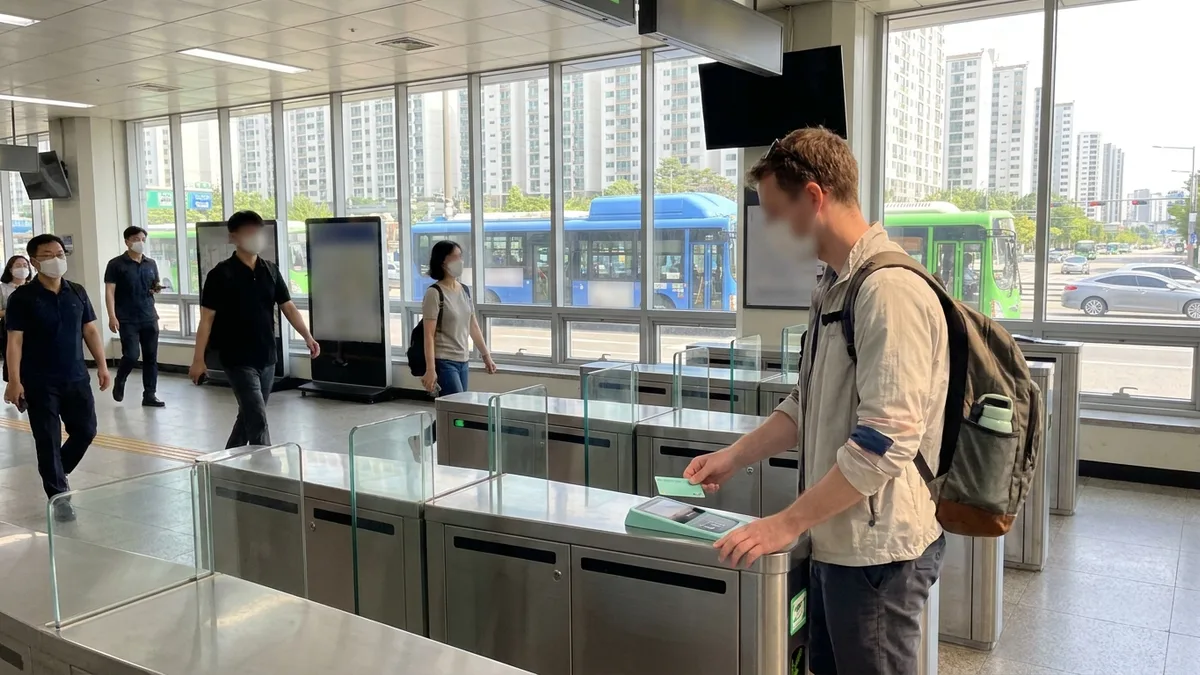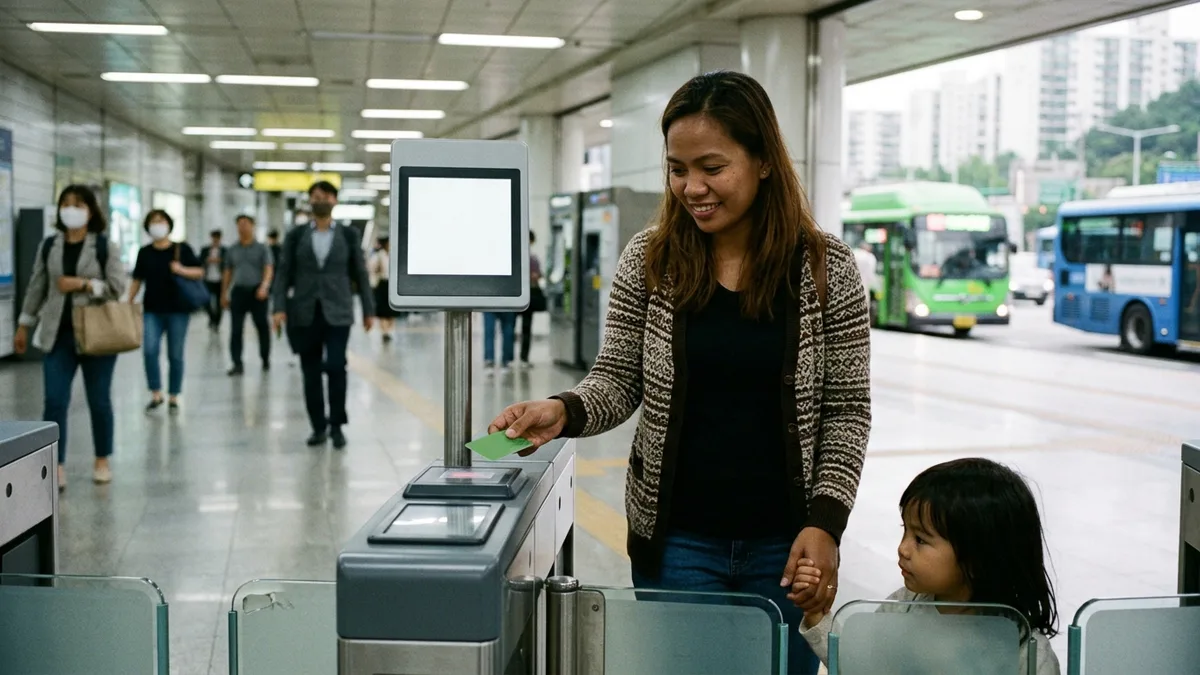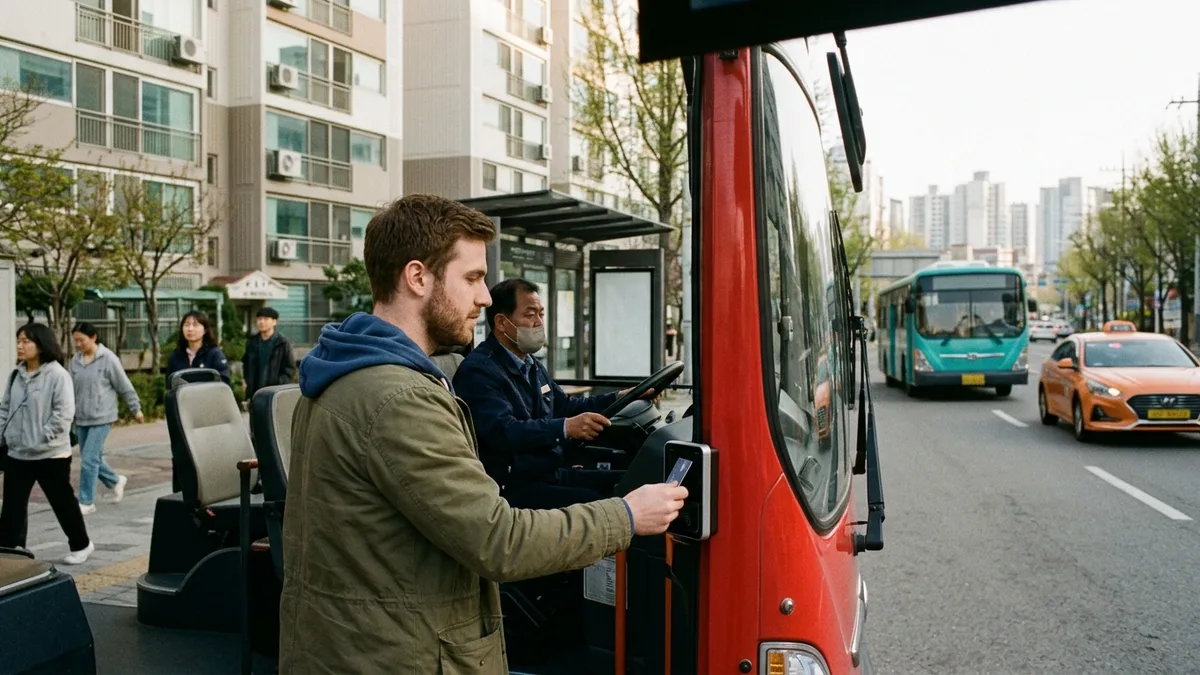
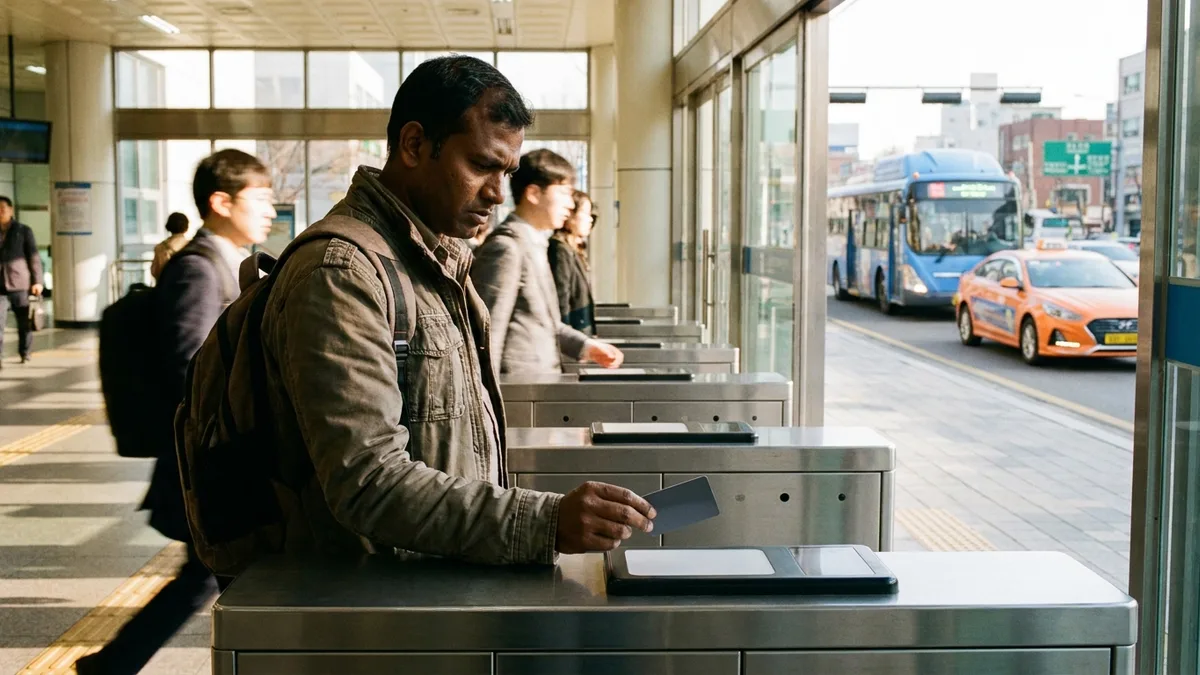
Starting with the first train on March 7, 2026, if you don't tap out on metropolitan-area urban rail, that record stays in the transit card system and the base fare gets deducted a second time the next time you ride with that card. It's 1,550 won for adults, 900 won for youth, and 550 won for children.
Losing a card is harsher. Article 27(1)(4) of the T-money terms of service lists "cases where the T-money card is stolen or lost" as an outright exception to the company's liability. The only way to get anything back is through what clause 2 of the same article calls "specific products designated in advance by the company," and the one the official guidance names is the Public Transport Safety Card (대중교통안심카드) — registered before the incident. A single T-money card can hold up to 500,000 won (Article 6(3) of the terms), so loading it up without registering means putting exactly that much on the line.
What you get back depends on the type of trouble. A missed tap-out costs you more money, a lost card comes down to whether you registered in advance, and a card that won't scan has to be reported within a deadline to get the card price back too. Below is a situation-by-situation breakdown of where to go and how much you can recover, based on official guidance as of 2026-08. For the normal, trouble-free flow of buying, topping up, and refunding a card, see T-money: Buying, Charging, and Refunding — The Complete Guide.
You Missed the Tap-Out — You'll Pay Again on Your Next Ride
This is the most common problem, and the rule changed in 2026. From the first train on March 7, 2026, skipping the tap-out actually costs you money.
Here's how it works. The missed tap-out is logged in the transit card system, and the next time you tap in with that card, the base fare for your fare type is automatically added on. It isn't collected on the spot at the gate — it attaches to your next ride — so your balance may come up shorter than expected days later at a completely different station.
| Fare type | Extra amount added on your next ride |
|---|---|
| Adult | 1,550 won |
| Youth | 900 won |
| Child | 550 won |
Who it applies to is split, too.
- Applies to: prepaid transit cards and postpaid (credit-linked) transit cards
- Does not apply to: commuter passes, single-use tickets (single-journey transit cards), and concession passes
The coverage isn't limited to Lines 1–8 and Phases 2–3 of Line 9 operated by Seoul Metro (서울교통공사) — it covers all metropolitan-area urban rail sections. The rationale for introducing it was an analysis showing an average of roughly 8,000 missed tap-outs per day on Seoul Metro sections from January to November 2025.
Separately from the money, your transfer chain is cut right there. Under the metropolitan integrated transfer discount system, failing to tap out breaks the transfer from that leg onward, and when you board your next leg the previous un-tapped ride is treated as a standalone trip so the uncollected base fare is charged on top. The transfer conditions (within 30 minutes of tapping out between 07:00 and 21:00, within 60 minutes from 21:00 to 07:00 the next day, up to 4 transfers) are laid out in How to Get Transfer Discounts on Subway and Bus.
Unlimited passes aren't exempt either. With the Climate Card (기후동행카드) you must tap out every time (including on transfers), and if you accumulate two or more missed tap-outs during the validity period, the card is suspended for 24 hours counting from the boarding time of the second missed tap-out. It isn't an extra fee — the card itself stops for a day, which is arguably worse.
Heads-up: If you tapped out properly and were still charged extra, the official guidance doesn't describe any appeal or refund procedure. For now there's no designated channel beyond asking at the station office (customer safety office) of the station where you got off, or your card issuer's customer center (needs official confirmation).
Your Card Beeped Twice — Double Charges vs. Multiple Taps
You need to tell two situations apart. The outcomes are completely different.
- Tapping the same card several times: no duplicate fare is deducted before you tap out. Even if you heard the beep two or three times, your balance doesn't drop twice.
- Two different cards being read at once: this is the real double charge. It happens when you tap your whole wallet on the gate and two cards inside get picked up together.
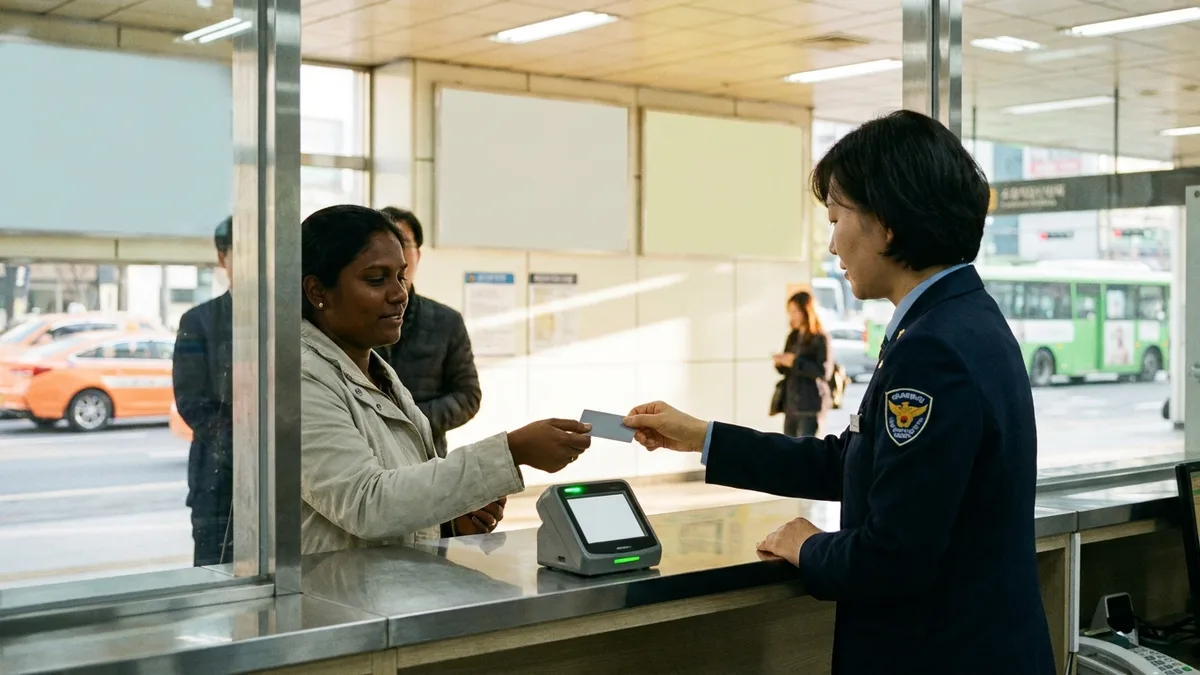
A double charge can only be refunded in cash at the station office of the station where you boarded. It can't be handled at your arrival station, and a card that's been refunded gets logged in the system as a broken transfer chain. The source guidance here is an older post and may differ from current practice, so it's safer to ask the station office first whether they can process it (needs official confirmation).
There's one poorly known gap here. For a double charge on a postpaid (credit card) transit card, and for one that happens on a bus, the handling path isn't confirmed in the official guidance. You'd need to contact both your card issuer's customer center and the station or bus operator, and which one is the proper channel needs to be confirmed.
Prevention is simple. Don't tap your whole wallet — take out one card and press it flat against the pad. That single habit cuts down on double charges and read failures at the same time.
You Lost Your Card — It Only Comes Back If You Registered Beforehand
This is the question people ask most, and the one they're most often too late on. A physical T-money card that isn't enrolled in the safety service cannot have its balance recovered if you lose it. That's because whoever finds it can just keep using it.
To get money back, you had to have completed three steps with the Public Transport Safety Card (대중교통안심카드) before the loss.
- Sign up for a T-money account
- Register the card
- Enroll in the lost/stolen service
Only cards with all three in place can go through the procedure below.
| Step | Details |
|---|---|
| Filing the report | T-money website's lost/stolen menu, or customer center 1644-0088 |
| Balance confirmed | As of 06:00 the day after your report, the balance registered in the T-money system (card price excluded) |
| Refund deposited | D+3 days after the report is filed, to the account you entered when reporting |
| Liability gap | T-money is not liable for any amount a third party spends between the moment you report and the moment the balance is confirmed |
That last row matters. Half a day or more sits between the report and the balance confirmation, so reporting the moment you realize the card is gone translates directly into how much money you keep.
Mobile T-money works a little differently. You file through the lost-card menu on the T-money Card & Pay website or by calling 1644-0088, the balance (spending limit) is zeroed out, and then you're refunded — but recovery is only possible if the device's network is on and Mobile T-money is set as the primary transit card. If the phone is dead or offline, this route is closed.
If recovery has become impossible, there's one compensation track left. Submit three documents — the lost/stolen report receipt, proof of your mobile carrier service contract, and the report receipt from the National Police Agency lost-and-found center — to mobileteam@tmoney.co.kr, and you can be compensated up to 20,000 won under the January–December 2026 promotion.
Single-use transit cards are a different animal. You pay the fare plus a 500 won deposit at the ticket machine and get the 500 won back at a deposit refund machine after use — but since the card itself is a reusable item, the deposit is not refunded if you lose or damage it through your own carelessness (inquiries: Seoul Metro / 서울교통공사, 1577-1234).
Note: Whether foreigners can sign up for the Public Transport Safety Card, and whether it requires an ARC number, a Korean phone number, or a Korean bank account, is not stated in T-money's official guidance. Since refunds are deposited into an account in your own name, a Korean account looks effectively necessary in practice, but you'd need to confirm with 1644-0088.
Your Card Won't Scan — Faulty Cards and Damaged Cards Are Handled Differently
When a reader can't read your card, T-money splits the handling into two tracks based on the cause. The scope of what you get back and the deadline both differ, so this distinction is literally money.
| Category | What it means | What you get back | Deadline |
|---|---|---|---|
| Faulty card | Looks physically fine but isn't recognized by readers | Balance + card purchase price | Within 2 years of the first top-up |
| Damaged card | Damaged through the user's intent or negligence | Balance only | — |
There are four ways to submit it.
- Convenience stores: pick up a refund envelope at GS25, CU, 7-Eleven, or Ministop and drop it in a mailbox
- Subway service centers: submit to station staff on Incheon Subway Lines 1–2
- T-money Town (티머니타운): submit in person
- Website, PC version: the photo-submission route does not refund the card price, and it's capped at 5 cases per year
Refunds are deposited to your registered account in your own name (a guardian's account for under-14s). If your card has suddenly stopped scanning, don't damage it — bring it in as is. Bend it or scratch it up and it gets classified as a damaged card instead of a faulty one, and you lose the card price.
Expiry Dates and Balances — There Is No Expiry Date, and Four Ways to Check
T-money Cards Have No Expiry Date
This is the first worry when a card from years ago turns up in a drawer, and the short answer is that T-money cards themselves have no expiry date. Article 26(1) of the terms of service states that "prepaid electronic payment means issued by the company may be used and refunded without an expiry date."
- Extinctive prescription: charged funds expire 5 years (60 months) from the last top-up or last use
- Unused card: a card with no top-up, payment, or refund history for more than 5 years
- What still works: if you hold and present a legitimate physical card, you can still use and refund the funds on it even after the prescription period (Article 26(2) of the terms)
So before you throw out an old card, the right move is to check the balance at a convenience store first.
The thing that does have a real end date is the pass side. Top-ups for the 30-day Climate Card (기후동행카드) ended on August 31, 2026. Prepaid passes already loaded can be used through September 29, and postpaid Climate Cards through September 30. The successor program — the Modu Card (모두의카드), also called the Climate Card Pass (기후동행패스) — starts September 1; short-term passes (1, 2, 3, 5, and 7 days) continue, and the youth eligibility range has been widened to ages 19–39. For how to wind down your remaining days and balance, also see the Climate Card Guide for Foreigners in Seoul.
Climate Card balance refunds are handled at self-service recharge machines in Seoul Metro stations within the Seoul city limits on Lines 1–8, Phases 2–3 of Line 9, the Ui-Sinseol Line, and the Sillim Line, or in the Mobile T-money app. What you get is the charged amount minus actual usage and a 500 won fee. If you've used 80% or more of the charged amount and then suspend the physical card in the app, the fee is waived — and the card purchase price is not paid out under any circumstances.
Four Ways to Check Your Balance, Only One Needs Identity Verification
Getting stuck at the gate because you didn't know your balance happens more than you'd think. There are four ways to check, and only one of them requires identity verification.
| Route | How | Identity verification |
|---|---|---|
| Boarding/alighting reader | The fare and remaining balance both show on screen when you tap | Not needed |
| Mobile T-money app | NFC check by holding the physical card against the back of your phone | Not needed |
| Self-service recharge machine | Place the card on a machine at a convenience store or subway station | Not needed |
| T-money website, "My T-money" (나의 티머니) | Register the card number and log in — balance, usage history, and top-up history | Needed |
Only the website check has a hurdle. Signing up for T-money and applying for the transaction history service accept four verification methods: Toss, KakaoBank, mobile phone verification, and i-PIN. Whether a foreigner can pass these without an ARC number, or substitute a passport number, is not stated in T-money's official guidance (needs official confirmation). Unless you specifically need the usage history, the other three routes are plenty.
It Feels Like You're Being Overcharged — Unregistered Child/Youth Discounts
This is where families with kids lose the most money. Child and youth cards don't get the discount automatically just because you bought one.
- Registration deadline: you must register the date of birth within 10 days of first use
- Where to register: the T-money website, the Mobile T-money app, convenience stores (GS25, 7-Eleven, emart24, etc.), or customer information desks inside stations
- Age ranges: children ages 6–12, youth ages 13–18 (may differ by region)
Once registered, the fare changes automatically based on that date of birth. The problem is the money already deducted at adult rates before registration — and there's no provision in T-money's official guidance for refunding that retroactively (needs official confirmation). Registering the same day you buy the card is effectively the only fix.
What Never to Do — 30x Penalty Fare for Fare Evasion
If you're in a rush and do any of the following, the amount you end up paying dwarfs anything you saved earlier. These are the fare evasion cases the Seoul Metropolitan Government spells out.
- Tailgating: slipping through the gate right behind someone else who tapped their card
- Age misuse 1: an adult using a youth card
- Age misuse 2: a youth or adult using a child's card
If you're caught, on top of the fare for the section you rode, a penalty fare of up to 30 times that fare is collected. The legal basis is Article 10 (Collection of Additional Fares) of the Railroad Business Act. Concession (free-ride) transit cards are even stricter: they're issued one card per person for that person's exclusive use, and if you lend or transfer one to someone else, the user is charged the passenger fare for the section ridden plus 30 times that fare.
Buses and subways diverge here. On a bus the driver can register multiple passengers, so if the same group continues the same journey, the transfer discount applies even in multi-passenger mode. On subway gates, there's no such override. That's exactly why, when a companion's card won't work, you go to the station office instead of squeezing through together. The basic playbook for getting stuck at a gate is laid out step by step in The Complete Guide to the Seoul Subway.
How the settlement actually works on the spot if you're caught, and whether interpretation is provided for foreigners, is not confirmed in the official guidance. The best approach is not to create a situation where you can't communicate.
Getting Your Money Out and Who to Call in a Hurry
If you've sorted out the trouble and decided to close out the card, each refund point has a different limit. Convenience store counters are for small balances (GS25 under 20,000 won; 7-Eleven, independent convenience stores, and some kiosk top-up vendors 20,000 won or less; CU and emart24 30,000 won or less), and how to ask plus the step-by-step is in T-money: Buying, Charging, and Refunding — The Complete Guide. Here we'll only cover the routes for pulling out a balance that exceeds those limits.
| Refund point | Amount per transaction |
|---|---|
| Subway customer information desk | 50,000 won or less |
| Bank ATM | 500,000 won or less |
| T-money Town (티머니타운) | 500,000 won per day |
| Mobile app | 3 times per month, up to 500,000 won |
The fee is 500 won, and no fee is charged on balances below the base fare (1,550 won). T-money Town is free up to a cumulative 500,000 won per month. If you request 50,000 won or more, they verify your identity with your name, date of birth, and contact number — and in no case is the card purchase price refunded. One caveat: the list of which banks' ATMs actually work isn't in the official guidance, so check in advance.
If you're stuck because of the language barrier, calling is fastest.
- Seoul Dasan Call Center 120 → press 9: connects you to foreign-language support
- T-money customer center 1644-0088 → press *8: connects to foreign-language support; base operating hours are weekdays 09:00–18:00 (whether the languages supported and the hours for foreign-language support match those for Korean-language support needs official confirmation)
- Seoul Metro (서울교통공사) 1577-1234: for single-use transit card deposit inquiries
Note: The procedures and amounts in this article are based on T-money and the metropolitan area (Seoul, Incheon, Gyeonggi). Cards from other regions and other operators — Busan's Dongbaekjeon (동백전), Daegu's One Pass (원패스), Cashbee (캐시비), Rail Plus (레일플러스) — may have different rules for loss, refunds, and expiry, so check that operator's own guidance separately.
Your Card May Stop, But Your Schedule Doesn't Have To
Getting around the city is fixable the same day — just buy a new card. What's genuinely painful is intercity travel you've already booked. KTX and express buses aren't things you tap a transit card for; they need separate reservations. You can buy them at station and terminal counters and ticket machines with a passport and an overseas-issued card, but online booking can get blocked at 3D Secure verification for overseas cards or at the Korean phone number check. Making an extra trip to the station on the same day you're cleaning up a card problem is a lot to ask.
LACHA (라차) is a transport and payment super app for foreigners that you can start using right away with no identity verification. It's designed so that no formal identity verification is required — no Korean bank account or phone number — and you can search and book both KTX and express buses in one app using familiar payment methods like Alipay and WeChat Pay. Keep T-money for city transit and LACHA for intercity travel, and a card problem won't take your itinerary down with it.
Want to search and book KTX and express buses in one app? Check out LACHA.
Built to work without a Korean phone number or bank account, with overseas payment methods like Alipay, WeChat Pay, and Apple Pay. Taxi hailing plus KTX, express bus, and airport railroad (AREX) booking — all in one app.
Up to 60% off Korea transit with a coupon (max ₩3,000): enter code at sign-up. KTX gets up to 18% off on top
Download now


Frequently Asked Questions (FAQ)
Q1. I forgot to tap out — what should I do right now? There's no announced way to report it separately or pay in advance. The next time you tap in with that card, the base fare for your fare type (1,550 won adult / 900 won youth / 550 won child) is automatically added. If you believe you tapped out properly and were still charged, ask at the station office or your card issuer's customer center (the appeal procedure needs official confirmation).
Q2. Can I still get the balance back from a T-money card I lost? If you completed account sign-up, card registration, and lost/stolen service enrollment with the Public Transport Safety Card (대중교통안심카드) before losing it, yes — report it via 1644-0088 or the website. Cards that weren't registered cannot be recovered, because Article 27(1)(4) of the terms lists loss and theft as an exception to the company's liability.
Q3. My card is old and past its expiry date — should I throw it out? No. T-money cards themselves have no expiry date (Article 26(1) of the terms). The extinctive prescription for charged funds is 5 years from the last top-up or last use, but if you still hold a legitimate physical card, you can use and refund it even after that.
Q4. My card suddenly stopped scanning — what happens to the balance? A faulty card — physically fine but unreadable — gets you both the balance and the card purchase price back, as long as it's within 2 years of the first top-up. Submit it via a convenience store refund envelope, an Incheon Subway Line 1–2 service center, T-money Town, or the PC version of the website. But if you damage it yourself, it's classified as a damaged card and you only get the balance.
Q5. Can I use these procedures without a Korean bank account or phone number? Lost-card refunds, faulty-card refunds, and Mobile T-money compensation all assume a deposit into an account in your own name. What exceptions apply to foreigners is not stated in T-money's official guidance (needs official confirmation). On the other hand, checking your balance at a reader, via the app's NFC, or at a self-service recharge machine — and getting a cash refund at a convenience store — works without an account.
Note: The fares, effective dates, refund limits, and terms-of-service articles in this article are current as of 2026-08 and may vary by card type, store, station, operator, and timing, and change frequently. In particular, the appeal procedure for the missed tap-out surcharge, the requirements for foreigners to sign up for T-money and the Public Transport Safety Card, and the handling path for double charges on postpaid cards and buses could not be confirmed from primary sources. Before you actually file a report or request a refund, please confirm your own case through official channels such as T-money (t-money.co.kr), the T-money customer center at 1644-0088, Seoul Metro at 1577-1234, or the Seoul Dasan Call Center at 120. LACHA (라차) is not a transit card issuer and does not process or guarantee refunds or compensation on your behalf.